|
|
|
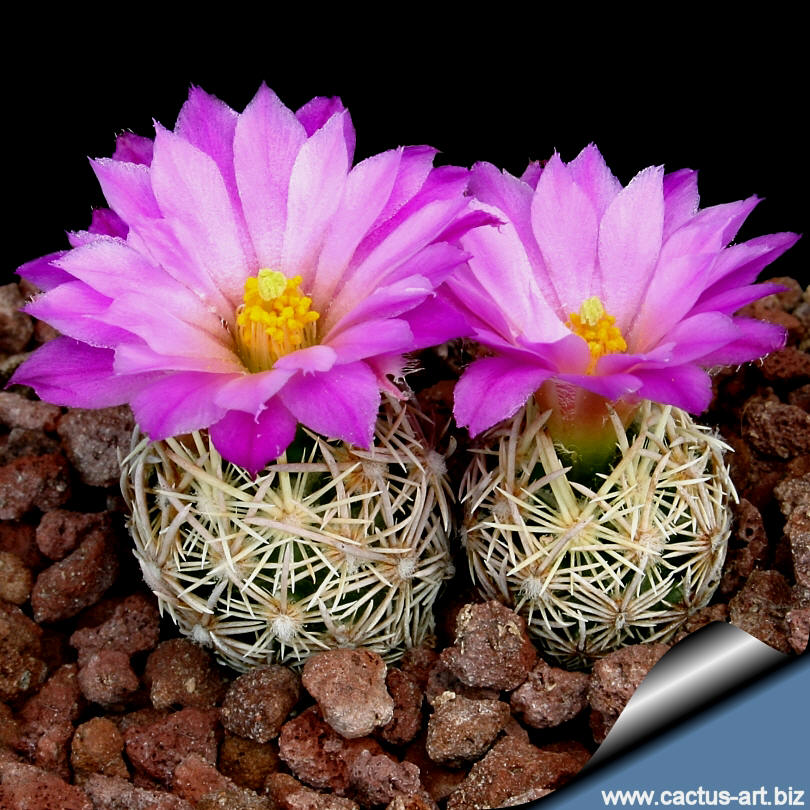
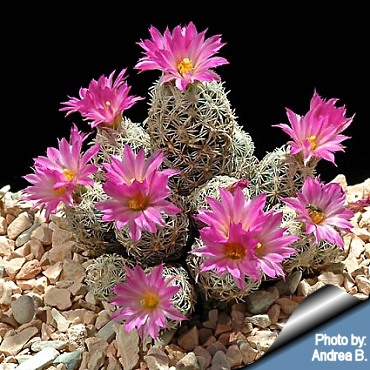
Escobaria minima
SB423 Brewster Co, TX
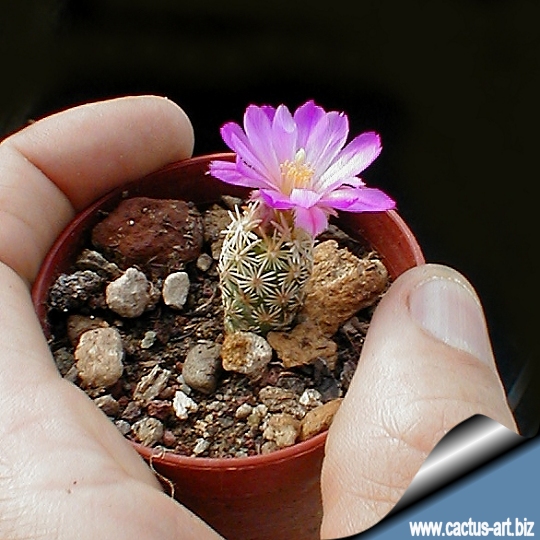
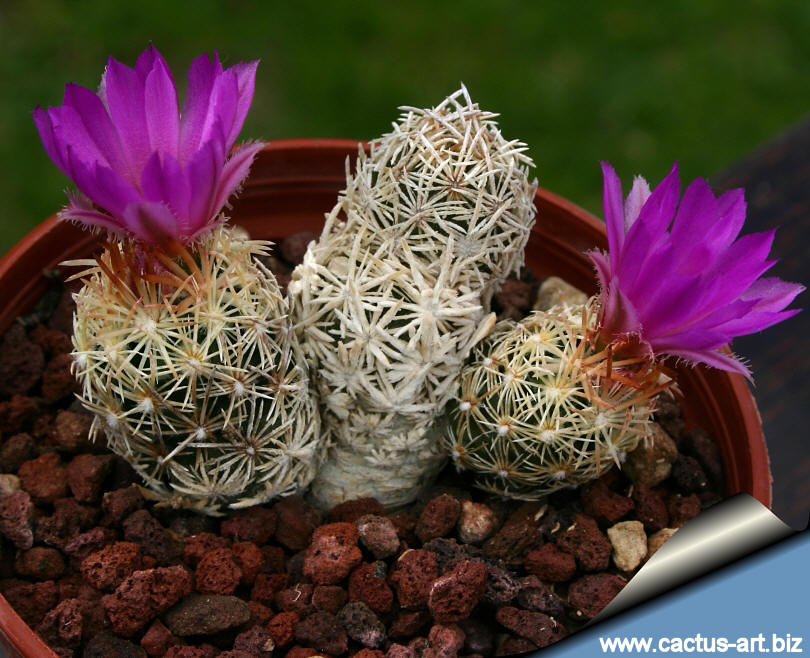
This tiny cactus with its thick whitish spines and attractive pink
flowers (larger than the plant itself),
is highly prized among
collectors.
|
|
|
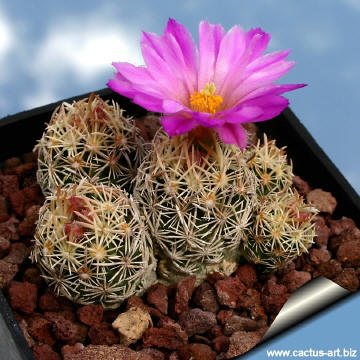
Description: Escobaria
minima is a tiny
cactus with rounded, single stems up to 2,5cm
tall and 6-17 mm wide, occasionally with a short
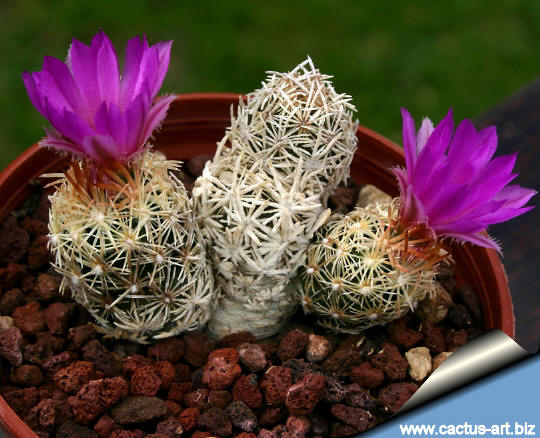
tap root; tubercles 2 to 4 mm wide. A cultivated plant can be slightly
larger, and clumped .
Spines: The plant is crowded with thick, corky, white spines (1
to 4 centrals, 4 to 6 mm long; 13 to 23 radials, 3.5 to 5 mm long)
Flowers: Numerous, pink,
up to 2.5 cm in diameter, 1.5 cm long.
It blooms in several flushes, primarily in May, but the blooming period
lasts from March until June.
Fruit: It produces ovoid, green fruit (1.5-5 cm long) that ripens
from June to October.
The flowers are easy to pollinate,
and produce around thirty seeds per fruit. |
|
Photo
and © copyright by
Andrea
B. (Bologna, Italy)
http://www.cactusfriends.com/Andrea/index.html
|
|
|


Advertising
|
|
|
|
Family:
Cactaceae
(Cactus Family)
|
|
Scientific name:
scobaria minima
(Baird) D. R. Hunt
Origin: Chihuahuan desert in the USA,
they are found from only three populations, all in a tiny area of
Brewster County, Texas.
Habitat:
Grows in desert grassland,
usually among the chips of weathered and physically fractured Caballos
Novaculite rock (a quartz-like material). This species is now known only
from three small sites
Conservation status: Listed in
CITES appendix 2.
Common Names include:
Nellie
Cory cactus
|
Taxon
synonyms:
-
Escobaria nelliae
Croizat) Backeberg
-
Coryphantha minima
Baird
- Coryphantha
nellieae
Croizat
- Mammillaria nelliae
(Croizat) Croizat
Remarks:
and
E.
hesteri (From an adjacent hill) are
two miniature plant which resemble dwarf races of
E. vivipara, to wich they shares some characteristic, but
much smaller in all parts. They can survive to –25°C in dry-winter
regions.
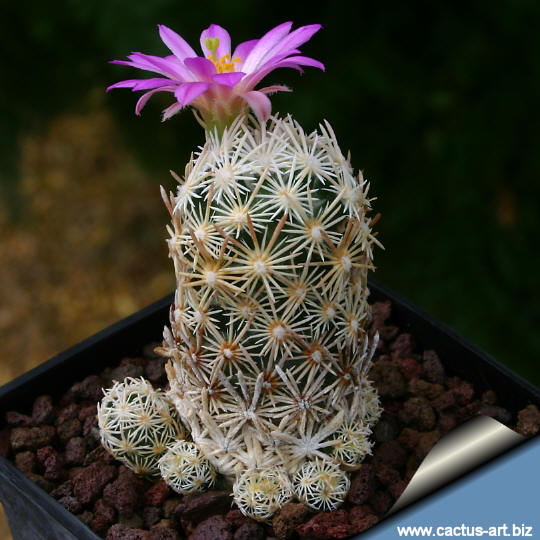
This is the smallest Escobaria,
a real gem,
and very
beautiful!!!
Plants flowering in cultivation do not
self-pollinate, but are easy to hand pollinate,
and produce around thirty seeds per fruit.
|
|
|
|
 |
|
Cultivation:
Very slow-growing, but easy to cultivate.
Water regularly in summer, but do not over-water.
It prefers a completely
dry place during winter with much drainage. An unheated greenhoouse
would be perfect. It can survive low temperatures (appr. -12 C).
Full sun to light shade Propagation: easy to
propagate from seed, cuttings and grafting. |
|


 Cultivation and Mail Sale