|
|
|
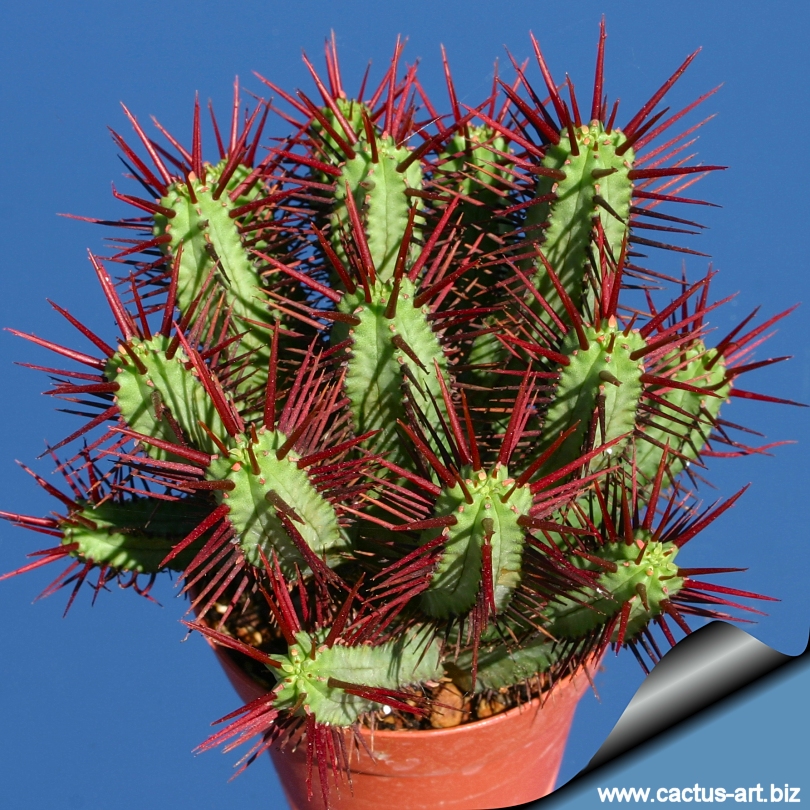
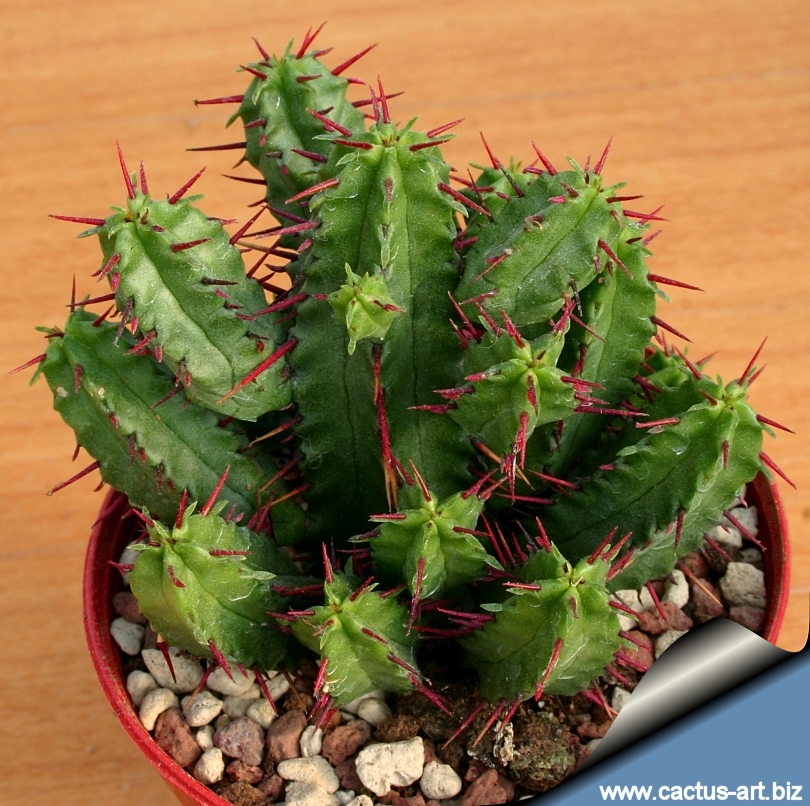
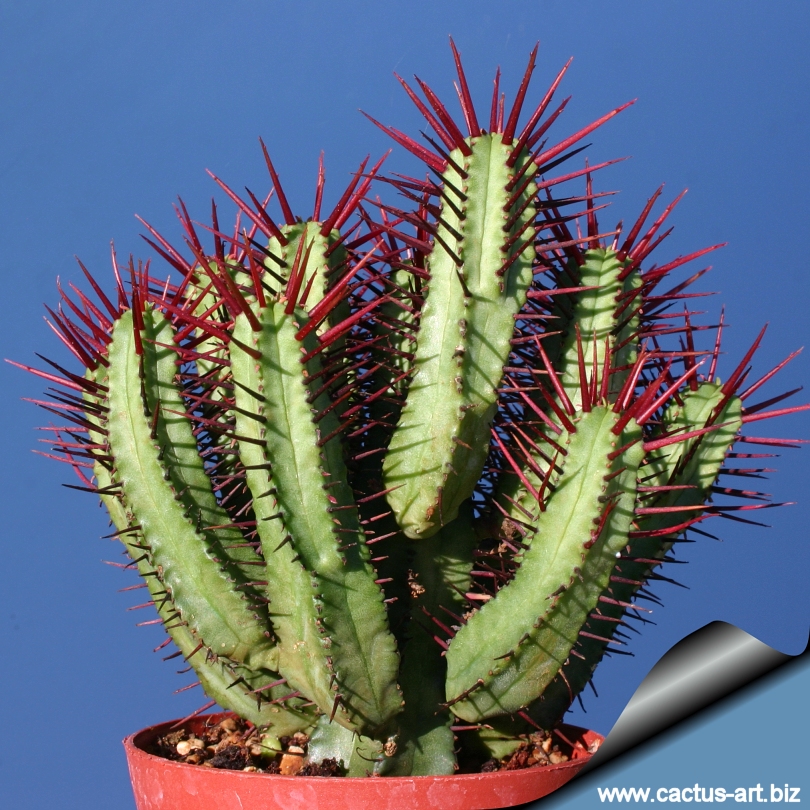
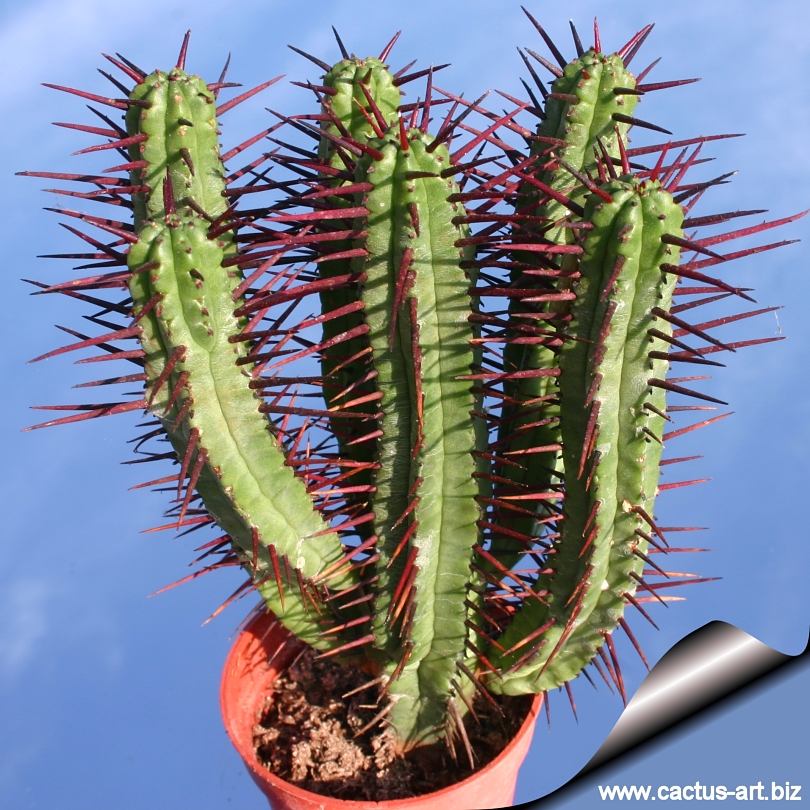
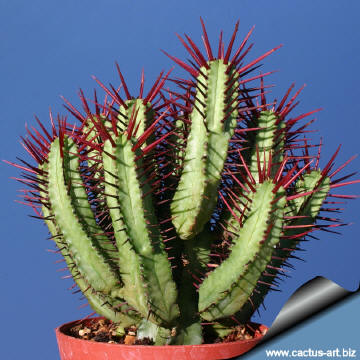
Euphorbia enopla is a beautiful species, partly because
of its long
red-purple spines.
It can form soon a large bunch. It isn't an actual cactus, but it looks
a lot like one.
|
|
Description: It’s a
heavily branching
dioecious succulent shrub that grow to about 30-100 cm, much
branched from the base, profusely covered with thick, prominent lovely
long red spines.
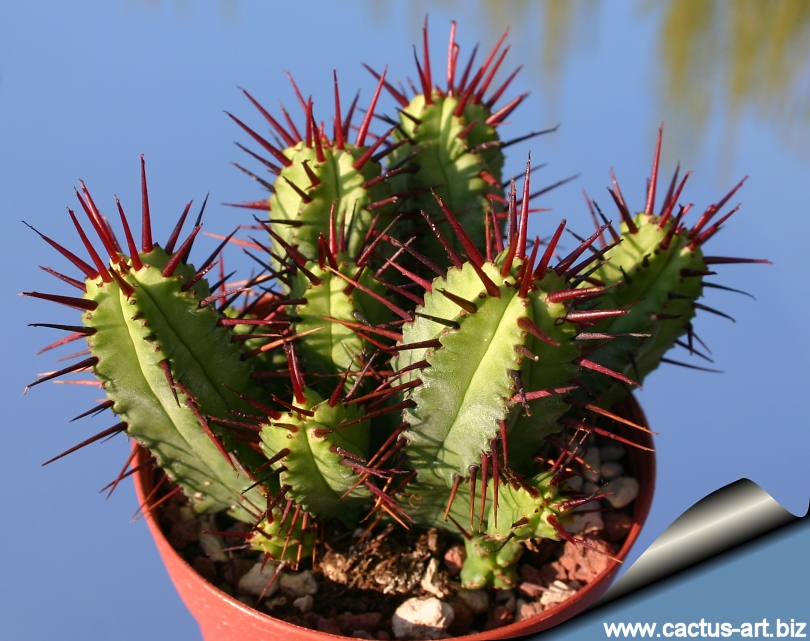
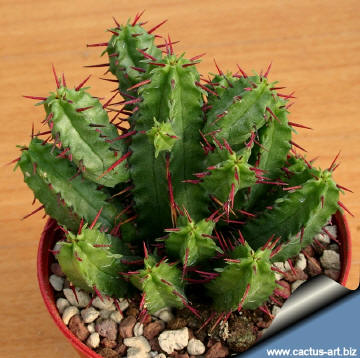
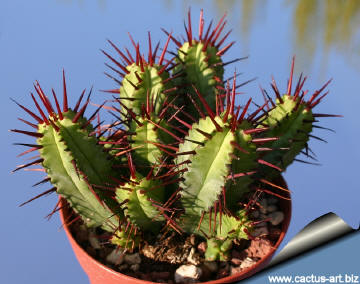
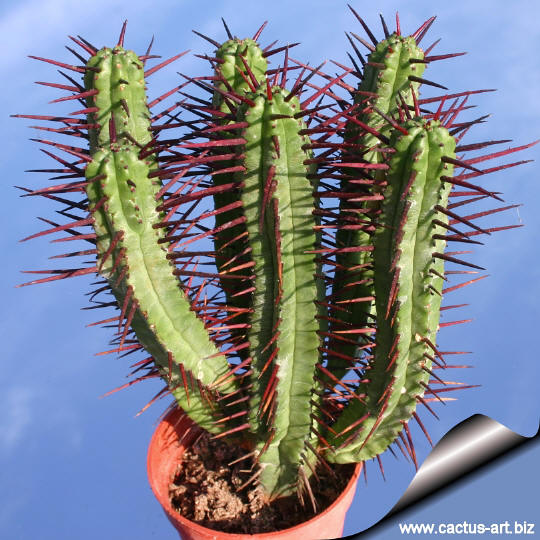
Stems: The branches are fat, finger-sized, columnar or curved
20-30 cm x 3 cm Ø and rise principally from the ground and above near
the base. They are light grey-green to bluish-green in colour
Ribs: Plump 6-7(-8) with deep groves between, grey-green, knobby-crested
with very shallow tuberles.
Leaves: Tiny,
ephemerals.
Spines: The spines are indeed solitary sterile
peduncles, they are very numerous, about 6 mm apart, stout, spiny
rigid, 1-6 cm straight to ± curved, reddish turning purple and finally
grey.
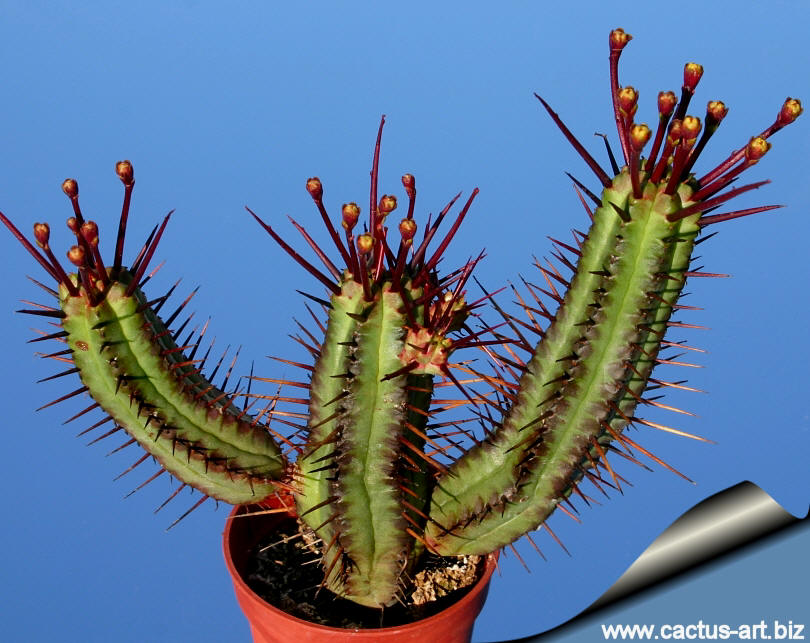
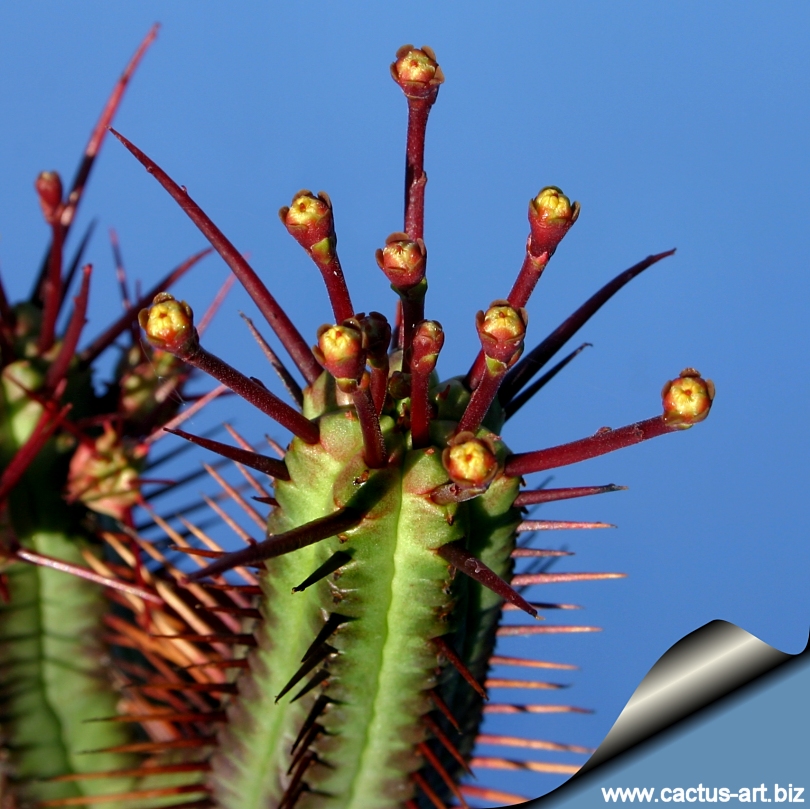
Flowers: Male
cyathia on solitary peduncle, 8-25 mm long. Female shorter, with 4-6
small bracts, dark red up to5 mm in diameter.
Fruit: Globose,
subsessile.
|
|
|
 |
 |
|
Warning: As with all other Euphorbias, when a plant get damaged it
exudes a thick white milky sap known as latex. This latex is poisonous
and may irritate skin. Pay extreme attention not to get any in your
eyes or mouth.
Cultivated plants must be handled carefully.
|
|


Advertising
|
|
|
|
|
Family: Euphorbiaceae
Scientific name: Euphorbia
enopla Boiss.
Origin: South-western South Africa.
Conservation status: Listed in
CITES appendix 2.
Common Name: Pincushion Euphorbia
E. enopla belongs to Euphorbia section
19 along with E. aggregata, mammillaris, anoplia, ferox, heptagona,
pentagona and polygona which are all similar in
form. In particular E. enopla looks a lot like
E. ferox, but E. ferox is much fatter.
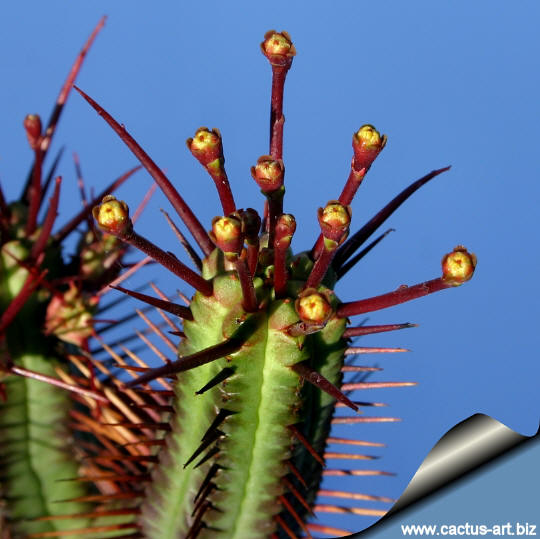
Flowers have striking dark red bracts
|
|
|
|
Cultivation:
Common and relatively easy to grow plant for pot culture. It grows well
in a very draining mineral potting substrate, but it isn't picky about
soil. The area where this plant is native receives rains both in winter
and summer, so it can be watered moderately all year around (except in
the coldest month of the winter, as it rot easily ,especially if
over-wet). During the summer, they enjoy average feeding and watering.
When dormant in winter, keep it totally dry at or around 4°C, even
though it seems to tolerate light frosts well. Mature healthy plants are
tough and can also be grown outside where frost is not too severe, but
when left out it is more sensitive to frost. They do need a lot of light
to keep their compact growth-form, but different clones vary in their
tolerance of full sunshine. The plants that are not kept in full sun
grow faster, but became untidy and may need support as they get larger,
or branches fall off. But if grown in the protection of light shade, the
thick purple spines of this low-growing clumping columnar plant have the
best colour. Sometimes, in really hot full sun all day long, a plant
will bleach out a bit. It soon grows into a large, many stemmed
specimen, and it can fill a 30 cm bowl. It is also a prolific bloomer,
and makes a spectacular specimen.
Propagation: It is propagated by cuttings or seeds. It branches
enthusiastically, and offsets are readily available. If you remove an
offset, remember to let it dry for a week or so, letting the wound heal
(cuttings planted too soon easily rot before they can grow roots). It
is better to wash the cut to remove the latex. The seed can be sown just
under the surface in normal seedling trays in a sandy seed mix.
Germination usually occurs within 1 - 3 weeks.
|
|


 Cultivation
and Mail Sale
Cultivation
and Mail Sale