|
|
|
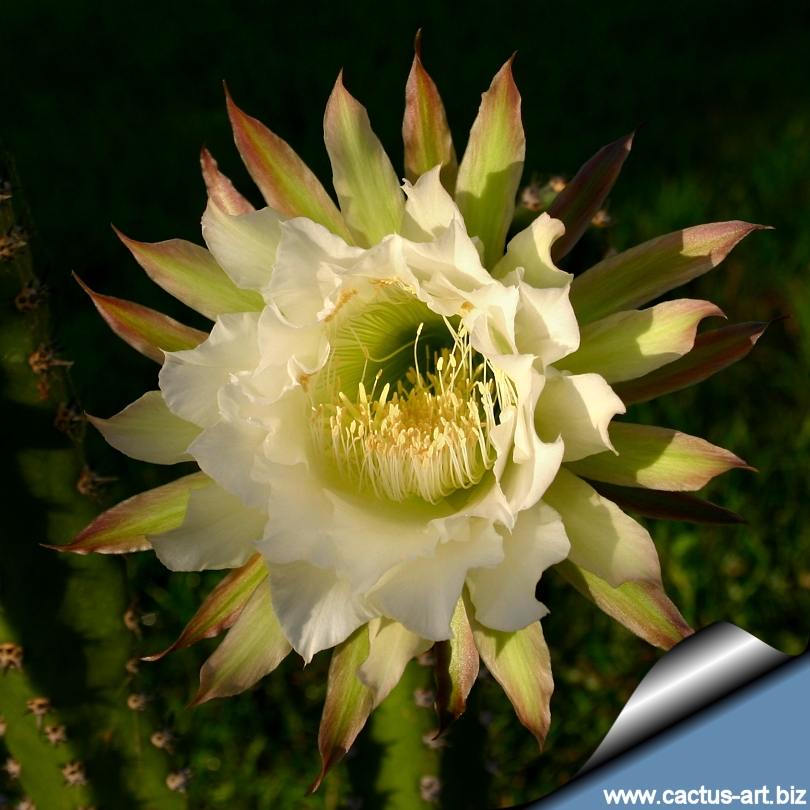
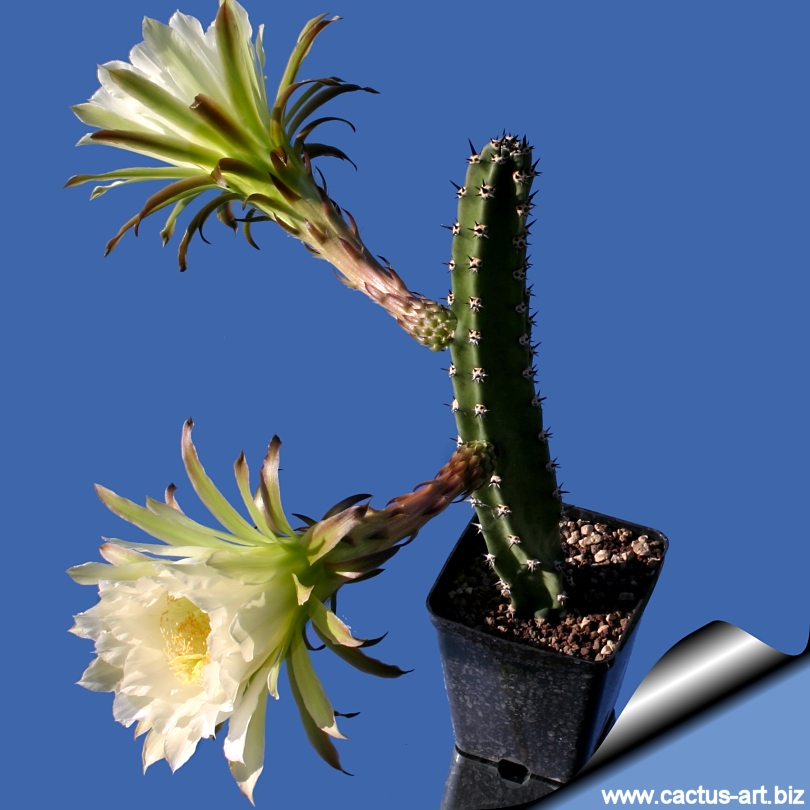
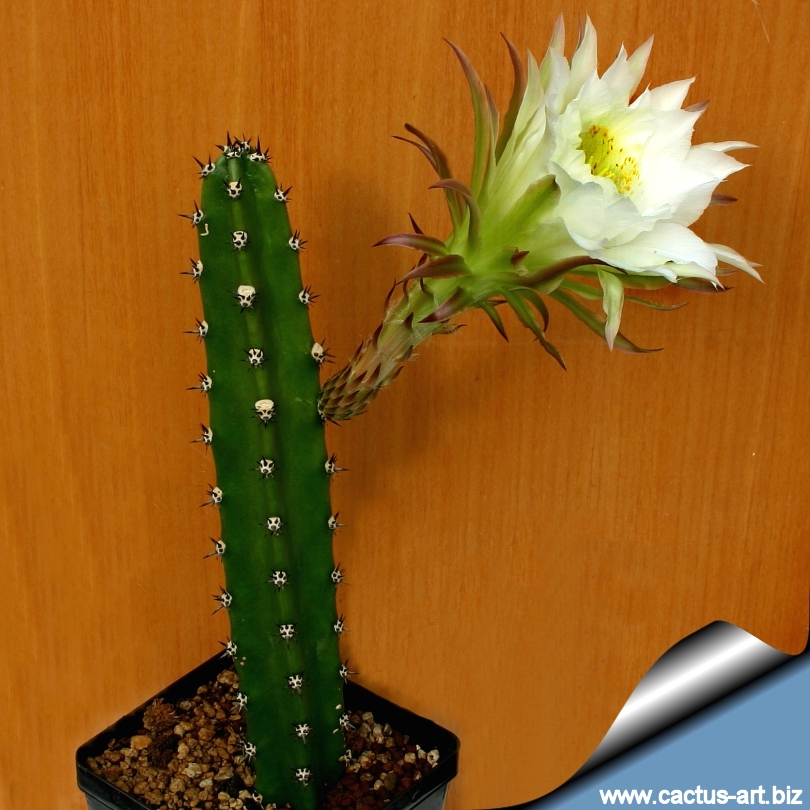
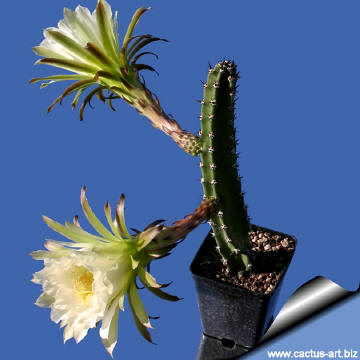
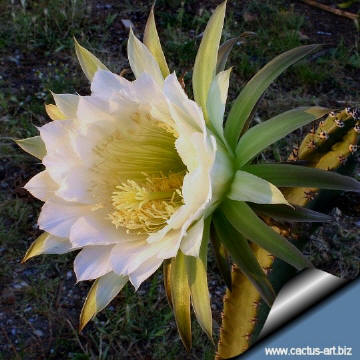
Harrisia jusberti is a night-blooming Cereus commonly known as "Queen of the night"
It is a nice columnar cactus that produces huge nocturnal white flowers
from spring to autumn.
|
|
Description:
Harrisia jusberti
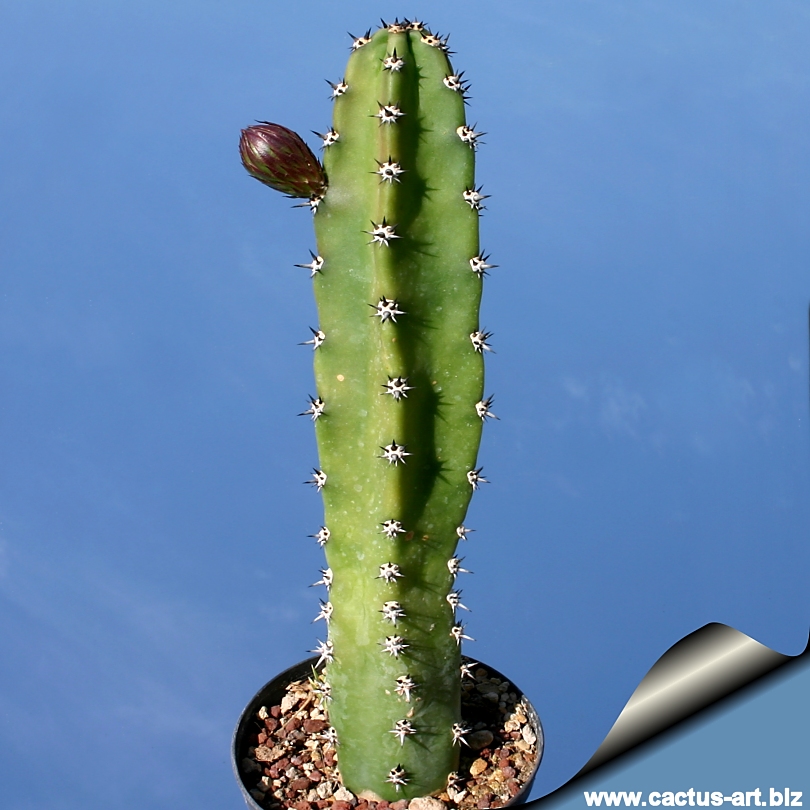
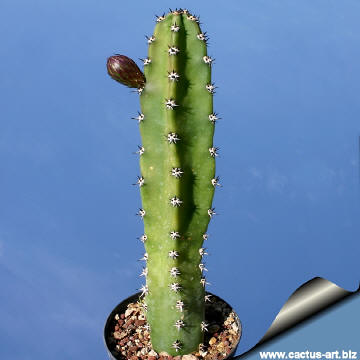
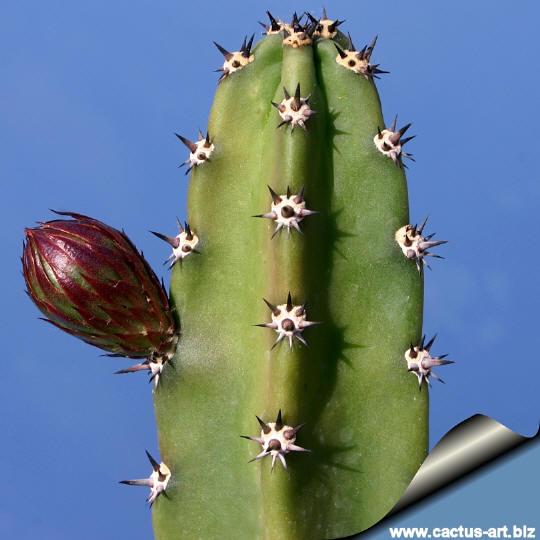
is a columnar
cactus, without aerial roots or segments, branching later, that forms
small scrubs with few branches, mostly erect to sub-erect often
requiring a stake or support from the surrounding.
Stem:
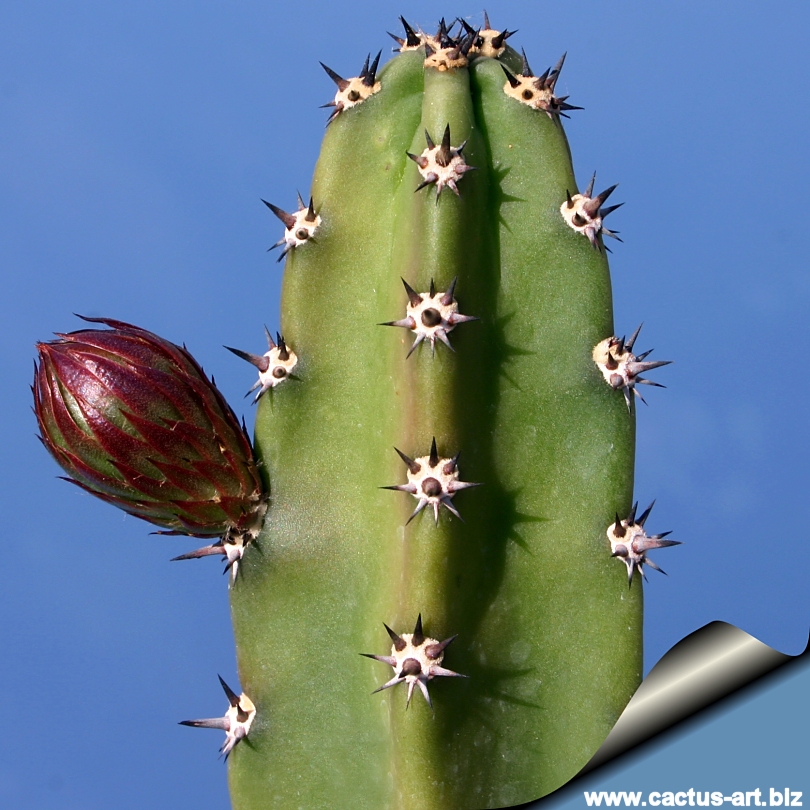
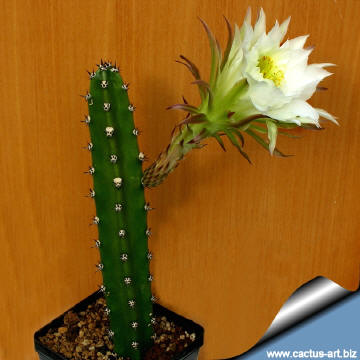
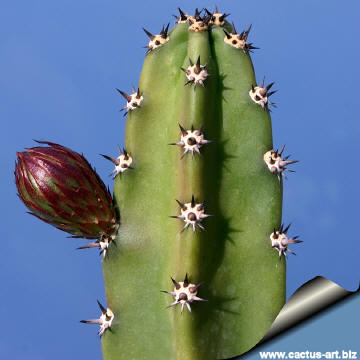
Dark green, up to 6 cm in diameter.
Ribs: 4 to 6 fairly acute.
Spines:
About
7,
very short more or less equal.
Areoles: 2 cm apart
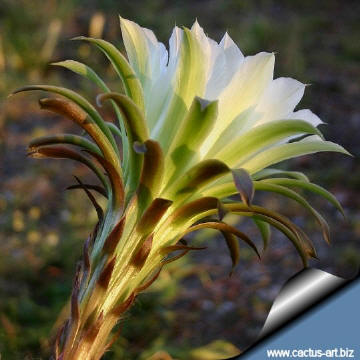
Flowers: Large up to18 cm long (or
more) white, funnel-shaped, strongly scented, with brownish green outer
petals,.
Blooming season: This species produces
abundant blossoms that open nocturnally from spring to autumn. Scales
felty and hairy in the axil.
Fruit: Fleshy tannish-green to
yellowish-red at maturation with areoles, scales and short spines, pulp
white .
The fruits
are rarely seen in cultivation,
since the species is self-sterile, and most plants – even from
different sources - might be coming from the same clone.
Seeds:
Numerous, black.
|
|
 |
 |
|
. |
|
 |
 |
|
. |
|
 |
|
|
H. jusbertii is
considered one of the best stock to use for grafting valuable species
and chlorophyll lacking cultivars of cacti. |
|
Advertising
|
|
|
|
|
Family:
Cactaceae
(Cactus
Family)
Scientific name:
Harrisia jusbertii
(K. Schum.) Britton & Rose
Origin: Unknown, maybe Argentina or Paraguay.
Conservation status: Listed in
CITES appendix 2.
Synonyms:
- Eriocereus jusbertii
(K.
Schum.) Riccob.
- Harrisia 'Jusbertii'
(Rebut
ex K.Schum.) Borg
- Harrisia bonplandii
- Cereus jusbertii
Harrisia bonplandii
is not
valid a synonym of this plant, it is instead a synonym of
Harrisia pomanensis.
NOTE: H. jusbertii
is considered by some to possibly be a natural
intergenic hybrid
between Harrisia
sp.,
probably H. pomanensis, and Echinopsis eyriesii
rather than a pure
species.
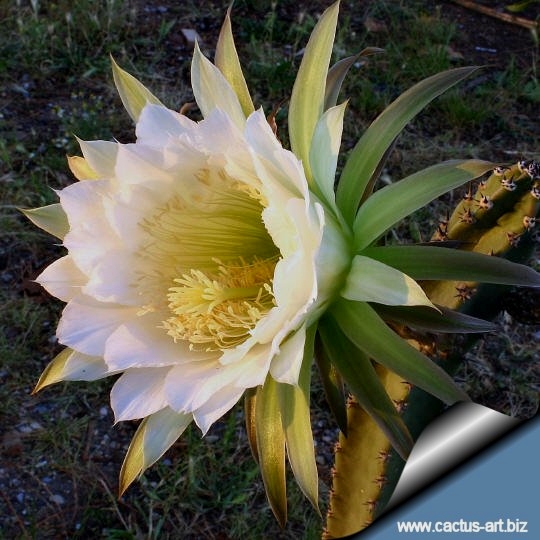
A magnificent flower with a
diameter of 18 cm.
|
|
|
|
Cultivation: This species presents no problems in cultivation and
will do well in a sunny spot in a cactus house. These plants will not
tolerate extended periods of frost;
they can survive to a minimum temperature of -4°C. Grow them in rich, porous, sandy soil and let their
soil dry out between waterings. If potted, repot in the spring if their
roots become cramped. Generally, they should be repotted every other
year in order to provide fresh soil. However, this doesn't necessarily
mean they'll need larger containers. Fill about a quarter of the pot
with broken crocks, gravel, etc. to promote good drainage. After
repotting, do not water for a week or more.
Multiplication: Harrisia jusbertii can be increased
by seeds or cuttings. Cuttings of healthy shoots can be taken in
the spring and summer, Cut the stem with a sharp, sterile knife just
above a bud or shoot (a 7-10cm long tip or branch is most suitable for
propagation) Leave the cutting in a warm, dry place for a week or weeks
(depending on how thick the cutting is) until a callus forms over the
wound. Once the callus forms, the cutting may be inserted into
a container filled with firmed cactus potting mix topped with a surface
layer of coarse grit. They should be placed in the coarse grit only;
this prevents the cut end from becoming too wet and allows the roots to
penetrate the rich compost underneath. The cuttings should root in 2 to
6 weeks.
USE:
Harrisia jusbertii
forms long columns that are great for grafting valuable species of cacti
and - differently from other common grafting stock - don’t induces
plants to elongate out of character and produce weak spination. The
scions on Harrisia don’t grow as fast as the ones grafted on other
tender and stronger stock, but they prosper very easy and can be kept in
dark and cold places in winter. It can easily endure some light frost,
too.

 |
|


 Cultivation and Mail Sale