Home | E-mail | Photo gallery | Mail Sale Catalogue | Grafting Guestbook |  Dictionary |  Winter test | Links | Search

  Thelocactus hastifer CACTUS ART
NURSERY

Cultivation and Mail Sale
of Cacti and Succulents.


This is one of the rarest species of the genus not being represented too frequently in the collections.


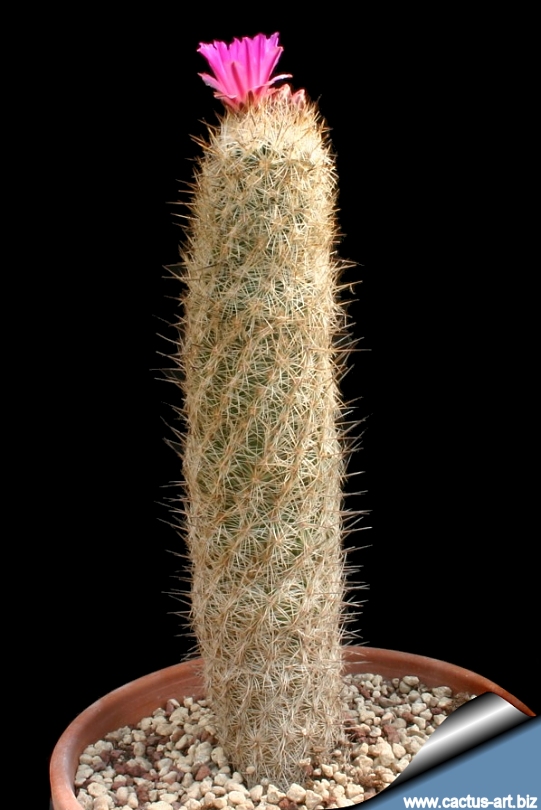
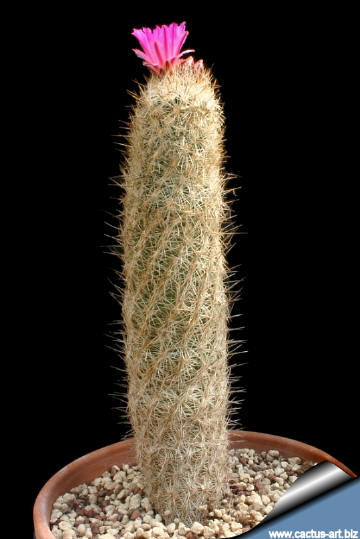
Description: Usually solitary, clustering only after many years, from the base, cylindrical cereoid stem, erect or decumbent, 10-40 cm tall , 2,5-5 cm in diameter
Ribs: 18, vertical or spiralling divided into rounded tubercles sometimes with or sometimes without extrafloral nectaries.
Spines: Central spines 4-5, 10-26 mm long, white to black, straight, acicular. Radial spines 20-25, 12-15 mm long, white, straight, acicular.
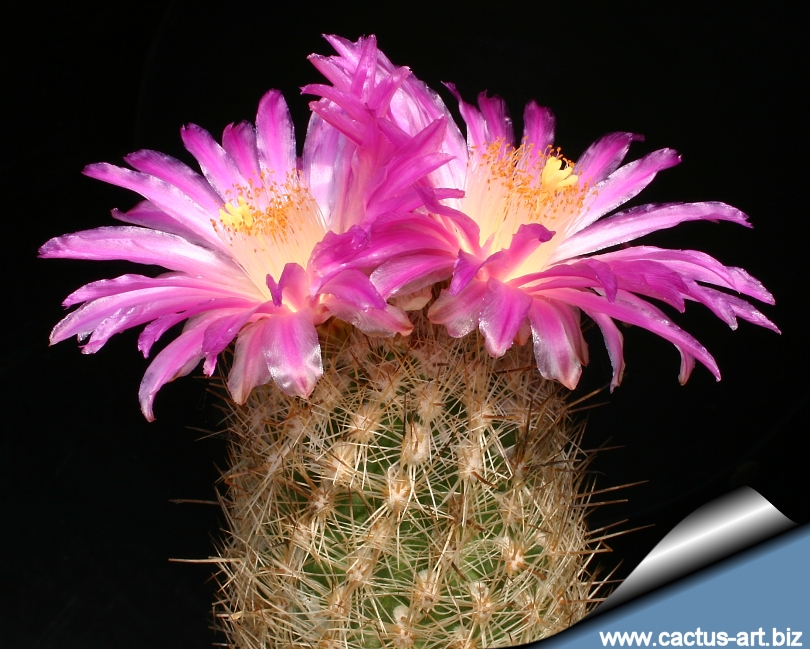
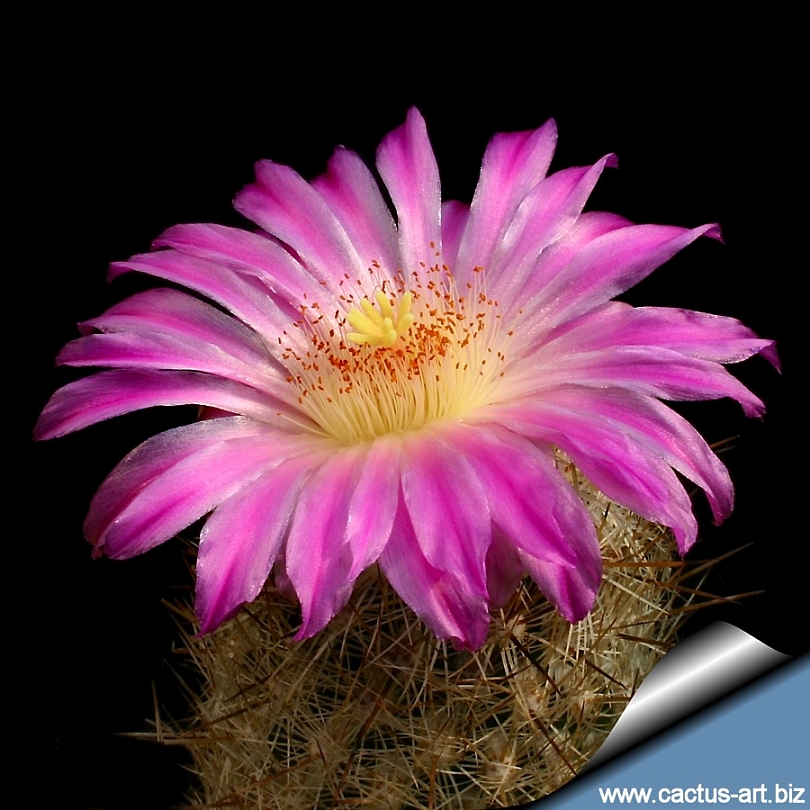
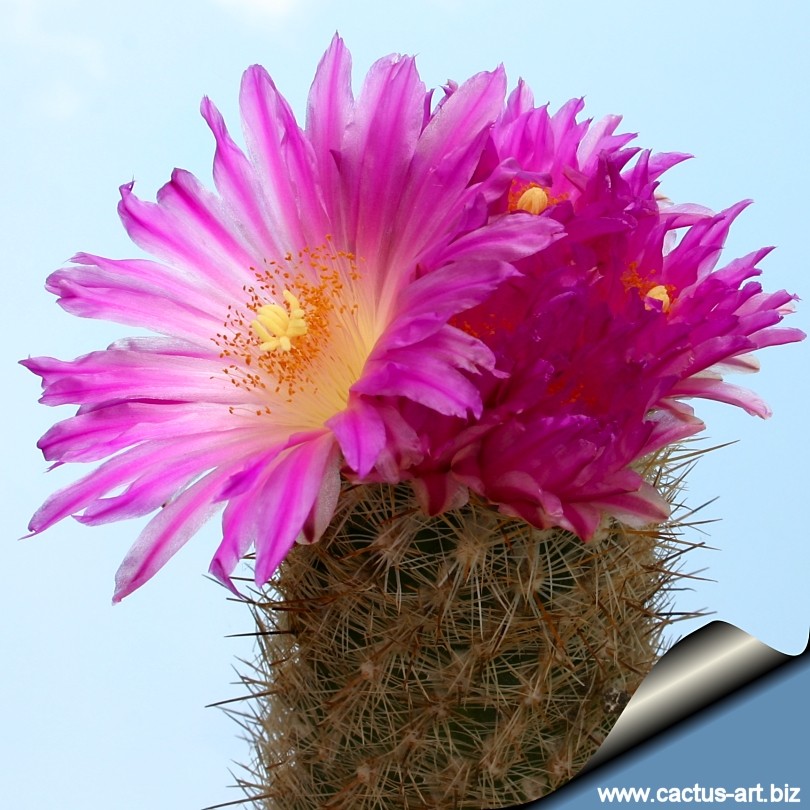
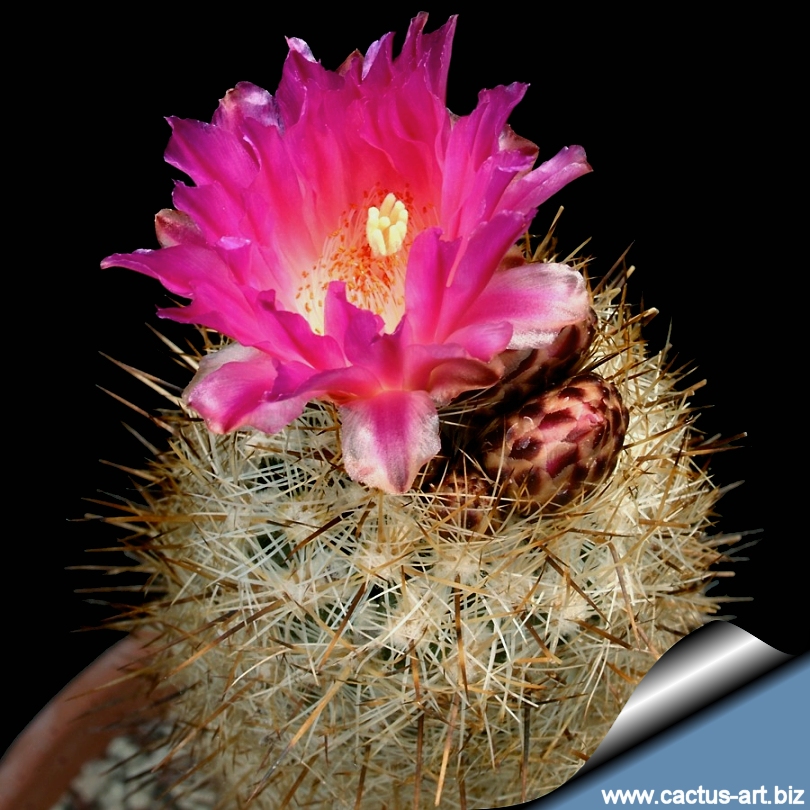
Flowers: 35-75 mm wide, magenta, with paler throat.  They appear in the spring.
Roots: have a tuberose swollen root
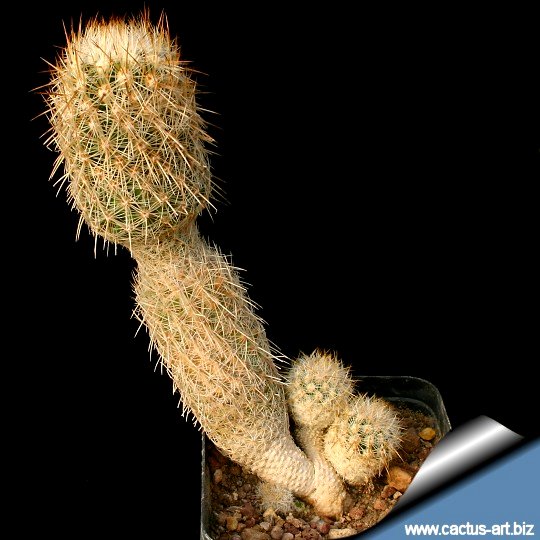
Note: At the base the plant body has a very thin collar that cannot bear the weight of the stem, so eventually it grows lying on the ground. (it is a good hanging like Thelocactus)


Cultivation: Easy to cultivate, but very slow growing. Water regularly from Spring to Autumn, but do not over-water (root prone).  It needs good drainage and very porous potting mix.  In Winter, keep dry.
Sun Exposure: Full sun to light shade


Reproduction: From seed, since the plant rarely produces plantlets.


Family: Cactaceae (Cactus Family)

Conservation status: Listed in CITES appendix 2.
 

Scientific Name: Thelocactus hastifer (Werderm. & Boedeker) F. Knuth
Published in: Backeb. & F. Knuth, Kaktus-ABC, 360 (1935).

Basionym: Echinocactus hastifer Werdeman. & Boedeker,
Published in: Notizbl. Bot. Gart. Mus. Berlin-Dahlem 11: 274 (1931)

Synonim:  Ferocactus hastifer N.P. Taylor,
Published in: Cact. Succ. J. Gr. Brit. 41: 90 (1979).

Origin: Mexico, occurring at about the southernmost limit of the genus in Querétaro (between Cadereyta and Vista Hermosa (a small village at the edge of the barranca of the Rio Moctezuma).

Habitat: grows in the matorral xerofilo on fairly steep limestone hills at 1800-2000 m elevation. The plants often collapse, or rather recline, under their own weight, coming horizontally out of cracks in large rocks, the growing point straining to keep upright. Because of its very restricted occurrence, it is considered an endangered species.


Even the young seedlings may be immediately distinguished from the other Thelocacti: from the very beginning their growth is elongate instead of globose.


The wide, magenta flowers appear in the spring.


Photo gallery: Alphabetical listing of Cactus and Succulent pictures published in this site.

Photo gallery Thelocactus


A Special Thanks to all Those Who help us to make this web site
This plant description is based on research and personal experiences and is too short to provide a comprehensive coverage of the subject. Do you see an error in what is shown? Or do you know more about the species than we are showing? Your help is greatly appreciated. Why not send us an email with further information or photos so that we can correct or extend the information provided?

The photos in  this site are subject to copyright. Images may not be copied, downloaded, or used in any way without the expressed, written permission of CACTUS ART nursery and the original photographer.

Home | E-mail | Photo gallery | Mail Sale Catalogue | Grafting Guestbook | Dictionary |  Winter test | Links | Search