|
|
|
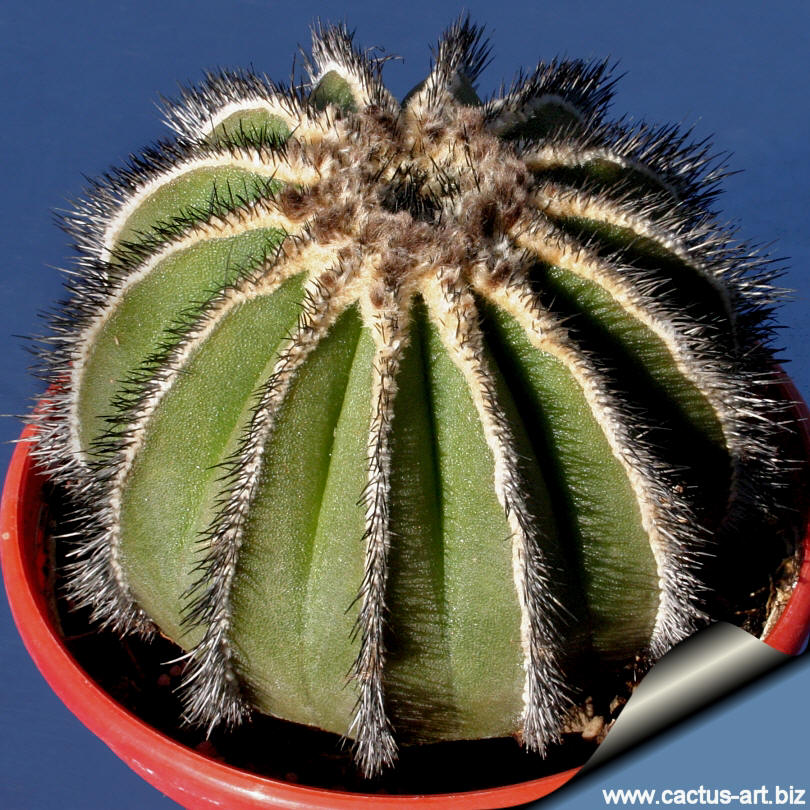
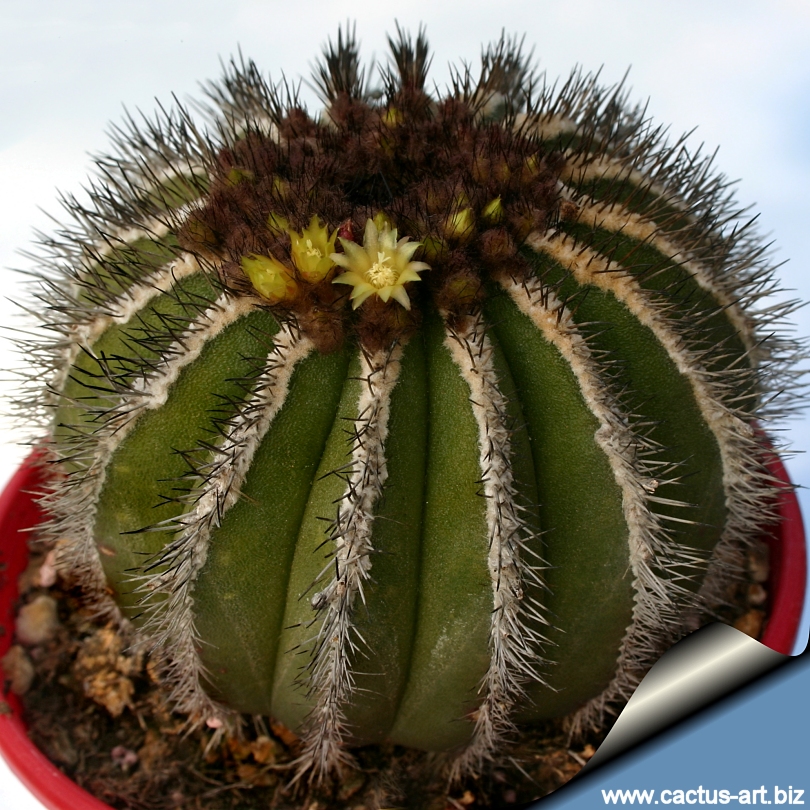
This is one of the most striking and recognisable Uebemannia with
a green to deep purple or reddish-brown, firm, almost lizard-skin textured 'skin'
and spines on vertical ribs.
|
|
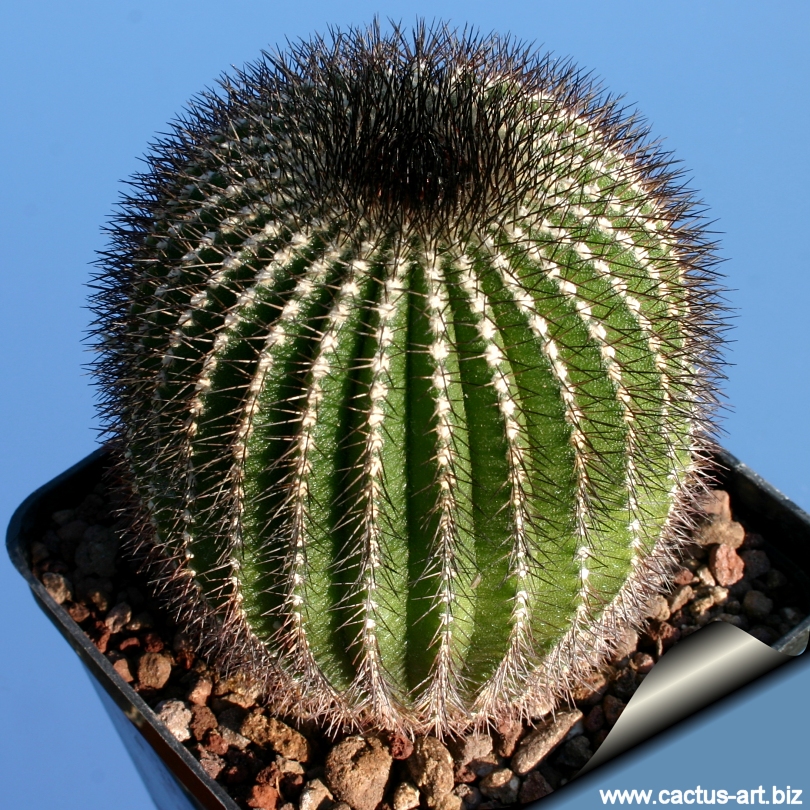
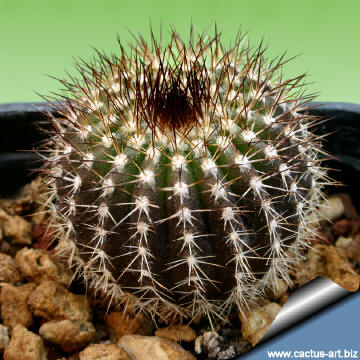
Description: Solitary cactus 50(-80)cm tall.
Stem: Although usually globular or slightly elongated in
cultivation, it is reported to grow to as much as 800mm tall and 10-15
cm wide. It is dark reddish-green to reddish-brown, with off-white
scales. (In cultivation the colour of the plants depends on sun
exposure, the plants grown in shadow are green with white stripes, while
the ones in full sun take on a dark frost brown or purple colour)
Ribs: 15 to 18, vertical and prominent.
Areoles: Set closely to form an almost continuous felt-like line
down the ribs' sides.
Central spines: Dark brown/grey, 1 to 4, up to 1.5(-2) cm long;
the spines are close set, neatly arranged, straight, and give a comb-like
effect.
Radial spines: Absent.
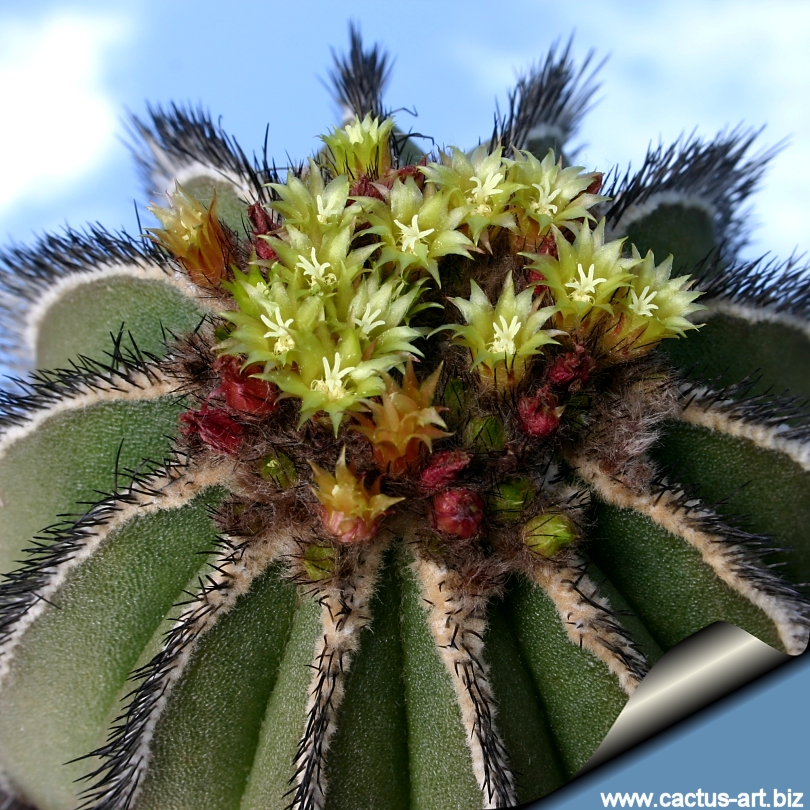
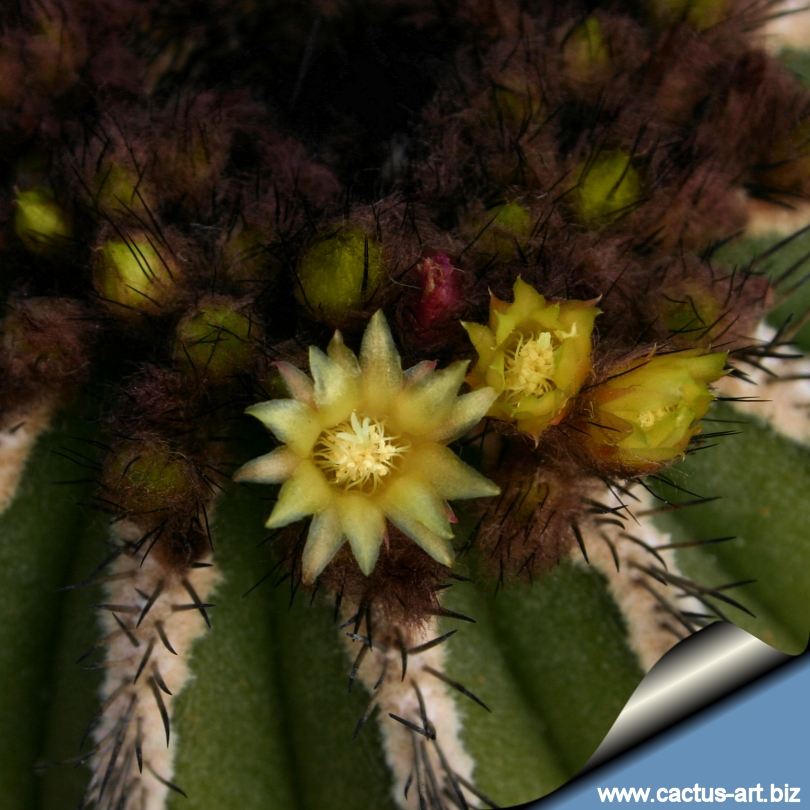
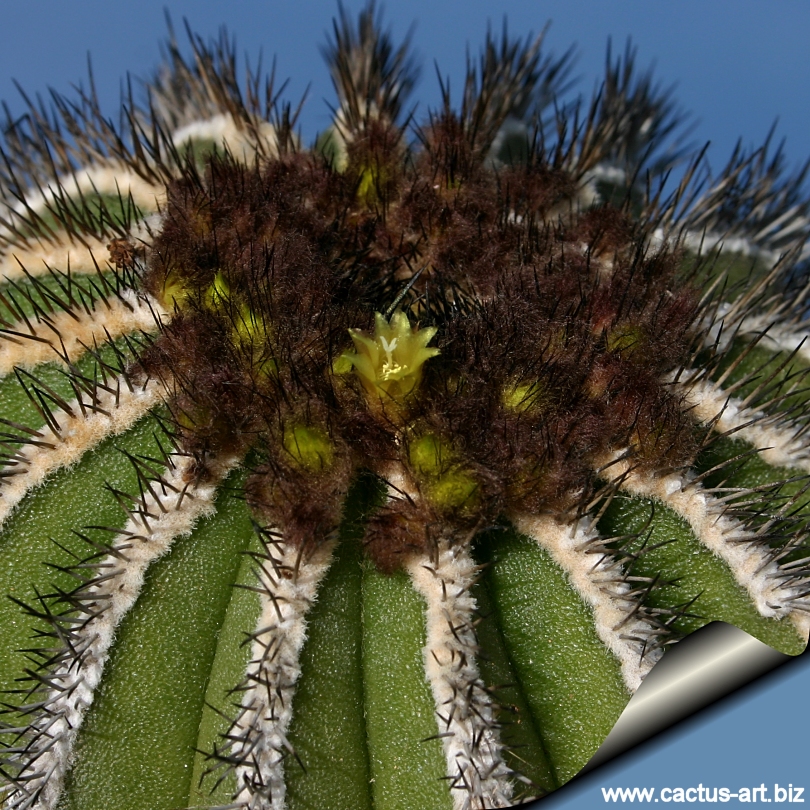
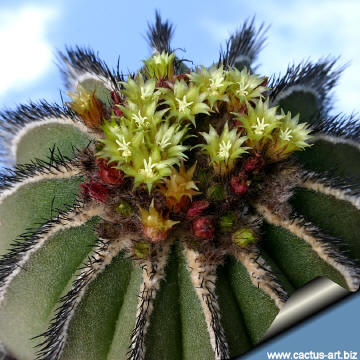
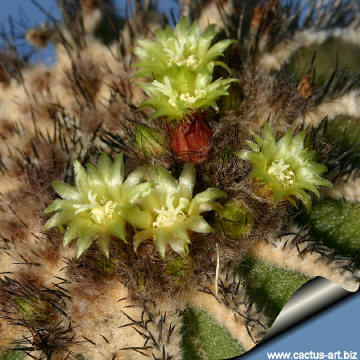
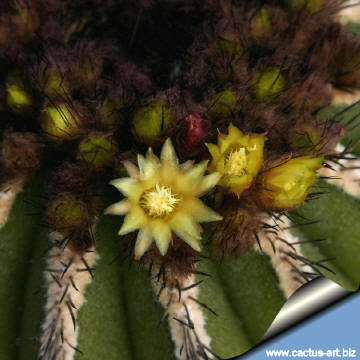
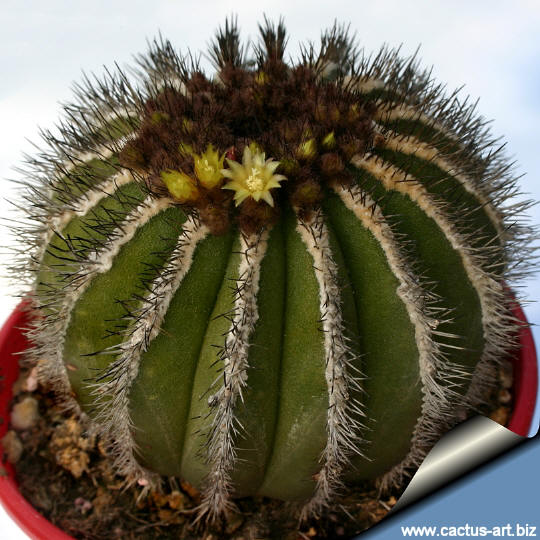
Flowers: Diurnal, funnel-shaped greenish yellow. They are 15 mm
long, 12 mm in diameter.
Blooming season: Flowers come sporadically from Early spring to
Late Summer
Remarks: The Uebelmannia pectinifera and all the
other plants belonging to the Uebelmannia pectinifera complex
are very variable in habitat,
it has three recognized
subspecies, but a
multitude of different forms exist, where each form is linked to others
by populations of plants with intermediate characteristics.
-
subsp. pectinifera:
It has about 18 ribs and slowly grow up to 50 cm in height. Origin: It
comes from the mountains in the higher part of the areal.
-
subsp.
flavispina: It has up to 29 ribs and can grow about 35 cm
tall. Origin: west of Diamantina.
-
subsp. horrida:
Stem with more than 23 ribs (up to 40) it is the taller of the three
and can reach 1 m of height. Origin: Serra do Espihaço.
|
Summer |
Winter |
|
 |
 |
|
 |
|
|
Cultivation: This tropical cactus loves warm moist, humid
conditions and mist spraying is a must in summer. Water regularly during
the growing season and use a very draining mineral potting substrate. At
the onset of winter, do not water. Uebelmannias need heat all year round
and extra winter heat, minimum 10C is best. Avoid any frost. Keep cool
in summer. This plant prove to be root prone if kept too cold in winter.
To help stop this, a good deep collar of pumice or lava grit is an
excellent idea. It prefers a position in
full sun, and possibly afternoon
shade in summer. If you can place it so that this occurs, the plant will
be much happier.
Propagation: Seeds, but plants are often grafted, making them
easier to grow, particularly through the winter. If possible using
a rootstock that is more hardy than the Uebelmannia is ideal.
Advertising |
|
|
|
|
Family:
Cactaceae (Cactus
Family)
Scientific name:
Uebelmannia pectinifera
Buining 1967
Origin: It is only known from one location,
north east of Diamantina, mountain of Minas Gerais, in Brazil.
Habitat: The plants are found growing in dry savanna and
rocky areas in rock cracks or in pockets or small flat areas of organic
leaf mould and sand found among rocks at about 1000m altitude. It is
threatened by habitat loss. U. pectinifera is more common in
collections than it is in habitat
Conservation status: Listed in
CITES appendix 1.
Etymology: The species name "pectinifera" comes
from the Latin for "bearing combs".
|
|
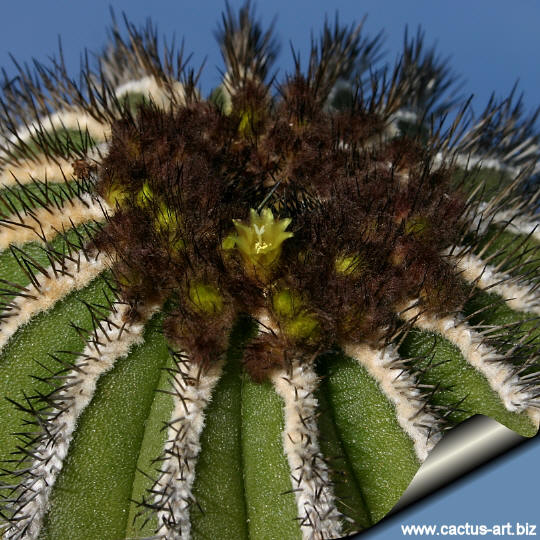
The flowers come sporadically from Early spring to
Late Summer
|
|
|
|
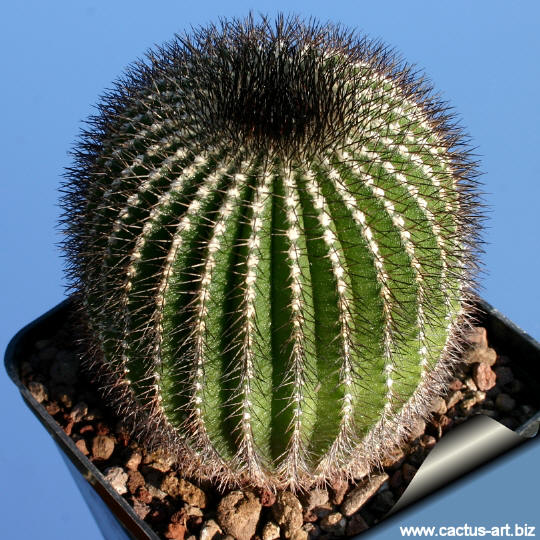
Uebelmannnia pectinifera
HU106 5km Mendanha, Minas Gerais, Brazil Altitude 770m.
|
|
|
|
Photo of conspecific
taxa, varieties, forms and cultivars of
plants belonging to the Uebelmannia
pectinifera
complex
(This
Taxon has lots of synonyms ( like
many other cacti) with several controversial
varieties and subspecies, and comprises a
multitude of different forms, but where each form is linked to others by
populations of plants with intermediate characteristics):


|
|


 Cultivation
and Mail Sale
Cultivation
and Mail Sale