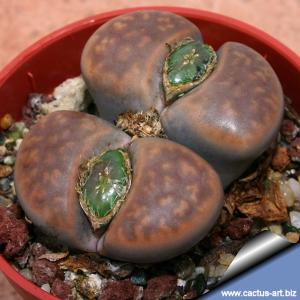
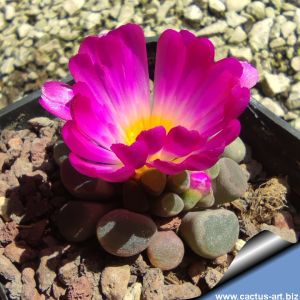
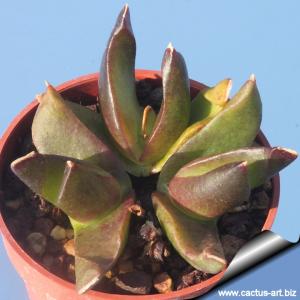
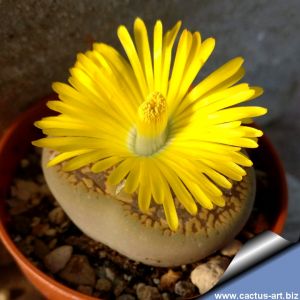
-
1
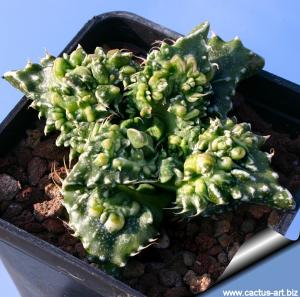
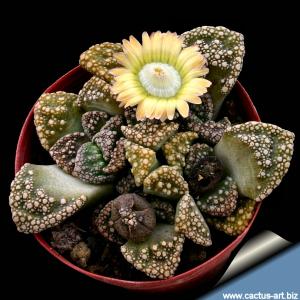
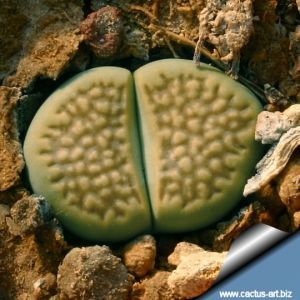
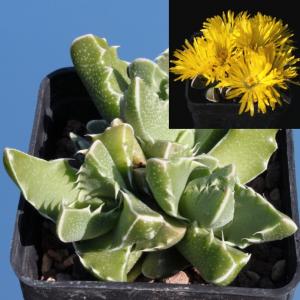
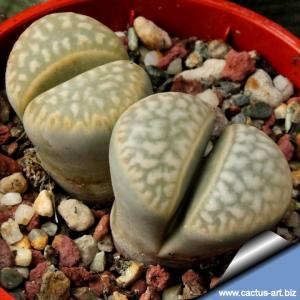
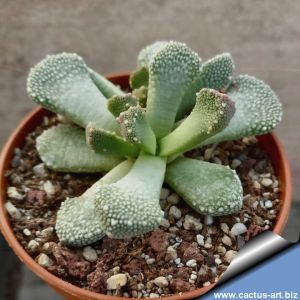
Instantly recognizable—its upper leaf surface is thickly studded with prominent white tubercles. Truly distinctive.
-
2
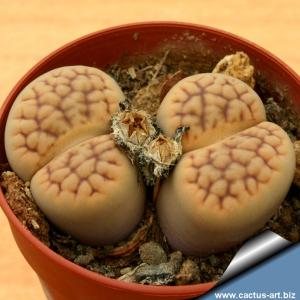
Back cross between a Lithops and a Dinterops (Lithops x Dinteranthus vanzylii hybrid). Surprising and easily grown.
-
3
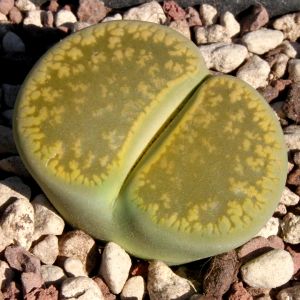
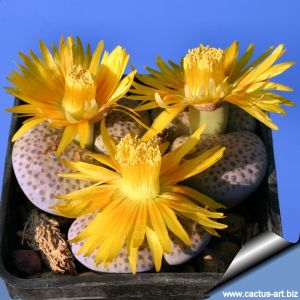
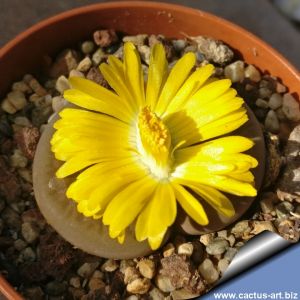
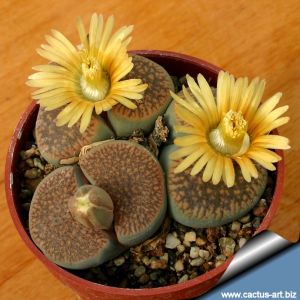
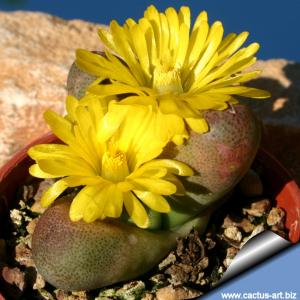
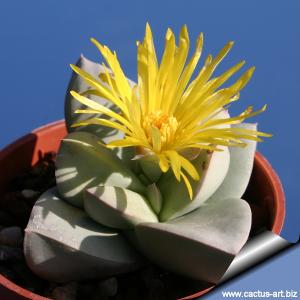
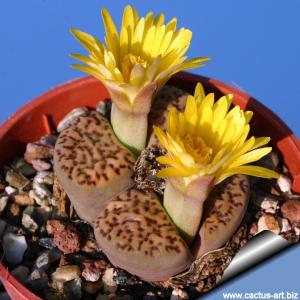
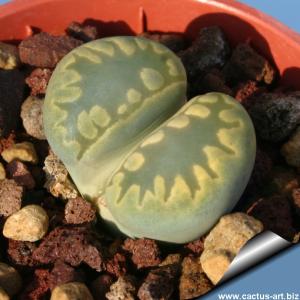
Detailed upper surface in green and yellow hues, along with bright yellow blooms. It gradually produces offsets, usually forming groups of 2–5 heads, though occasionally more than a dozen.
-
4
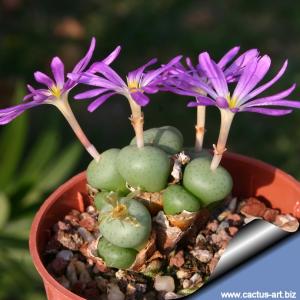
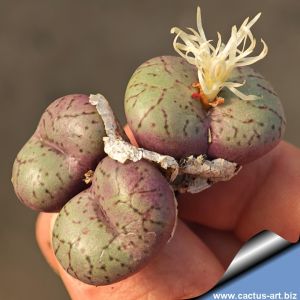
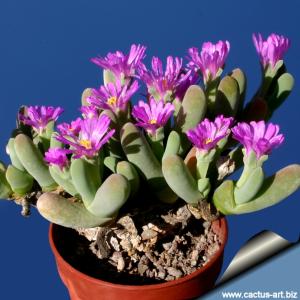
C. minutum is aptly named for it is only 1 cm tall body, it is in fact one of the smallest or dwarf succulent that offsets readily forming small clumps. Produces a profusion of violet flowers in autumn.
-
5
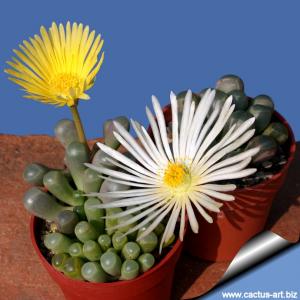
Commonly called "Baby Toes" has small club-shaped leaves with fenestrate ends and form large clumps by offsetting. Flowers colours range from pure white to rich golden yellow.
-
6
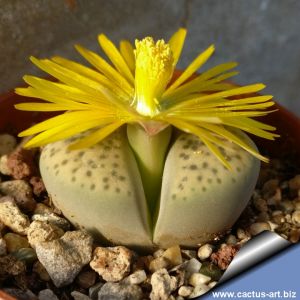
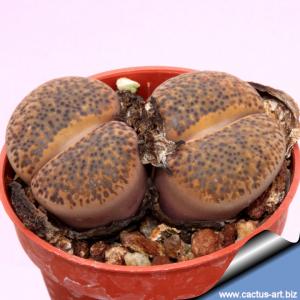
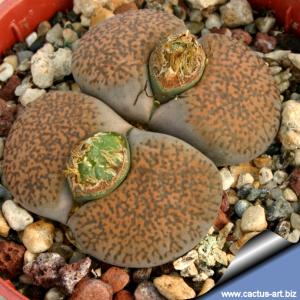
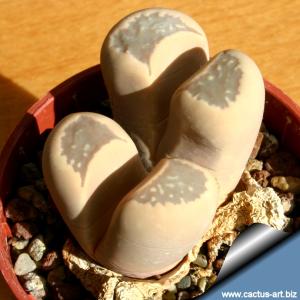
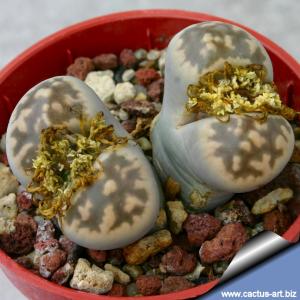
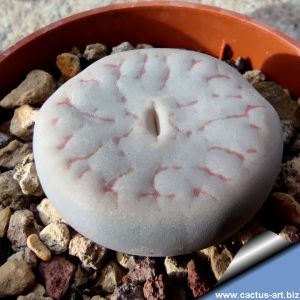
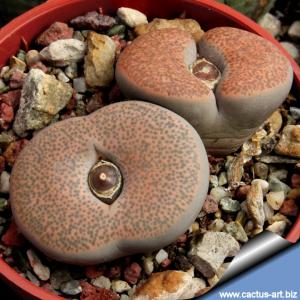
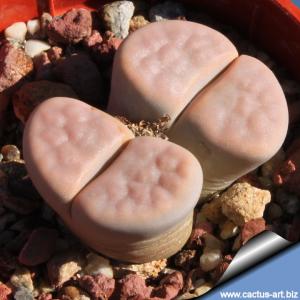
Distinctive variety featuring a grey stem and a milky pink-grey upper surface, covered in grey dots and occasionally traced with delicate red lines.
-
7
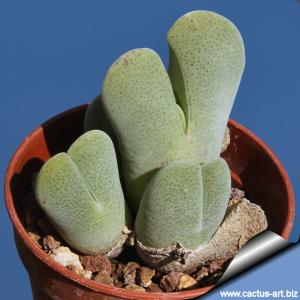
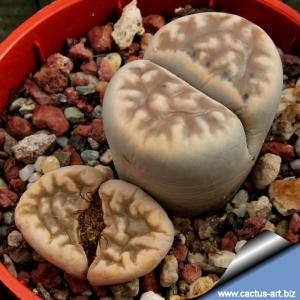
Very peculiar small convex form with a relatively smooth surface without the large raised dusky dots which characterize the type variety.
-
8
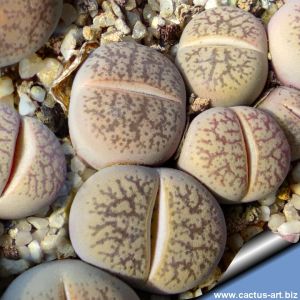
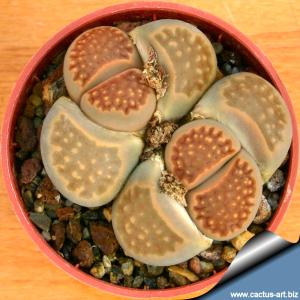
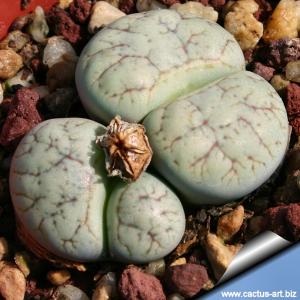
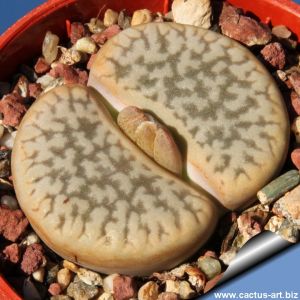
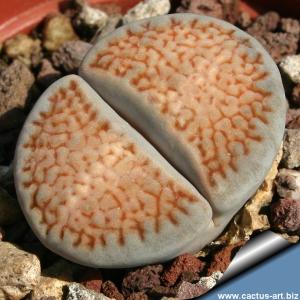
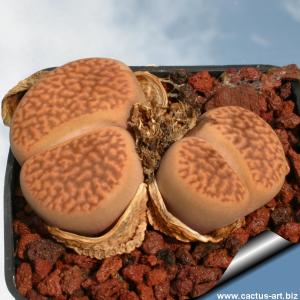
Reticulated upper surface in grey-orange, ochre, and red-brown tones. Produces white flowers in autumn.
-
9
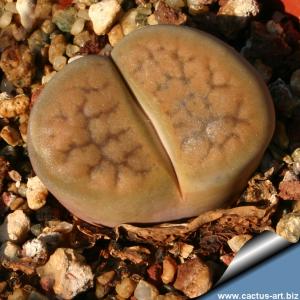
A striking rusty-brown sheen overlaid with darker brown veining—truly eye-catching! Blooms with yellow flowers in autumn.
-
10
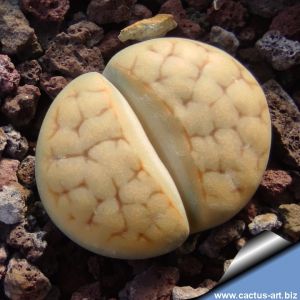
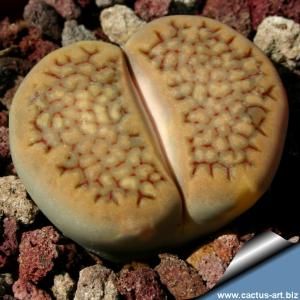
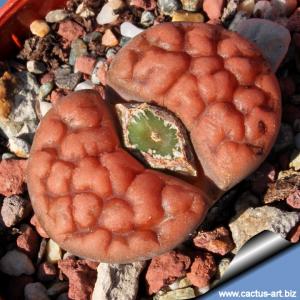
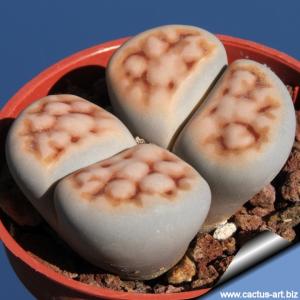
A striking variety that mimics the look of coarse orange stones. Its upper face—beige to pale orange—is textured and marked by sunken reticulations in a deeper orange hue.
-
11
-
12
-
13
This species has very handsome, soft to the touch and shining body with tiny dots all over. It stays small (2-3 cm wide) and forms mounds of purple or reddish-brown grapes.
-
14
-
15
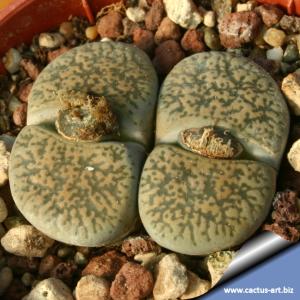
Against an ochre-beige background, translucent dots — dark green or brown — appear either distinct or merged into thin lines, forming a delicate pattern.
-
16
A miniature, charming Lithops featuring a distinctly convex top surface etched with recessed dark lines. Yellow flowers. Highly uncommon and strikingly lovely.
-
17
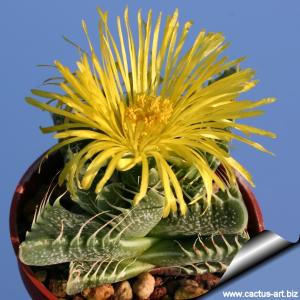
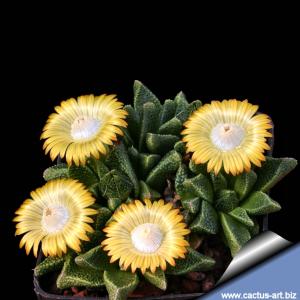
Gray-green leaves, slightly warty, tipped with slender reddish-green teeth resembling tomato hornworms—a distinctive texture that makes the plant instantly recognizable.
-
18
Basal rosettes of blue-green to grey leaves topped with variable whitish, ochre, red or bluish crusts. Confined to limestone habitats, it is a remarkable case of plant camouflage, merging seamlessly into its environment.
-
19
Var. susannae is distinguished by a less reticulate top in various shades of obscurely translucent grey-green, greenish grey, brown, or orange-brown, sometimes more intensely colored along the margins. Yellow flowers in autumn.
-
20
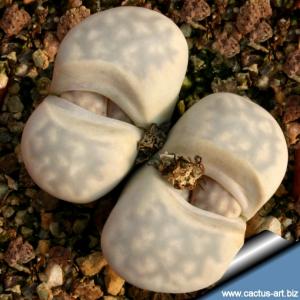
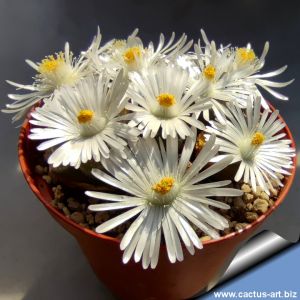
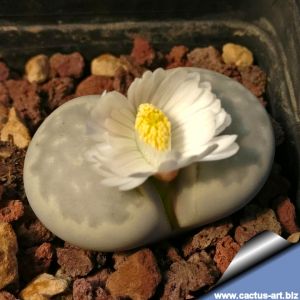
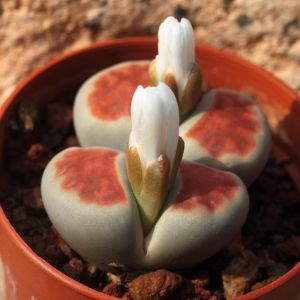
They have a nearly white stonelike body and top with pale grey blushes, some specimens are opaque whitish-grey and almost uniform in colour. They produce a single white daisy-like flower that emerges from the fissure from mid-summer through Autumn.
-
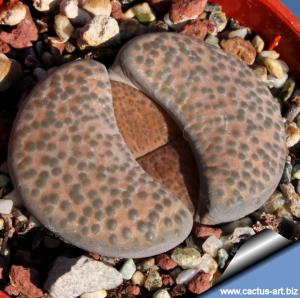
21
-
22
Raised grey-pink lobes marked by zigzagging lines.
-
23
This is one of the easiest species. Some people consider it one of the most tolerant of overwatering.
-
24
mustardy tops .
-
25
-
26
Warm orange colors, truncate.
-
27
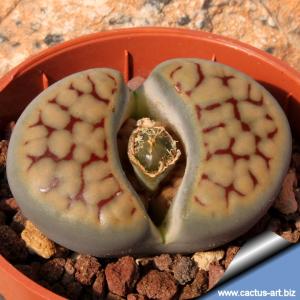
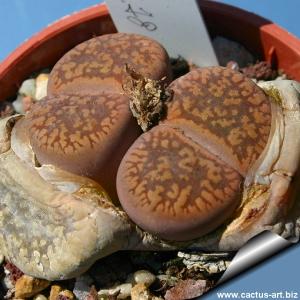
Beautiful! Light brown window with thin dark brown lines - one of the best!
-
28
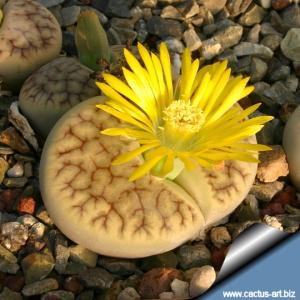
Intermediate between L. salicola and L. halli it has a large fine reticulate brown windows.
-
29
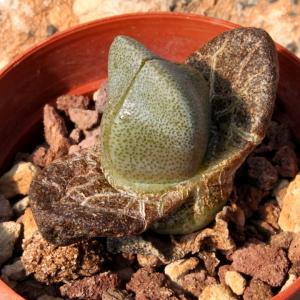
Pale green freak.
-
30
Nice form of Lithops hookeri with rich orange coloration characterized by large island and coarse network of grooves on the top face. Flowers are Yellow in late summer.
-
31
The more distinctive feature of this "pallid" greyish-white plant is a brown 'lip-smear' along the inner margins. The lip-smear occurs occasionally as a narrow edging or lining all along the outer margins.
-
32
Popular clump-forming species with thick, green triangular leaves with up to ten pointed, soft recurved "teeth" along the edges, making them look like open jaws. Flowers are yellow and last for a very long time in autumn.
-
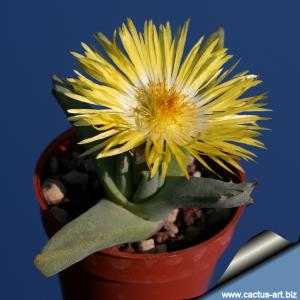
33
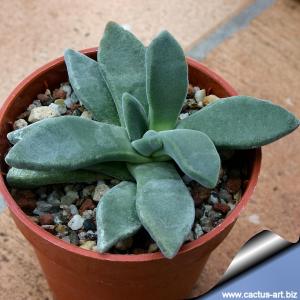
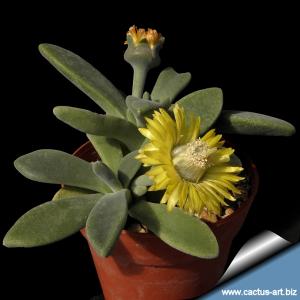
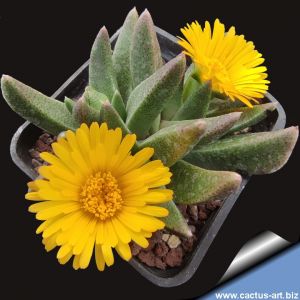
Long, thick taproot that can be partially raised from the substrate to create a miniature succulent bonsai effect. Grey, velvety leaves covered in soft down. Bears yellow, honey-scented flowers.
Cold hardy to -23 °C.
-
34
“Spectabile” means “the best.” Small succulent bodies bear refined markings, varying in both patterning and floral color intensity. Its night-blooming flowers release an exquisite perfume.
-
35
Very nice free blooming succulent. Often found growing among quartzite stones.
-
36
-
37
Medium-small Lithops. The face is opaque slightly rugose with channels reduced to mini-windows. Shoulders, margins and islands orange-brown. Windows and channels transluscent reddish-brown with dull blood-red rubrications.
-
38
Distinctive grey-green, slender leaves resembling tiny sharks. Produces a profusion of long-lasting purple flowers.
-
39
Great succulent bonsai: this species is sought after by bonsai impassionate as it will form large rootstock (caudex) in time, the thick root and trunk eventually can be trained to the shape of a odd mini-bonsai.
-
40
Very wide jagged windows.
-
41
A dark form with mottled orange-grey top.
-
42
t is one of the nicest window-leaf succulents and very popular as the shape of the leaves is truly unique and when in flower the magenta petals with lighter centres are particularly showy.
-
43
-
44
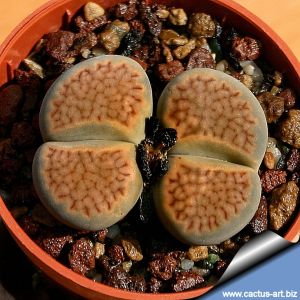
Robust. Light hazelnut with mahogany-colored reticulation.
-
45
This cultivar originates from a single specimen collected by D.T. & N.A. Cole. It features dark metallic grey-green windows edged with pale avocado-cream margins, grooves and inner islands..
-
46
-
47
-
48
Dark rusty grey body.
-
49
-
50
-
51
Dinteranthus microspermus is a small stemless succulent that grows above ground. As it ages it forms small compact groups with 3-7 branches up 2 to 3 cm high, each with a single leaf-pair in the resting state.
-
52
This is s a mimicry plant know as "African living rock" or “Splits rock” because it imitates split chunks of granite (especially if grown in full blazing sun) It resemble stones so closely that it can only be found with difficulty.
-
53
This delicate succulent features fleshy, fuzzy leaves and strikingly large, bright yellow flowers that unfurl in the late afternoon. Blooming between 3 p.m. and 9 p.m., the flowers open at twilight, creating an enchanting display.
-
54
A very attractive Lithops with a bright brick-red or rusty red top, featuring a highly recognizable and eye-catching appearance. Its intense coloration gives it remarkable ornamental appeal and places it among the finest forms.
-
55
-
56
Beautiful white & pink flowers in spring.
-
57
-
58
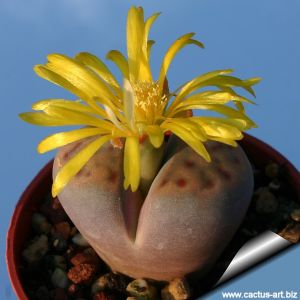
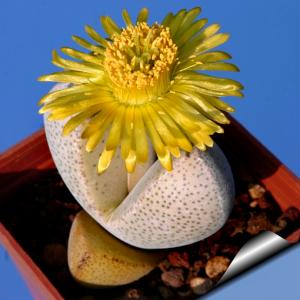
Dull grey-pink to light ochre top with relatively large raised grey dots resembling tiny water drops or craters. Yellow flowers, sometimes very large for the body size.
-
59
Rusty, deep lines.
-
60
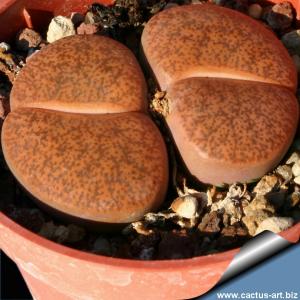
Many red spots.
-
61
-
62
Colored like earth, densely speckled with light dots on an ochre-grey apex. Bears a bright yellow flower.
-
63
-
64
Leaves widen toward a more or less triangular or recurved apex. Thick, light bluish-green, both surfaces finely warty, upper surface with white crust. Margin bears 5–6 evenly spaced pink tubercles.
-
65
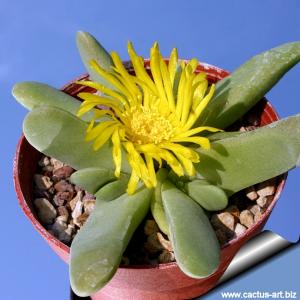
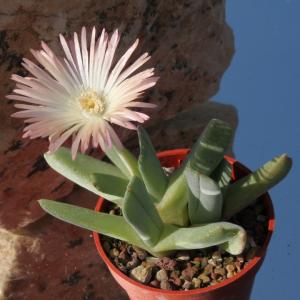
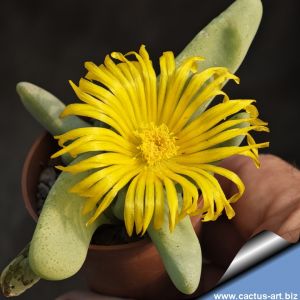
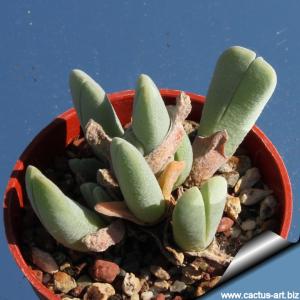
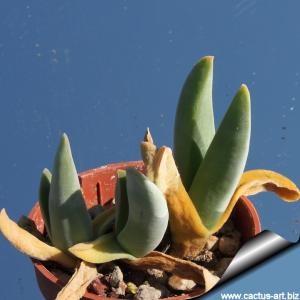
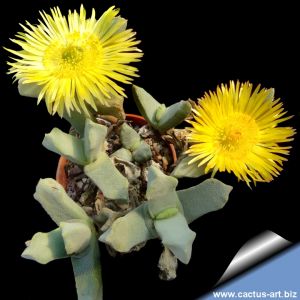
A miniature stemless succulent forming clusters, with soft, club-like or tongue-like leaves pressed to the soil in two opposite rows. Colour ranges from grey-green to blue-green, whitening under intense light. Produces large yellow blooms in autumn.
-
66
Purple flowers, smooth leaves.
-
67
Pink flower, hooked curved leaf.
-
68
Wonderful dwarf! Big yellow flowers.
-
69
A beautiful dwarf form with leaves speckled in dark green. An exceptionally hardy plant, also ideal for beginners—it thrives in rock gardens and tolerates severe winter frosts.
-
70
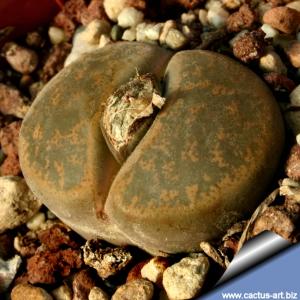
Grey-pink body with a uniformly grey-orange upper surface, sometimes faintly mottled with beige, orange or brown on flat and sunken areas.
-
71
-
72
Orange grey body with thin dark brown lines.