|
|
|
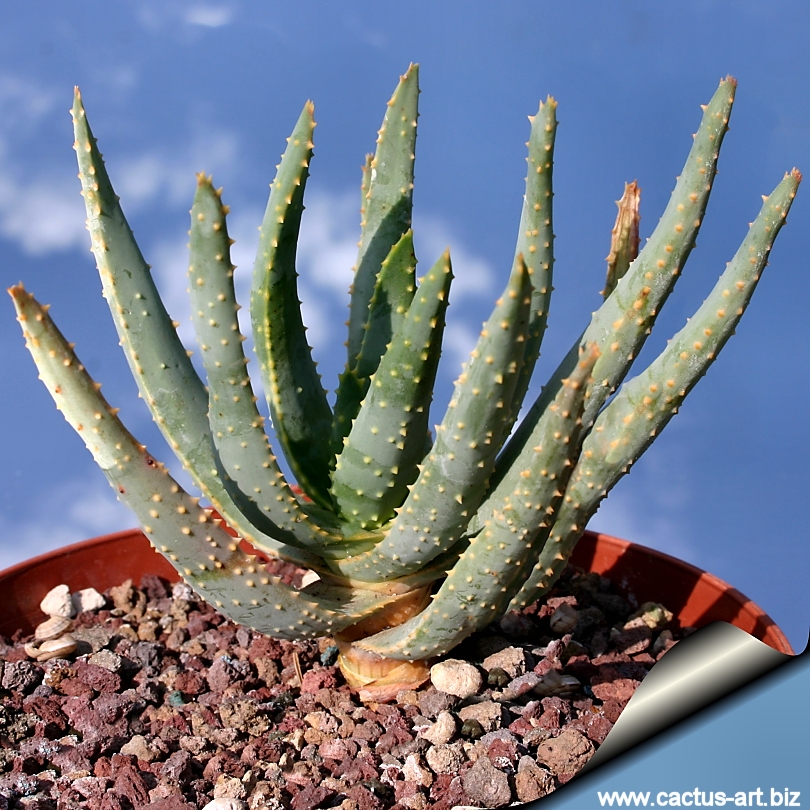
Aloe dichotoma (A youn specimen)
These sculptured succulents can grow 3 - 4 m, sometimes to 7 m
tall with a base 90 cm in diameter. The slow growth rate and relative
rarity of the plant make it a particularly expensive specimen.
|
|
.Description: It is probably the best known aloe that form an
extremely tough tree with densely rounded crown as a result of the
repeatedly forked branches. It is one of the biggest members of the
genus Aloe and may reach an age of over 80 years and a height of
approximately 7(-9) metres with up to 1 m of diameter at ground level.
This is one of the most branched and tree-like species of aloe.
Stem: Smooth, covered with a thin layer of whitish powder that helps
to reflect away the hot sun's rays. Typically, the trunk tapers from a
thick base towards the top and begins to branch and re-branch
dichothocomously at about half way up the trunk, earning the plant
its specific epithet for this dichotomous pattern. The bark on the trunk
is rather hard and forms beautiful golden brown scales, but beware, the
edges of these scales are razor sharp. The
pith is soft, light and spongy.
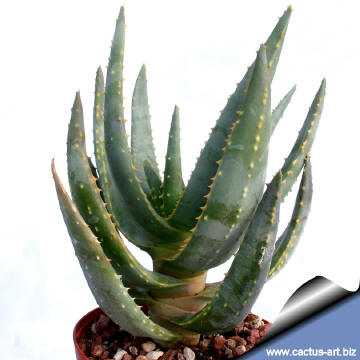
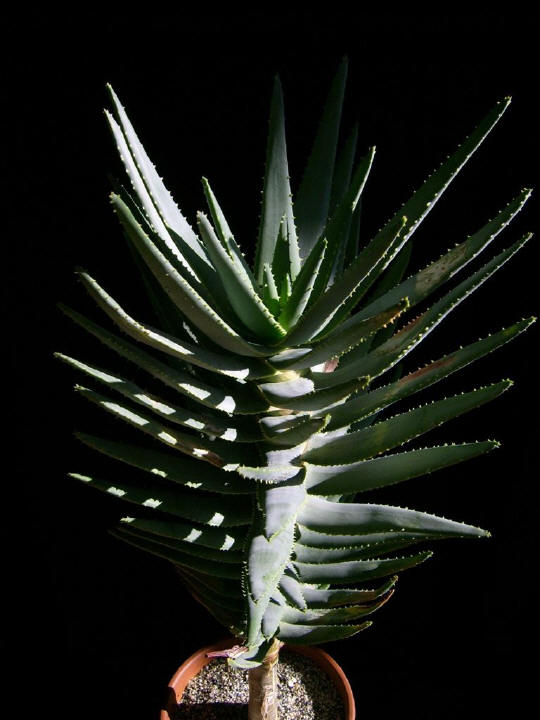
Leaves: About 30cm long and 5cm wide, blue-green, fleshy, bearing a
narrow brownish-yellow margins margin of thorns. Leaves are arranged in
a spiralled terminal
rosette in old plants, but in juvenile plants they are ranked in
vertical rows. These rosettes at the tips of the forked branches usually
form a dense, rounded crown. In this species the old dry leaves drop off
so that the leafy rosettes only remain at the tips of the branches,
leaving the rest of their length clean.
Roots: It has a spread-root-system the roots are somewhat fleshy.
Flowers: The flowers are branch
panicles up to 30 cm tall from the base of the
peduncle to the apex of the terminal of the raceme. They are bright
canary yellow, held close to the leaves, at the tips of the branches,
and are fairly short and carried erect. The flowers are rather short and
rounded in shape and not nearly as showy as many other species of aloes.
Blooming season (Europe): Flowers are borne in winter (December
to January). They have their first flowers when they are about 20 to 30
years old.
|
|
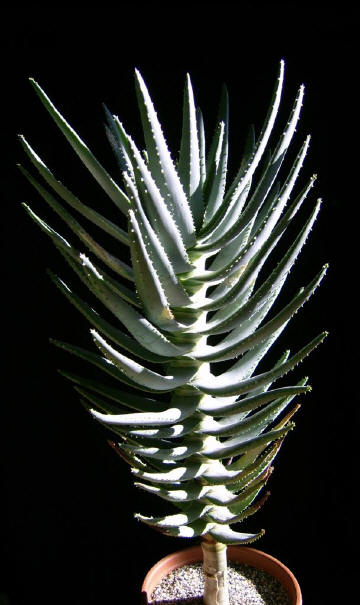
Photo and ©
copyright by
Mladen Turcinovic (Croatia) |
 |
|
Propagation: Almost
exclusively by seeds planted in autumn, in trays of coarse river sand.
Truncheons (if available) can also be used for propagation. Truncheons
must be dried out for at least 3 weeks before planting in river sand.
This is quite a difficult alternative and success is not always
guaranteed.
USE: The young flower buds
can be eaten and have a similar appearance and taste to asparagus.
|
|
Advertising
|
|
|
|
|
|
|
Family: Asphodelaceae
Scientific name:
Aloe dichotoma Masson
In: Philos. Trans. 66: 310, 1776
Common Names include: Quiver tree. (Two other
closely-related aloe species carry the name quiver tree: Aloe
pillansii, the giant quiver tree, and Aloe ramosissima,
the maiden quiver tree)
Origin: South Africa northern Cape region and Namibia.
Namaqualand and Bushmanland. from near Nieuwoudtville northwards into
Namibia and eastwards to Upington and Kenhardt.
Habitat: It occurs in desert and
semi-desert rocky areas where it receives rainfall, if at all, in the
winter. It mostly occurs in black rock formations (called "ysterklip")
which absorbs a lot of heat during the hot summer. (Average summer temp.
is 38°C). The rocks anchor the plants which have a spread-root-system.
The quiver tree is proof against frost.
Ecology: The copious nectar of its blossoms draws birds and
insects as well as baboons that can strip a tree of its flowers in a
short time. Being one of the only tree forms in its arid habitat,
Aloe dichotoma oftentimes plays host to huge colonial nests of
social weaver birds. The plants are usually found growing singly but in
some areas the plants grow in large groups, giving the effect of a
forest.
Etymology: The species name, 'dichotoma', means
'divided in two' and refers to the way the branches divide,
repeatedly forking in two.
Synonyms:
- Aloe montana Schinz 1896
- Aloe ramosa Haw. 1804
- Rhipidodendrum dichotomum (Masson) Willd. 181
|
|
|
Cultivation: Easy
to grow, requiring very little care. It can be grown in large
containers. Always use a good quality, loamy sandy soil with plenty of
drainage chips at the bottom of containers. It tolerates weekly watering
in the summer; once a month, or not at all in the colder months of
December and January. Can withstand long periods of drought, but they
will thrive and flower more profusely if watered in the correct season.
Incorrect watering, poor drainage or too much shade can lead to attack
by pests and diseases. They can take a few degrees of frost in winter as
well, but prefer hot summers. It grows much better outdoors in spring
and summer.
In mild climates it can be cultivated outdoors for use in landscaping,
preferably planting it in hot and dry rock gardens. They will grow best
in regions with a climate close to that of their native deserts – not
too cold, and not too wet. They grow slowly, but not agonisingly so –
being able to increase their height by 10 - 20 cm per year under
favourable conditions.
|
|
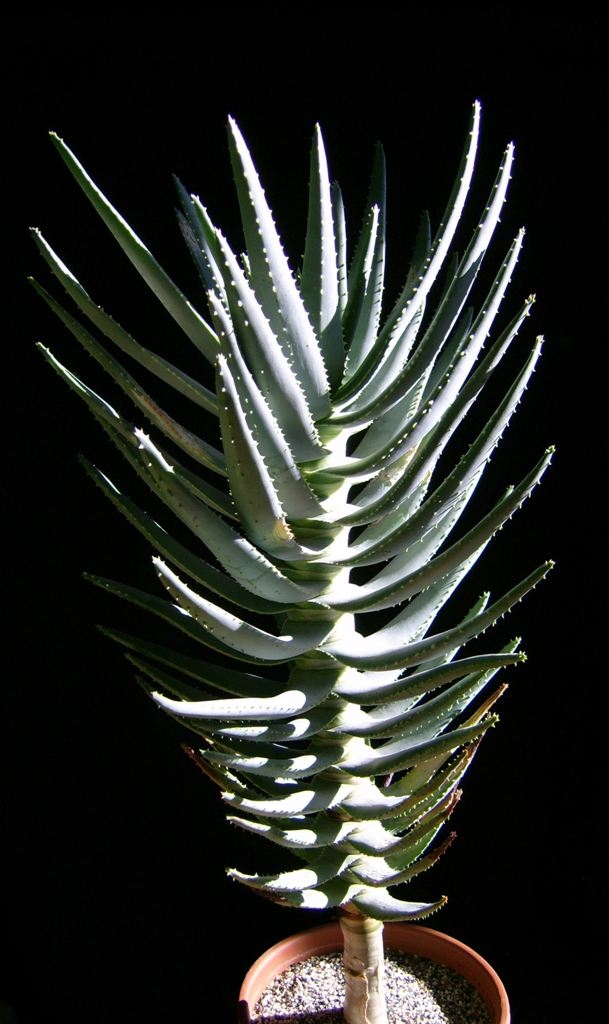
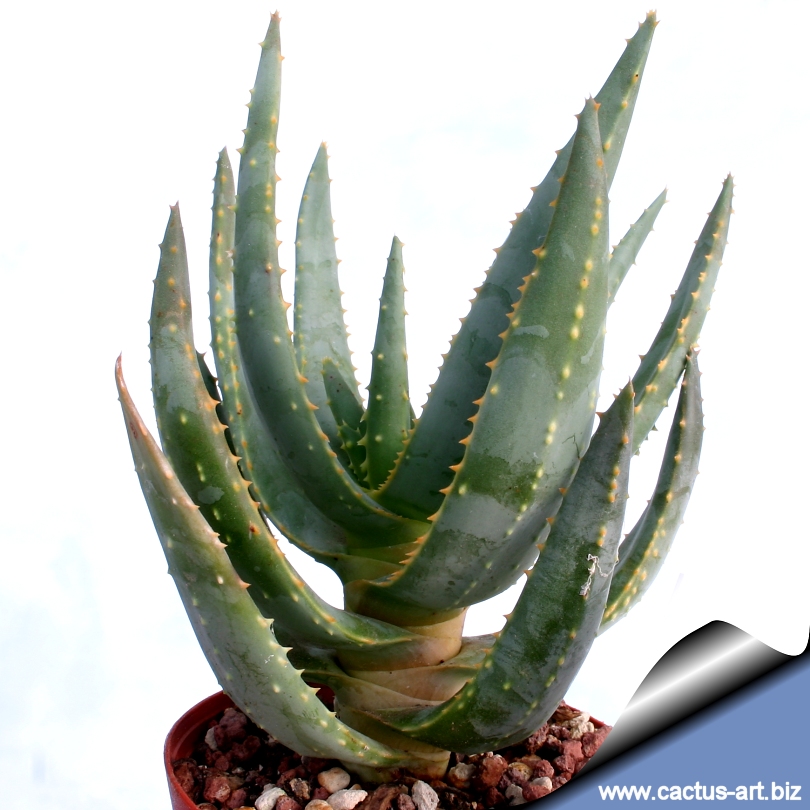
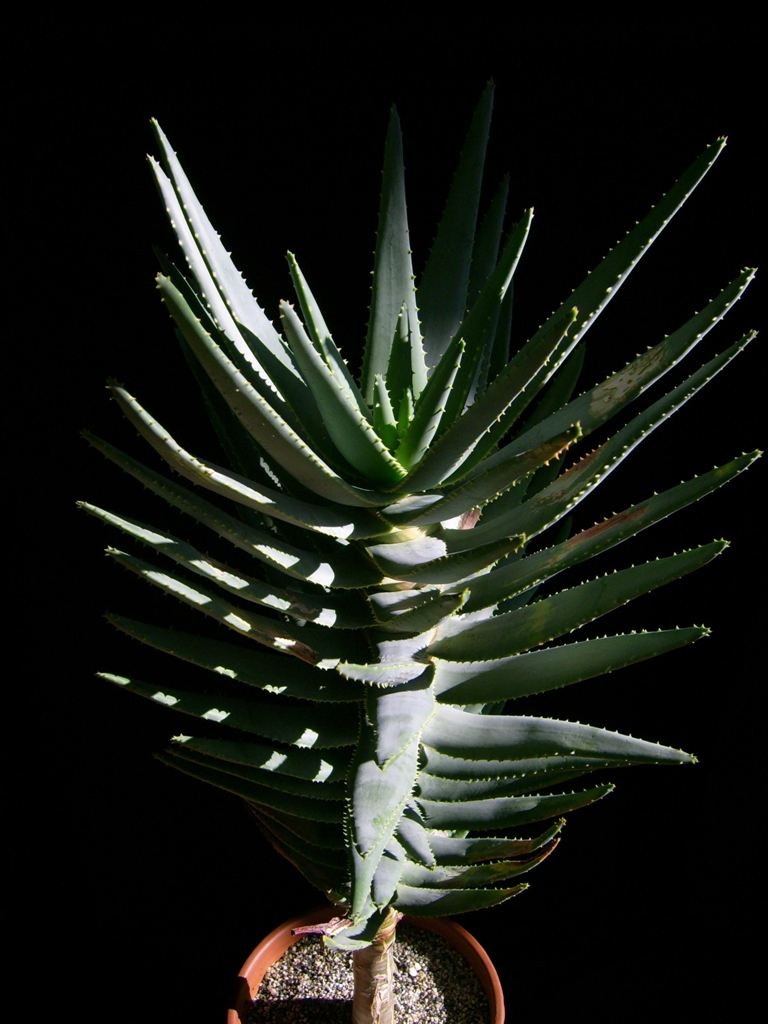
Photo of conspecific taxa, varieties, forms and
cultivars of Aloe dichotoma.
|
|


 Cultivation
and Mail Sale
Cultivation
and Mail Sale