|
|
|
Aztekium ritterii is unlikely to be mistaken for any other
species.
It grows extremely slowly (about only 1mm per year).
|
|
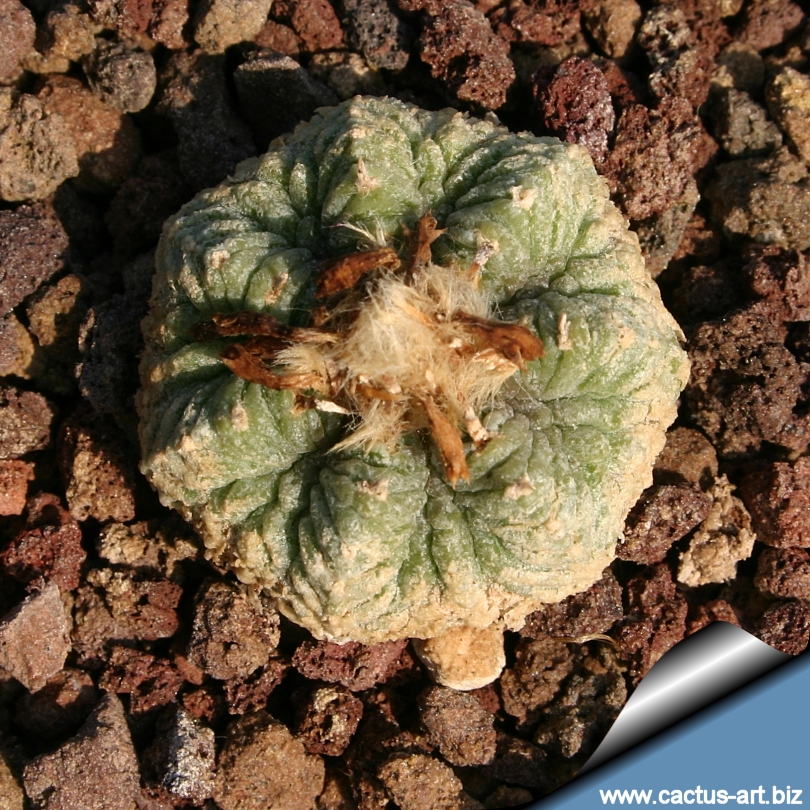
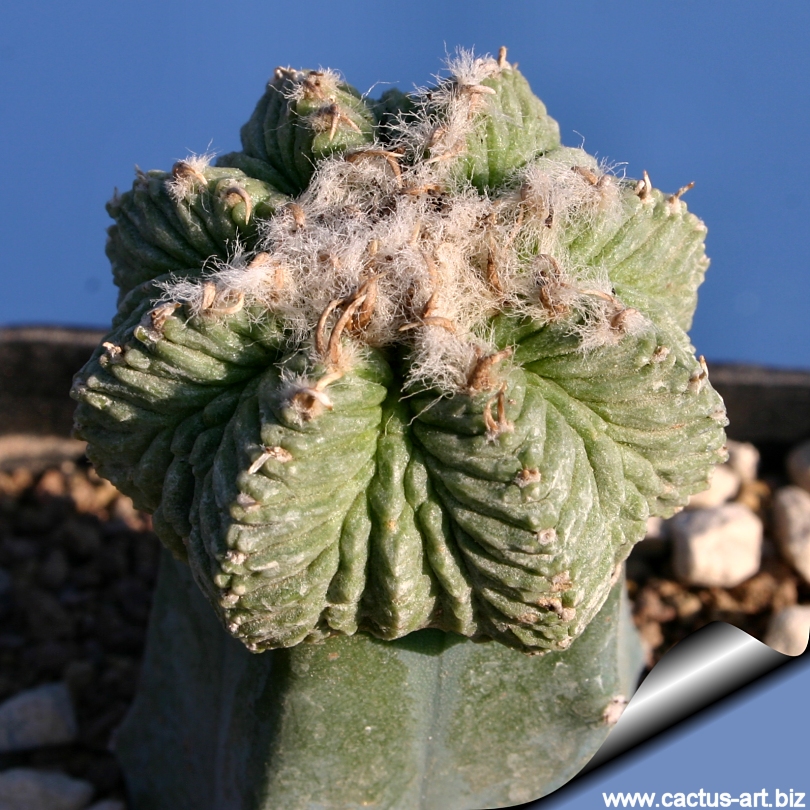
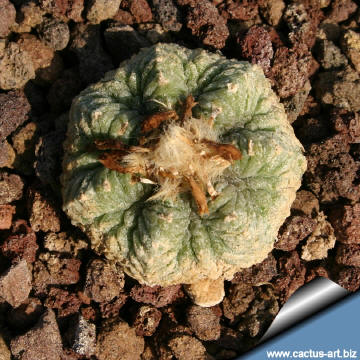
Description: Globular
cactus, seldom exceeding 5 cm in diameter and rather less in height,
with 9 to 11 rounded ribs. These are in turn crossed by numerous
horizontal furrows. Between these true ribs are small secondary ribs,
reaching about halfway up the plant body. The colour of the younger
growth is a rather pale yellowish green, merging to grey-green on the
lower, older growth. The centre of the cactus contains a lot of white wool. Once the plant body
has reached full size it slowly offsets, and small clumps are commonly
found. It does not develop a large storage root.
Spines: 1 to 3 small, weak, often missing from the
youngest areoles. The older areoles form a more or less continuous line
along the centre of the true ribs.
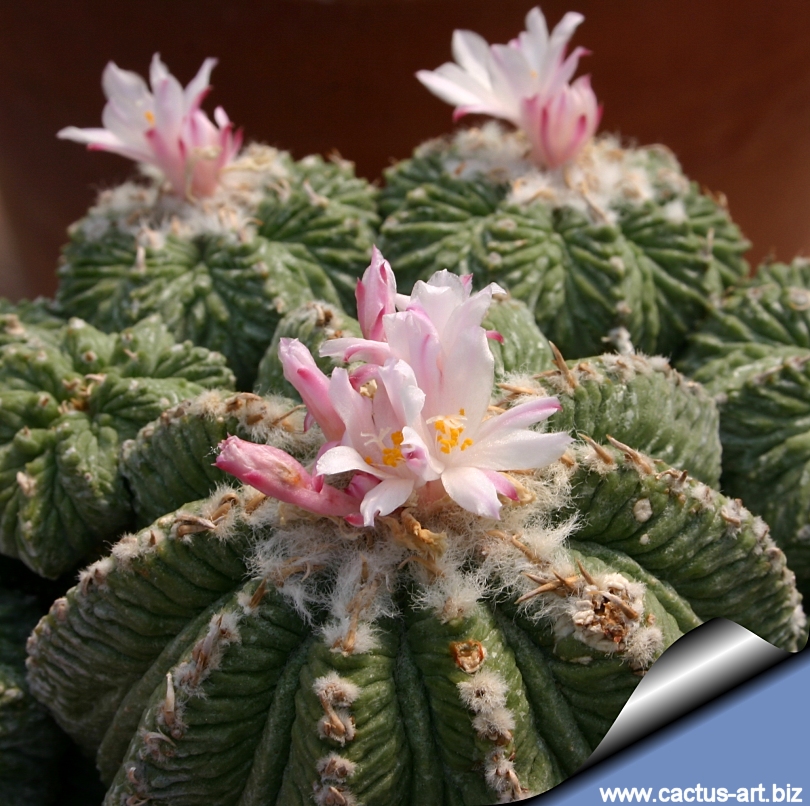
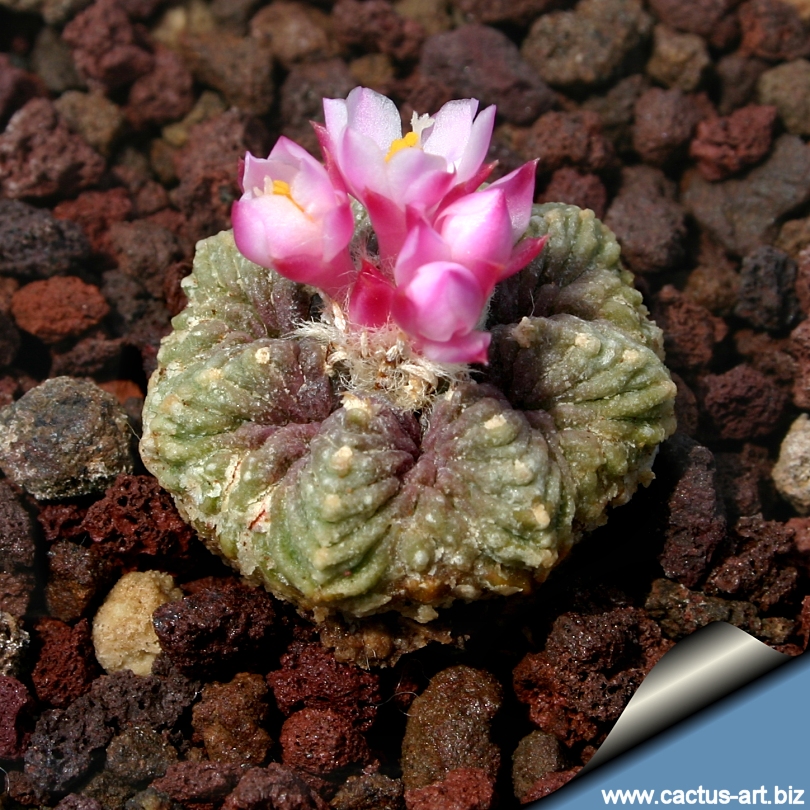
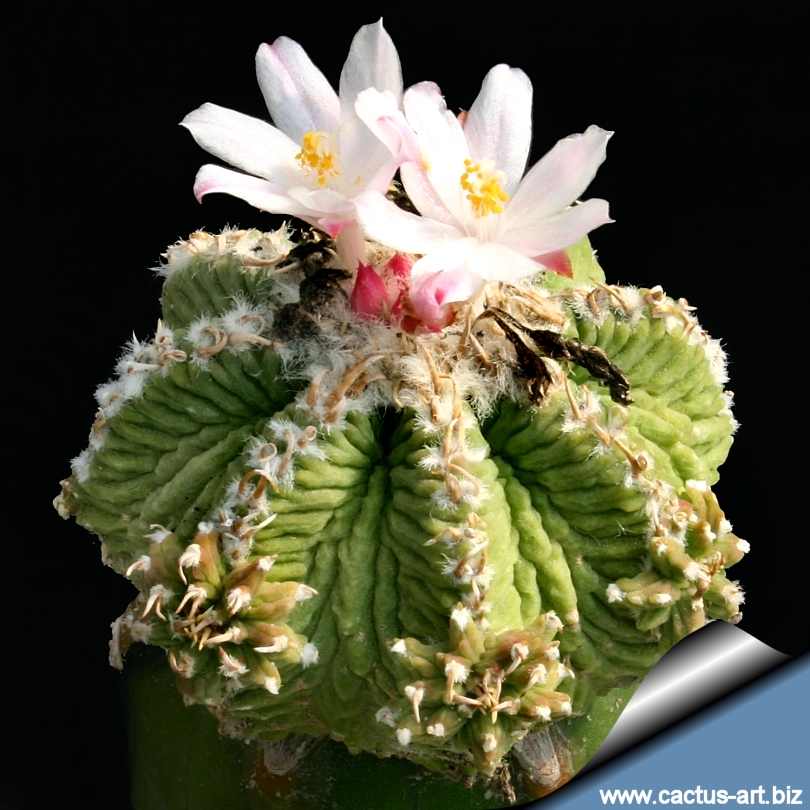
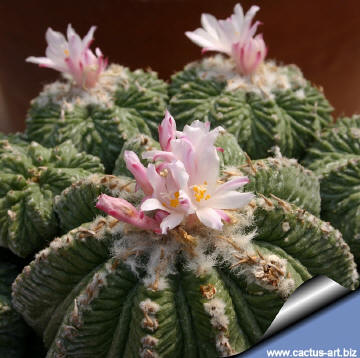
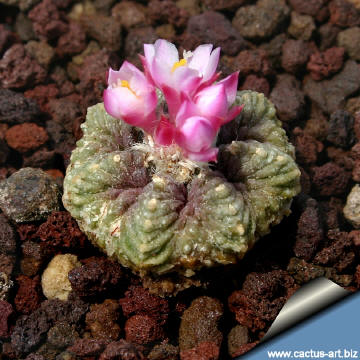
Flowers: Small (less than 10 mm wide) from the plant tip, white
to pink, and usually the outer petals have a darker mid-stripe. It
flowers freely in cultivation throughout the summer months.
They are
followed by small pink fruit that open when ripe and let out tiny seeds.
|
|
|
|
. |
|
|
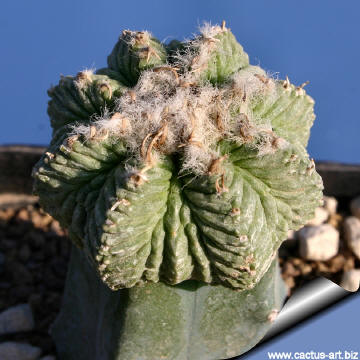
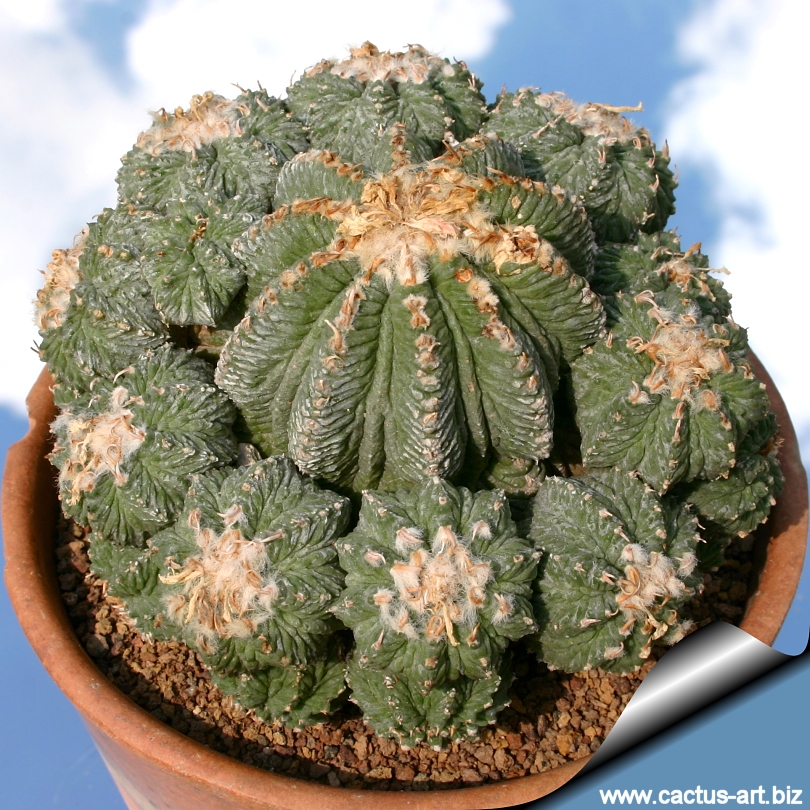
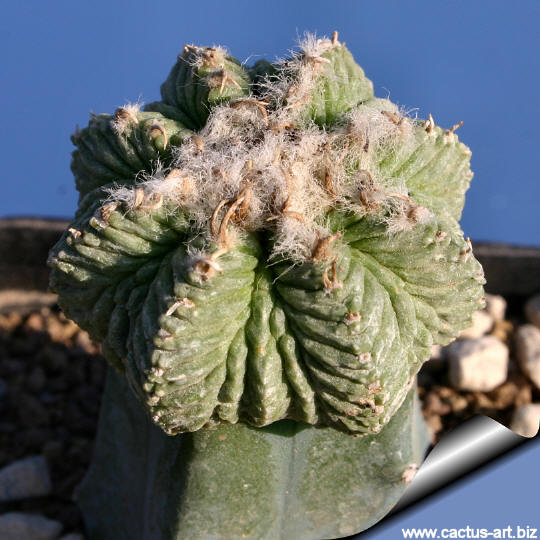
A grafted specimen |
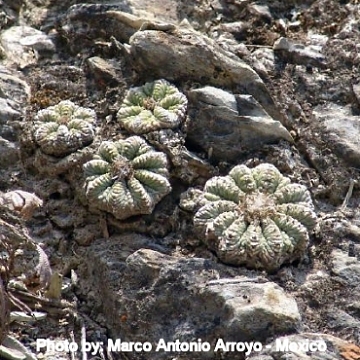
(
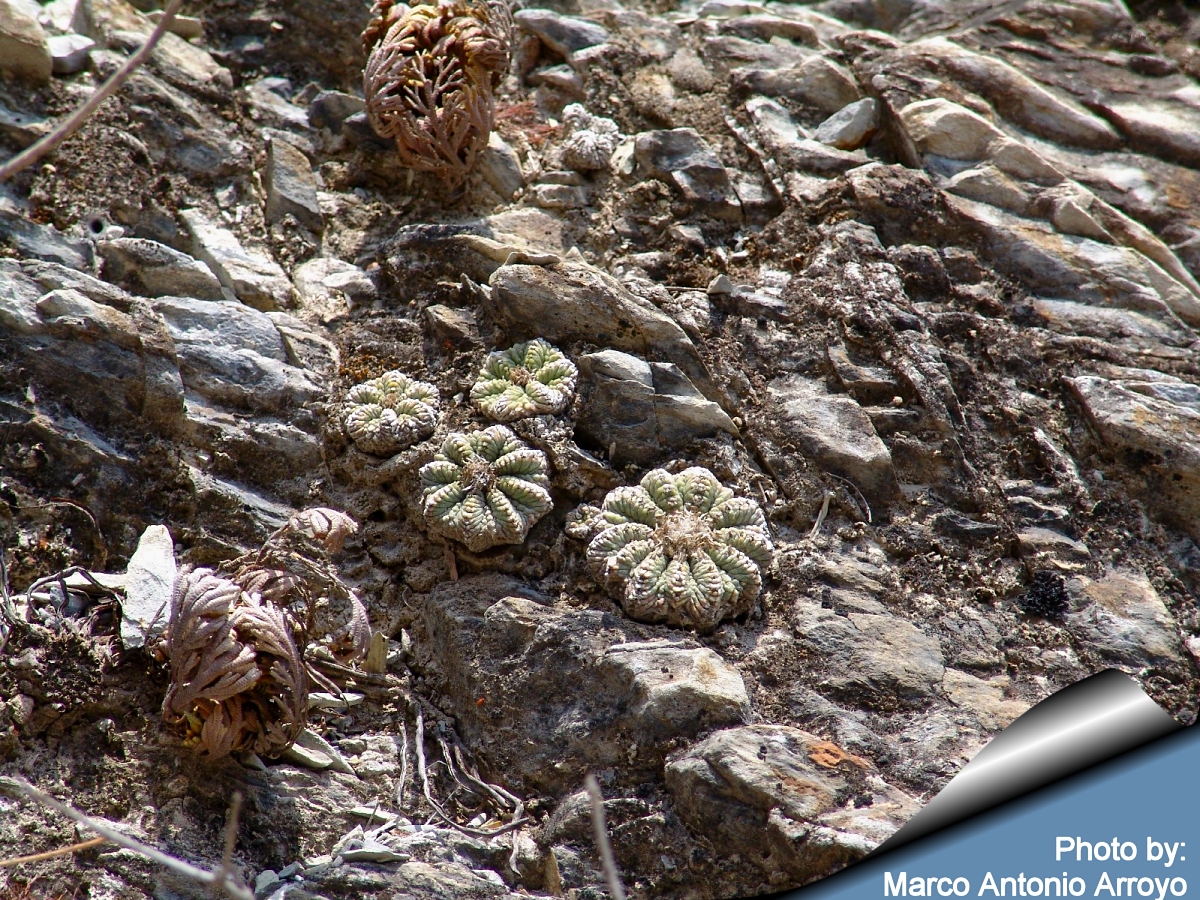
Photo in habitat © Copyright by Marco Antonio Arroyo - Mexico ) |
|
This plant is considered a sacred plant for
some Mexican tribes. The name of this genus refers to the similarity of
the plant with Aztec sculpture designs.
Cultivation: It is of extremely slow growth - probably the
slowest of the entire cactus family. It usually takes several years for
growth to be even noticeable. It needs good drainage and regular water
in summer. It should be dried out completely for its winter rest when it
will withstand temperatures down to to -4°C for short periods. It
prefers some shade.
Once a specimen is established on its own roots it is no trouble to keep
it ,and becomes an easy plant to manage.
Reproduction: It usually multiplies by seeds. The seeds are
extremely fine and germinate readily, producing minute seedlings which
are very sensitive for the first two months. But many of them perish,
and taking them to a viable size is very difficult. They are usually
grafted to increase growth speed. In any case, grafting produces rather
atypical plants which tend to be more obese and to offset much more
readily than plants growing on their own roots. The offsets of grafted
plants are often produced from areoles high up on the plant body, rather
than at ground level.
It is also possible to root the offsets from grafted plants, but with
little success.
|
|
Advertising
|
|
|
|
|
Family:
Cactaceae (Cactus
Family)
Scientific name:
Aztekium ritteri (Boed.)
Boed.
Origin: North east of Mexico. It appears to be restricted to a
single valley (Rayones) in Nuevo Leon.
Listed in
CITES Appendix 1
Habitat: Occurs in vertical cliffs of friable limestone.
Elsewhere it has been reported growing on similarly steep gypsum faces.
The plant appears to favour north facing slopes rather than those with
a sunnier aspect.
Synonyms:
-
Echinocactus ritteri Boed.
|
|
|
|
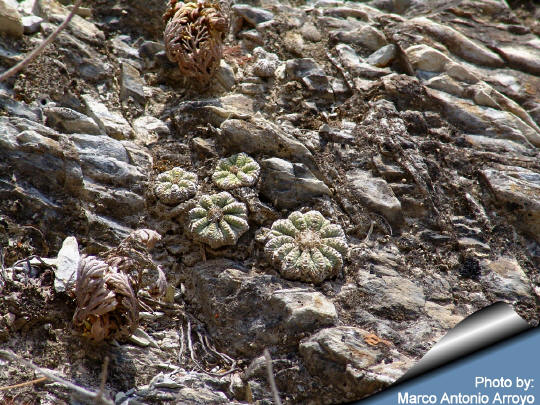
(
Photo and © Copyright by Marco Antonio Arroyo - Mexico )
In habitat (
Rayones, Nuevo Leon )
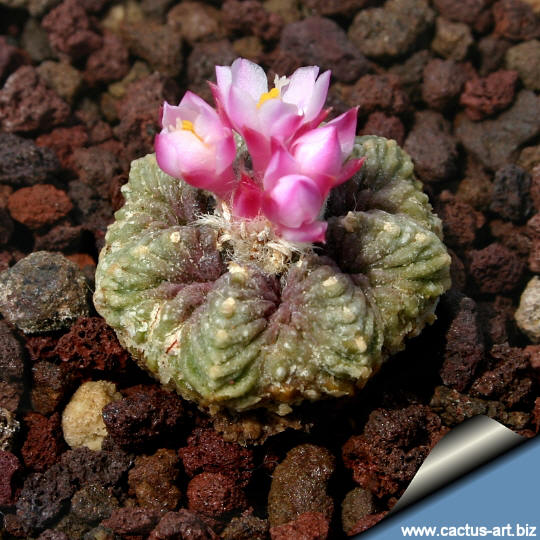
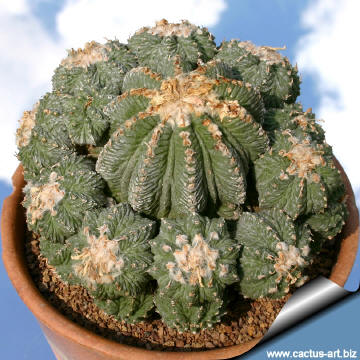
A 15 year-old seed grown cultivated specimen
(about 1,5 cm in diameter )
Photo of conspecific taxa, varieties, forms and
cultivars of Aztekium ritterii.

 |
|


 NURSERY