|
|
|
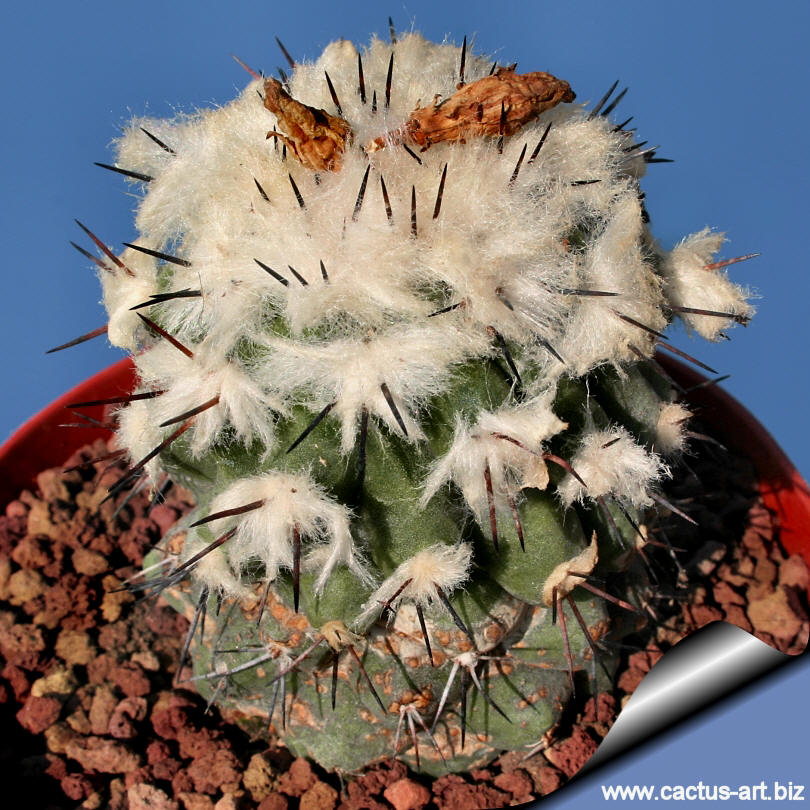
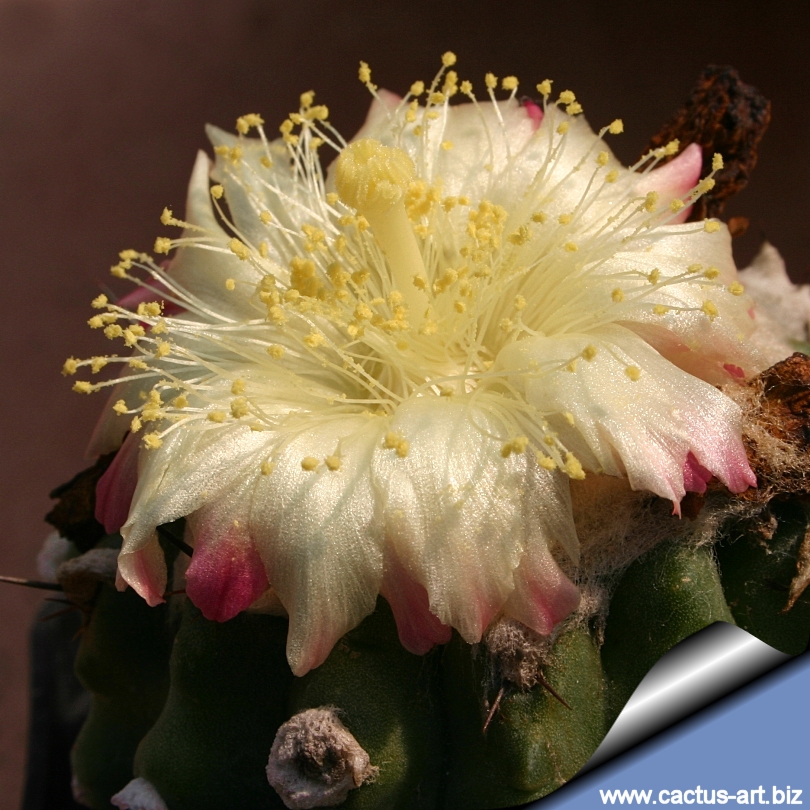
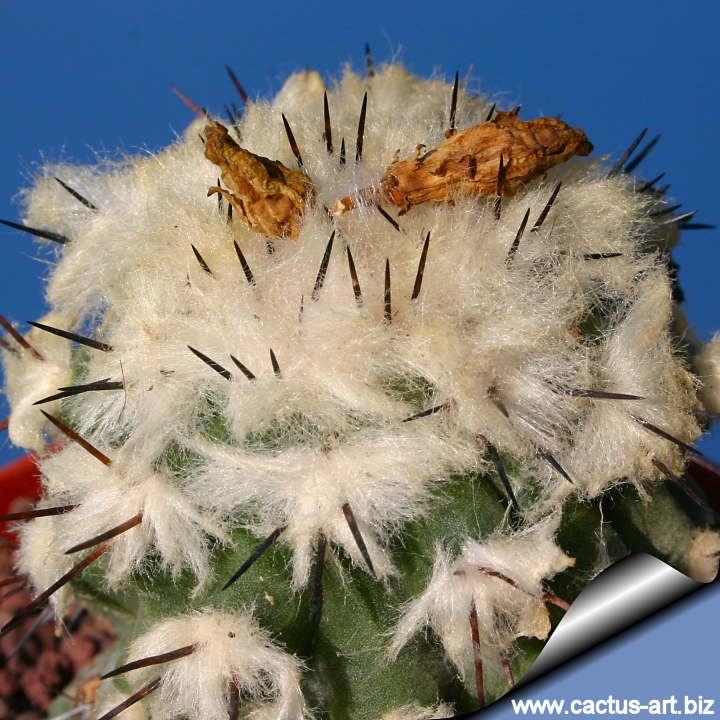
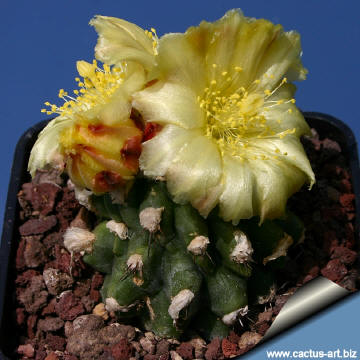
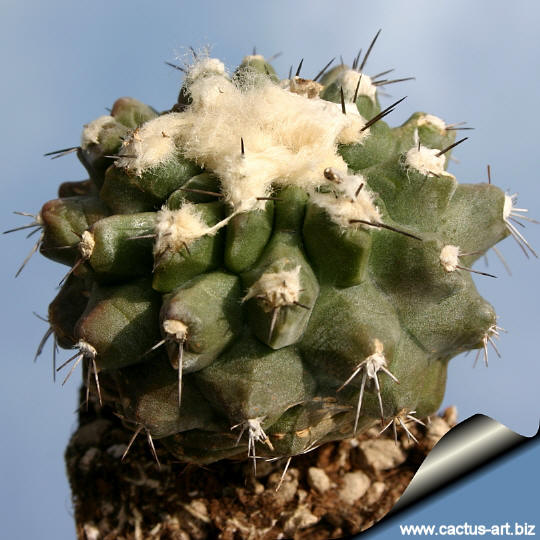
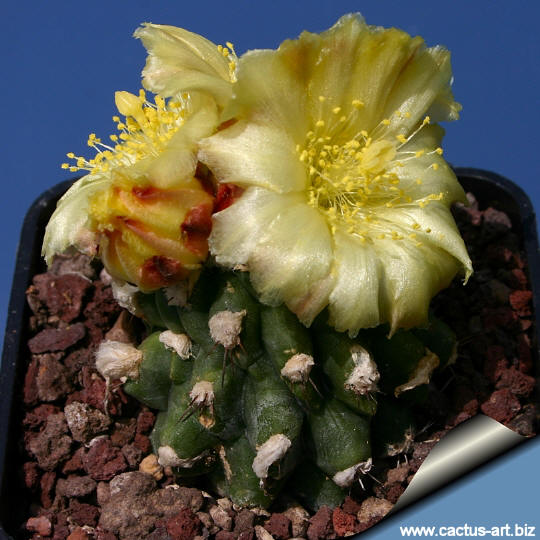
Copiapoa esmeraldana II Region, Parque Nacional Pan de
Azúcar, Las Lomitas, Chile, 845 m
These superb cacti only grow on the coastal areas of the Atacama desert
in Northern Chile.
|
|
Description : Moderately prolific, eventually forming large clumps.
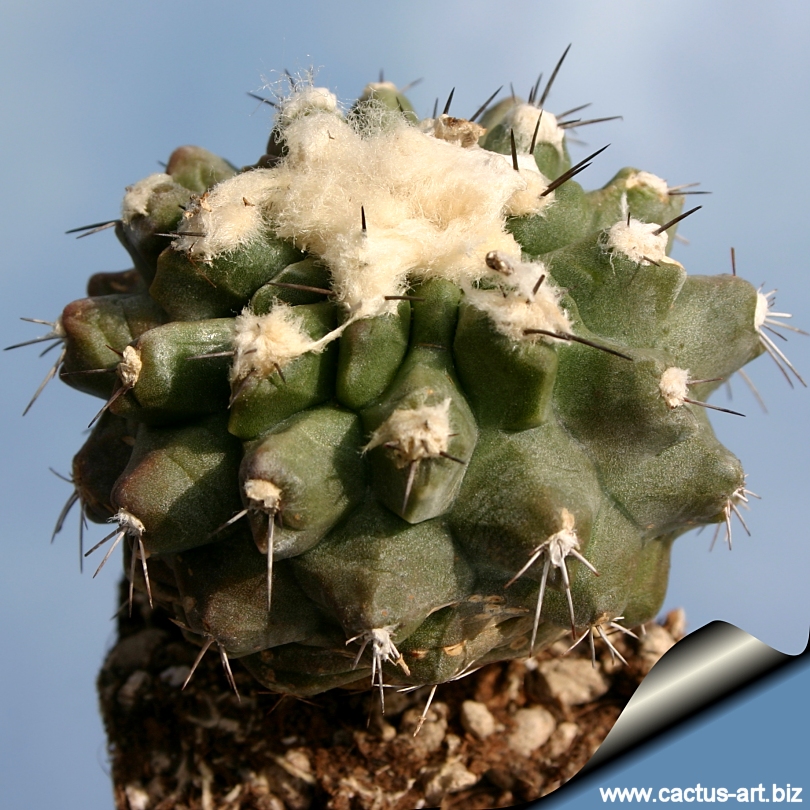
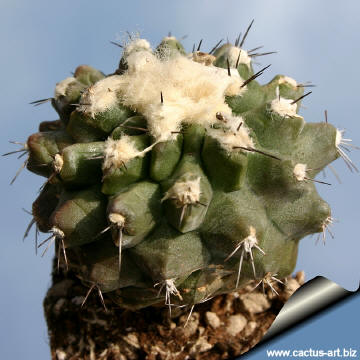
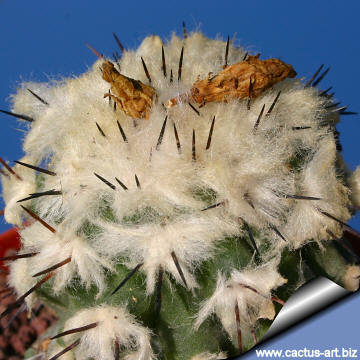
Stem: Green, soft, succulent, 3,5-7cm, apex depressed with white
wool, particularly at flowering
time.
Ribs: 13-16, deeply crenate,
tuberculate , 6-10 mm tall.
Tubercles: Rounded, chin-shaped.
Areoles: 3-4 mm in diameter, apical, slightly dislocated in the
lower part of the tubercle. 8-15 mm apart.
covered with short whitish wool when young, later glabrous.
Spines: Brownish to ash-grey, straight. Yuong plants
only have thin radial
spines, while the centrals appear as the plants mature.
Radial spines: 6-8 acicular, 5-10 mm long.
Central spines: 3-4 subulate 1-2 cm long
Root: Large tap-root with a thin neck.
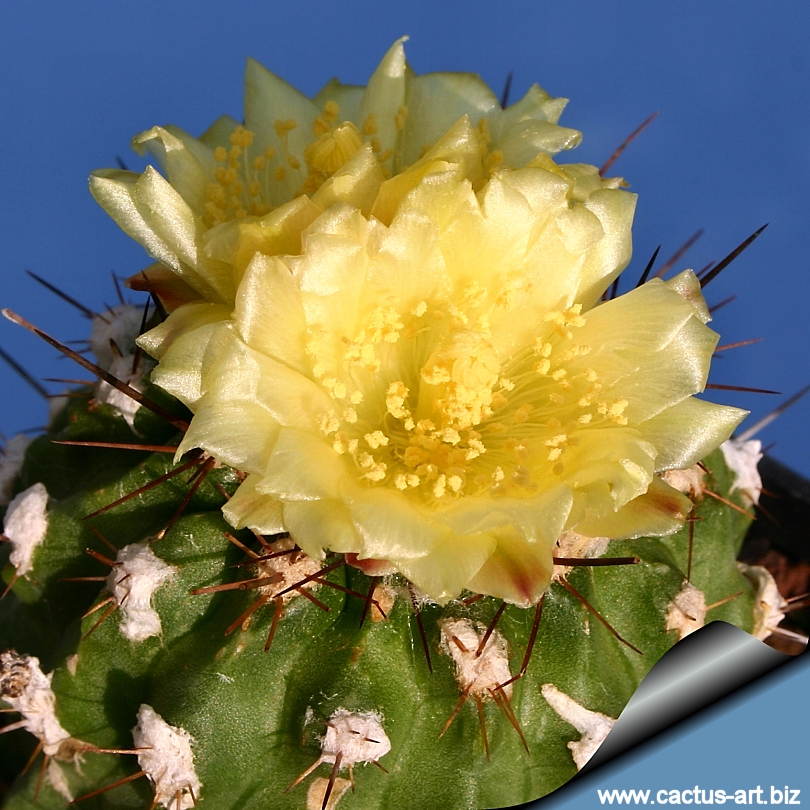
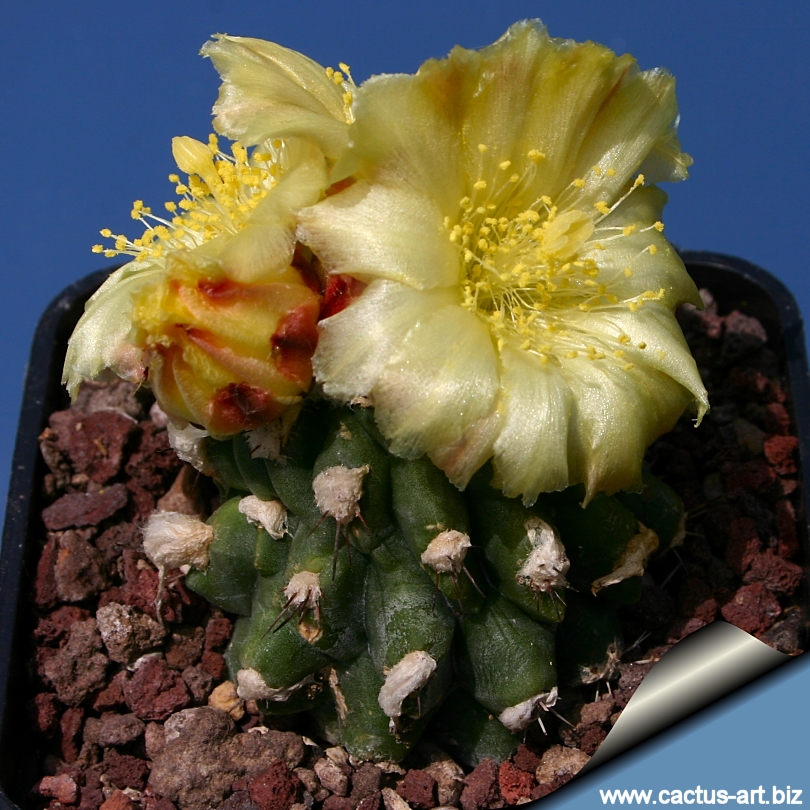
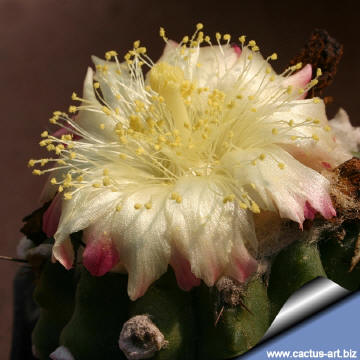
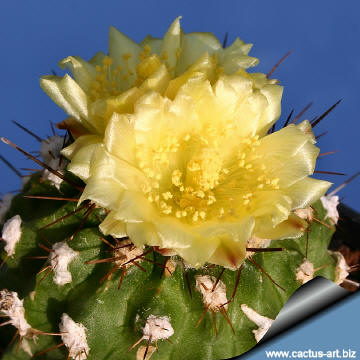
Flowers: Yellow,
campanulate, scented, about 32 mm long.
They grow from the center of the white wool at the
apex.
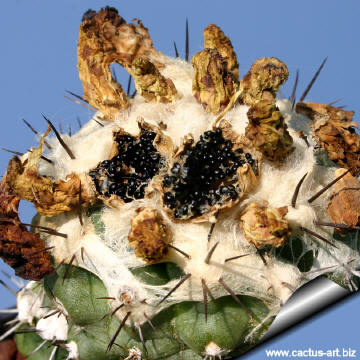
Seeds: 1,5 mm wide, black.
|
|
|
 |
 |
|
. |
 |
 |
|


Advertising
|
|
|
|
|
|
|
Family:
Cactaceae (Cactus
Family)
Scientific name: Copiapoa
esmeraldana RITTER
Original Description: KaKteen in Südamerica. 3:
1064-1065, fig 978, 1980
[Typus (T). Ritter 1457 (U, ZSS [seeds only]) (Type
cited for U l.c. 1: iii, 1979.).
Origin: Atacama desert in Northern Chile, Depart.
Taltal (C. esmeraldana grows along the cliff's edge, overlooking
the Pacific Ocean from Guanillos Valley on the west, to Cifuncho and the
Cachina Valley with Esmeralda to the north, high on the hills at Las
Lomitas)
Habitat: Steep coast in granitic hills, a few km. from
the sea, growing along with
C. laui, C, grandiflora and C. longistaminea.
Conservation status: Listed in
CITES appendix 2.
Synonyms:
- Copiapoa grandiflora ssp. ritteri Doweld 2002
- Copiapoa humilis (Phil.) Hutchison
- Copiapoa humilis var.
esmeraldiana (F.Ritter) A. E. Hoffmann
In : Cactaceas en la flora silvestre de Chile: 108,
1989
|
|
NOTE: The identification of the true
'esmeraldana' may concern a degree of uncertainty as to what
this plant is. There is no doubt that it grows in the Guanillos valley
near Esmeralda, together with some other Copiapoa species, but it is
far from clear that it is Ritter's Copiapoa esmeraldana, although
specimens have been cultivated under that name for some time. It is
likely that the majority of the plants that have
been called C.
esmeraldana in the Guanillos Valley were probably small plants of
C. grandiflora.
|
|
|
|
Cultivation: Slow growing, it
needs full sun but
should be protected from excessive heat and sun in summer. Requires light
watering and good drainage. Keep warm and dry in winter to avoid rot. It needs mild heat in winter.
Avoid any frost.
Propagation: Seeds or or stems planted
as cuttings. Grafting is often used to speed growth rate and to
create a back-up to plants in collection.
|
|
Photo of conspecific taxa, varieties,
forms of plants
belonging to the Copiapoa humilis/taltalensis
complex
(This
Taxon has lots of synonyms (like most copiapoas)
with several controversial varieties and subspecies):
|
|


 Cultivation
and Mail Sale
Cultivation
and Mail Sale