|
|
|
The traditional
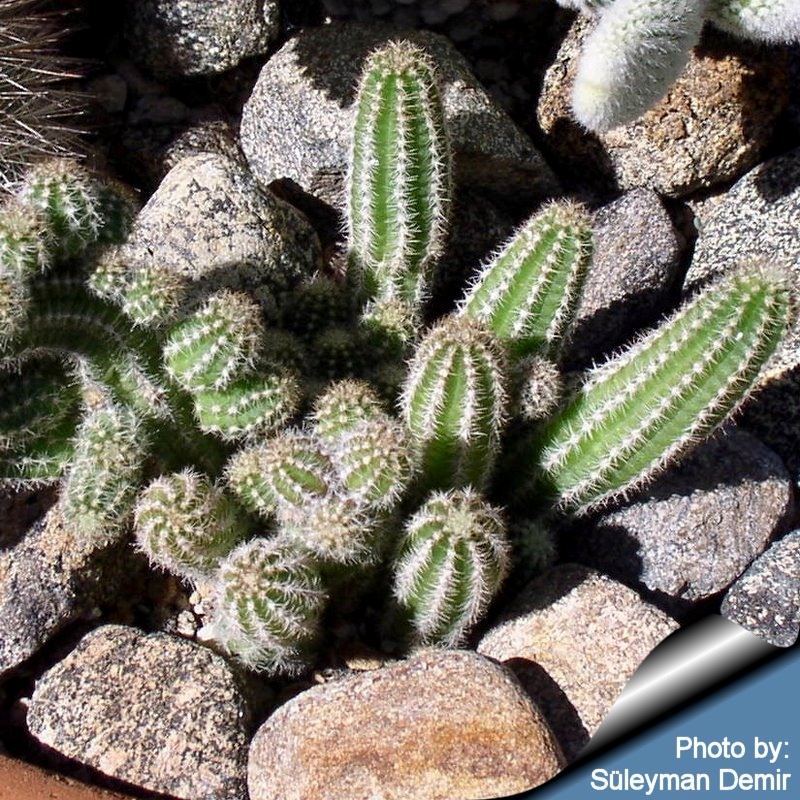
peanut cactus (Chamaecereus sylvestris) is a well known cactus
with vivid red flowers, often produced in prolific quantities.
Description: Matforming cactus with many crowded finger-like
stems. Established plants can reach a height of 15 cm and width of 30
cm, with stems
Stems: Pale green finger sized, initially erect that became
prostrate up to 10 cm tall, 1.2 cm in diameter, up to 15 cm long. As
cactus ages, eventually eventually become woody and spineless.
Ribs: 8 to 10;
Spines: 10 to 15 soft, white bristles, 2 mm long.
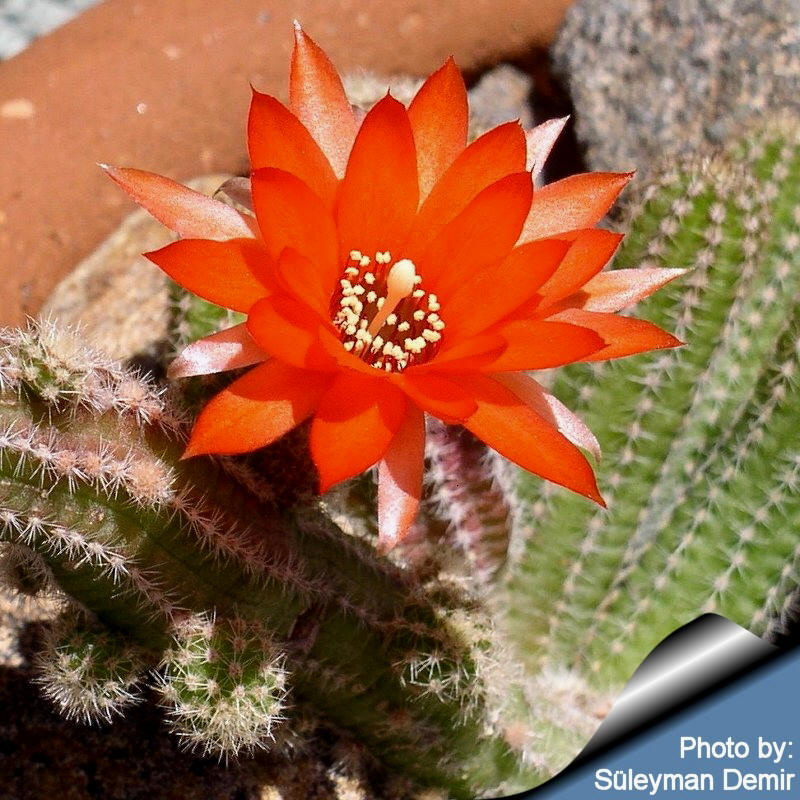
Flowers: Orange-red about 5 cm in diameter, often produced in
prolific quantities from an early age.
Blooming time: In several flushes in late spring and early
summer. |
|
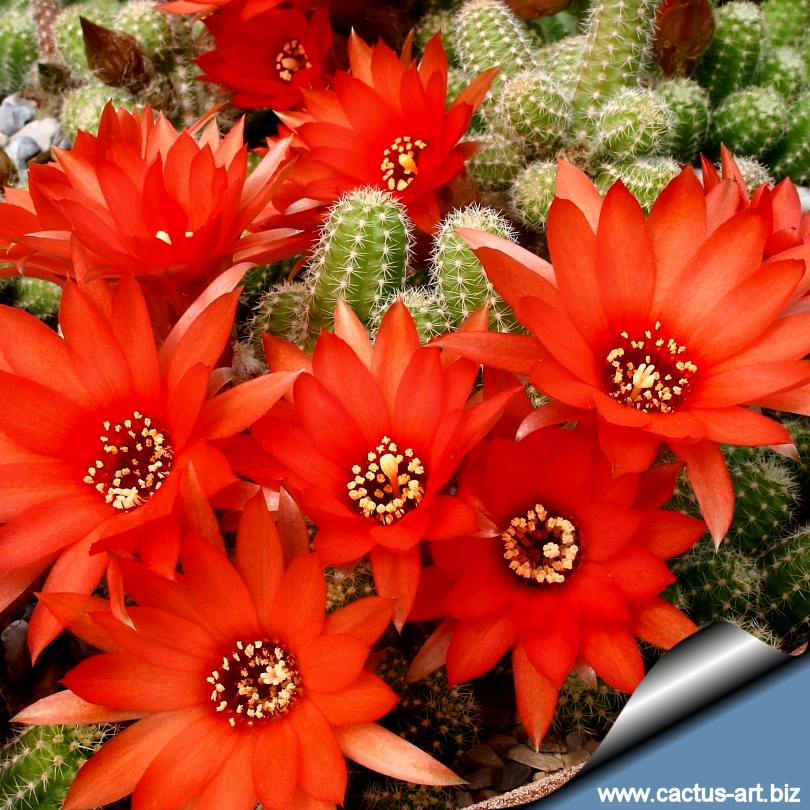
Chamaelobivia
hybrids: The peanut cactus is still often encountered as
Chamaecereus silvestrii, and occasionally as Lobivia silvestrii. This
plant has been intensively hybridized with other Echinopsis (especially
Lobivia sp.). This hybrids are sometime called "Chamaelobivia"
and are pretty easy to grow and easy to get to bloom and are now
available in different striking flower colours. They are often thicher,
stronger, larger growing than C. sylvestrii and tend not to have
the typical peanut shaped offsets. The offsets produced being more
strongly attached to the main stems.
|
cv. RAINBOW |
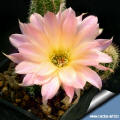
cv. PERLA DI VERONA |
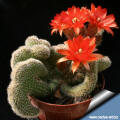
Forma CRISTATA |
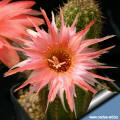
cv. BOOM |
|
Cultivation: This is an easily grown cactus, suited to hanging
baskets as well as pots. Grow in well-drained soil in a sunny spot. This
Echinopsis needs a period of cool rest in winter to produce flowers
abundantly. It flowers freely indoors if conditions suit it. The plant
survives outside without protection in winter (cold hardy to -8° ) but
somewhat prone to rot, then, too.
Needs moderate water in summer, none in winter Watch for infestations of
mealybug, scale insects and spider mite.
Propagation: Easy to propagate from offsets or seed. Small joints
are produced in quantities (peanuts) These offsets can be detached and
planted immediately as they root easily with no assistance when they
touch the ground. Just let them lay on the soil and you have a new
start.
Photo of conspecific taxa, varieties, forms and
cultivars of Lobivia sylvestris:

 |
|
|
|
|