|
Cultivation:
Because of the tap root
they are very rot prone, so use highly gritty compost with much drainage.
Requires half shade to part sun. Waterings should be
rather infrequent to keep the plant compact and not to become
excessively elongated and unnatural in appearance,
watering it properly is often difficult
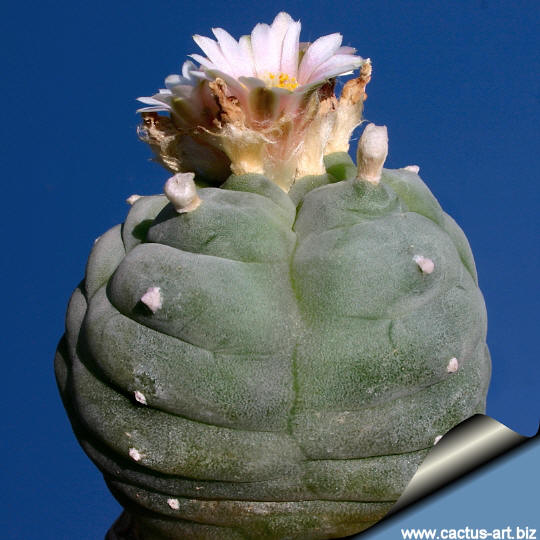
because this plant tends to crack open or rot if over-watered. The fact that the plant retracts into the soil and assume a grey-green
colouring between watering, is perfectly natural and doesn’t cause any
damage.
Overwatering: Keep completely dry and cool in winter (An unheated
greenhouse would be perfect) or when night temperatures remain below 10°
C, it can survive low temperatures (appr. -7°C) for a short
period. Assure a good ventilation.
Propagation:
From seeds or (usually) by grafting on a stronger stock.
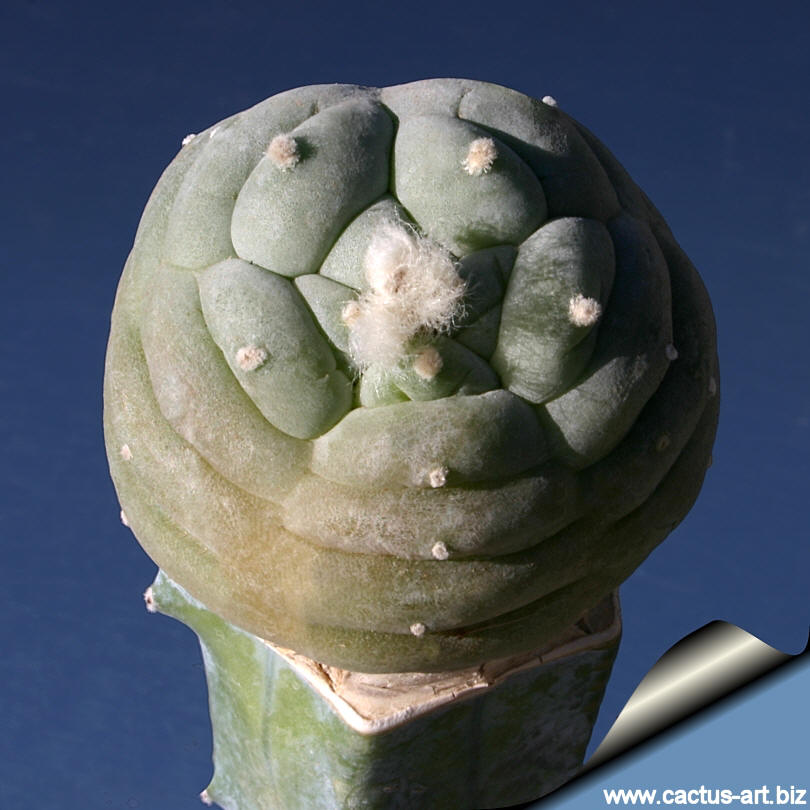
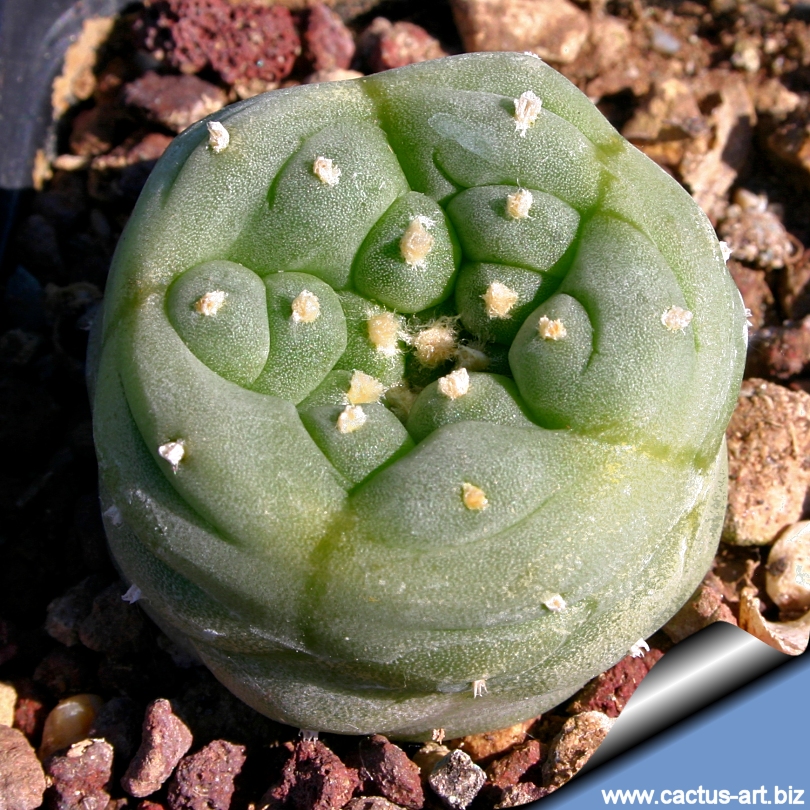
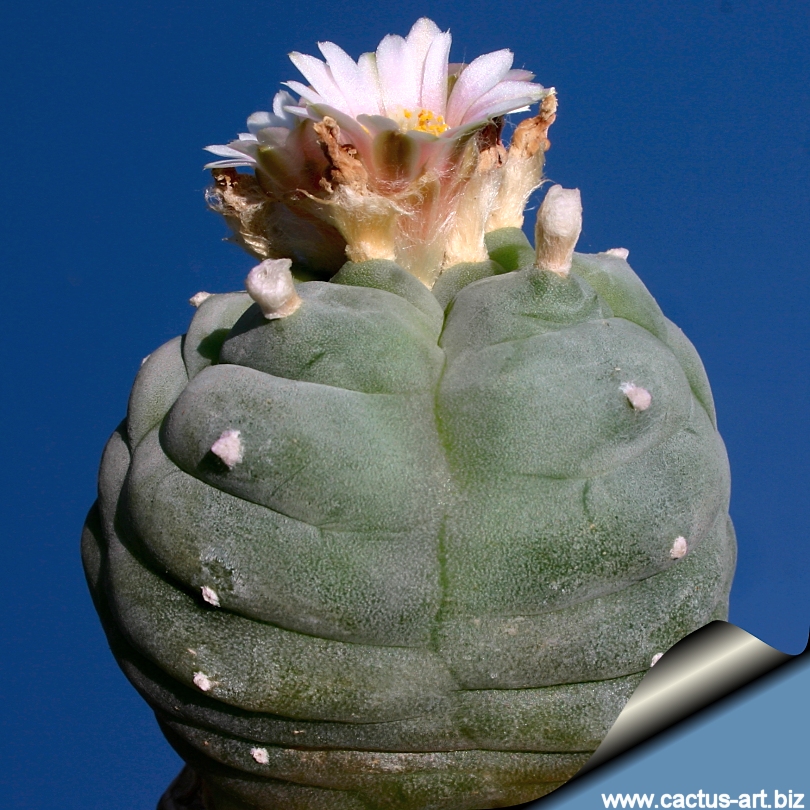
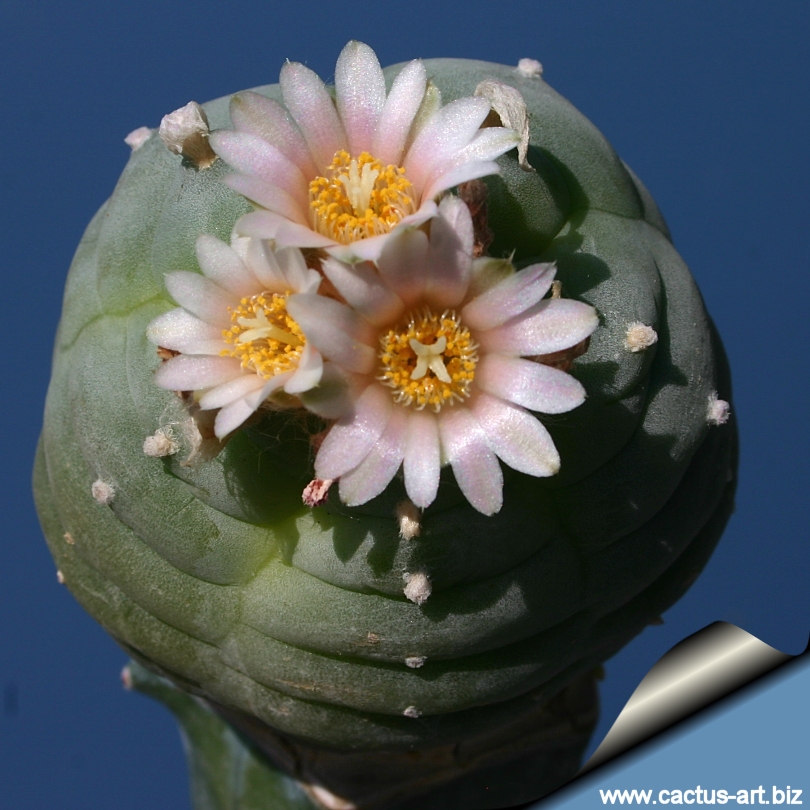
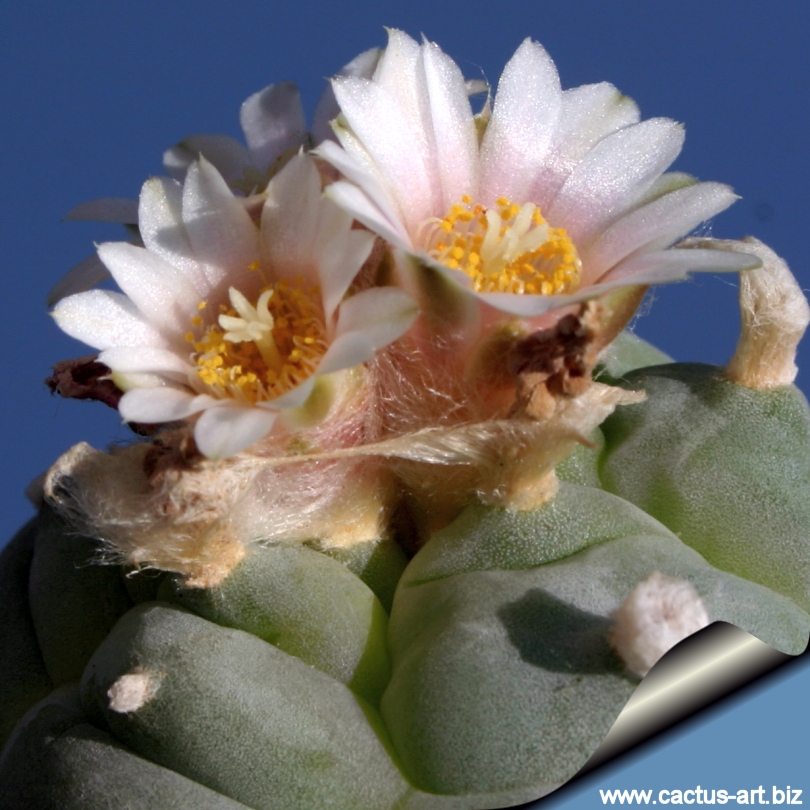
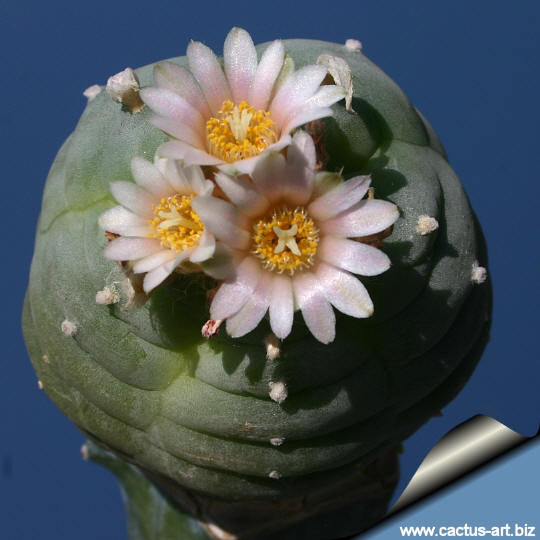
Photo of conspecific taxa, varieties, forms and
cultivars of
plants belonging to the
Lophophora williamsii complex
(This
Taxon
has several controversial varieties and subspecies and comprises a multitude of different forms, but where each form
is linked to others by populations of plants with intermediate
characteristics):
|


 Cultivation
and Mail Sale
Cultivation
and Mail Sale