|
|
|
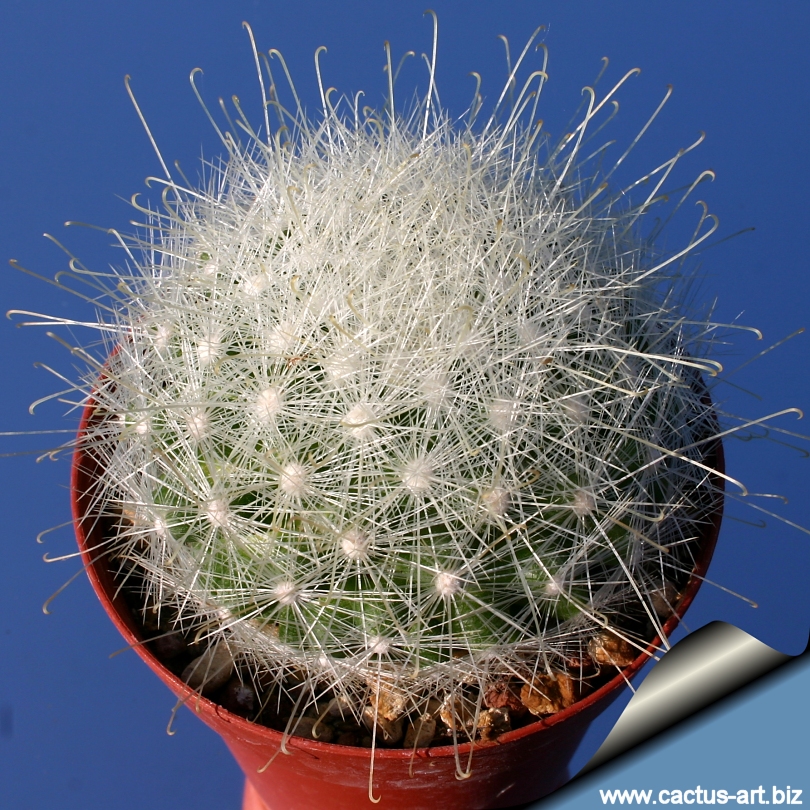
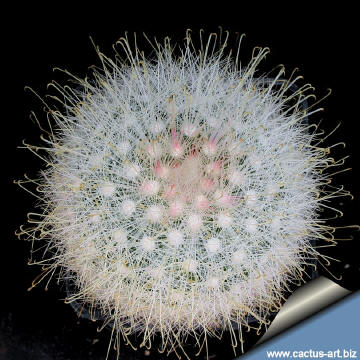
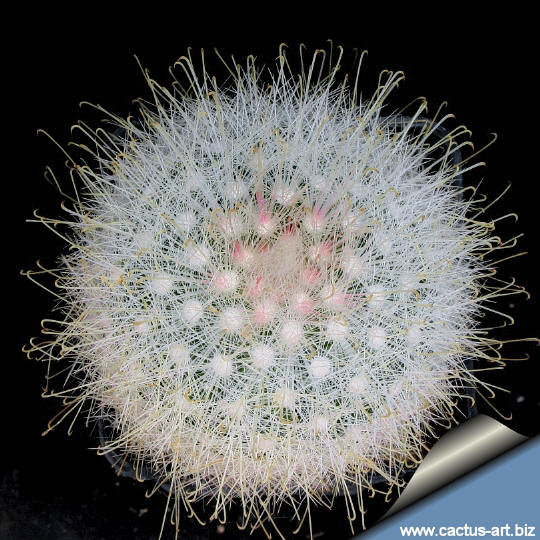
Mammillaria (Mamilopsis) senilis.
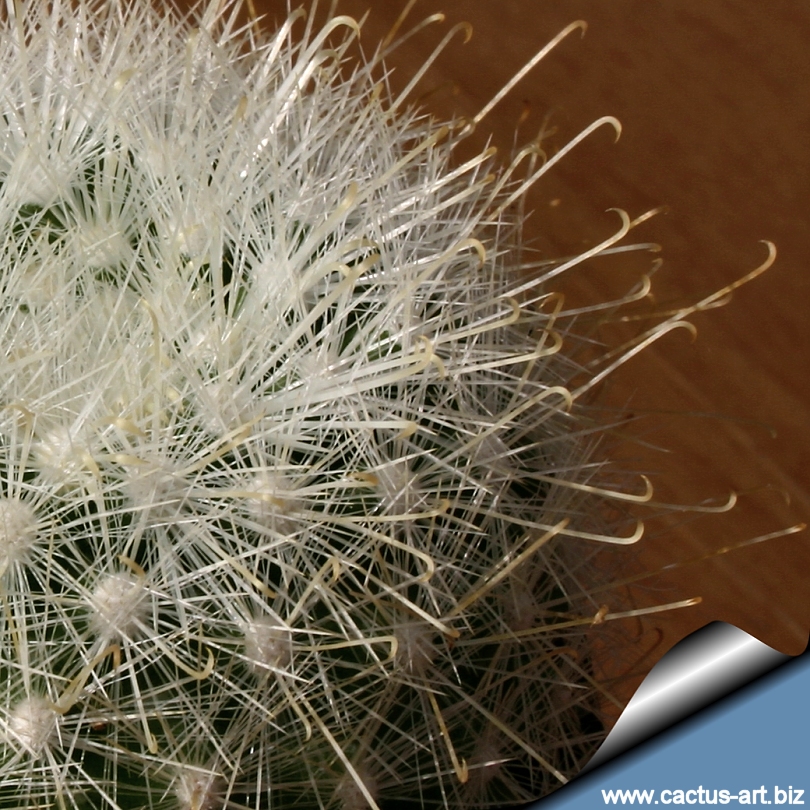
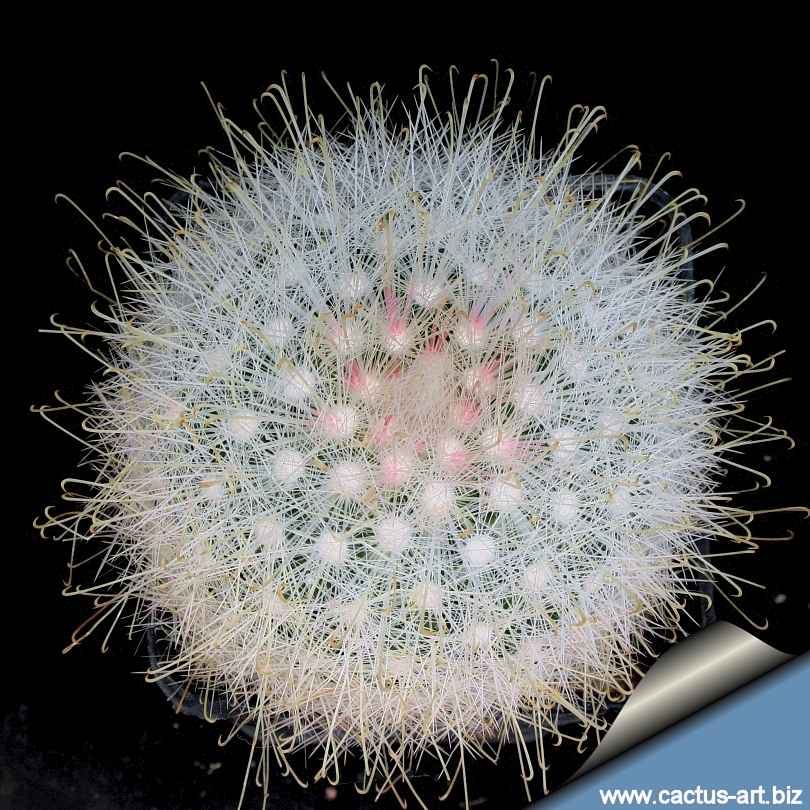
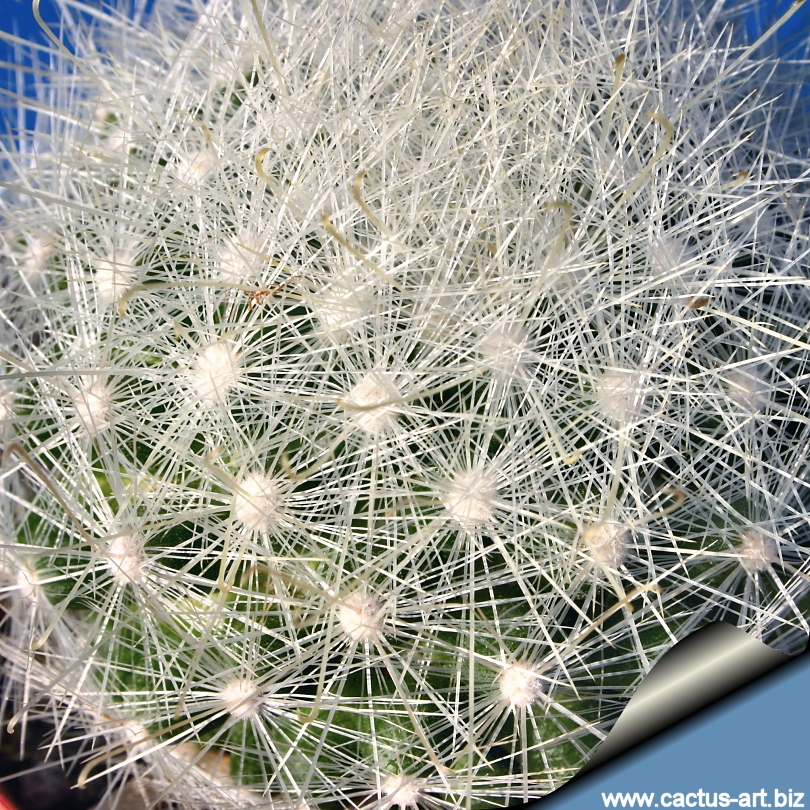
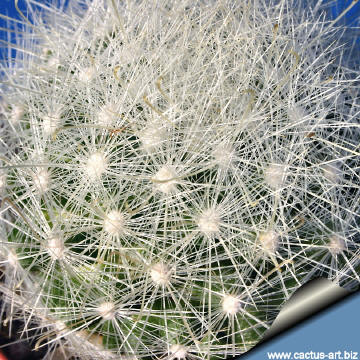
This is a very ornamental plant that looks like a cotton ball with
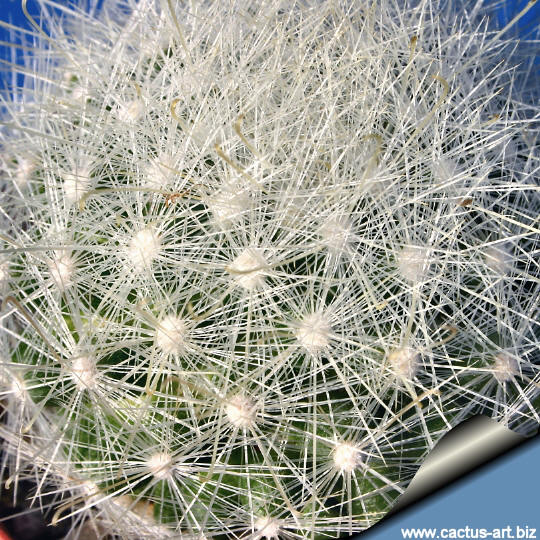
small but deadly sharp,
glistening hooked white spines and many white radials.
|
Description: Branching
basally to form clumps.
Stems: Globose to cylindrical, up to 15 cm tall and 10 cm wide.
The tubercles are conical, obtuse with wool and bristles in the axil.
Without latex.
Radial spine: 30 - 40, thinner than the centrals, white, to 20 mm
long.
Central spine: 4 - 6, white with yellow tips, upper and lower ones
hooked.
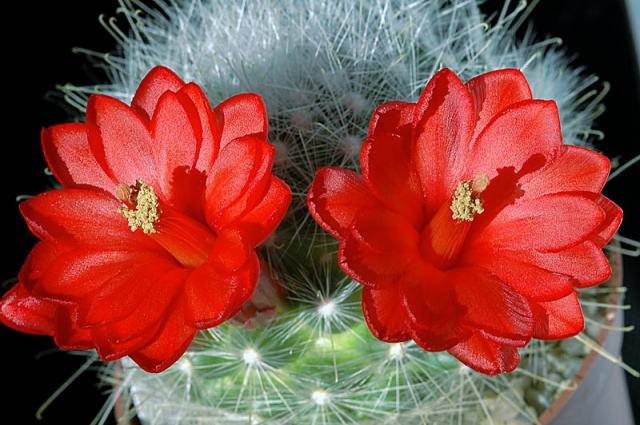
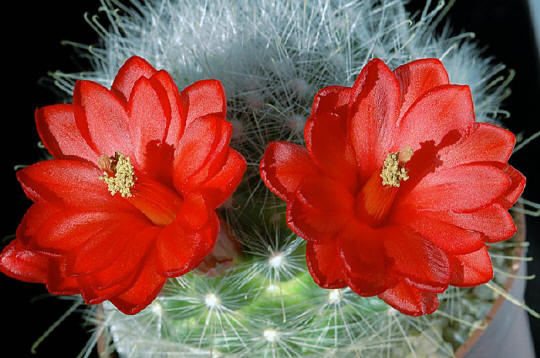
Flower: Usually orange-red, but also yellow or near white to pink
(rare) , 60 - 70 mm long, 55 - 60 mm in diameter; floral
tubes slender, scaly, to 4 cm long.
Flowering season: February and March
Fruit: Silvery red to greenish white.
Seed: Black.
|
|
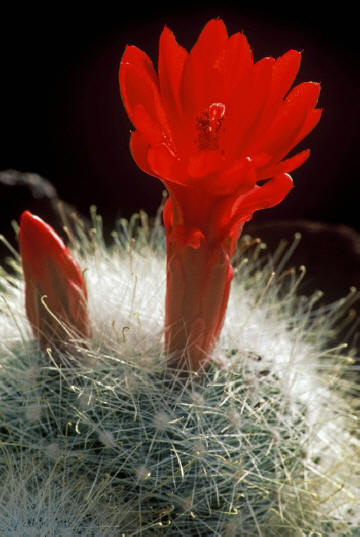
Photo &
©
copyright
by
Irwin Lightstone
Note: Mamilopsis (Mammillaria) senilis, was placed in a
separate genus due to various differing characteristics involving flower
shape (The flowers have a characteristic
zygomorphic structure - unlike the other mammillarias - with tube
possessing obvious "scales"
- i.e. fleshy reduced sepaloids - and by the apparent lack of fragrance
in the flower) , size, seed and pollen morphology. The genus
Mamilopsis includes only M. senilis. Notice that contrarily
to the name Mammillaria, Mamillopsis has only one
'm'. |
|
|
. |
 |
 |
|
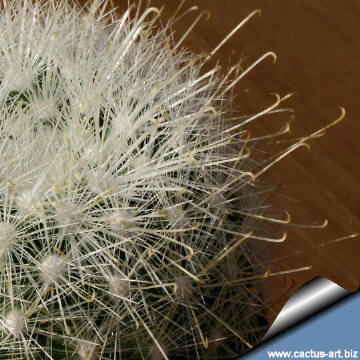
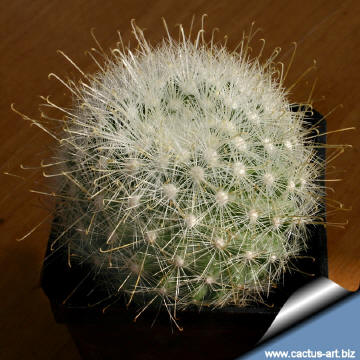
Photo of conspecific taxa, varieties, forms and
cultivars of Mammillaria senilis.
|
|


Advertising
|
|
|
|
|
Family:
Cactaceae (Cactus
Family)
Scientific name: Mammillaria
senilis
First description: by Salm-Dyck, Cact. Hort. Dyck. 1849: 8,82
(1850).
Origin: Chihuahua, Jalisco and Sinaloa, Mexico. Altitude 2.400 -
2.800 m.
Habitat: Grows on moss-covered boulders in
pine forests at high altitudes.
Conservation status: Listed in
CITES appendix 2.
Synonyms:
- Mamillopsis (Mammillopsis) senilis
(Salm-Dyck) Britton & Rose 1923.
- Cochemiea senilis
- Mamillopsis diguetii
- Mammillaria diguetii
- Mammillaria senilis var diguetii
|
|
Photo
and © copyright by
Andrea
B. (Bologna, Italy)
The red flowers are huge and showy
(huge for a Mammillaria) during Ferbruary and March.
|
|
|
|
Cultivation: It is a slow growing species
and one of the most difficult Mammillaria to keep and grow that needs
lots of light with ample airflow. Water regularly in summer, but do
not overwater (very
wet-sensitively, especially in light of its small root system)
Water thoroughly only if soil is dry to
the touch, let soil dry in between to prevent root rot,
keep very dry in
winter. Use a very porous acidic potting media (Avoid to add
limestone!), with excellent drainage, as can be achieved by the addition
of extra perlite
or pumice. Feed with a high potassium
fertilizer in summer.
It is a mountain plant that prefers somewhat cooler temps
and it proved to be quite
frost resistant if kept dry
and hardy as low as -5° C (some
reports give it hardy to -10°C or less)
Sun Exposure: High levels of light are needed to
flower and for good spine development.
Can be sunburned if moved
from shade/greenhouse into full sun too quickly. During the spring it
may be able to take full sun until the heat arrives at the end of
spring. In an area that has hot afternoon sun, it may be able to take
full morning sun, but requires afternoon shade or afternoon light shade.
If grown correctly, it will reward the grower with generous
displays of red flowers.
A resting period in winter and strong light are necessary so that it can
flower properly.
Clustering in cultivation after several years and easily flowered.
For best results, use a shallow pot, and only use the smallest
diameter pot that will accommodate the plant. Sensitive to red
spider mite. Overhead watering is helpful in controlling mites.
Propagation: Direct sow after last frost
(usually) or division, wait
until the
offsets that appear at the
base of old clustered
specimens
are 1/3 the size of the parent and then detach and plant. |
|


 Cultivation
and Mail Sale
Cultivation
and Mail Sale