|
|
|
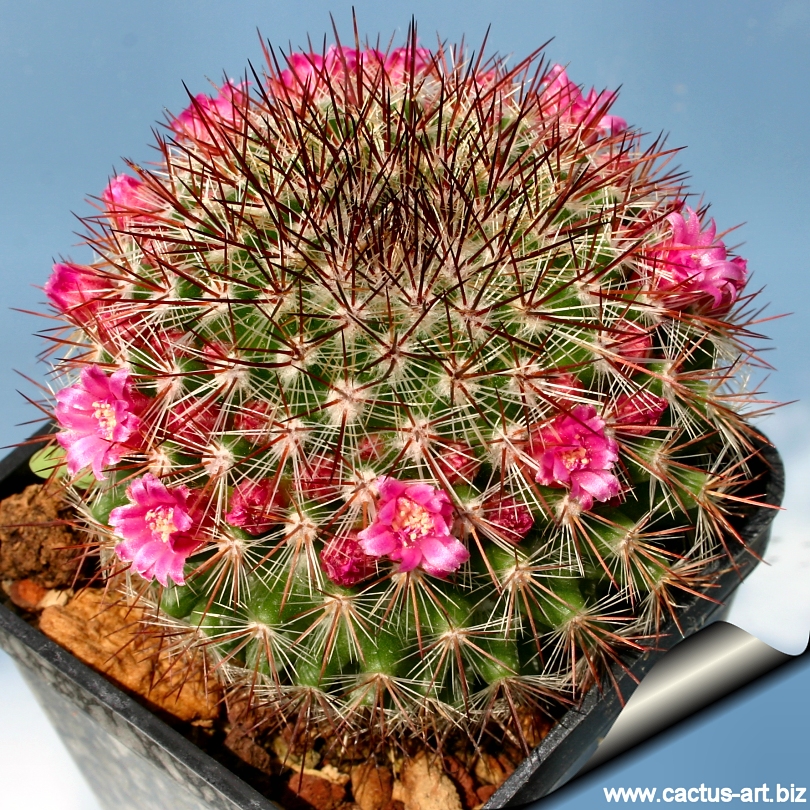
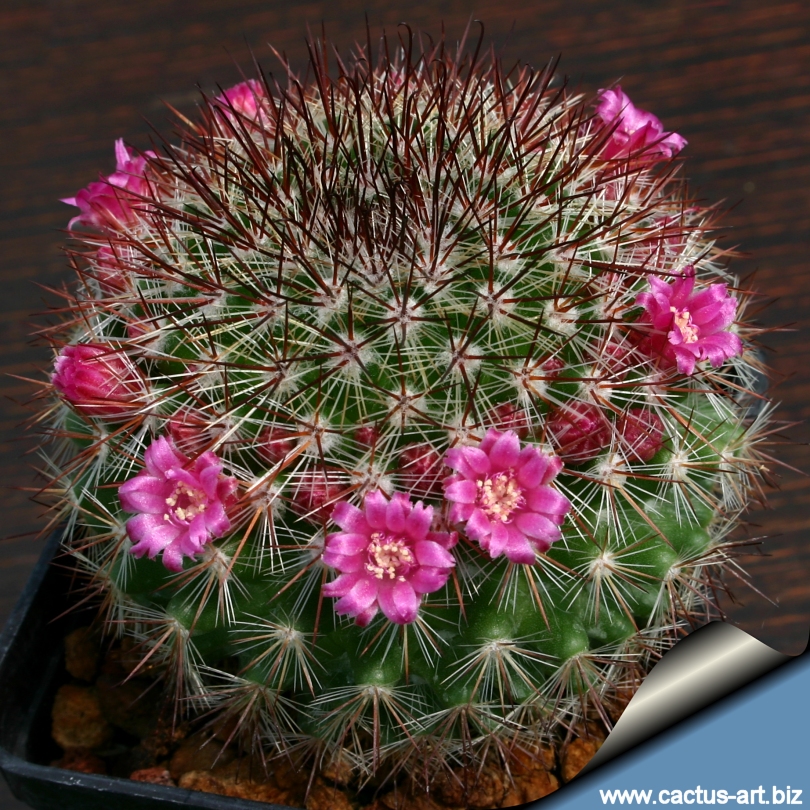
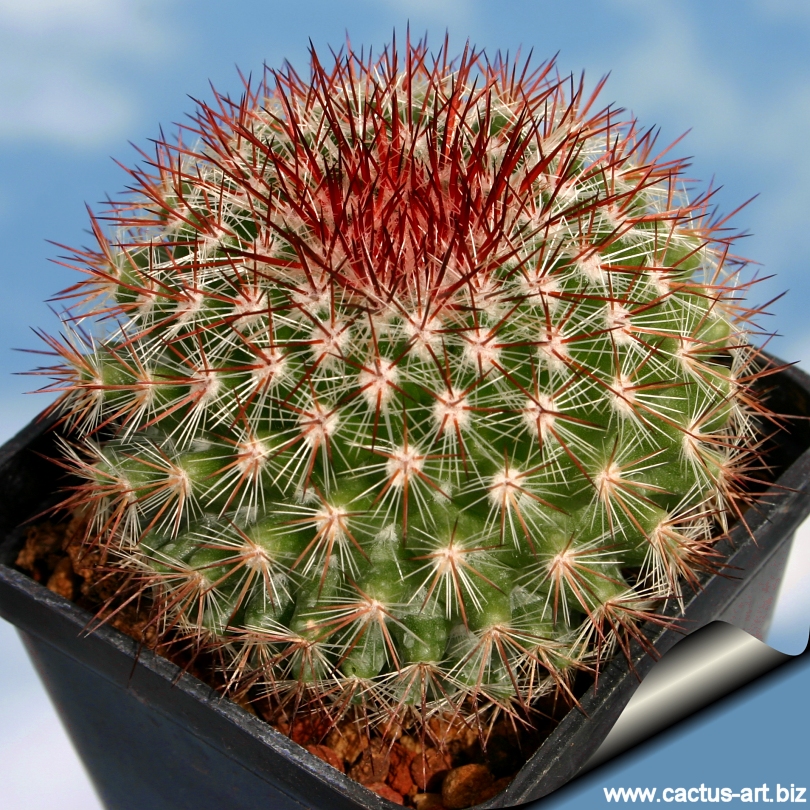
M. supraflumen ML 295 Ferreria, Jalisco, Mexico 1550m
This species (previously considered independent ) is now included
with many others in Mammillaria nunezii.
|
|
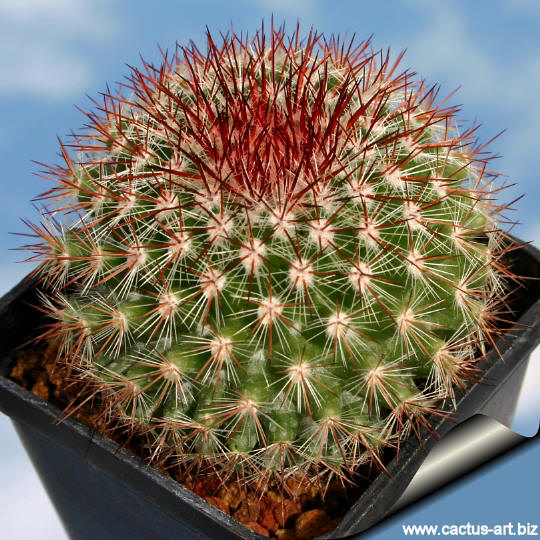
Description: M.
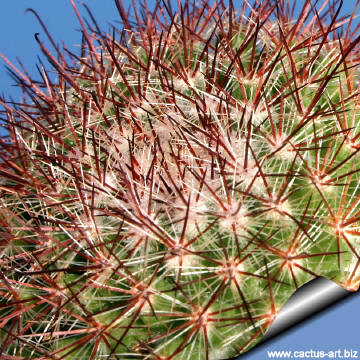
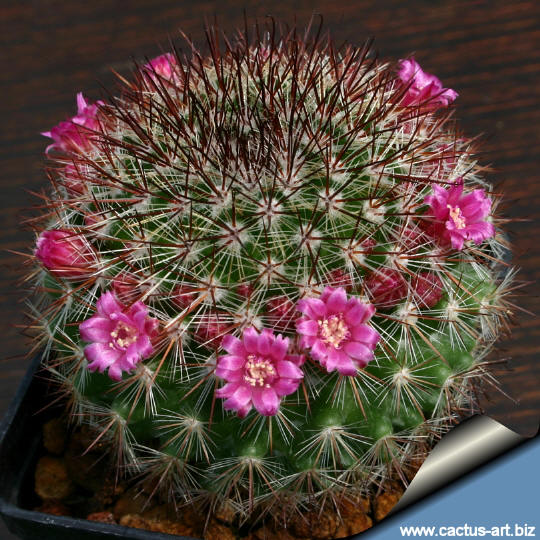
supraflumen is a small cactus covered with wool, spines and
showy flowers in June. It is usually solitary, but occasionally forms
offsets.
Stem: Pale green, spherical to cylindrical, sunken apically, 30 -
100 mm high, 40 - 70 mm in diameter (or more in cultivation).
Without
latex.
Tubercule: Conical to four-angled, pyramidal, firm, with a
humpbacked epidermis, 7 - 9 mm long and 5 - 7 mm in diameter.
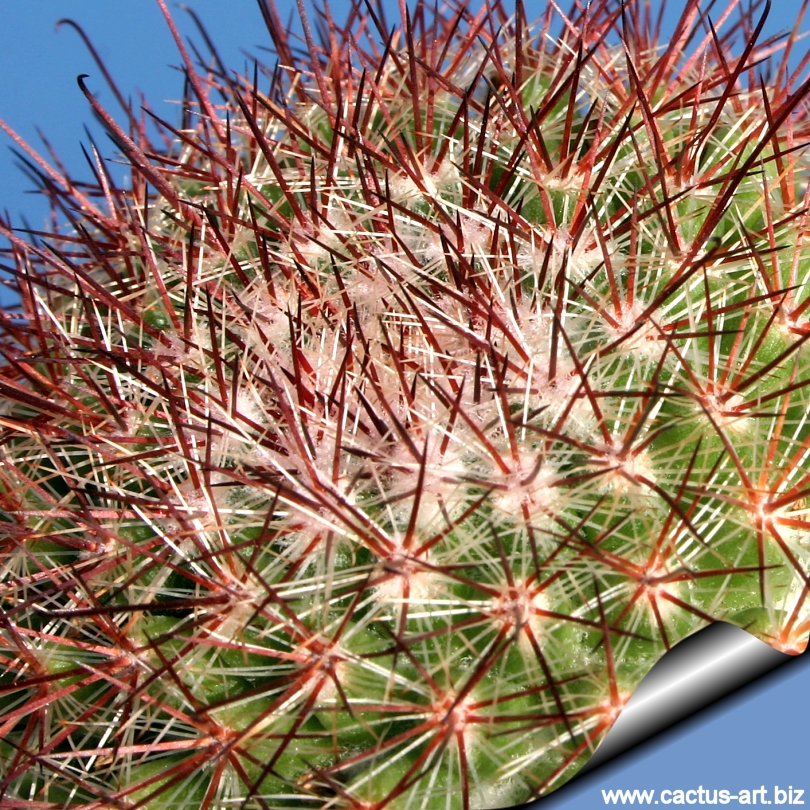
Axil: With a few bristles and some wool.
Areoles: Large, white and woolly.
Roots: Fibrous.
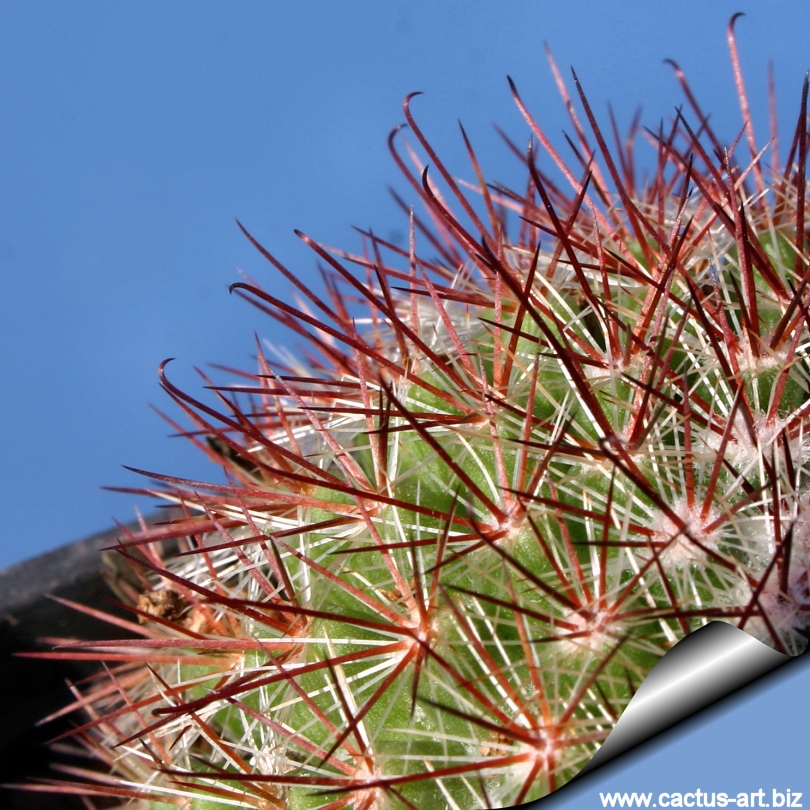
Radial spine: 20 - 25, stiff, bristle-like, straight, expanding,
the uppermost being the shortest, glassy white, 3 - 7 mm long.
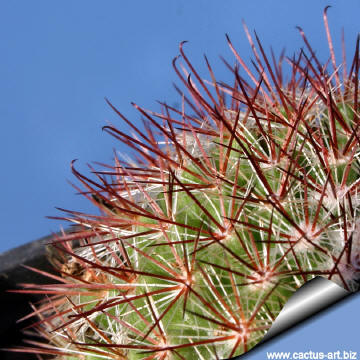
Central spine: 5 - 9, needle-like, straight (sometimes one is
hooked), brown to reddish, 7 - 15 mm long.
Flower: Funnel-form, dark carmine to magenta, 13 - 15mm long and
10 - 12 mm in diameter.
Fruit: Ovoid to club-shaped, carmine, 10 - 15 mm long and 6 - 8
mm wide, ripens 12 - 14 months after flowering. (while in Mammillaria
nunezii the fruit is greenish-white, tinged with pink)
Seed: Brown, round to club-shaped, 0,9 mm long and 0,8 mm in
diameter, testa striated, hilum subbasal.
Blooming season (Europe): April - July.
Comments: This plant is now referred to:
M. nunezii ssp nunezii.
The differences with M. nunezii ssp nunezii are very few: only the
fruit's colour, and its having fewer spines.
|
 |
 |
|
. |
 |
 |
|


Advertising
|
|
|
|
|
Family:
Cactaceae (Cactus
Family)
Mammillaria supraflumen
Reppenhagen
First description: In: Die gattung Mammillaria
nach dem heutigen stand meines wissens 1987; Herausgeber AfM, 1987: 87 -
89 .
Accepted
Scientific name: Mammillaria nunezii subsp. nunezii
Britton & Rose 1923
Origin: Mexico, Jalisco, near Ferreria.
Habitat: The plant is found on
porous stones and basalt rocks, in a bit of humus soil. Altitude
1500-1600 m.
Conservation status: Listed in
CITES appendix 2.
Synonyms:
- Neomammillaria nunezii
- Mammillaria nunezii (Britton &
Rose) Orcutt 1926
- Mammillaria nunezii subsp. nunezii
(Britton & Rose) Orcutt 1926
- Ebnerella nunezii (Britton &
Rose) Buxb. 1951
Other names considered as synonyms:
- Neomammillaria solisii Britton &
Rose 1923
- Mammillaria solisii (Britton &
Rose) Boed. 1933
- Ebnerella solisii (Britton &
Rose) Buxb. 1951
- Mammillaria wuthenauiana Backeb.
1942
- Mammillaria hubertmulleri Repp.
1987
|
|
|
|
 Cultivation: An
easy-to-grow and easily flowering species, but not a fast grower, that
may make large clumps given the best conditions. Some plants will
offset, and moderately large-sized clumps can be produced in a few
years.
Water regularly in summer, but do not over-water (rot prone). Use a pot
with good drainage and a very porous potting media, and keep dry in
winter. Feed with a high potassium fertilizer in summer. Avoid frost.
Reputedly sensitive to low temperatures, but less so if kept on the dry
side prior to, and during, cold weather. Outside full sun or afternoon
shade, inside it needs bright light, and some direct sun. Tends to get
yellowish in strong light, which encourages flowering and heavy wool and
spine production.
Propagation: Direct sow after last frost, or
division of larger plants.
Photo of conspecific taxa, varieties, forms and
cultivars of Mammillaria nunezii .
|
|