|

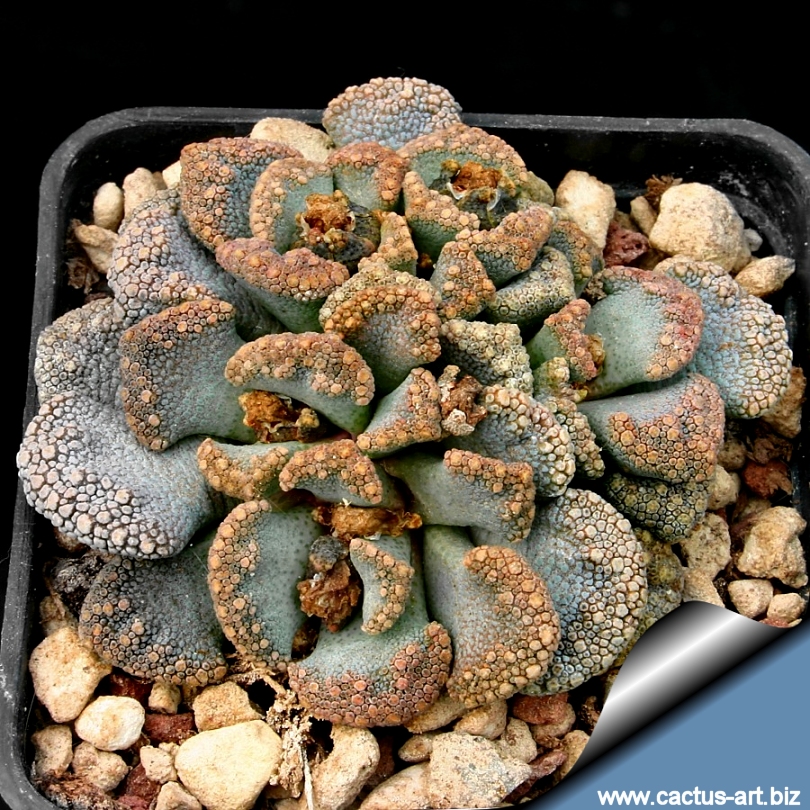
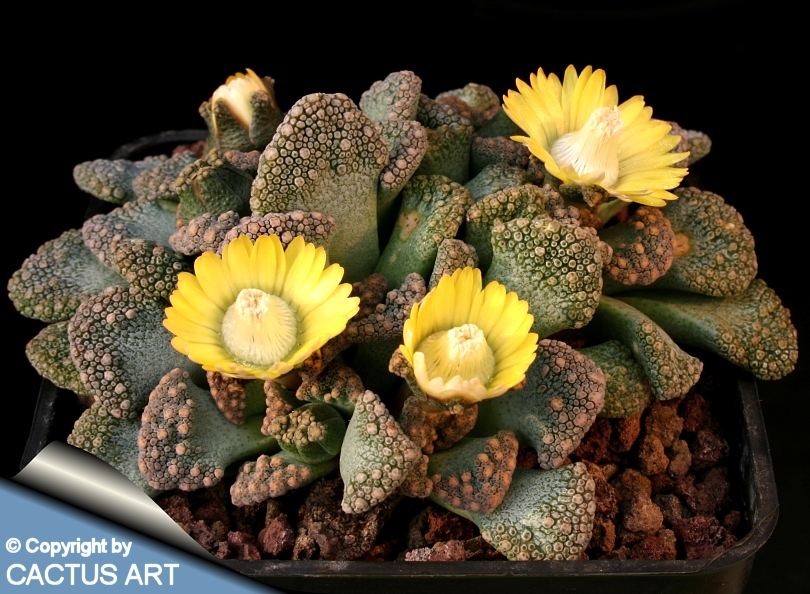
T. calcarea 35 km nw Brandvlei
The plants of this species are quite variable,
depending on origin, clone and sun exposure.
|
Description: Mat forming succulent with basal rosettes up to 10
cm wide.
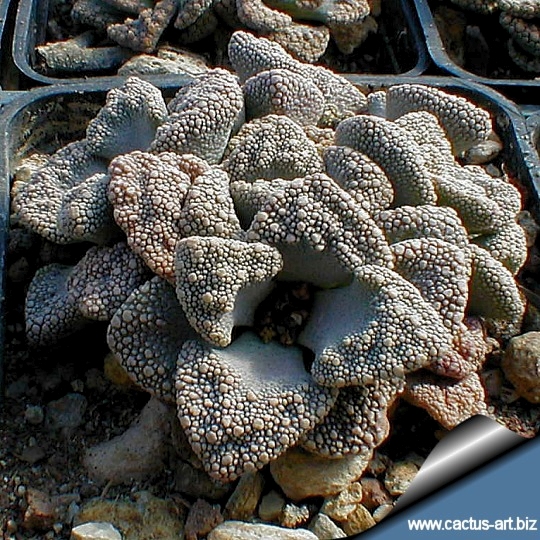
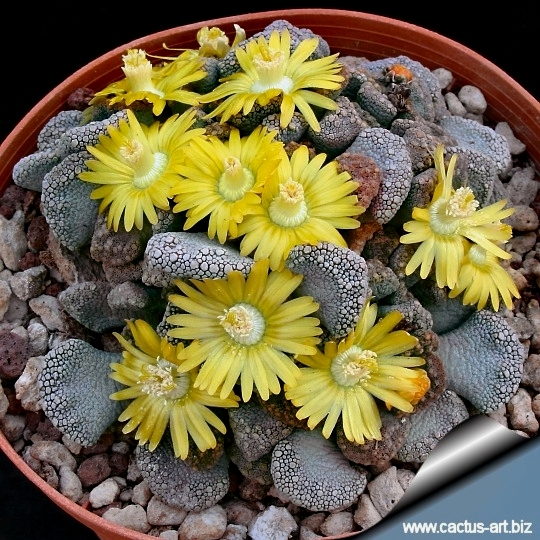
Leaves: Up to 2.5 cm long with truncate tip. This species has
variously coloured leaves, usually grey or blue-green, densely covered
at the apex with whitish, creamy grey, ochre, red or bluish rough
tubercles (depending on plant's origin).
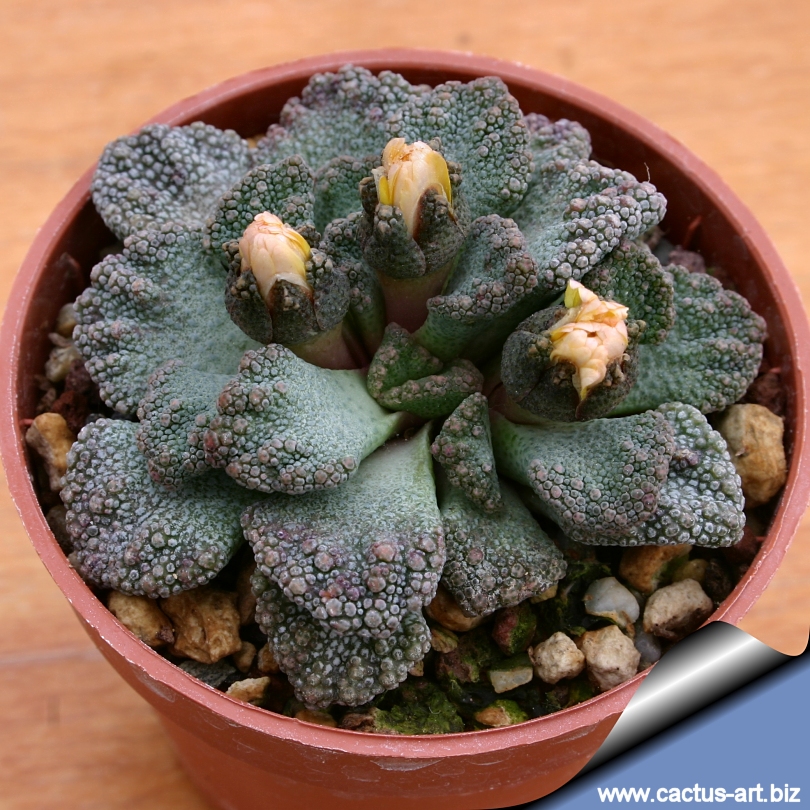
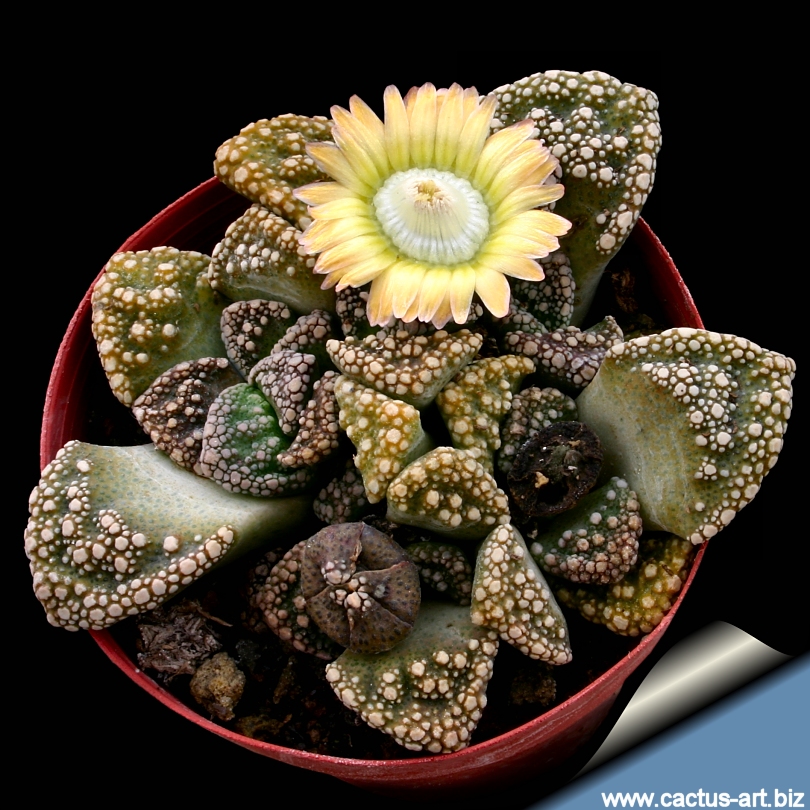
Flowers: 2 cm orange-yellow flowers in late fall and winter.
|

T. calcarea ( Campbell west Kimberley ) |

T. calcarea Oorlosghoek with buds |
 |
 |
|
Cultivations: This species is easy to grow and clumps readily,
forming a beautiful succulent mat. Needs moderate water when growing in
late fall and early spring. Keep somewhat dry the rest of the time. Like
all living rocks, they thrive in porous soils with excellent drainage.
It can tolerates high heat and heavy frost (hardy to -10° C). It is a
very rewarding succulent, and can be cultivated in desert gardens in
warm climates or in greenhouses or windowsills in the home. Enjoys
bright shade in summer and full sun in the other seasons.
Propagation: They grow quickly from seed or by
division of larger clumps.
Genus Titanopsis: There are three to six
species, depending on botanists' opinions. Some botanists have now
lumped T. lüderitzii and T. primosii in with T. schwantesii.
The species list for Titanopsis is considered to be:
|
|
|
Family: Mesebrianthemaceae (Aizoaceae) |
Scientific name:
Titanopsis calcarea
(Marl.) Schwant.
Origin:
South Africa (Bushmanland, Upper Karoo)
Habitat: With
a white incrustation to the leaves, it is confined to limestone
outcrops. This is probably a rare case of protective coloration in
plants akin to that found in the animal kingdom and these plants blend
in well with their surroundings.
Etymology:
Titanopsis calcarea is the species of Titanopsis most
frequently seen in cultivation, the name means 'looking like
limestone'
Synonyms:
Titanopsis calcareum
|
|

T. calcarea Campbell west
Kimberley
This species is a truly impressive living rock, with unique
leaves with very variable colourful "warts" on their ends, making them
blend well in the rocky areas of South Africa where they are native.

Photo of conspecific taxa,
varieties, forms and cultivars of Titanopsis calcarea:

 |
|