|
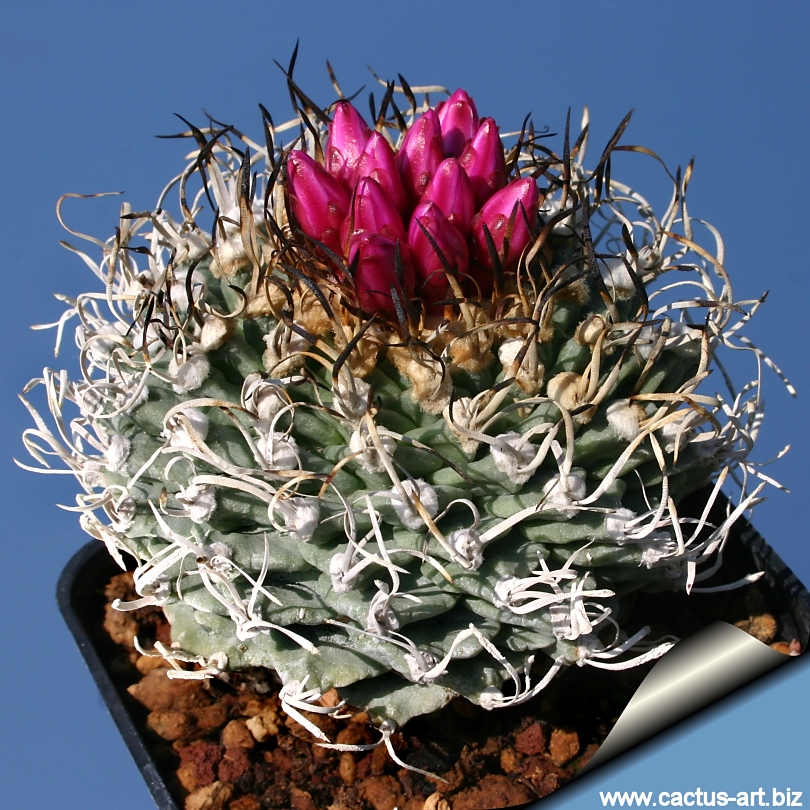
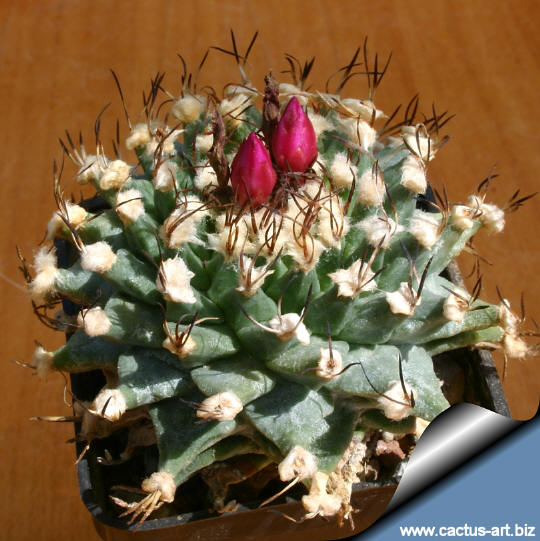
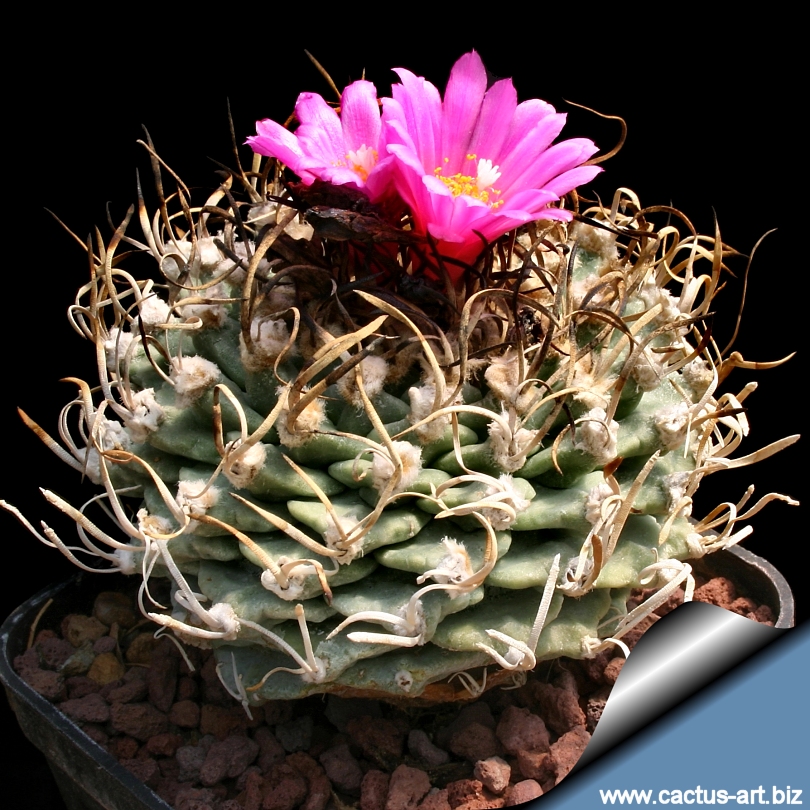
Description: T. alonsoi is a small
geophytic solitary cactus with a large tap-root, and only the
apical part of the stem exposed at soil level.
Stem: Flattened, spherical, mostly underground, 6-7 (-9) cm in
diameter, up to 11 cm long.
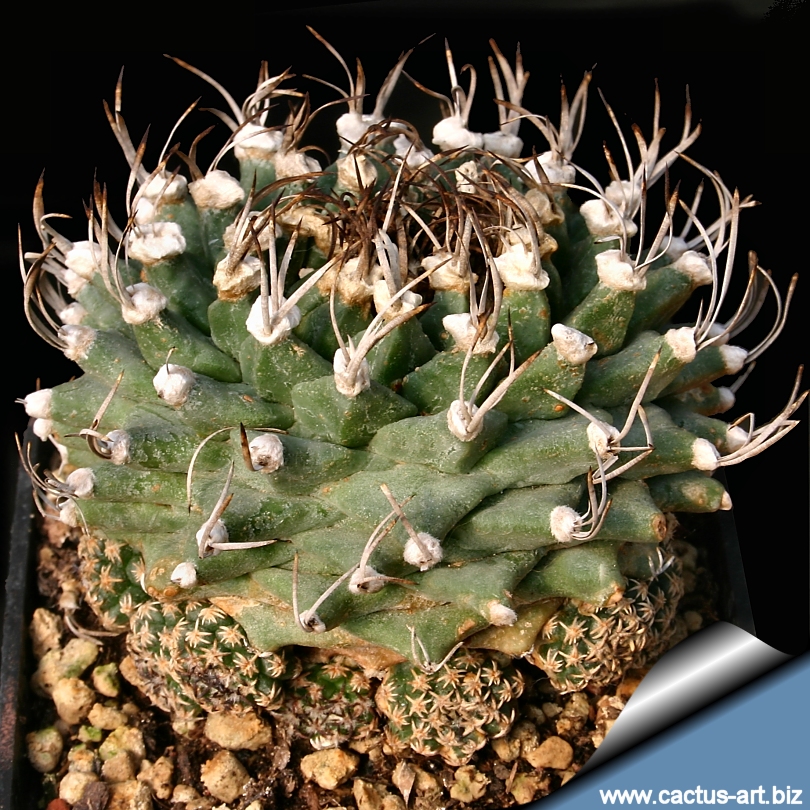
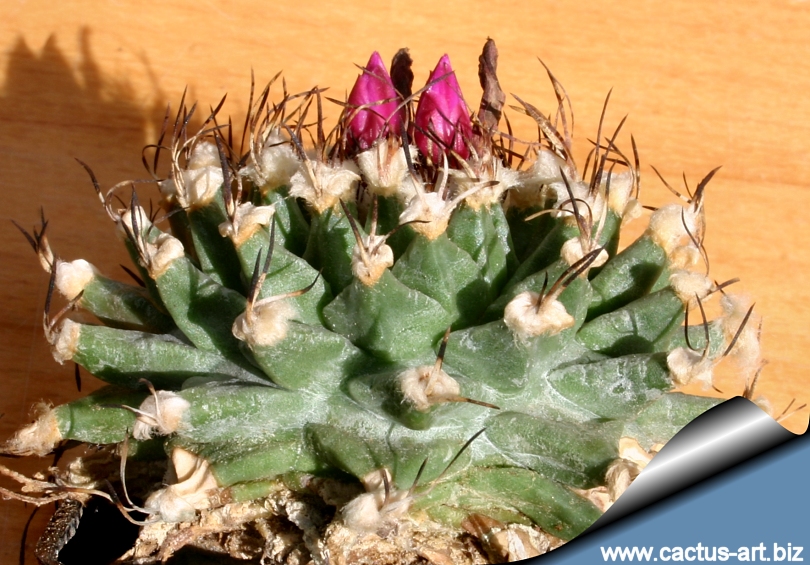
Ribs: Arranged in tubercles, these are 15 mm long and 13 mm wide
at the base, slightly angular, upper side keeled, however concave at
the base, clearly keeled on the underside, arranged in spirals,
opposite contact
parastichy with a number relationship of 5:8 or 8:13, from
grey-green to glaucous in colour.
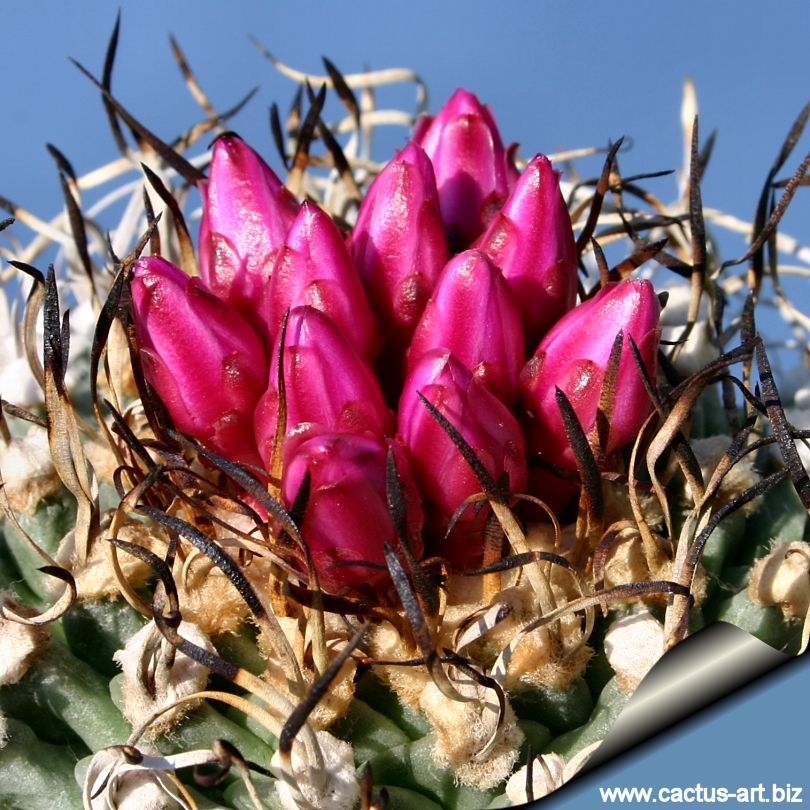
Areoles: At first with reddish brown wool, later becoming
grey.
Spines 3-5, up to 20 mm long, flattened, cardboard-like, grey with
dark tip, irregularly bent inwards, frequently weathered, not
piercing.
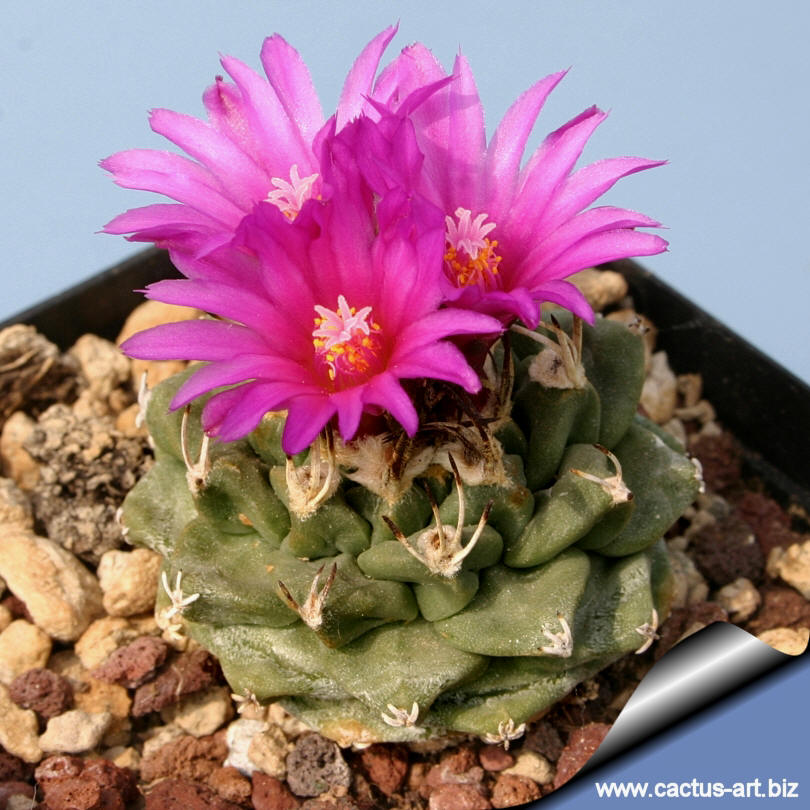
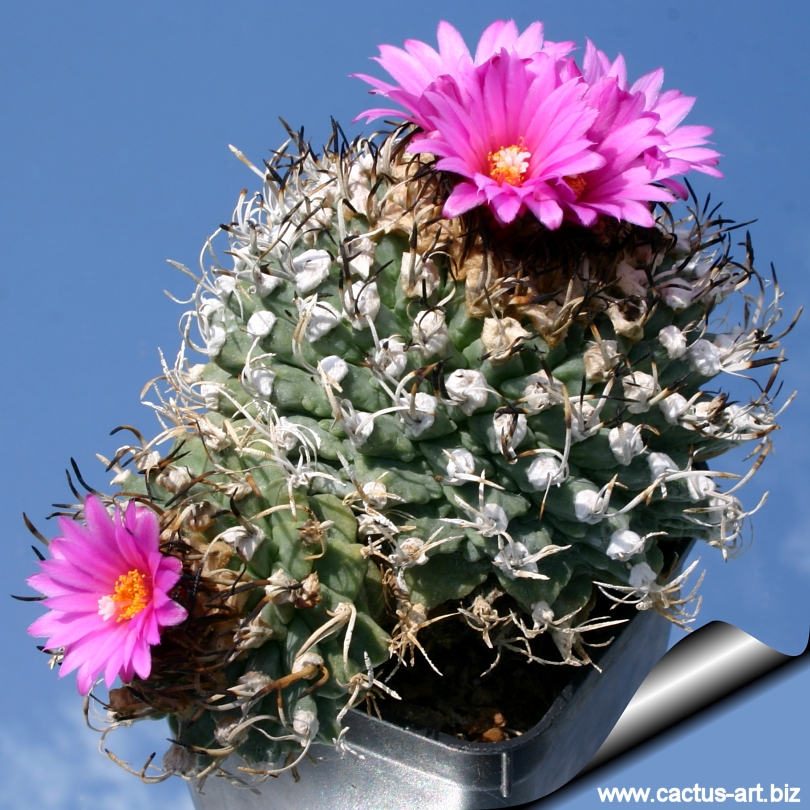
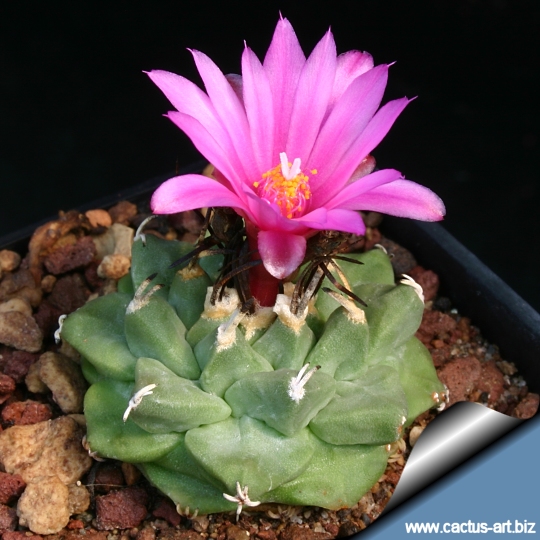
Flowers: Cherry red to pink-magenta, with more
intensely coloured mid-stripe 20-30 mm in diameter, 25-35 mm long,
standing above the tubercles by about 10 mm, with approximately 22 inner (teptals),
scale like perianth segments, more intensely red with pale edge. Pistil
15 mm long, white, standing above the stamens by around 2-4 mm, with 6
white, 1.5-2 (-2.5) mm-long stigma lobes.
Blooming season: From March to October, mainly between April and
June
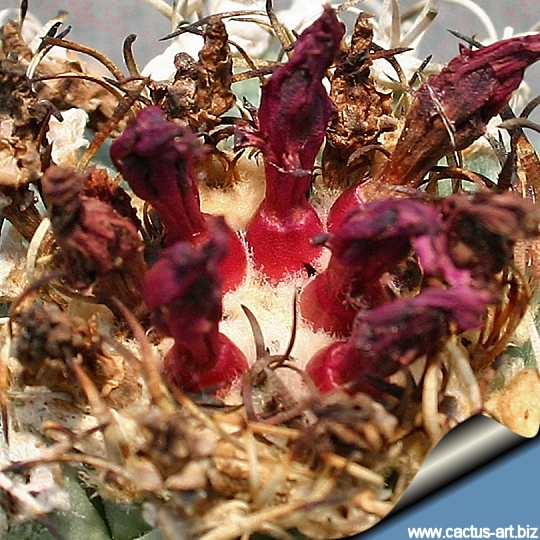
Fruit: 10 mm long, 5 mm in diameter, smooth, reddish-dark
purple, brighter at the base, opening with 1-2 longitudinal tears.
Seeds: 1 mm long, 0.75 mm high.
|
|
Cultivation: It’s a fairly easy and robust species to cultivate, but
very slow growing. It needs a very well-drained soil, and requires
strong sun to part sun to
keep the plant compact and low and to develop a good spinal
growth. Waterings should be rather infrequent to keep the plant compact,
and avoid its becoming excessively elongated and unnatural in
appearance. Furthermore it has a tap root, and watering
it properly is often difficult, because it tends to crack open or rot if
over-watered. Careful watering away from the body of the plant
will allow the areoles to keep their wool. Keep dry in winter, or when
night temperatures remain below 10° C. It is hardy to -4°C for a short
period. Assure a good ventilation.
Reproduction: From seed, since the plant rarely produces
plantlets, or
grafted.
|


 Cultivation and Mail Sale