|
|
|

This species is one of the most popular and highly ornamental Agaves
because it is spineless and forms such a structural low growing form.
One solitary plant can make an imposing statement.
|
|
Description:
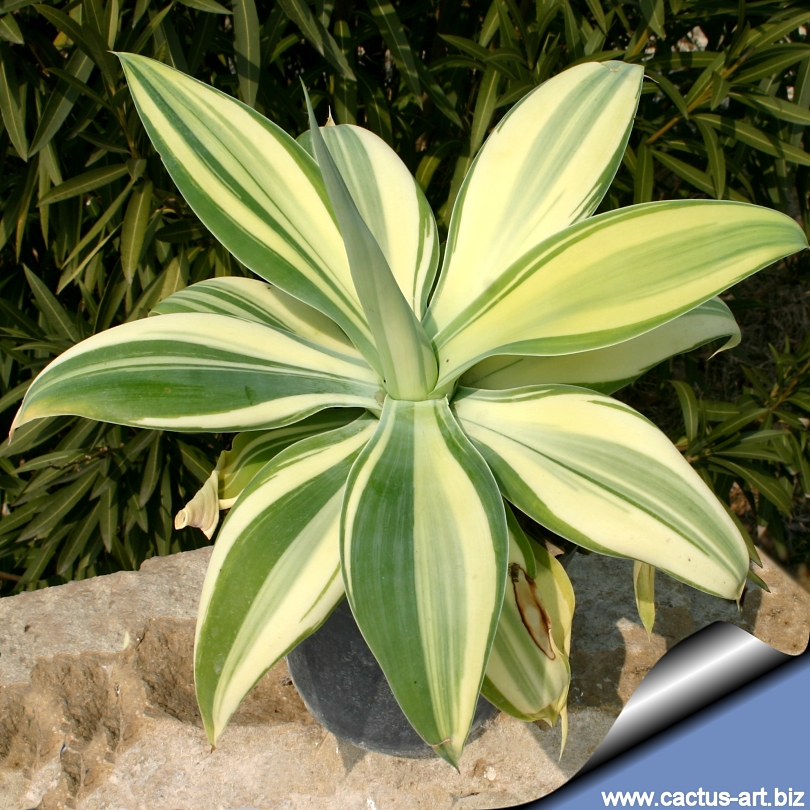
A. attenuata “variegata” is a wimpy, but striking and very
pricey plant, it is basically same as regular
A. attenuata except for the
broad, soft, pale blue-green leaves that are marked with contrasting
creamy yellow stripes. This cultivar tends to be slower to offset and
doesn't seem to grow as fast or get as large. It is thought that it can
takes a lot of sun for a variegated plant but a filtered sun spot is
surer.
The degree of variegation varies considerably from plant to plant, some
are almost completely green with only few thin cream stripes while - on
the other extreme - we can found almost completely white ones. The
whiter leaved are the more admired and pricey, but also the slower and
difficult to grow, especially the very white ones. It makes for a
handsome potted plant, especially when highlighted with dark foliage
plants such as Black Aeonium. If planted in the ground it will likely
form a clump to 90 to 120 cm or more tall by even wider with many
rosettes of leaves. Fear not this plant as it has no spines unlike
its prickly cousins.
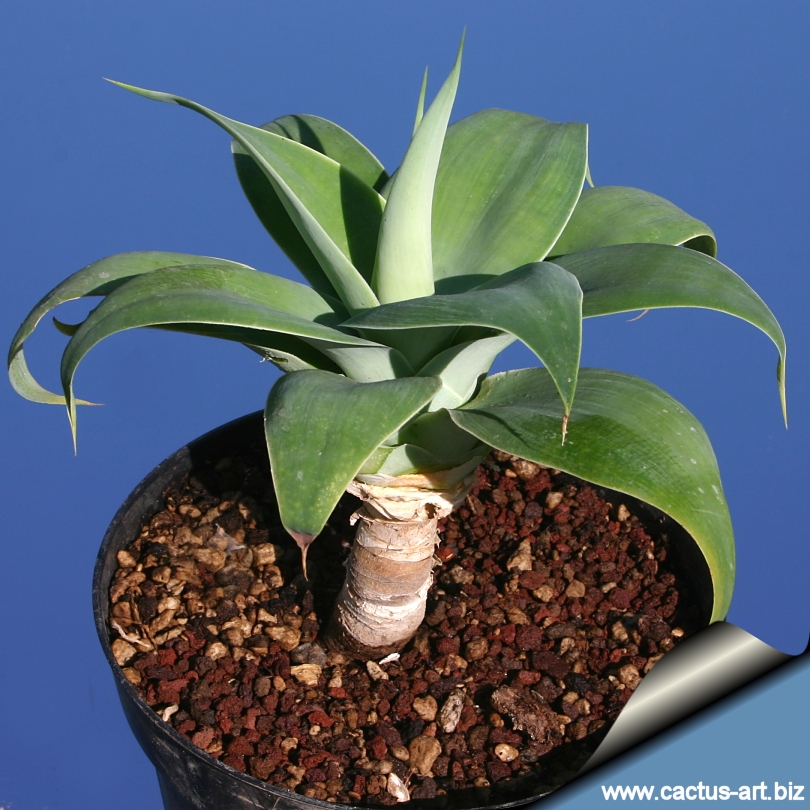
Stems: Stout curving , often branched, smooth grey stems that
rise up to 100 cm tall (unusual among agaves) and eventually old leaves
fall off, leaving them naked and visible.
Leaves: Wide, soft,
pliable, somewhat translucent ovate-accuminate, 50-70 cm long and 12-16 cm
large. The leaves are powdery green, light yellowish green or grey/blue
green.There are no teeth, nor terminal spines,
although the leaves taper to points that fray with age. They emerge from
a tight central spear to arch gracefully back, looking a bit like a
large open green flower.
Flowers: Flowers are pale greenish yellow on a dense raceme
1,5-3,5 long .
Over
many months the
vertical flower stalk
develops,
first
as a mass of green buds which open from the bottom up into flowers of
greenish-yellow,
then it reflexes back towards
the ground before arching upward again. The flowers are followed by seed
pods and from
the axils of the flowers many new "plantlets" (or bulbils) will sprout,
meanwhile the mother rosette slowly dies. But sometime - unlike
other members of it's family - this plant doesn't die after flowering.
Blooming Time:
Spring. It may take up to 10 years to bloom.
|
As plants get older,
they produce smooth curving
trunks, often branched, that rise 40-100 cm tall (unusual among agaves) and eventually old leaves
fall off, leaving them naked and visible. |
Some extremely beautiful variegated cultivars have been described. The
variegated forms are among of the much sought after and highly prized
agaves by collectors, |
|
Advertising
|
|
|
|
|
|
|
Family: Agavaceae
Scientific Name: Agave
attenuata Galeotti 1834
Synonyms:
- Agave
cernua Berger 1915
- Agave
glaucescens Hook. 1862
- Agave
pruinosa Lem. ex Jacobi 1865
Common English Names include: "Fox Tail
Agave", "Lion's Tail", "Swan's Neck", "Elephant’s trunk", "Spineless
Century Plant", "Gooseneck Succulent" and "Soft Leaved Agave".
Origin: ative to the
plateau of central Mexico (from Jalisco east to
Mexico)
Habitat: Grows in small colonies at elevations of 1,900 to 2,500
meters, this Agave is rare in the wild.
|
|
|
|
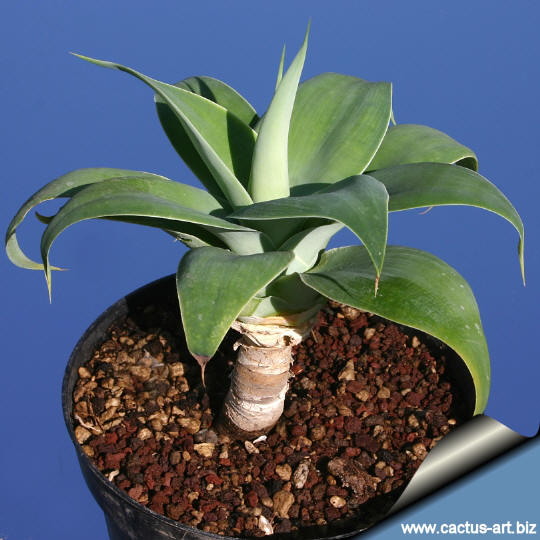
As plants get older,
they produce smooth curving
trunks, often branched, that rise 40-100 cm tall (unusual among agaves) and eventually old leaves
fall off, leaving them naked and visible.
Cultivation:
Agave attenuata is an
excellent plant which works well with other succulents or even tropical
plant material. It is well suited for a container inside or a sheltered
warm spot outdoors.
It is a frost tender plant and
it will usually be
severely damaged in temperatures below -2° C.
Although
Agave attenuata
survives in poor soils and can tollerate
full coastal sun to to full shade,
it does best in rich but
well-drained soil mix
( 2 parts peat moss to 1 part loam to 1 part of pumice) with half sun
exposures. The plant is extremely drought tolerant but does better with
ample moisture
and grows quickly if kept
well watered and nourished (Slow release fertilizer applied once or
twice a year is usually sufficient).
During the winter months, one should only water enough to keep the
leaves from shrivelling. Plants cultivated outdoors are more drought
tolerant and can take some heat and full sun.
It tolerates seaside conditions
too.
Protect from snails which can also
disfigure the plant.
Offsets or 'pups' can be removed to
maintain the strong architectural lines of the agave and provide great
additional plants, or left to form a clump.
Propagation:
By seeds or by
removing
suckers
produced at the
base of older plants or using
the thousands
of small bulbils produced on its' entire flower stalk length. Seeds
germinate readily when they are fresh.
The basal suckers can be removed in spring or summer,
letting the cuttings dry for a few days before inserting in compost.
Photo of conspecific taxa, varieties, forms and
cultivars of Agave attenuata.


|
|