|
|
|
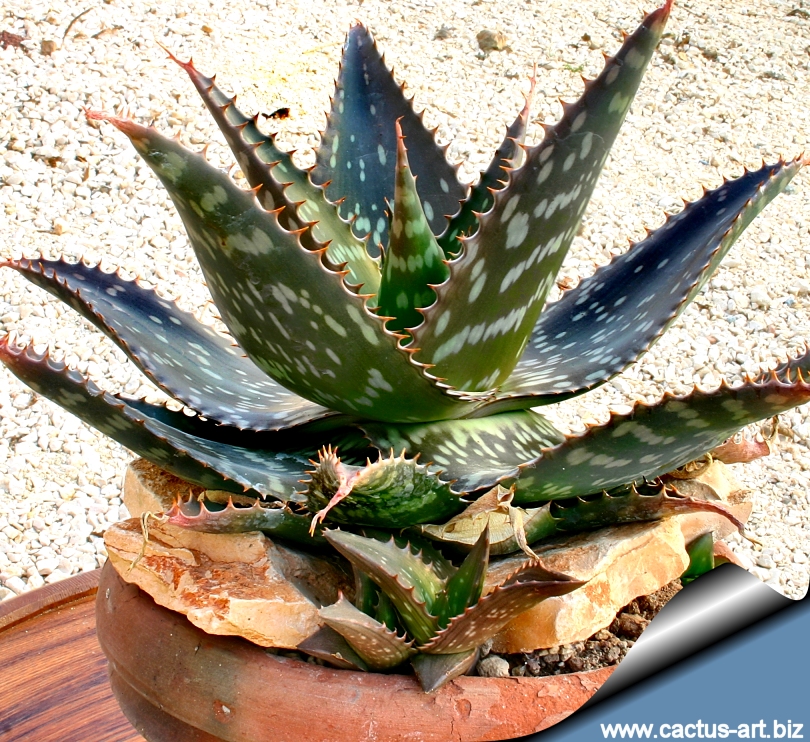
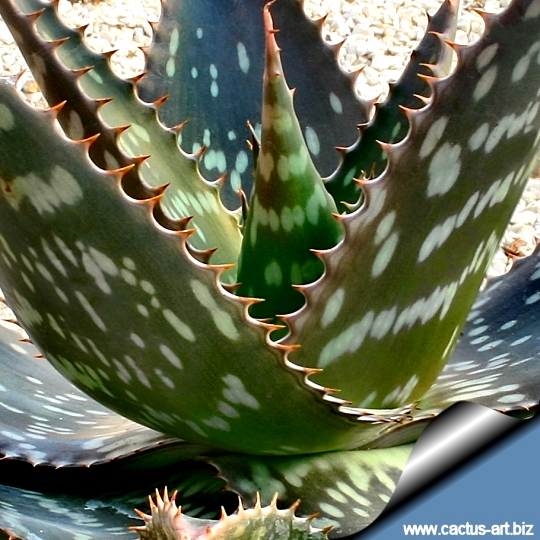
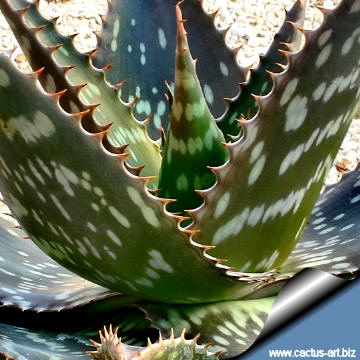
Beautiful dark green leaves with distinctive white spots and
coarsely-toothed
margins;
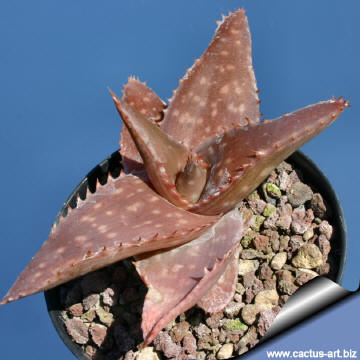
foliage sometimes has reddish tinge. This aloe is very
tolerant of drought, although the tips of the leaves may wither and curl
during hot, dry periods.
|
|
Description: Soap aloe grows in a (usually)
stemless, clumping
rosette, that often overgrown in succulent gardens. The main rosette
gets up to 30/45cm tall and just as wide. The
lance-shaped leaves are thick pale green spotted (with linear spots-
almost streaked) foliage sometimes has reddish tinge and 25-30 cm long.
The leaf
margins are armed with prominent dark brown
teeth.
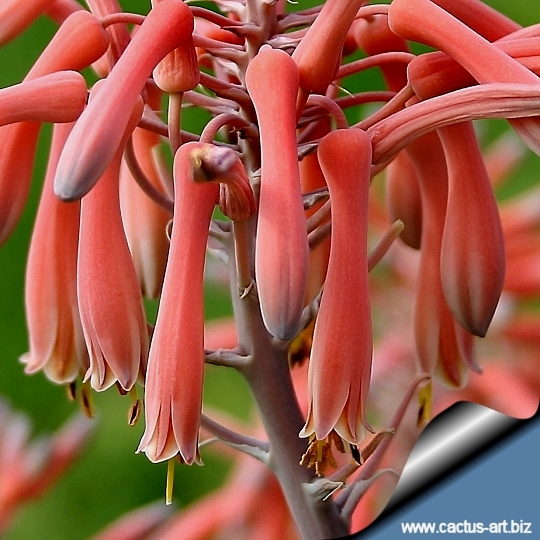
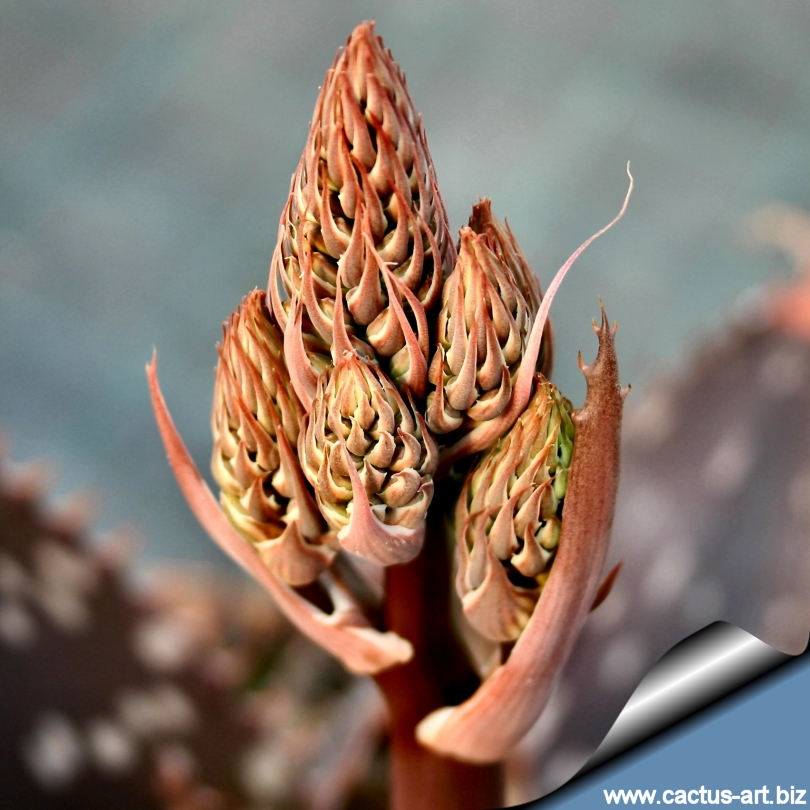
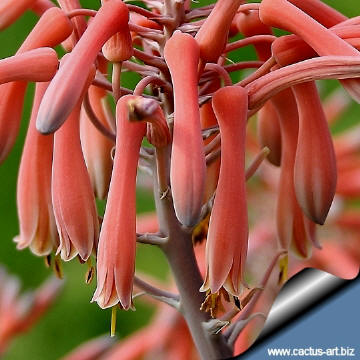
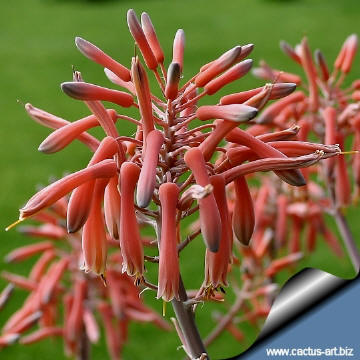
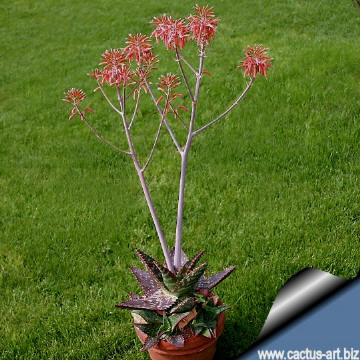
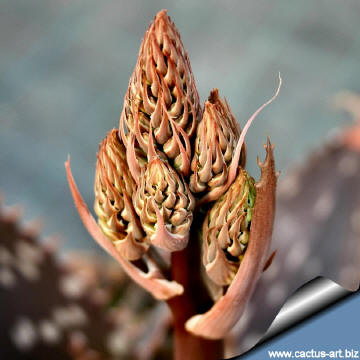
Flowers: Throughout much of the
summer, soap aloe sends up a purplish elegantly elaborate
candelabrum-like stalk about 60/90 m tall, bearing showy
tubular yellow, orange or red flowers (first bloom is best). Flowers
are often, but not always
branched and
flowers head is a flatted
globe in shape. Individual flowers are 5-7cm long.
|
|
 |
 |
|
|
|
 |
 |
|
. |
|
 |
 |
|


Advertising
|
|
|
|
|
|
|
Family: Asphodelaceae
Scientific name:
Aloe saponaria var. saponaria
Origin:
Widespread in the
arid regions from Eastern Cape Province of South Africa to
Zimbabwe and Botswana.
Conservation status: Listed in
CITES appendix 2.
Vernacular names
include: Soap aloe, Zebra aloe
Etymology:
Synonyms:
- Aloe maculata
- Aloe latifolia
- Aloe saponaria var. ficksburgensis
- Aloe saponaria var. brachyphylla
- Aloe leptophylla
- Aloe leptophylla var. stenophylla
- Aloe umbellata
- Aloe saponaria var. latifolia
- Aloe saponaria
- Aloe perfoliata var. saponaria
- Aloe perfoliata var. lambda
- Aloe perfoliata var. theta
- Aloe maculosa
- Aloe disticha
NOTE:
The
sap from the
juicy leaves makes suds in water and can be used as a soap
substitute, but
contrarily to the medicinal A. barbadensis
(A. vera), its sap should not
be used on the
wound
skin,
as it is irritating and can provoke dermatitis in sensitive people.
|
|
|
|
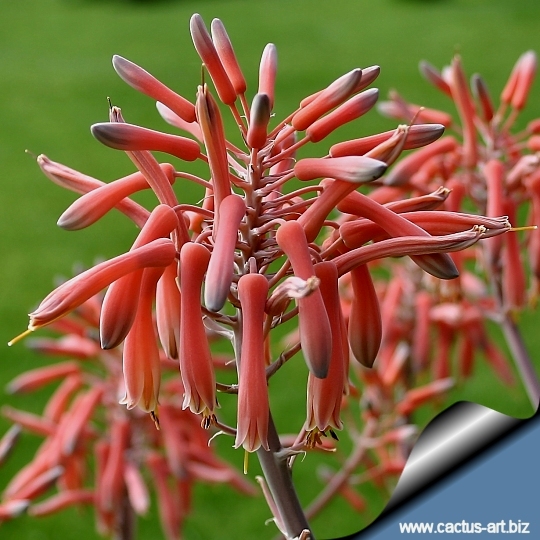
Eye catching
clusters of tubular coral-coloured flowers that come in several
flushes in early spring and summer.
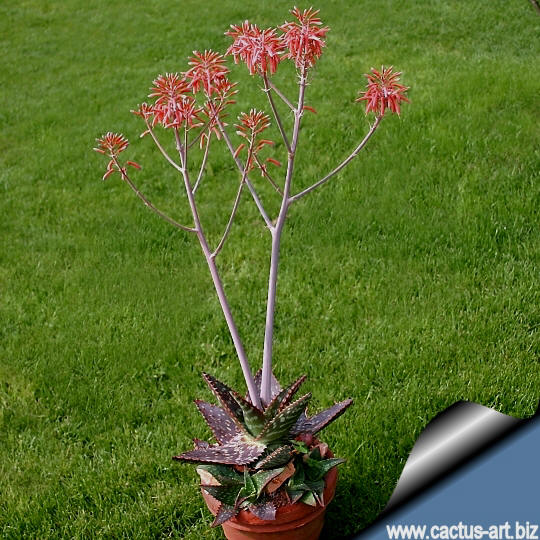
Cultivation: Very easy to grow and adaptable need a
mineral soil with good
drainage.
Light:
Full sun to
partial shade. Plants grown in partial shade usually look
healthier and more
succulent.
Moisture: This aloe is very
tolerant of
drought, although the tips of the leaves may wither and curl during
hot,
dry
periods. Supplemental
watering will keep the leaves plump and juicy.
Hardiness: It is damaged in
hard freezes, but recovers quickly. The leaf tips get damaged below
-2°C.
Maintenance: Removal of old flower
stalks; Divide the crowded
clumps periodically. During the
winter months, the plants should be grown cool to initiate flower
development (about 5-10°C )
Propagation: By
division of
offshoots that develop around the outside of the main rosette in
spring or by seed. Fresh seeds
germinate quickly at 18°C. Uses:
- Gardening: This aloe can be grown in
large, rocky, well-drained soil in gardens in drier areas. It is very
drought resistant but susceptible to frost. Aloe saponaria
adapts well to a variety of soils and climates. It makes an excellent
ground cover, grows best in a sunny position and makes a long lasting
cut flower.
|
|


 Cultivation and Mail Sale