|
|
|
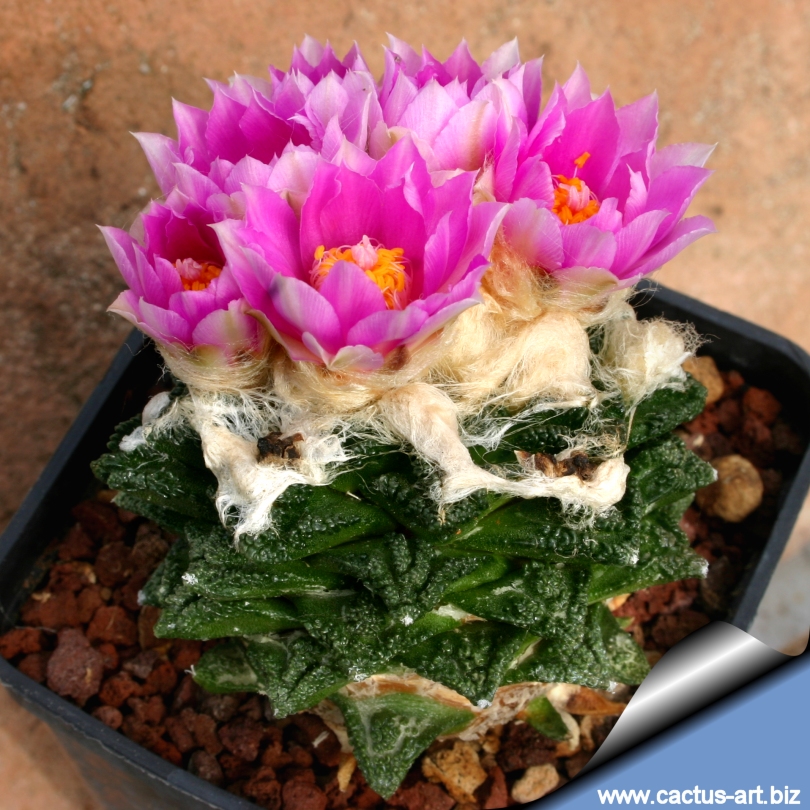
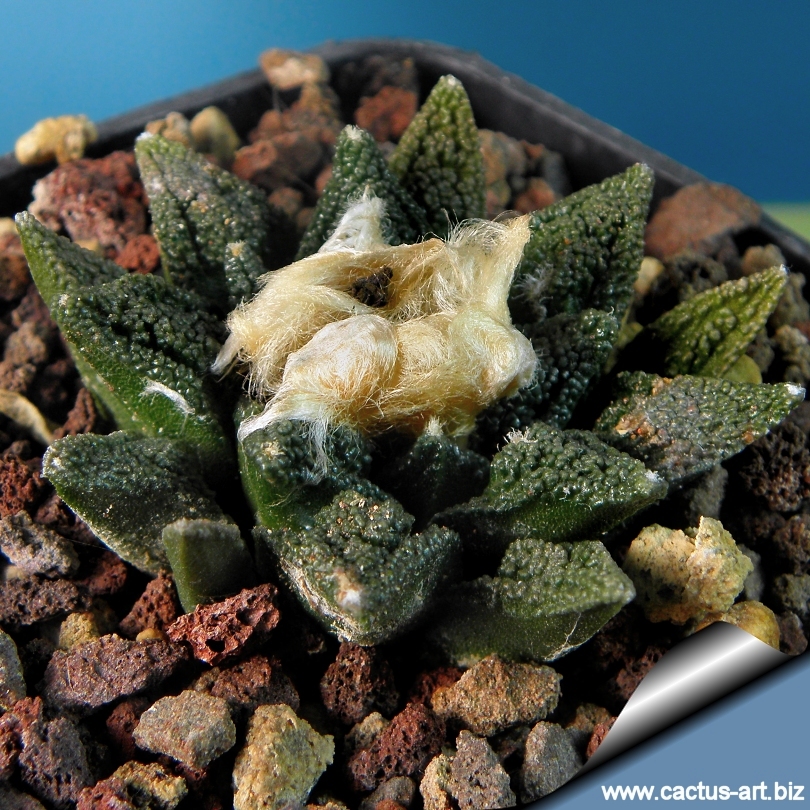
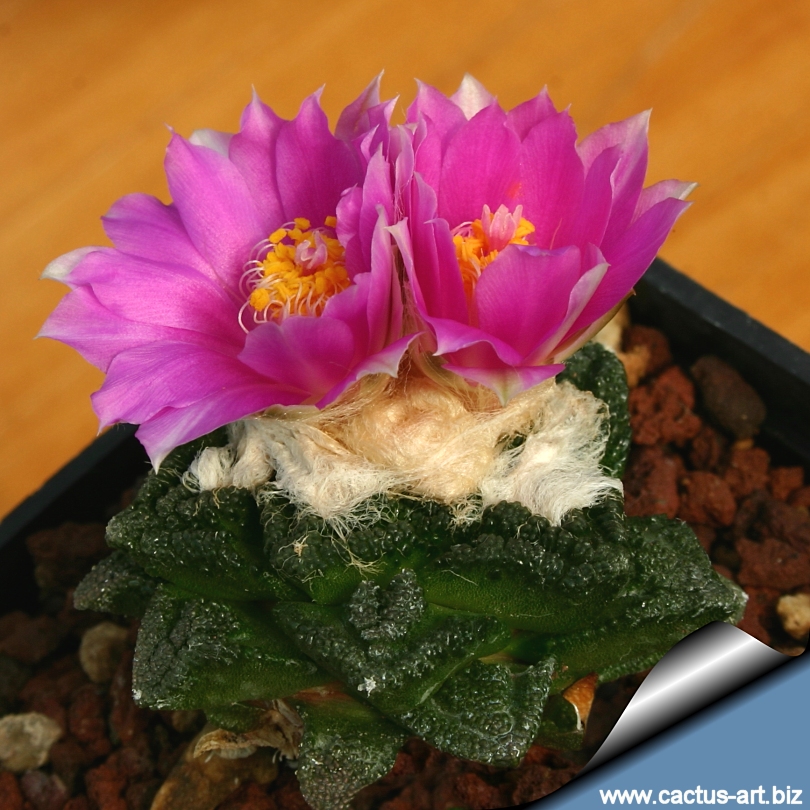
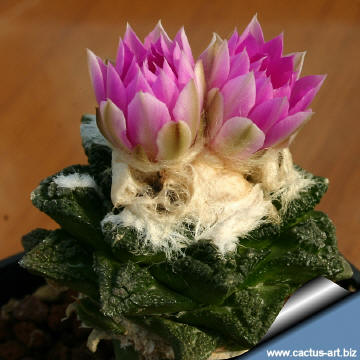
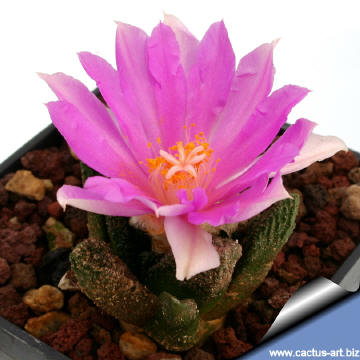
Ariocarpus bravoanus var. hintonii
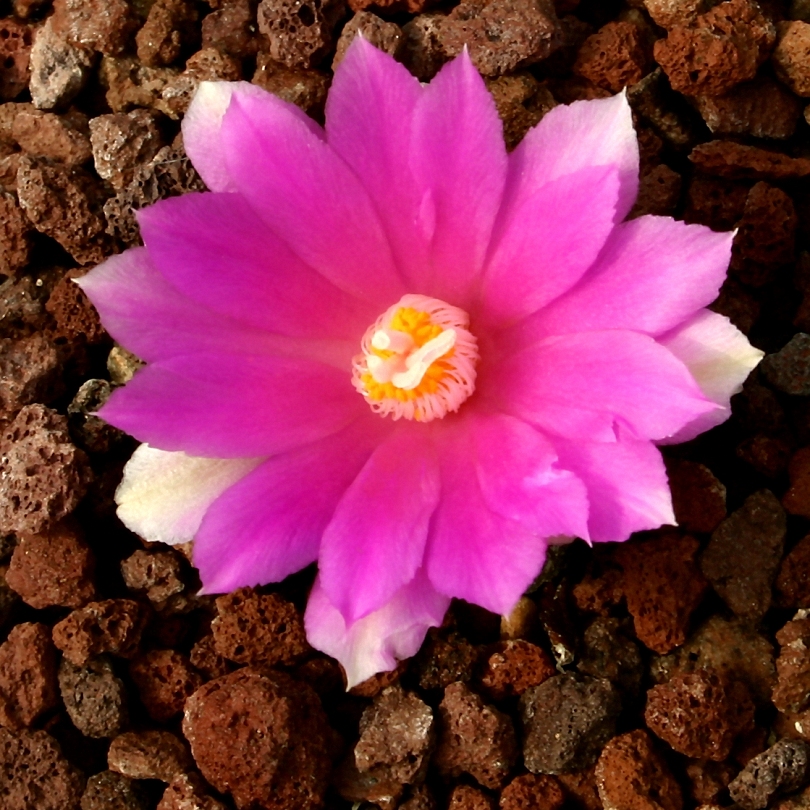
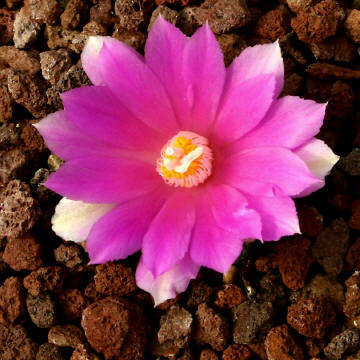
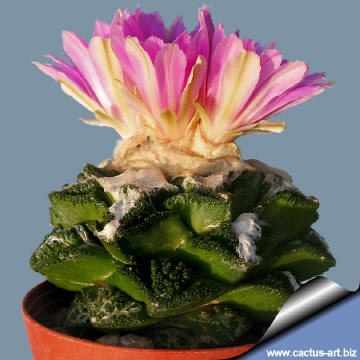
Flowers pink-purple with greenish-white margins, inner perianth
parts deep magenta.
|
|
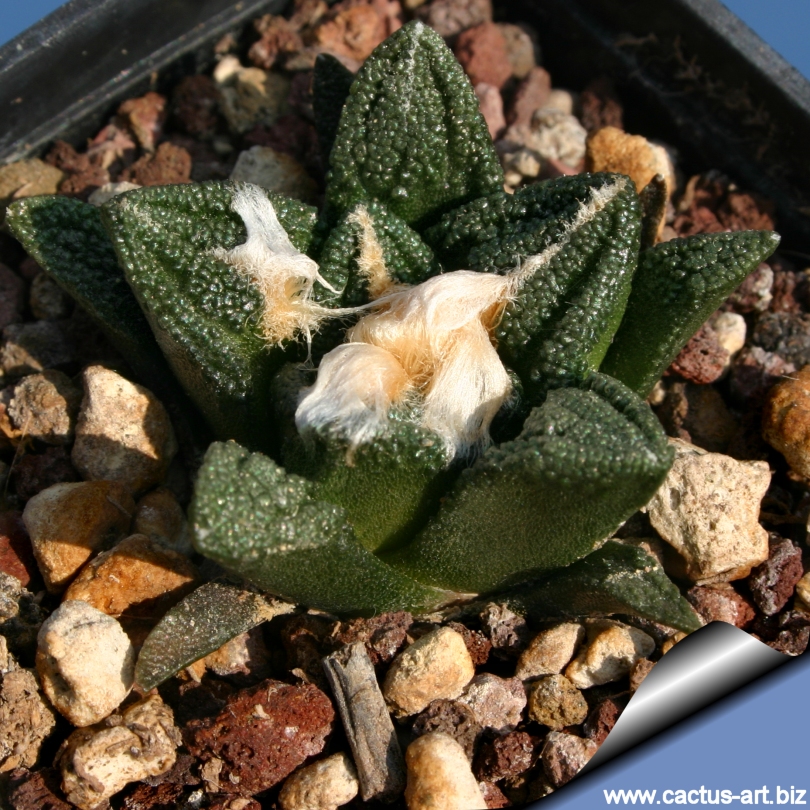
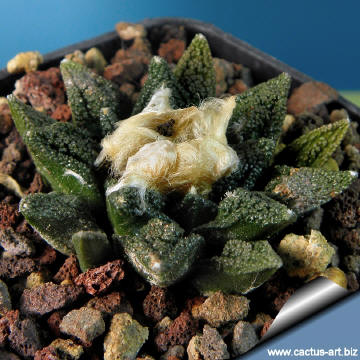
Habit: Solitary geophyte.cactus,
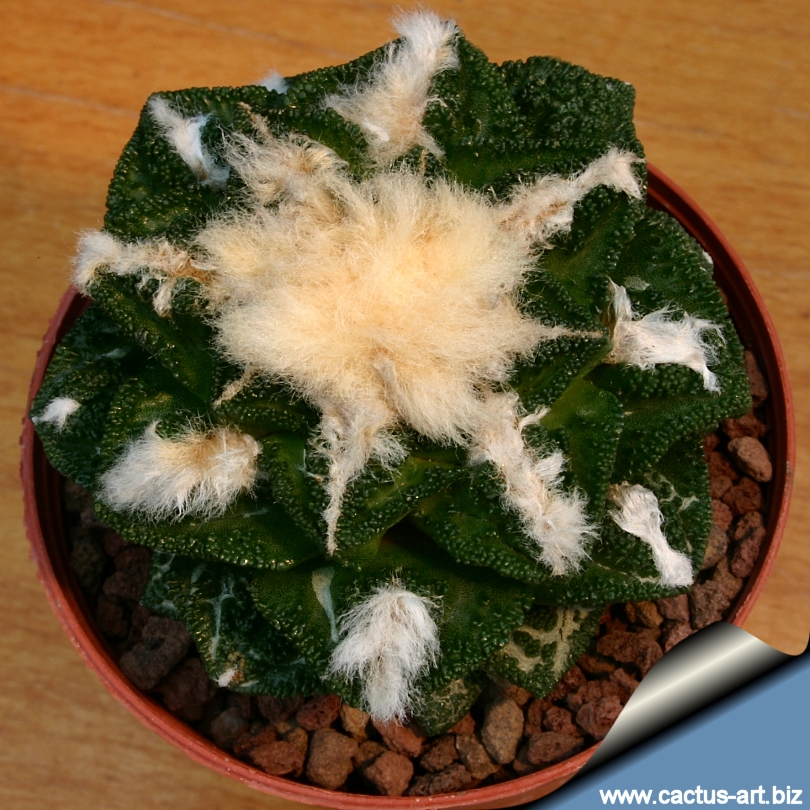
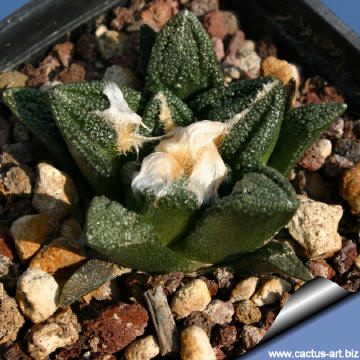
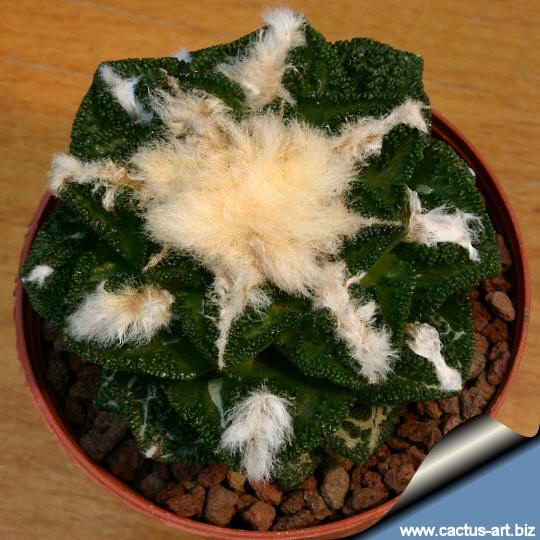
rosette-shaped with triangular, rough, dark green verrucese
tubercles..
Stem: Growing slowly to 6 cm in diameter 1.5 cm above ground
level in habitat.
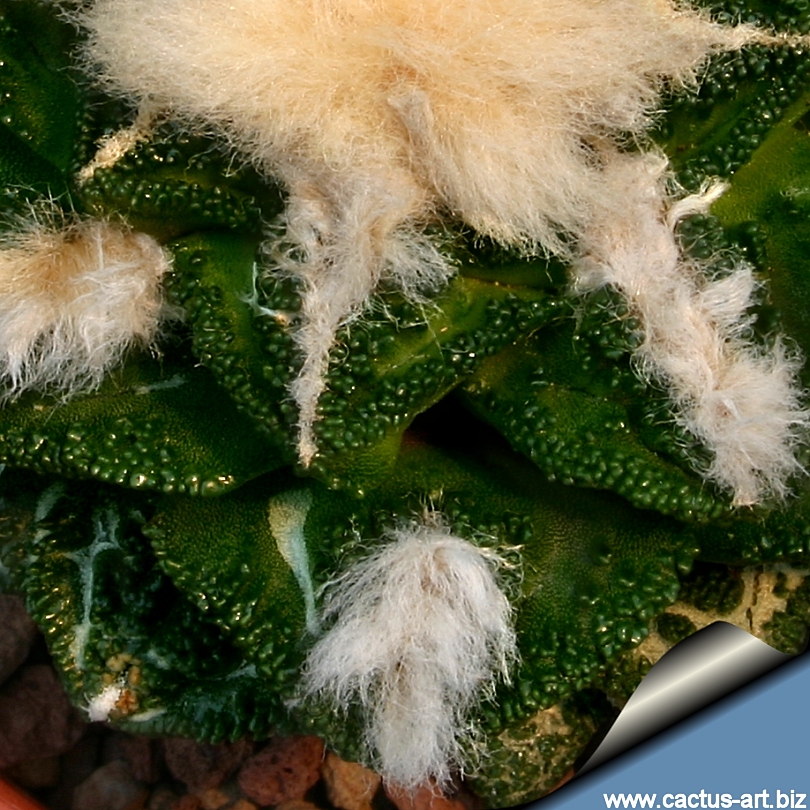
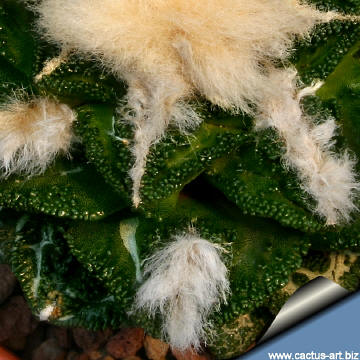
Tubercles: Flat, triangular, up to 20mm dark olive green, with a
central woolly grove and two smaller glabrous, very distinct, perfectly
straight lateral groves 0.5-1.0 mm wide,. The verrucose part of adaxial
tubercle surface is 8-11 mm long and 11-15 mm wide, the remainder is
densely and finely verrucose, with a pale, almost crystalline
appearance, edges acute, not rounded apex acute and well-defined. The central fissure
develops only with maturity.
Parastichy numbers: 5 and 8.
Spines: None.
Flowers: Pinkish-magenta flower, 4 cm in diameter.
Blooming season: August to October , it is frequently the
earliest species of the genus to bloom in cultivation.
Fruit: Pale red 2O x 5mm.
Seeds: 1.1-1.4(-1.5) x O.95 -1.2 mm, testa black, tuberculate.
|
 |
 |
|
. |
|
 |
 |
|
. |
|
 |
 |
|
. |
|
|
|
|
This
specie starts blooming when still young. The
first flower is larger than the plant's body.
The central fissure on the
tubercle develops only with maturity.
Cultivation: Grows in
alluvial plain that becomes muddy in
summer, so likes quite a lot of water then... but very
prone to rot other times of the year, moderate water in
spring and
autumn, no water in
winter. Cultivate it in a well drained, non-organic,
free-draining soil compost. The use of a weak low-nitrogen fertilizer
during the growing season can encourage growth. The main threat to its
development is root rot.
The Ariocarpus should be kept dry whenever there is a threat of cold.
The appearance of Ariocarpus can benefit greatly by watering the plants
from the bottom. This practice will help to keep the “wool” on the top
of the plant from becoming matted or discoloured. Need
half shadel to
Full sunf. Frost Tolerance: Hardy to -10° C.
Propagation: It is easy to
raise from seed, but will generally take about 6-10 years to reach
flowering size, occasionally grafted.
|
|
Advertising
|
|
|
|
|
Family:
Cactaceae (Cactus
Family)
Conservation status: Listed in
CITES appendix I
Scientific name: Ariocarpus bravoanus subsp. hintonii
(Stuppy & N.P. Taylor) Anderson E.F. & Fitz Maurice W.A
Pubblished in: Haseltonia 5: 1-20, 1997
Original pubblication (basionym):
Ariocarpus fissuratus var. hintonii Stuppy, W. & Taylor,
N.P.
Pubblished in: (1989) Bradleya 7: 84-88.
Synonyms:
Ariocarpus fissuratus ssp. hintonii (W. Stuppy & N. P.
Taylor) Halda
Origin: Mexico (known from two small locations 10 and 35km to
the South of Matehuala, in Northern San Luis Potosi)
Habitat:
Habitat: Grows at circa 1600m altitude on gravelly limestone
slopes.
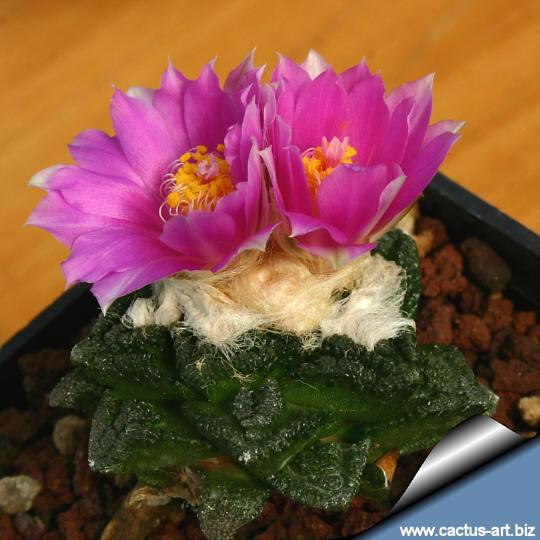
It flowers in August to October and is frequently the
earliest species of the genus to bloom in cultivation. This
species start flowering when still young.
|
|
|
|
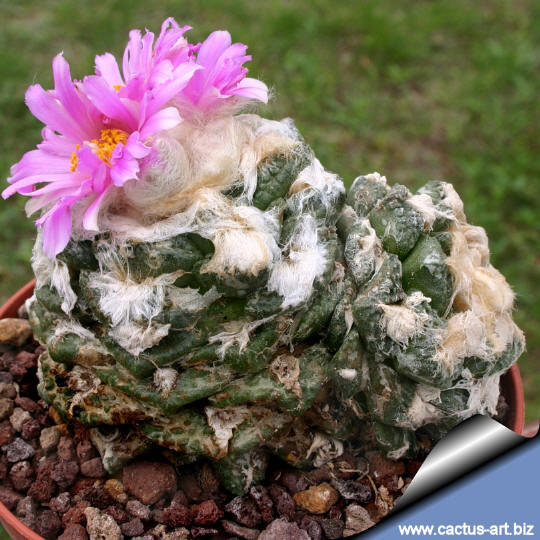
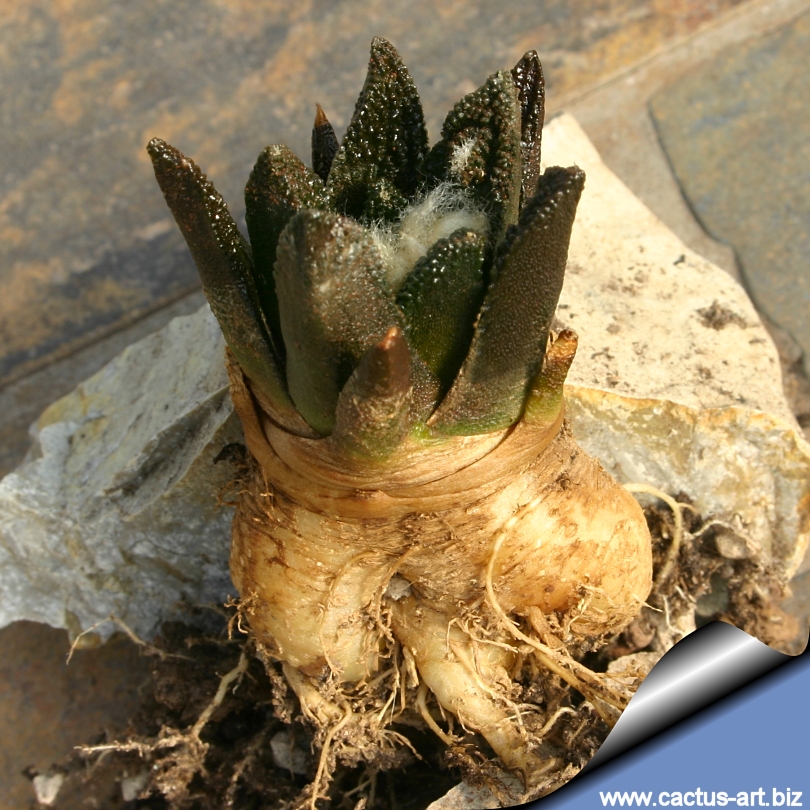
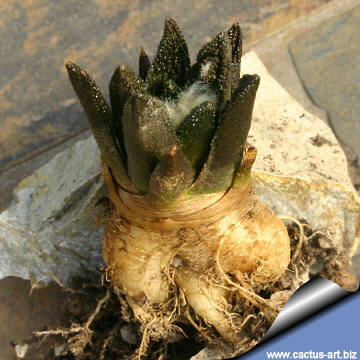
A
degrafted specimen imported from China.
NOTE: Ariocarpus hintonii - discovered in 1981 - is a highland or southern
form of
A. fissuratus
from a geographically remote isolated line.
A. fissuratus var. hintonii, although
superficially resembling
A. fissuratus
of the Northern type, is closely related to
A. bravoanus, sharing many similar morphological characters,
tubercle structure, papillate epidermis, seed testa etc.
A.
fissuratus var. hintonii was therefore subsequently transferred to
subspecific status beneath A. bravoanus by Anderson & Fitz
Maurice. In fact some plants in the A. bravoanus habitat have a marked resemblance to A. hintonii, and these
taxon two may well represent extremes of the same species.
Photo of conspecific taxa, varieties, forms and cultivars of
plants belonging to the
Ariocarpus fissuratus/bravoanus
complex
(This
Taxon has lots of synonyms whit
several controversial varieties and subspecies):

 |
|


 Cultivation
and Mail Sale
Cultivation
and Mail Sale