Home | E-mail | Photo gallery | Mail Sale Catalogue | Grafting Guestbook | Dictionary |  Winter test | Links | Search

  Echinocereus rigidissimus var. rubrispinus CACTUS ART
NURSERY

Cultivation and Mail Sale
of Cacti and Succulents.


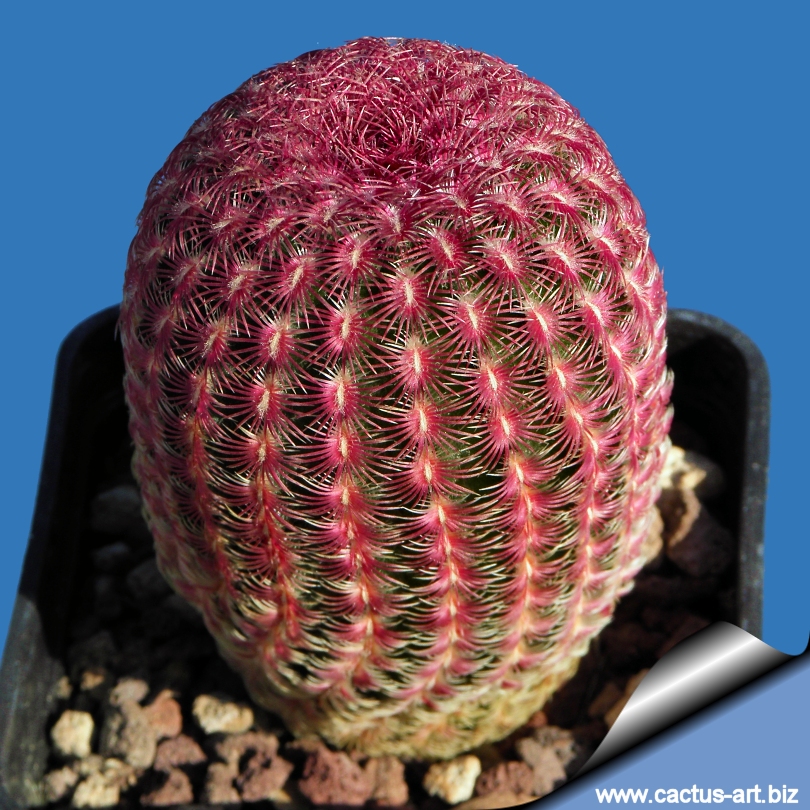
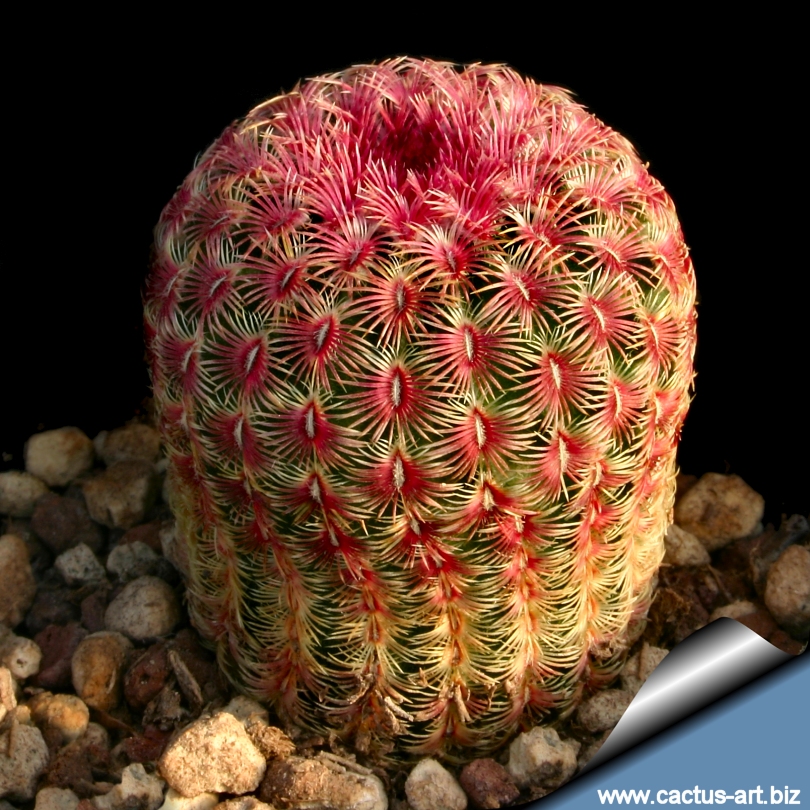
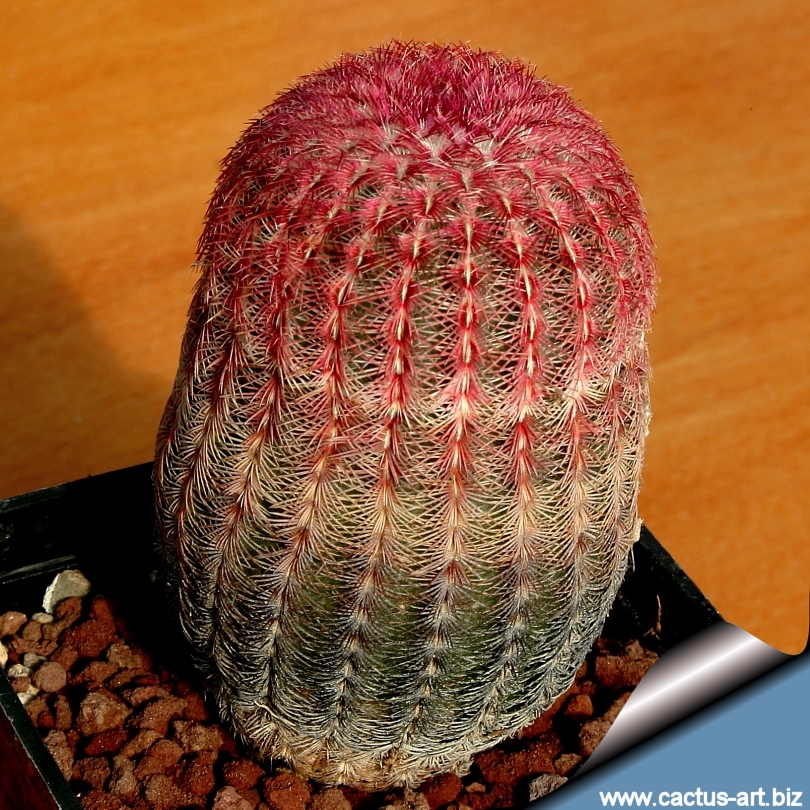
Echinocereus rigidissimus rubrispinus (LAU 088 Sierra Oscura, W. Chihuahua, MX)
This is a "must have" plant for any collection, its attractiveness is in the unique
pink and violet colour and density of its spines.


Facing adversity - ID: 2656133 © Irwin  Lightstone
Photo &
© copyright by Irwin Lightstone

Desription: The subspecies 'rubispinus' is a small columnar cactus with very short pink spines. When mature it will form a clump about two 60cm wide by 25cm tall.
Stems: Erect, short cylindric, only get about 7cm thick.
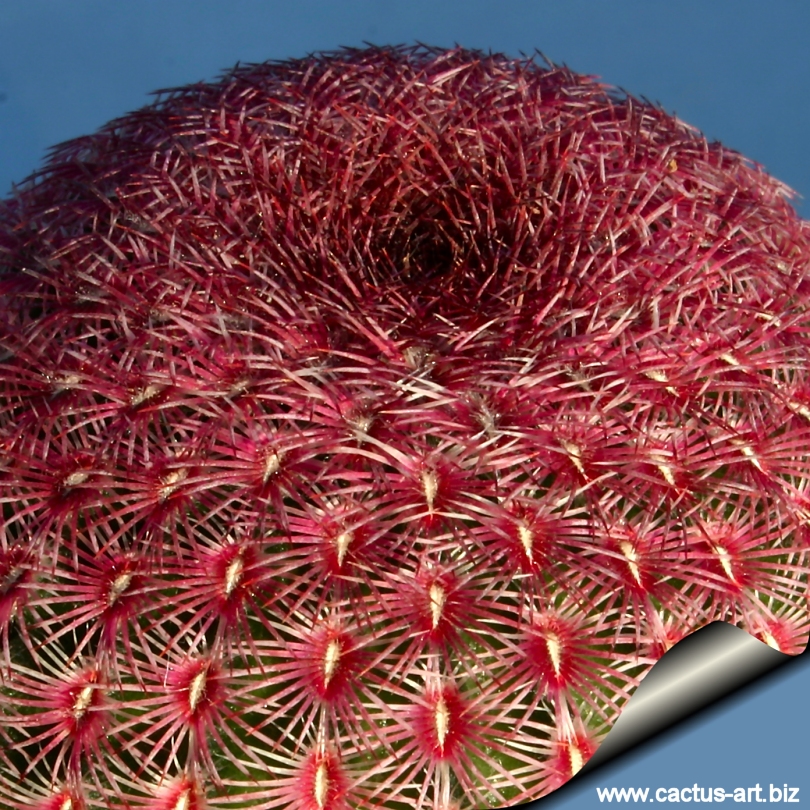
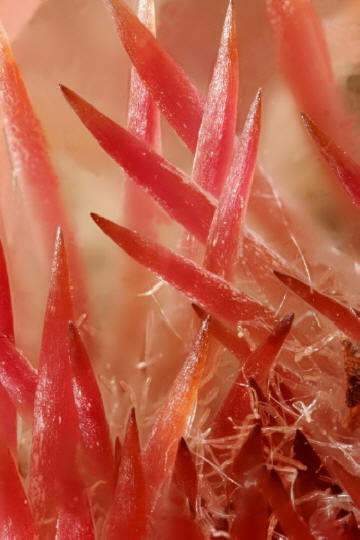
Radial spines: 30-35 pectinate per areole and 6-10 mm in length in red and white bands, but more ruby/violet colored compared to the 'rigidissimus' subspecies, witch makes it a very attractive cactus. This is a Mexican form and does not turn grey like the Arizona form.
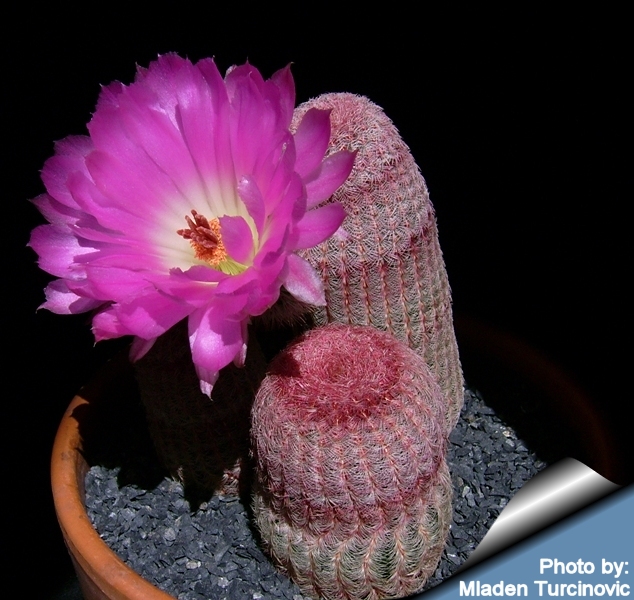
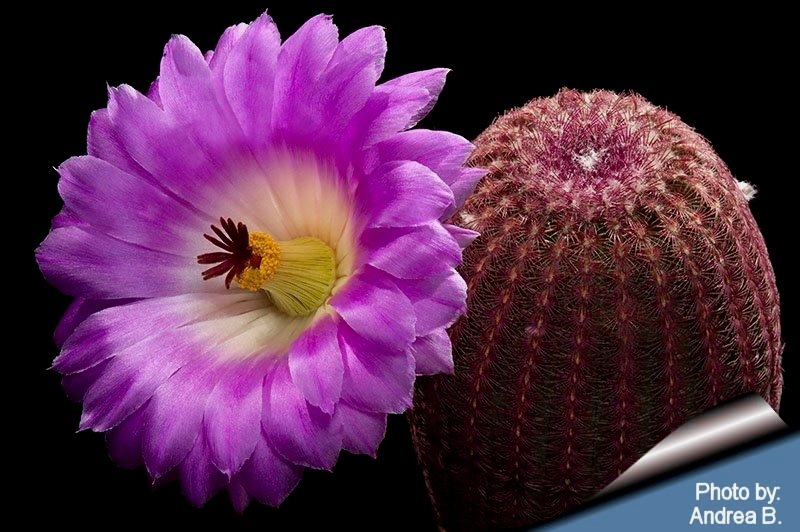
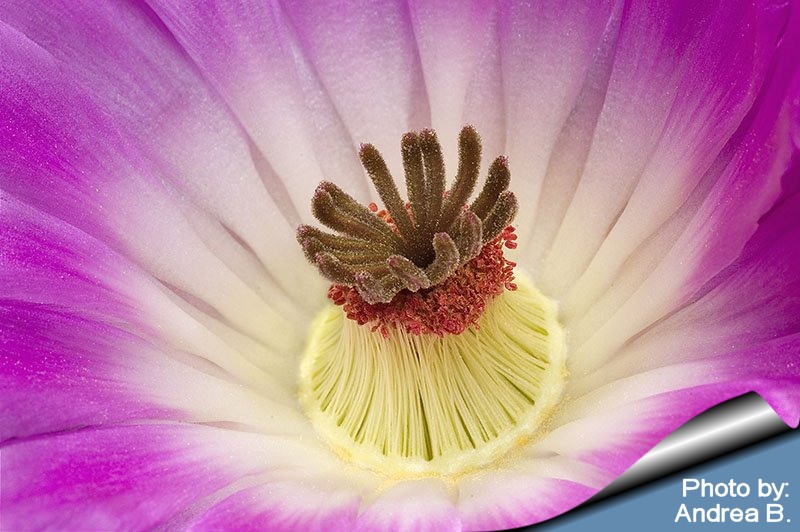
Flowers: Huge up to 10cm wide. Beautiful bright pinkish-red or magenta or red with white throats. Blooms in ring on the crown of the stem in spring. The only downside is the flowers leave an unsightly scar when they drop off.
Fruit: Globose, greenish or dark purplish brownish very spiny, 3 cm in diameter, pulp white. Fruiting 3 months after flowering


Photo and © copyright by Andrea B. (Bologna, Italy)
http://www.cactusfriends.com/Andrea/index.html 
Huge 7 to 10 cm wide, shocking pink
 with white-eyed flowers.


 Echinocereus rigidissimus v. rubispinus
 

Cultivation: E. rigidissimus var. rubrispinus is not the easiest cactus to grow, but when grown well it’s very attractive. Rot easily it is sensitive to overwatering (rot prone), so perfect soil drainage is a must. It prefer a neutral to slightly acidic compost with plenty of extra grit.  Best if watered with rain water and given an occasional tonic of sequestrated iron. In the summer they need an airy location in bright sun; well watered when it's hot. To achieve the best spine colors give these plants lots of sun. In the winter light, cool, and absolutely dry conditions. Very cold resistant  above approx -12C or less for short periods of time. In mild climate they grow well when planted freely outside in well-drained soil.

Propagation: Seeds

For this extreme macro (4x lifesize) of the interlocking spination of a cactus (Echinocereus rigidimus rubispina) I used a Canon 65mpe lens Canon 20d camerea on a tripod mounted focusing rail. Multiple exposures with different focal points were composited with Helicon software. Focusing was accomplished by advancing the focusing rail. the aperature was f8.
 

This is the most colorful form of the species and plant in cultivation are often selected for best and brightest colour.

Photo of conspecific taxa, varieties, forms and cultivars of Echinocereus rigidissimus:

Family: Cactaceae (Cactus Family)
 

Echinocereus rigidissimus var. rubrispinus (the varietal epithet meaning red-spined)

Scientific name:  Echinocereus rigidissimus (Engelmann) F. Haage
Published in: Special Preisverz. 13. 1897.

Synonyms: Echinocereus pectinatus var. rubrispinus

Origin Mexico (northern Sonora, north-western Chihuahua

Habitat: The reported habitat preference for limestone is erroneous; this species is a calcifuge, preferring soils poor in lime and usually acid.

Conservation status: Listed in CITES appendix 2.

Common NameRainbow cactus, Ruby Rainbow


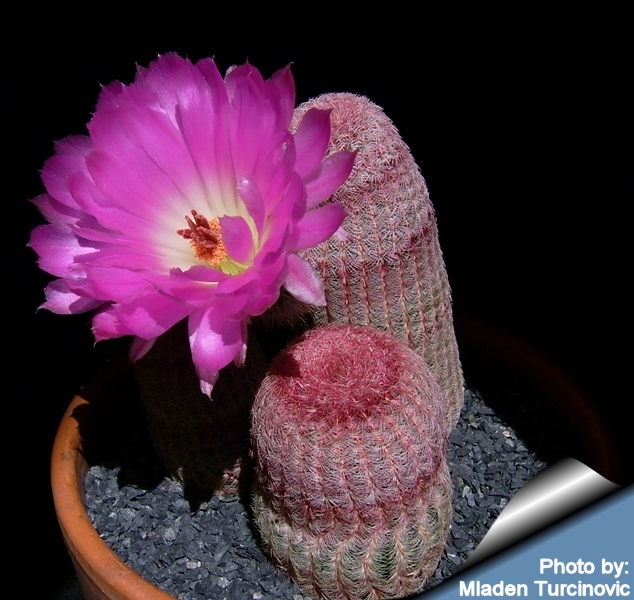
A beautifull plant flowering or not for its beautiful
new spination which is a lacy raspberry red.


Photo and © copyright by Mladen Turcinovic (Croatia)
 

NOTE: Echinocereus rigidissimus, lacking central spines, belongs to the E. reichenbachii group, unrelated to the superficially similar E. pectinatus group, which has at least microscopically visible stubs of central spines. It sometimes occurs with E. pseudopectinatus but without evidence of hybridization.
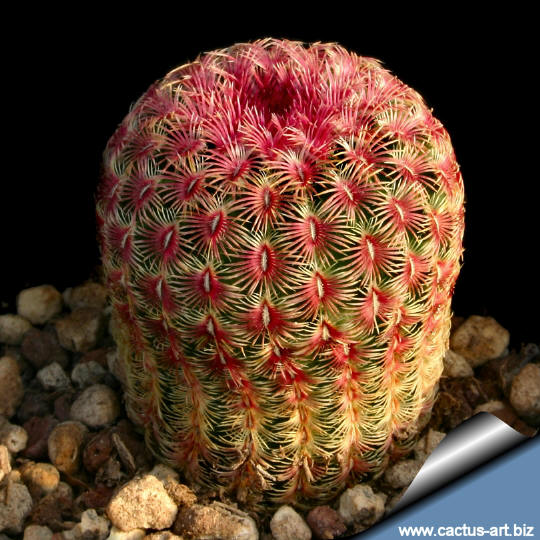


Photo gallery: Alphabetical listing of Cactus and Succulent pictures published in this site.

Photo gallery Echinocereus


A Special Thanks to all Those Who help us to make this web site
This plant description is based on research and personal experiences and is too short to provide a comprehensive coverage of the subject. Do you see an error in what is shown? Or do you know more about the species than we are showing? Your help is greatly appreciated. Why not send us an email with further information or photos so that we can correct or extend the information provided?

The photos in  this site are subject to copyright. Images may not be copied, downloaded, or used in any way without the expressed, written permission of CACTUS ART nursery and the original photographer.

Home | E-mail | Photo gallery | Mail Sale Catalogue | Grafting Guestbook | Dictionary |  Winter test | Links | Search