|
|
|
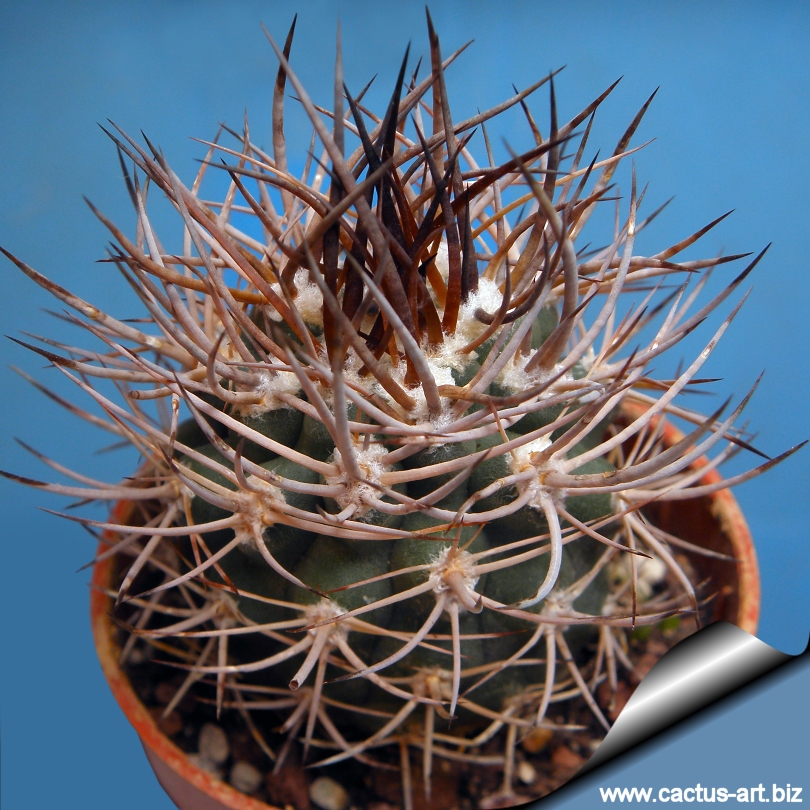
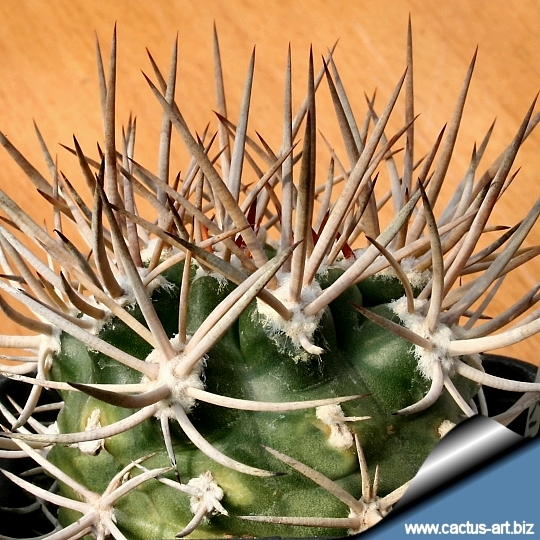
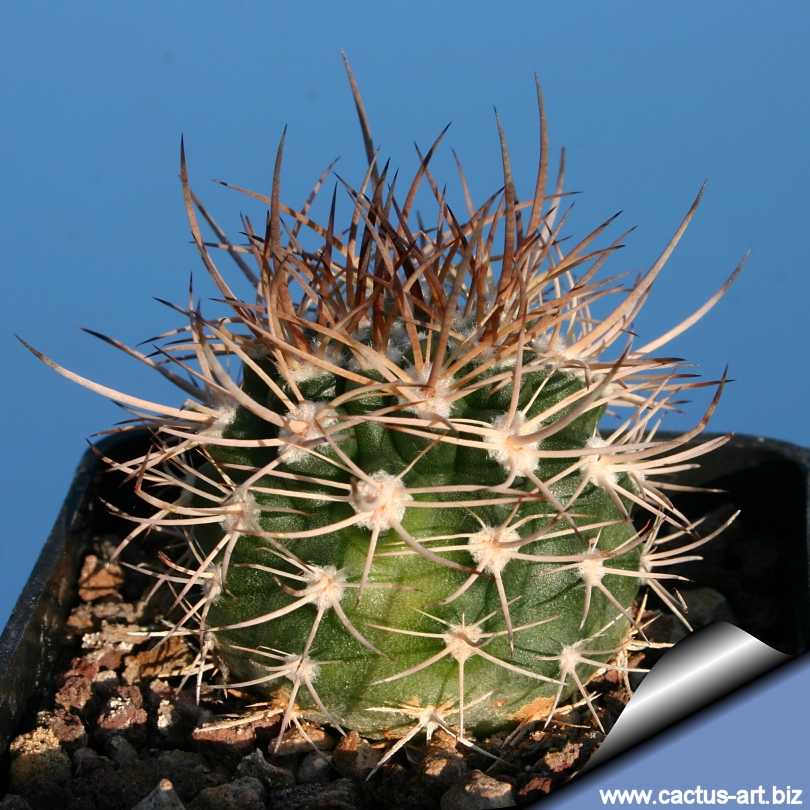
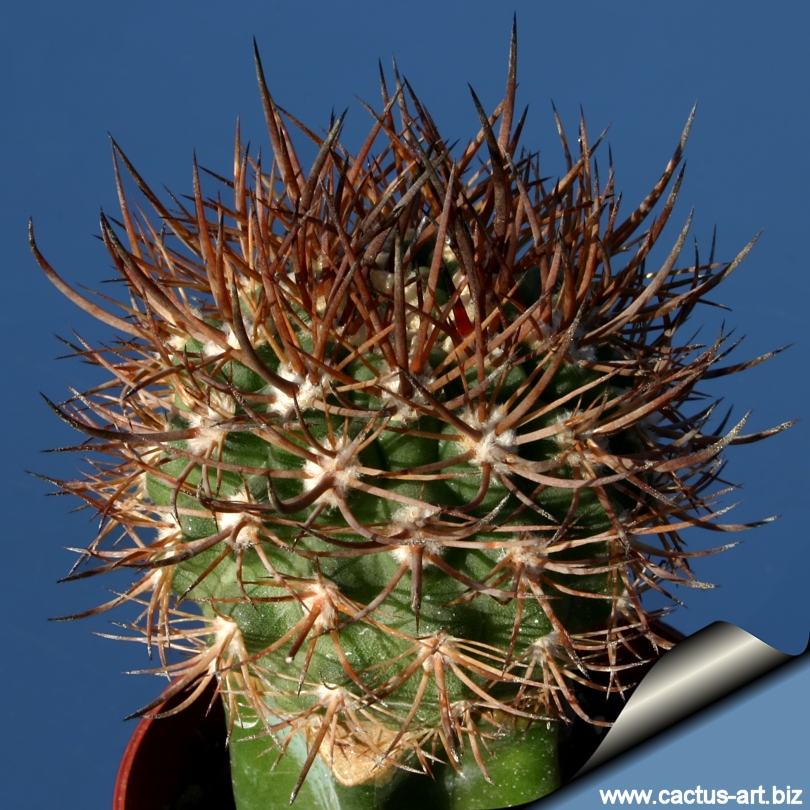
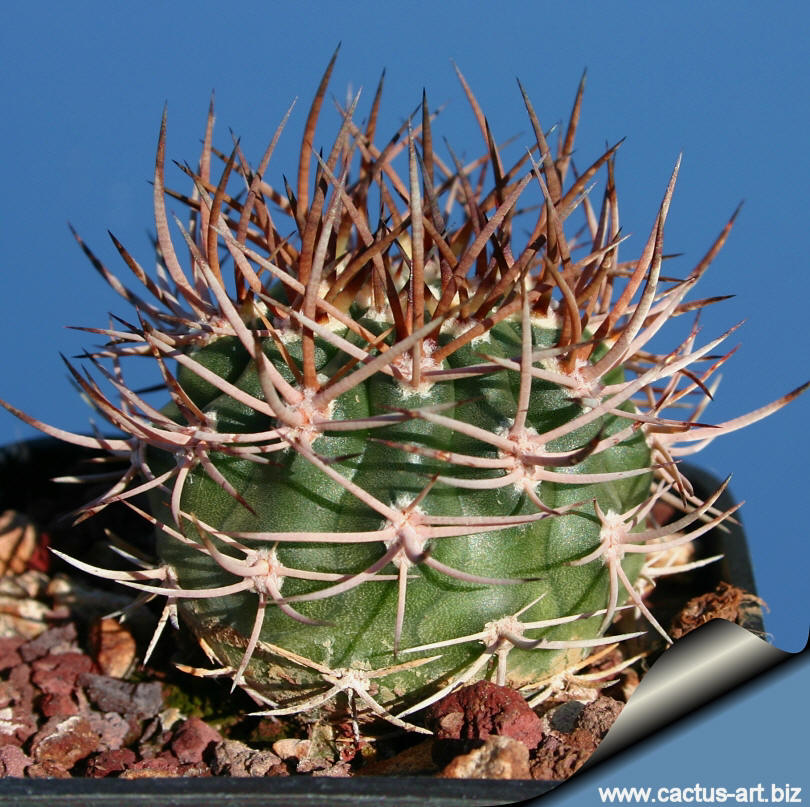
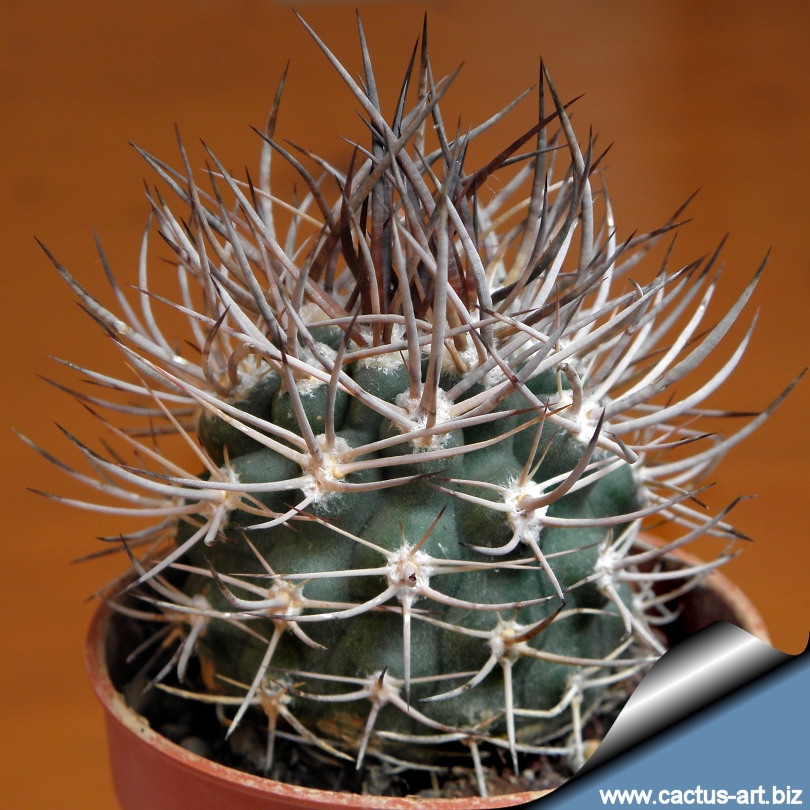
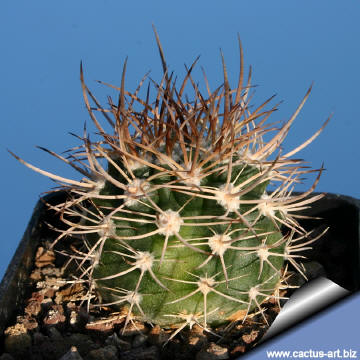
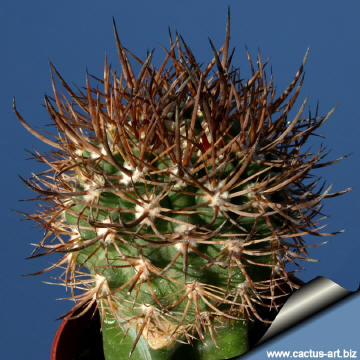
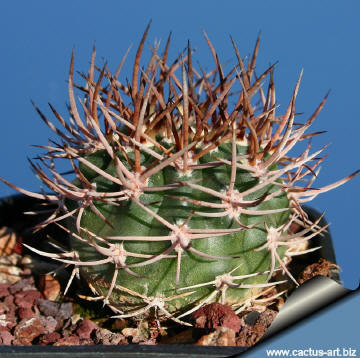
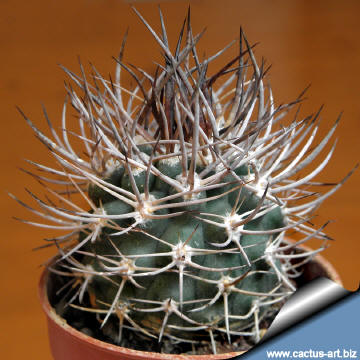
Eriosyce bulbocalyx (syn. Pyrrocactus bulbocalyx)
L505 - Sierra Mazan, Catamarca, Argentina 2600-2900m
|
|
 |
 |
|
. |
|
 |
 |
|
. |
|
 |
 |
|
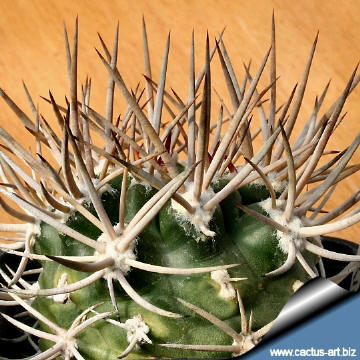
Spines are curved upwards with a swollen
base . |
|
Advertising
|
|
|
|
|
Family:
Cactaceae (Cactus
Family)
Scientific Name:
Eriosyce
bulbocalyx (Werderm.) Katt. 1994
Origin: Argentina
Conservation status: Listed in
CITES appendix 2.
Etymology: The specific name "Bulbocalyx"
comes from Latin "bulbus" = bulb, tuber and "calix" = calix,
cup, for the funnel shaped flowers with narrowed mouth and spreading
perianth segment segments
Synonyms
- Echinocactus bulbocalyx Werdermann (Basionym)
In: Blüh. Kakt., p. 136, 1937
- Pyrrhocactus bulbocalyx (Werdermann) Backeberg
In: Die Cactaceae, 3 : 1565, 1959
- Neoporteria bulbocalyx
(Werderm.) Donald & G.D.Rowley 1966
Other names (Heterotypic synonyms):
- Pyrrhocactus marayesensis (Backeberg) J.G. Lambert (Nom
inval.), In: Cactus d'Argentine, ed. 2: 265: 1998.
- Pyrrhocactus umadeave var. marayesensis Backeberg (Nom inval.),
In: Descr. Cact. Nov. 3: 13., 1963
- Neoporteria dubia
(Backeb.) Donald & G.D.Rowley 1966
- Pyrrhocactus dubius Backeberg, Backeb.
& F. M. Knuth
In: Kaktus-ABC, 263, 415., 1935
- Pyrrhocactus megliolii W. Rausch
In: Kakteen Sukk. 25
(10): 220, fig., 1975
- Neoporteria megliolii
(Rausch) Donald 1976
|
|
|
|
Description: Usually
solitary globular cactus with apex covered with incurved,
rust-coloured spines.
Stem: Globose to sub-globose or cylindrical
as it becomes old, grey green, up to 12 cm in diameter.
Ribs: About 12-13.
Areoles: Oval, woolly and hairy when young (with yellowish felt),
later naked.
Radial spines: 7 to 12 about 1,5-2 cm long, horn coloured,
brownish becoming grey as the age.
Central spines: 1-4, subulate, nearly 2,5 cm long, rusty red
later grey sometime with black tips, all curved upwards,
base swollen.
Flowers: From the from centre of plant 2.5-5 cm in diameter,
Urn-shaped, straw coloured, yellow or green yellow.
|
|
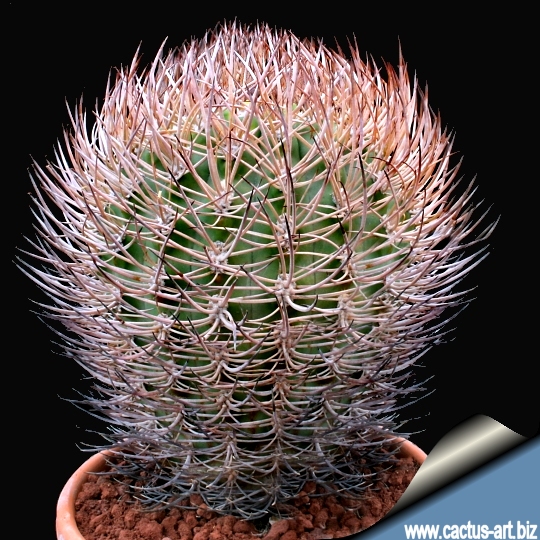
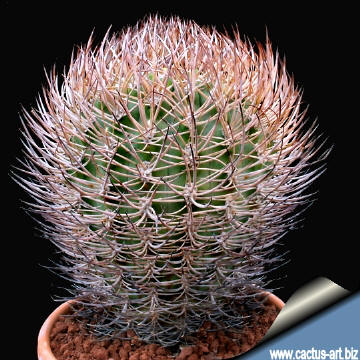
A
mature specimen h 15 cm, diameter 11 cm
Cultivation:
It is a summer-growing species of relatively
easy cultivation. It is
susceptible
to
over-watering if kept in a non
ventilated place, sometimes it is
grafted to avoid
root
rot problems. Likes warmth (recommended minimum
winter temperature 5° C) But plants kept perfectly dry can easily
survive
to winter night temperatures below 0° C.
Sun Exposure: Suited for
sunny-brightly exposure; can
tolerate
light shade.
Good heat tolerance.
Cultural Practices: Suited for
airy exposures. Needs deep pot
and gritty mineral substrate with a very good
drainage.
Water regularly in summer,
keep dry in
winter.
Propagation: Usually propagated
from Seeds. (seldom produces offsets) or
graft. Seeds can be sown in the spring or summer. The seedlings
should not be disturbed until they are well rooted after which
they can be planted separately in small pots.

 |
|