|
|
|
Euphorbia obesa is
a peculiar ball shaped succulent plant that
resembles a stone but
becomes taller with age.
|
|
Description:
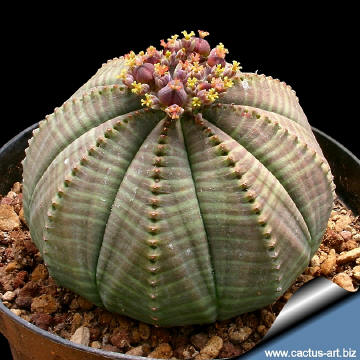
It is a highly succulent solitary plant without spines or leaves that
looks like a green-brown football, but
will
sometimes 'branch' or
sucker,
creating very odd looking clusters of spheres.
Root:
Tapering tap root.
Stem:
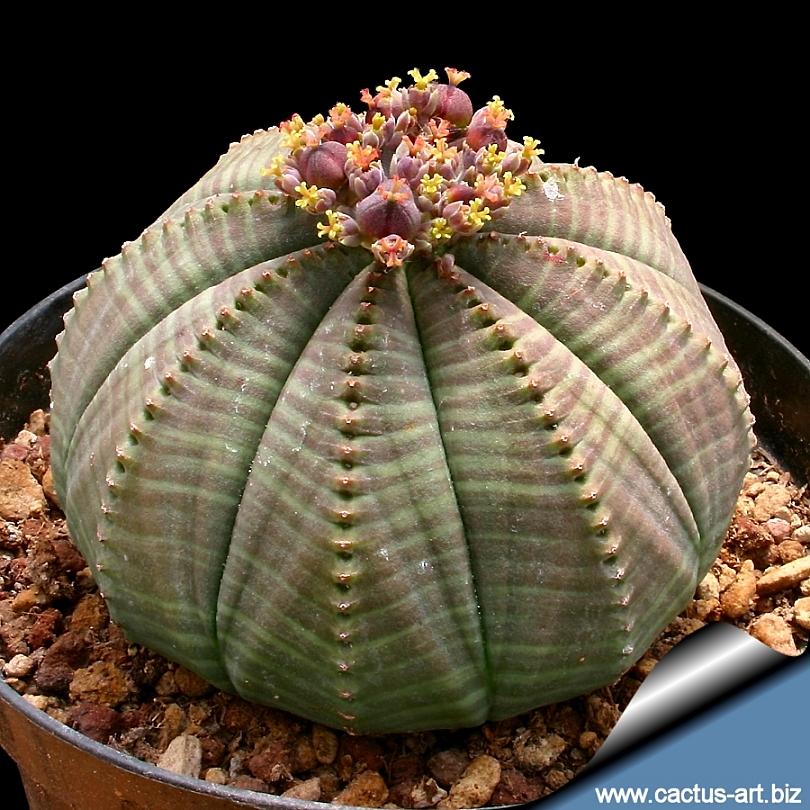
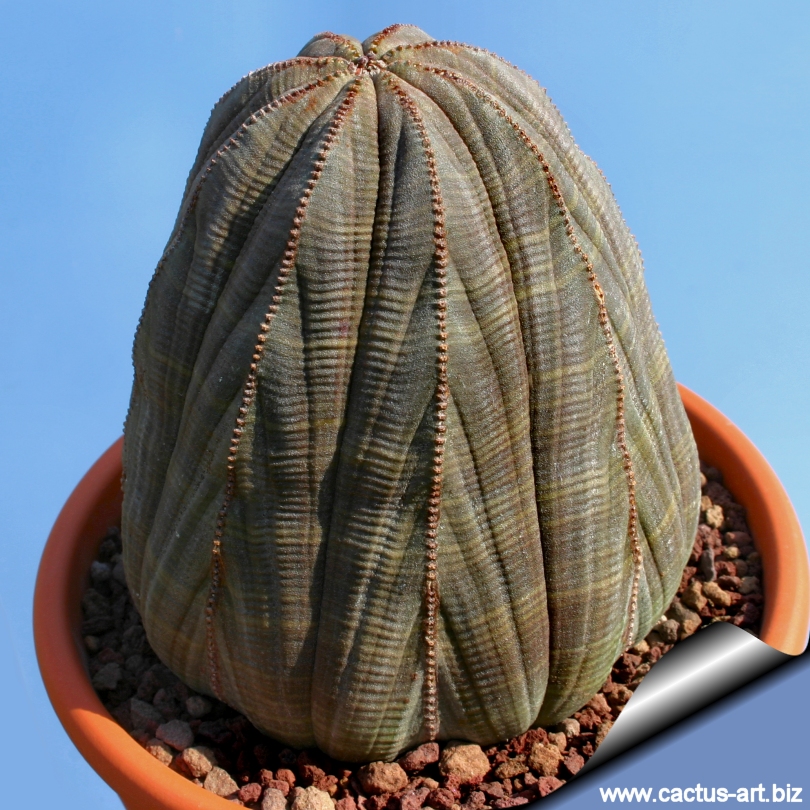
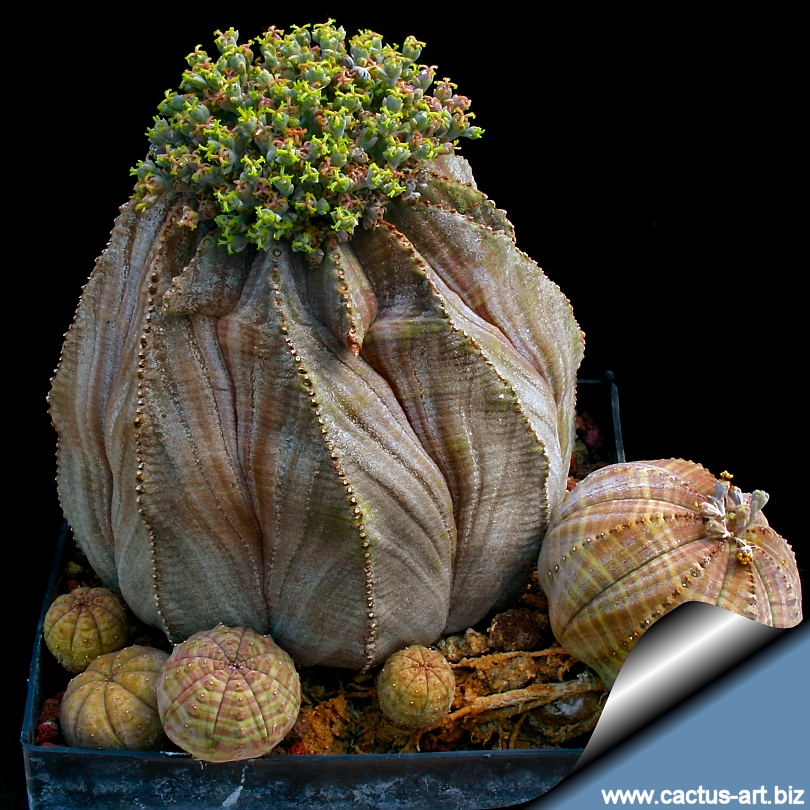
Solid, firm, dome shaped, spherical, or when old twice as high and
elongated or cone shaped, up to 20(-30) cm in height with a diameter of
9-10 cm, grey green, iron-grey, bluish-green
or brown-green with very attractive transverse red-brown or dull
purplish bands and with finely marked longitudinal seams marking its
surface, creating an almost plaid effect.
Younger plants have a rounded sea
urchin-like shape.
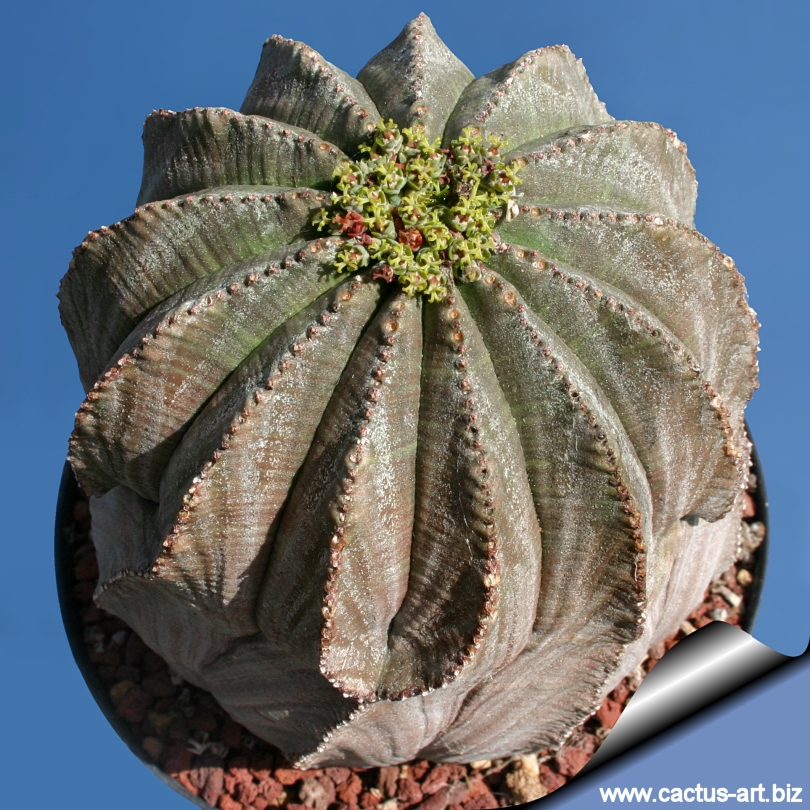
Ribs: Usually 8, vertical, broad, slightly raised with shallow
furrows in between. But the number of ribs tend to increase as the plant
get older (plants with up to ten ribs are reported). Visible on top of
the ribs, are minute, brown, ruglose tubercles in a single series.
Leaves: The
leaves are very rudimentary, minuscule and soon drop off
Flowers:
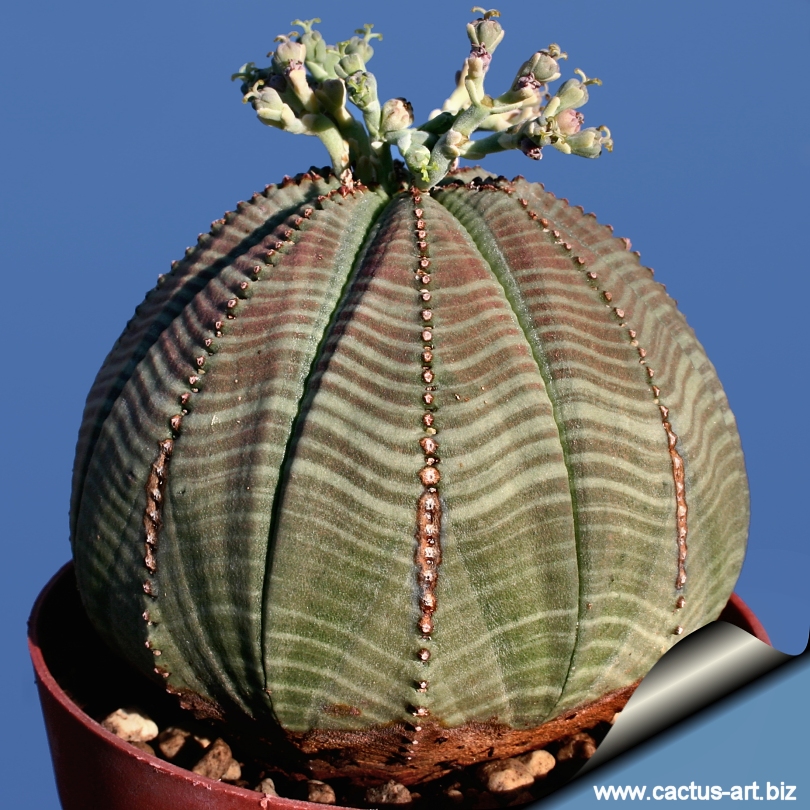
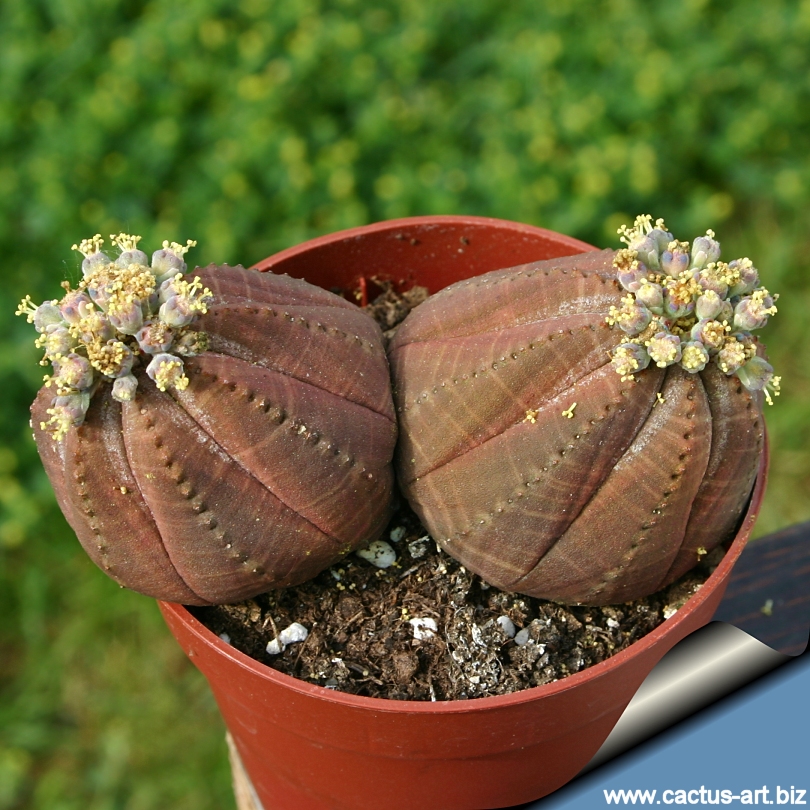
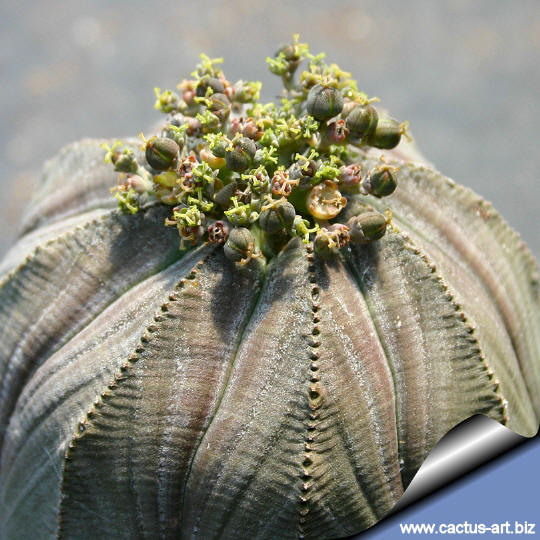
This Euphorbia is unisexual with the small, greyish green cyathia
normally being all male on some plants, or all female on others.
Therefore cross pollination between a male and a female plant is
required to produce seeds. Pollination usually carried out by insects.
All euphorbias have a complex floral arrangement that is termed a
cyathium (a cup) and this is the unit of the inflorescence. A cyathium
contains many highly reduced male flowers or a single female flower. In
Euphorbia
obesa,
the cyathia appear in summer, from "circular flowering eyes", situated
along the tops of the angles, near the growing tip, on the stem. They
are produced on fork-branched peduncles (flower stalks), have minute
bracts and are finely hairy. The cyathia are cup-shaped to 3 mm in
diameter, expanding in the female.The tiny flowers are delicately
scented
Fruit: The fruit
is a slightly 3-angled capsule , up to 7 mm in diameter that explosively
releases the seeds. The peduncles do not persist, and fall off after the
seed has been dispersed.
Seeds:
Small rounded 2mm diameter mottled grey when mature.
|
Female |
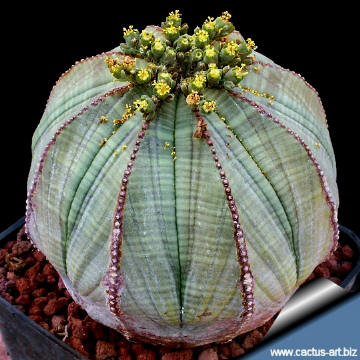
Male |
|
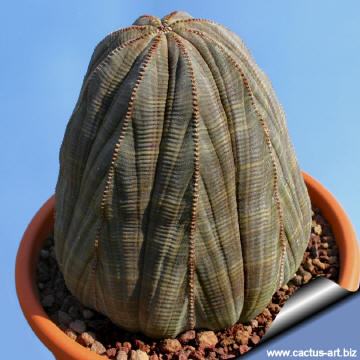
Old plants elongates and take a conical shape |
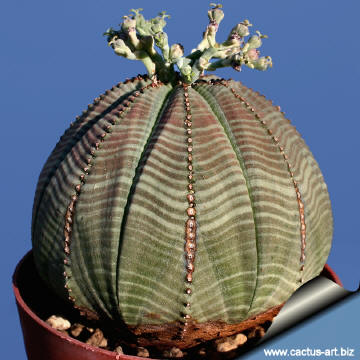
Young plants are dome-shaped or spherical. |
|
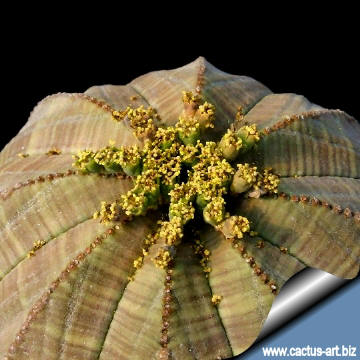
A male (pollen producing) plant |
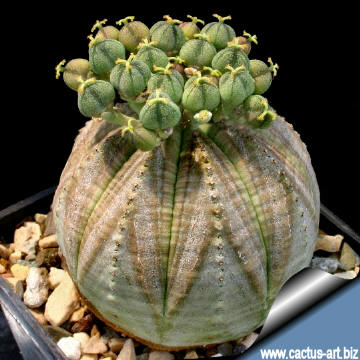
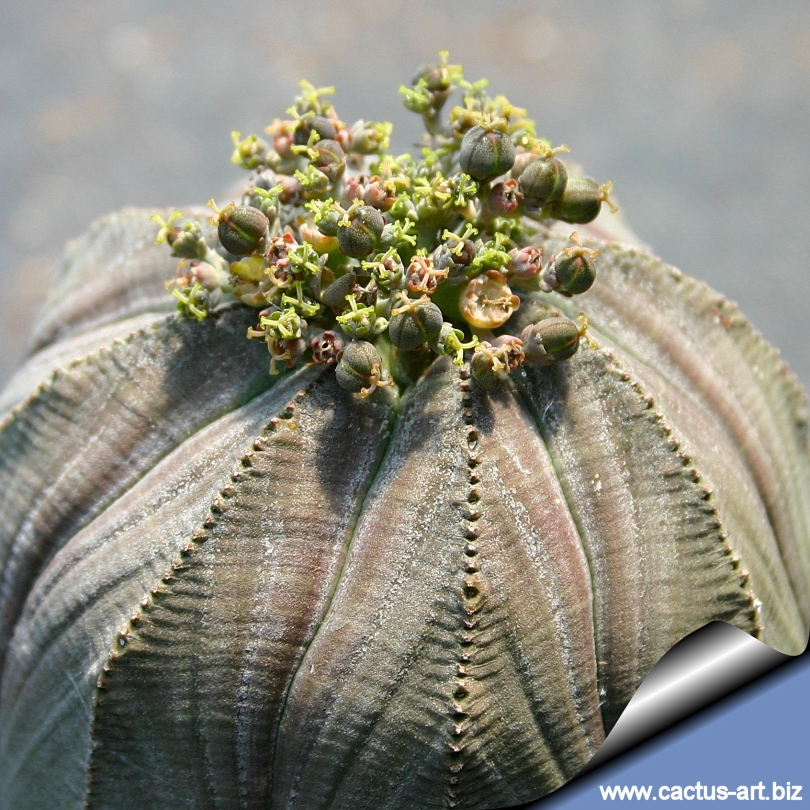
Immature capsules. |
|
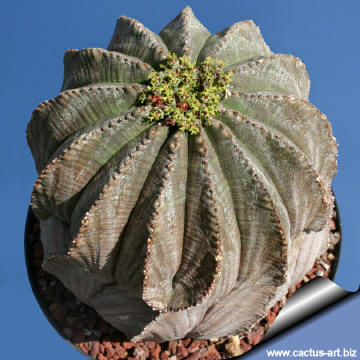
A very old specimen with 13 ribs. |
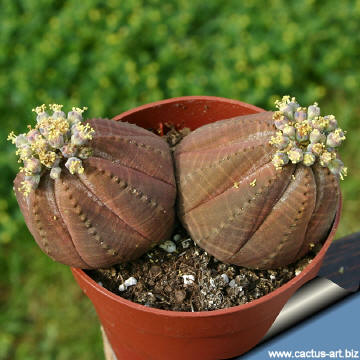
The famous basketball plan is very priced for its outstanding
colours and symmetry. |
|


Advertising
|
|
|
|
|
Family:
Euphorbiaceae
Common Names include: Basketball, Sea Urchin, Baseball,
Living Baseball, Gingham,
Golf ball, Vetmensie.
Conservation status: Listed in
CITES appendix 2.
Origin: Euphorbia obesa
is an
endemic species, found in Kendrew, a small area of the Great Karroo,
the Northern Cape region of South Africa, in the Graaff-Reinet district.
Habitat: They are found growing in full sun or (more frequently)
under the protection of low
shrubs and sometime among low boulders in fairly
sandy soils. Their colour blend so well with the surroundings that
it is often quite difficult to distinguish them. They are found at an
altitude ranging from 300 to 900 m above sea level, a place where there
is no significant
frost. The habitat is very stony and hilly with summer
rainfall ranging from 200-300 mm per annum, falling mainly in thunder
showers. Summers are very hot: the average daily maximum about 26
degrees centigrade and the minimum about 11 degrees centigrade. Light
frost occurs during the winter months.
|
|
Cultivation: It likes a sunny position, but it can
also be grown outdoors where the frost is not too severe. It can
tolerate temperatures down to -5°C (-10° if the roots are kept dry). It
does best in a mineral soil, but is tolerant of a wide range of soil
types. Good drainage is essential. Water sparingly during the summer
months and keep dry in winter. It is a slow-growing, long-lived plant,
and once established, it will be content in its position and with its
soil for years. It can tolerate moderate shade, and a plant that has
been growing in shade should be slowly hardened off before placing it in
full sun, as the plant will be severely scorched if moved too suddenly
from shade into sun.
|
|
|
|
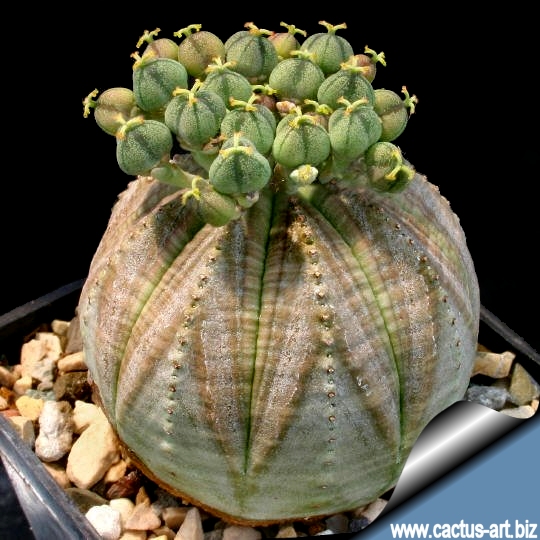
A female (seed-producing) plant with immature seeds
|
|
Euphorbia obesa is dioecious male and
female flowers occur on different plants in summer, so a male and a
female plant are needed for fecundation.
The female has three protruding stigma on which the pollen grains
stick, whereas the male has a hairy like center covered with yellow
pollen. Once pollinated the female plant produces fruit containing 3
seeds each.
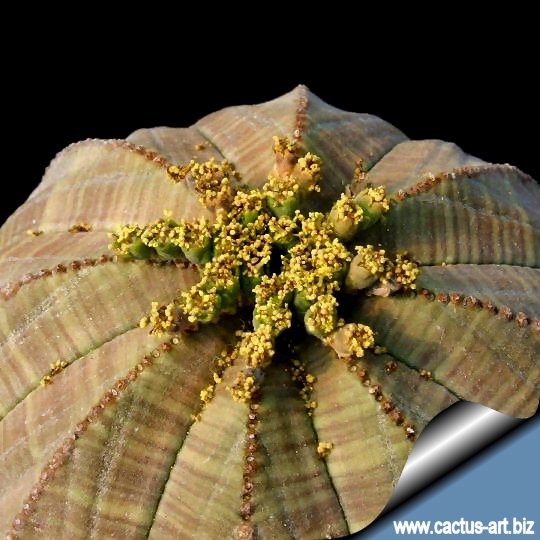
A male (pollen producing) plant |
|
Note: As with all other Euphorbias,
when a plant get damaged it exudes a thick white milky sap known as
latex. This latex is poisonous and may irritate skin
Euphorbia obesa is a wonderful example of convergent
evolution. In fact it incredibly
resembles Astrophytum asterias.
Propagation: It is propagated from seed sown during spring or
summer. Germination occurs within 3 weeks, but it can be reproduced by
cuttings as well (if available). Flowering can be achieved within 5-8
years.
|
|
Photo of conspecific taxa, varieties, forms and cultivars of
Euphorbia obesa.
|
|


 Cultivation and Mail Sale