|
|
|
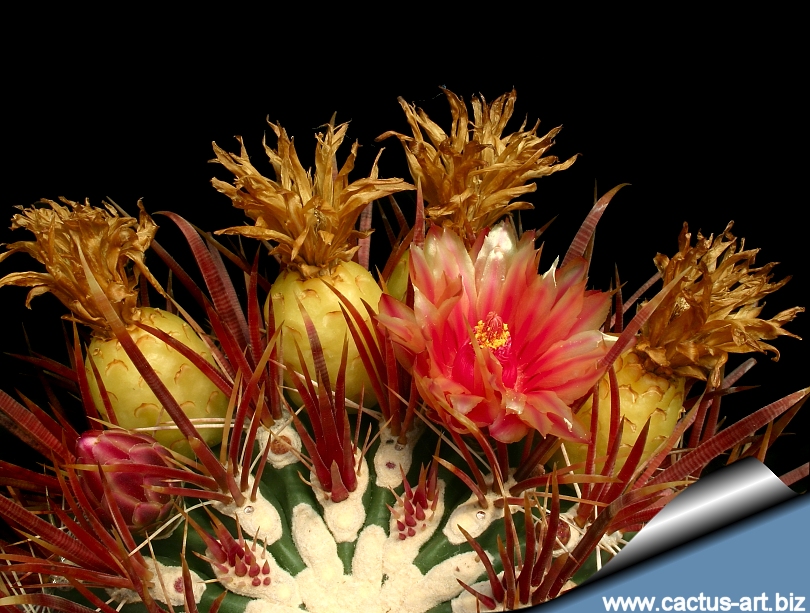
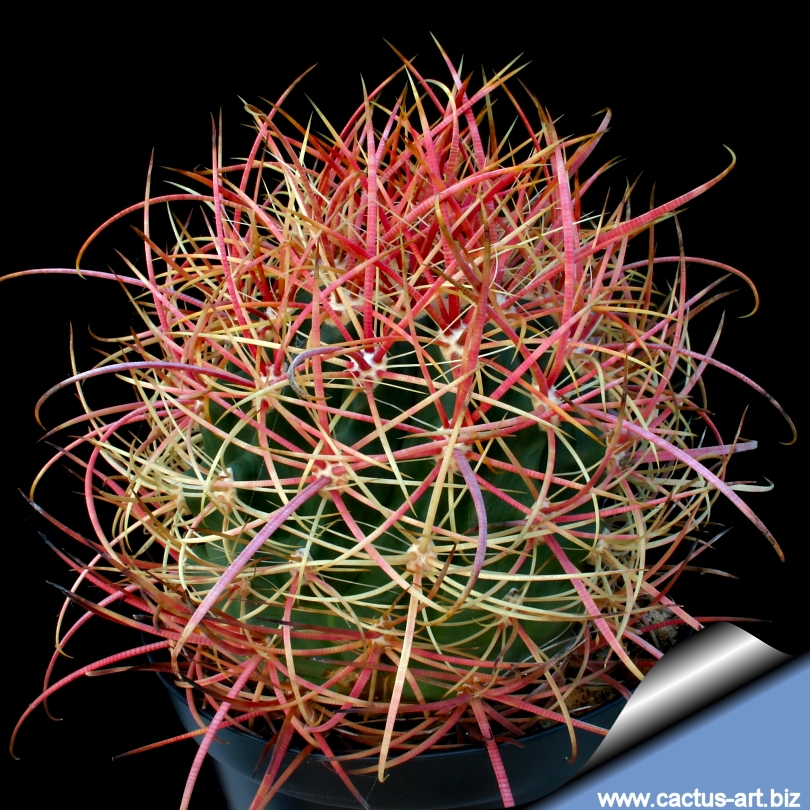
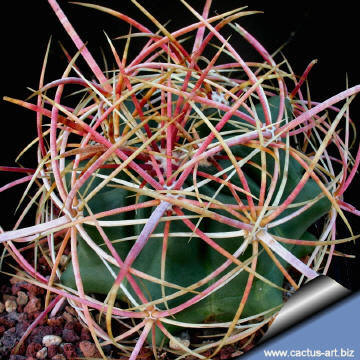
F. acanthodes grows slowly,
forming in age a mound of thorns and
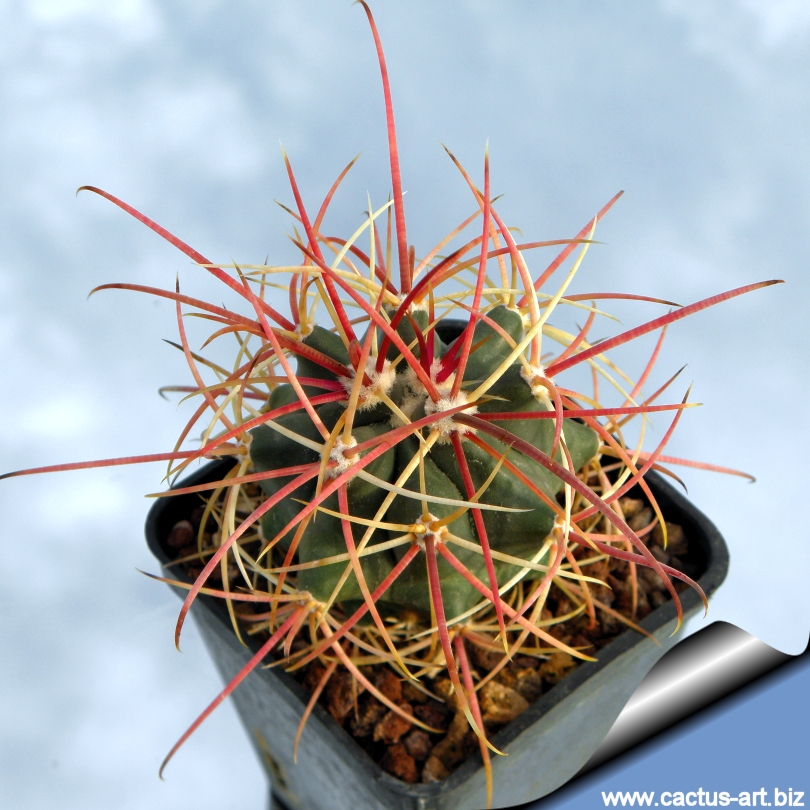
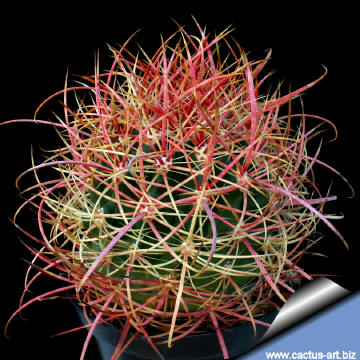
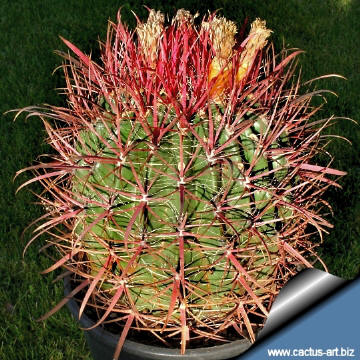
then a narrow column up to 2m tall, with attractive curved spines
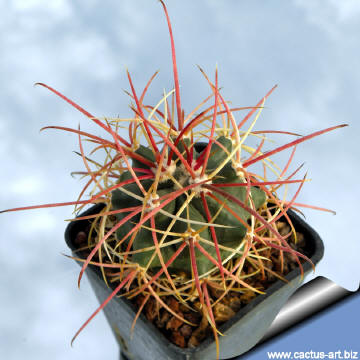
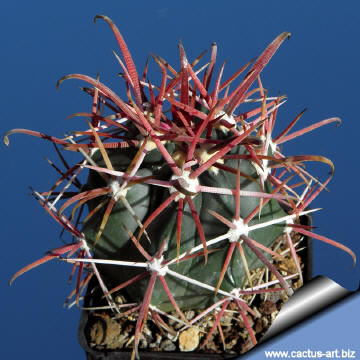
that partly obscure the green stem. The spine colour is red but also
yellow or pale grey.
|
|
Description:
The plant is usually unbranched, forming a single column up to 2 (3) m tall
and 30cm in diameter. The ribs are 2.5cm high and tuberculate. This species is highly variable
and has numerous synonyms.
Spines:
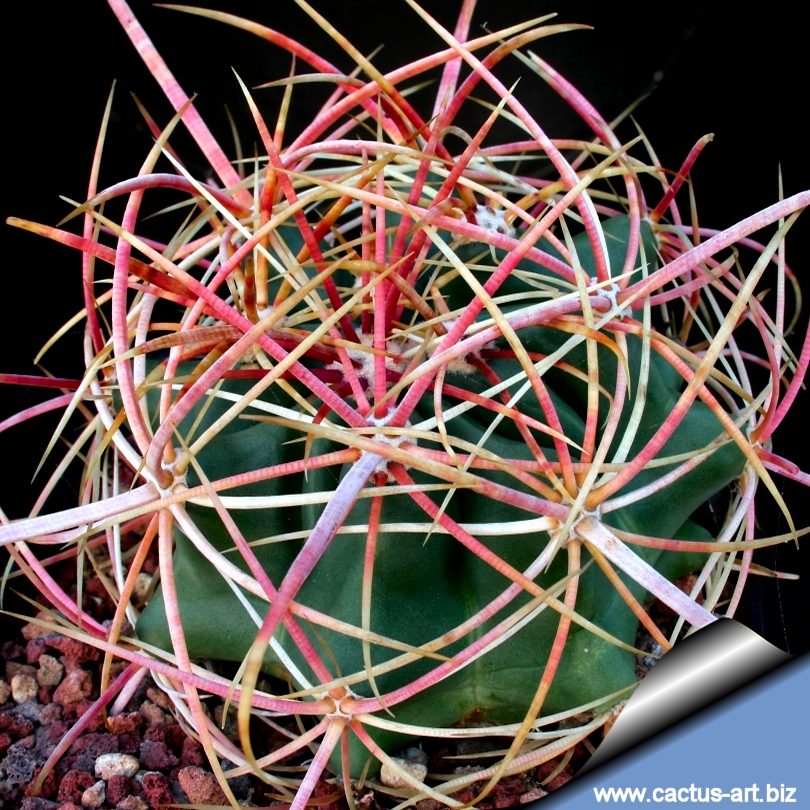
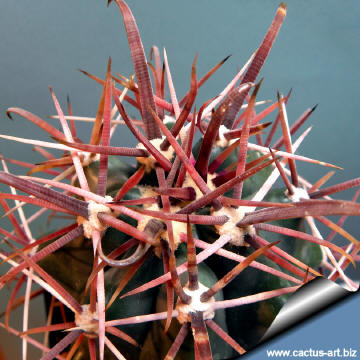
A large central spine and three auxiliary centrals form a crucifix
shape, The primary central is 7-15 , angles down and is slightly to
moderately hooked, sometimes to 90 degrees. The other centrals are from
5 to 7.5 cm long. The centrals are noticeably
ring ridged and
flattened, with a flat upper surface and rounded lower surface. Spines
can be very light grey to red and yellow, but darken to black with age.
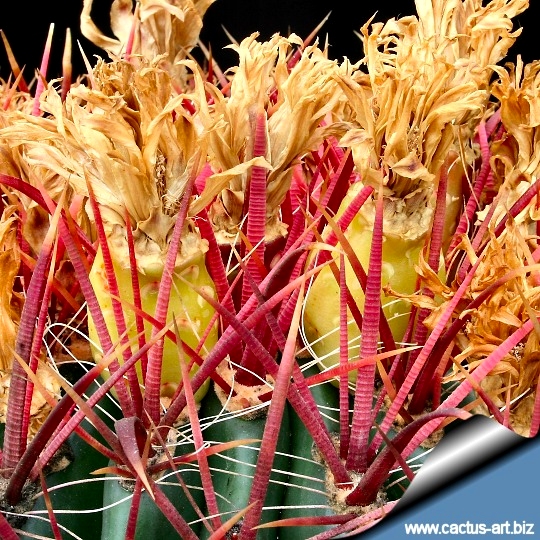
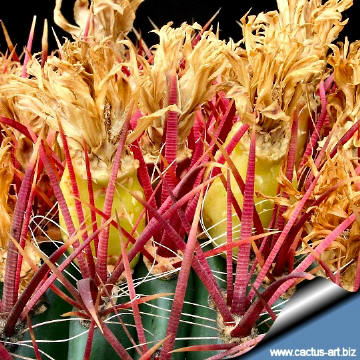
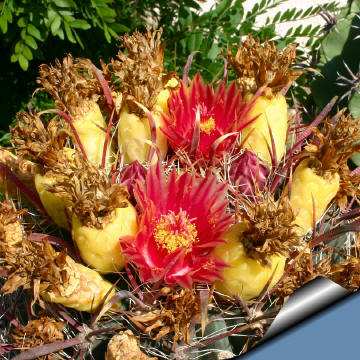
Flowers: Yellow flowers tinged with red appear in May and June at
the crown of the plant, 4 to 6cm. The fruit with scales is fleshy,
yellow or yellowish green 5cm long, 2.5cm in diameter.
The flowers on all subspecies are yellow, occasionally with a red tint.
|
 |
 |
|
. |
 |
 |
|
. |
|
 |
 |
|
. |
|
|
|
|
Advertising
|
|
|
|
|
|
|
Family:
Cactaceae (Cactus
Family) Ferocactus acanthodes
Scientific name: Ferocactus cylindraceus subsp. cylindraceus
Synonyms:
- Echinocactus cylindraceus
- Echinocactus viridescens var. cylindraceus
- Echinocactus acanthodes
- Ferocactus acanthodes
Common English Names include: 'Desert
barrel cactus', 'Compass barrel cactus' (It
leans south as it ages hence the common name). Another name is 'fire
barrel' due to it's red spines.
Origin:
The various variety of F. acanthodes ( =
cylindraceus) are
spread across central and western Arizona, southeastern California and
southwards into Baja California and Sonora, Mexico
Habitat: This cactus is locally abundant in arid gravelly or rocky
foothills, canyon walls, fans and wash margins at 600 to 1250m elevation
among creosote bush scrub, it also utilizes slopes and Acid Igneous rock
lands. The species is limited in its northwards range by frost
conditions. To reduce the damage by frost the plant is found on south
facing slopes and it leans to the south to protect the sensitive growing
tip by placing it for best exposure to the sun .
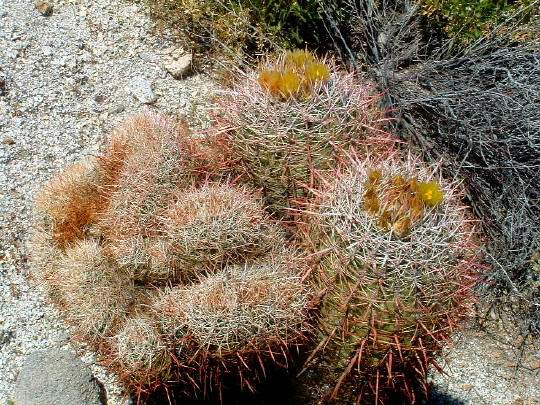
Photo & ©
copyright by
Jürgen Menzel
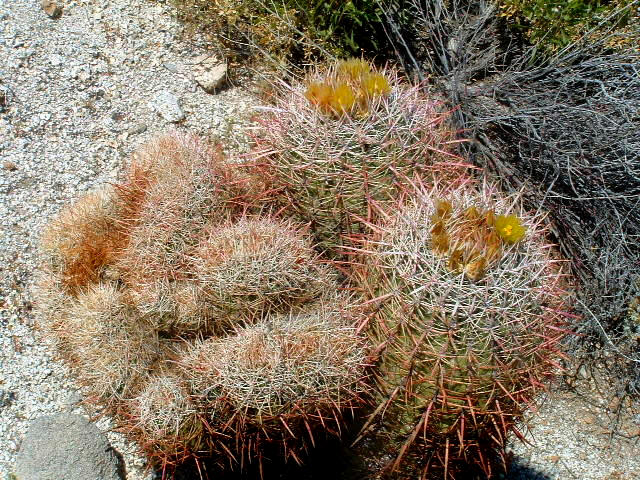
A ferocactus acanthodes with a crested branch.
|
|
|
|
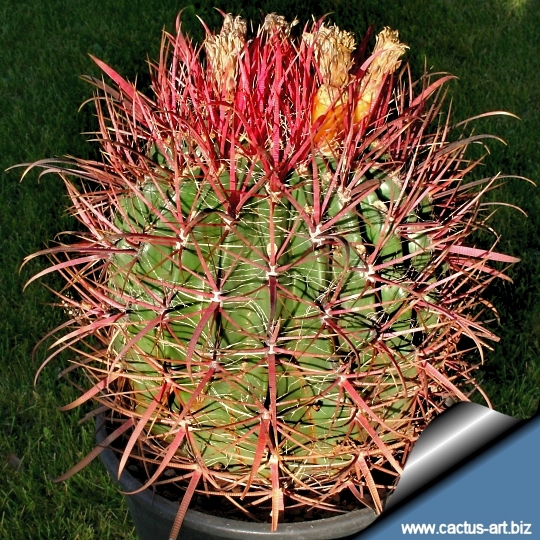
The dense shading of the growing tip by spines, fruit, flowers remnants
and pubescence allow this species a further northward range and higher
elevations than F. wislizenii or F. Covillei.
Cultivation:
They are summer-growing and pretty easy plants thought
slow to start. They are suited for any rich, well
drained soil such us clay, pumice, lava grit, and only a little
peat or leaf-mould. If potted, repot them preferably in the spring, if their
roots become cramped. Generally, they should be repotted every
other year in order to provide fresh soil. However, this doesn't
necessarily mean they'll need larger containers. Fill about a quarter of
the pot with broken crocks, gravel, etc. to promote good drainage. After
repotting, do not water for a week or more. Water regularly during the
aestival growth cycle (this plant need plenty of water, but do not
overwater and let their soil dry out between waterings),
and also needs to be avoided wetting the body
of this plant while it is in sunlight. A wet cactus in the sun light can
cause sun burning which can lead to scares or even fungal infections and
death, keep rather dry in winter. No water should ever be allowed to
stand around the roots. Feed with a high potassium fertilizer in summer.
Exposure: Outside they need a bright exposure,
full sun or half shade in summer if the location is exceedingly hot or
bright, inside needs bright light, and some direct sun.
It can tolerate moderate shade, and a plant that has been growing in
shade should be slowly hardened off before placing it in full sun as the
plant will be severely scorched if moved too suddenly from shade into
sun.
Frost Tolerance: Light frost protection required for
safe cultivation, but can tolerate sporadic light frost. This
plants need a period of cool rest in winter to produce flowers
abundantly.
Diseases and pests:
Watch for infestations of
mealybug, scale insects and spider mite.
Plant in good conditions will
start to bloom when reach the diameter of only 15-18 cm.
Propagation:
Seeds are the only way of
reproducing.
Seed
Collecting: Permit
fruit to
ripen.
Fruit must be significantly
overripe before harvesting seed; clean and dry seeds
Photo of conspecific
taxa, varieties, forms and cultivars of
Ferocactus cylindraceus:

 |
|


 Cultivation
and Mail Sale
Cultivation
and Mail Sale