|
|
|
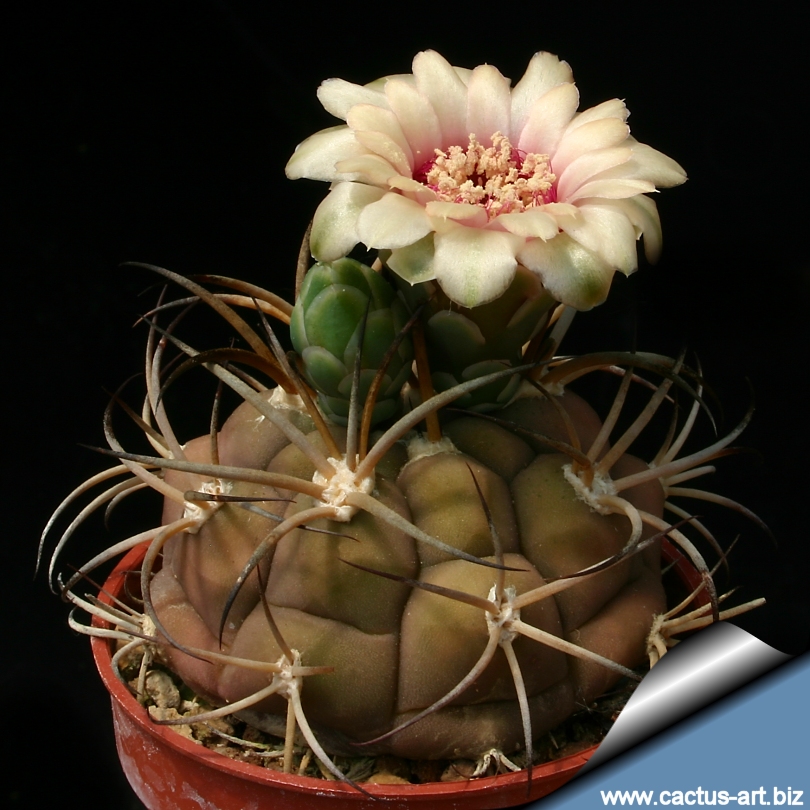
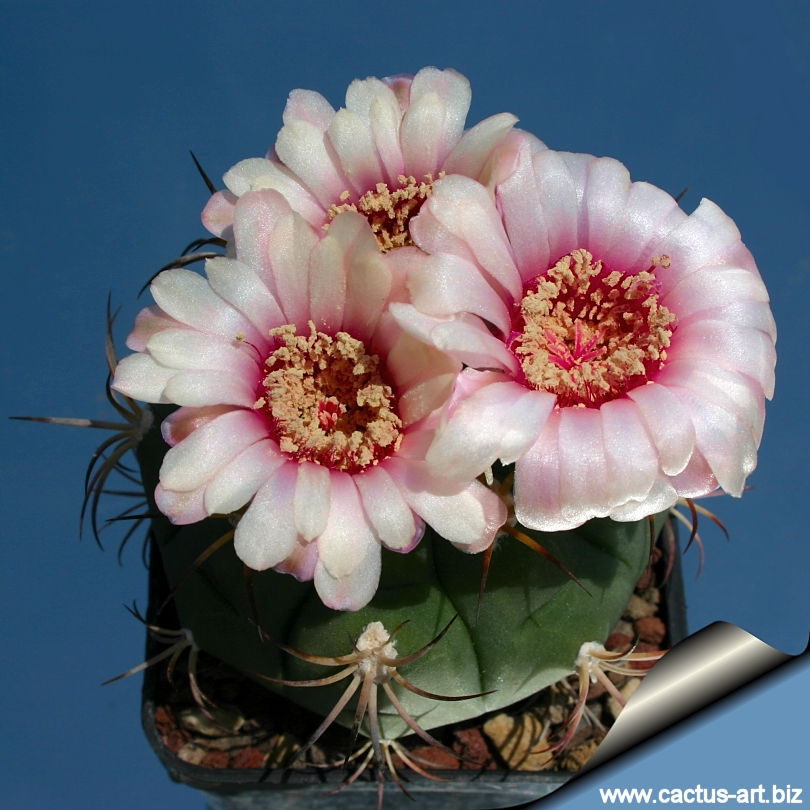
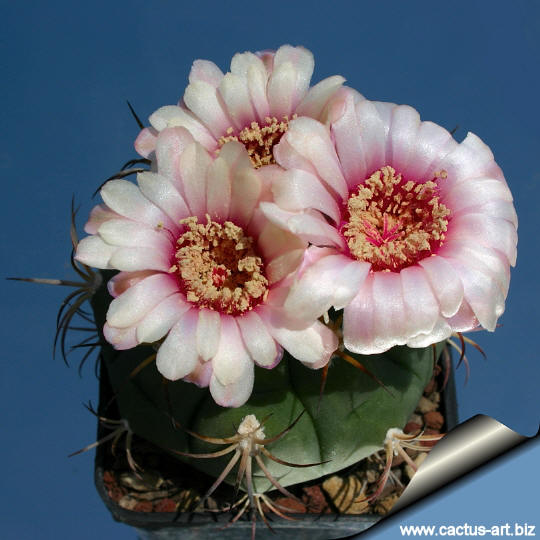
This South American beauty has a purple
tinged body and nice white flowers with a purple throat.
|
Description:
Solitary or slowly clustering,
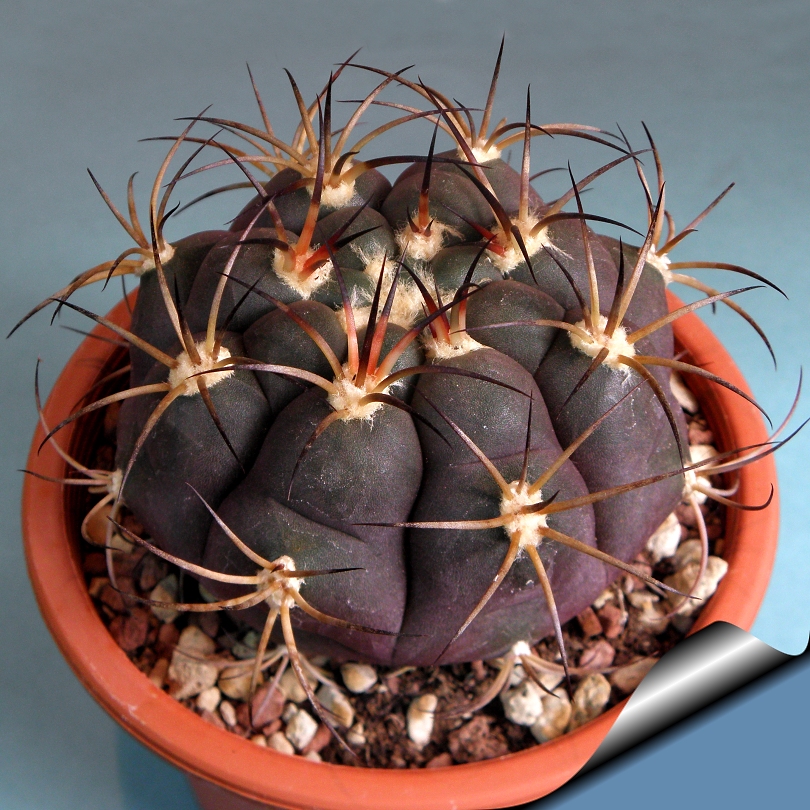
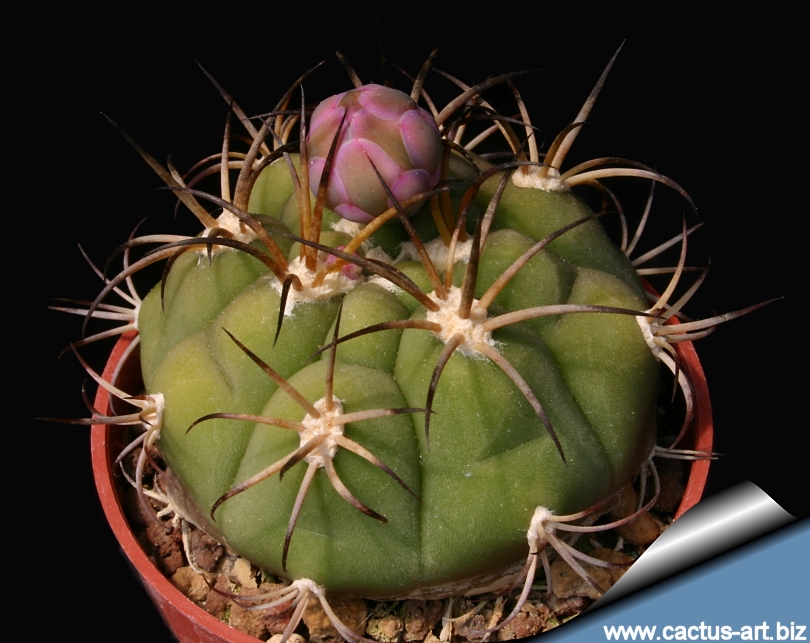
Stem: 10-15 (25) cm in diameter, 10 cm tall, pale green that
turns to an orangish purple in full sun. The epidermis has a velvety
appearance. The apex is slightly depressed and woolly.
Ribs: 10 to 12 thick, divided into polygonal rounded
(not chinned) tubercles,
separated by arched furrows.
Roots: Fibrous
Areoles: Large, oval, 10x14mm, yellowish then blackish, dismantling
with time.
Spines: Strong, bent, initially blackish with a brown base then becoming
grey-pinkish with black point.
Radial spines: 7-9 (5), up to 25mm long.
Central spines: one or two central spines of the same length.
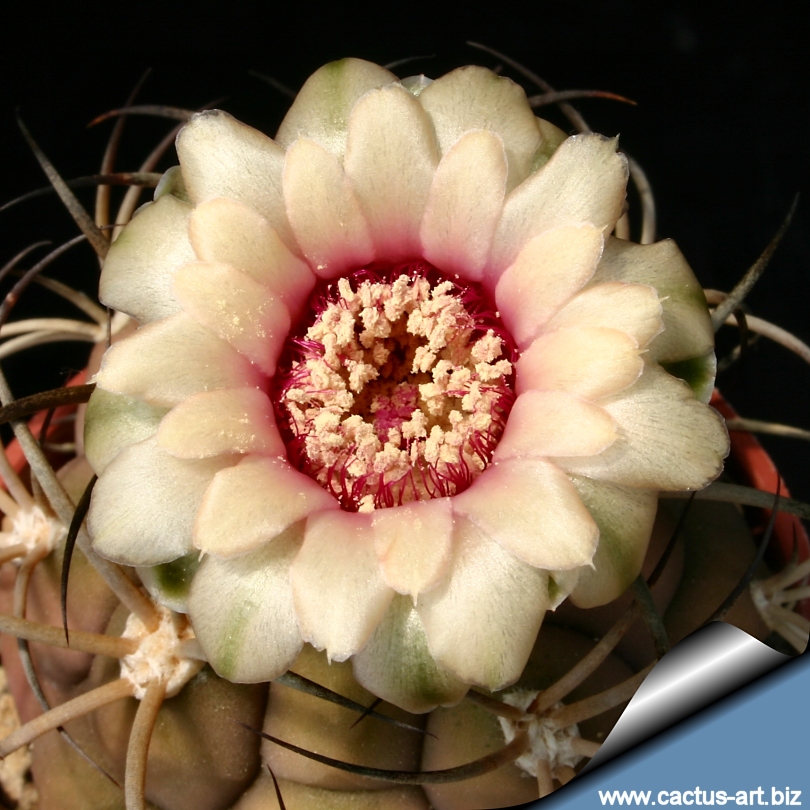
Flowers:
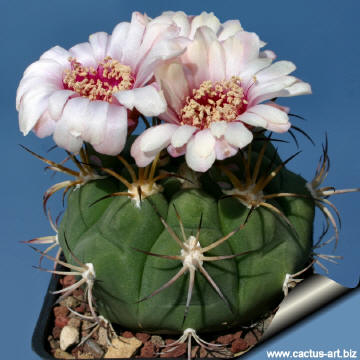
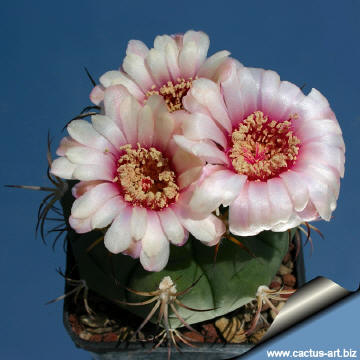
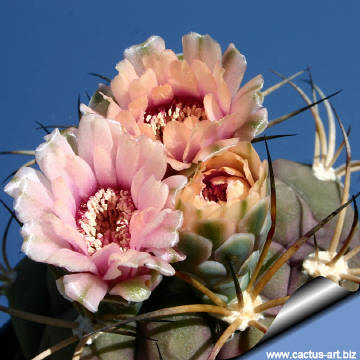
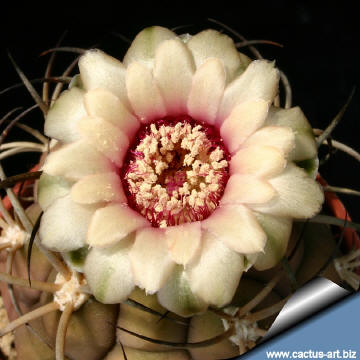
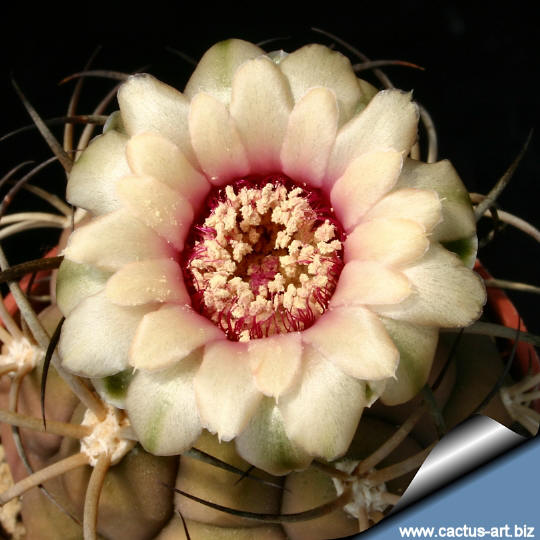
Infundibuliform near the apex, diameter and height 45-50
mm. Pericarpell: dull green
and very short. External
tepals are spatulate, slightly bent outward, white with brownish
green midribs. The inner tepals are narrower, spatulate and slightly
denticulate, white with a carmine-pink, purplish throat. Styles are
carmine with carmine pink 10-12 lobes. Pollen is yellow.
Fruit: Sub-spherical, approximately 2 cm in diameter, becoming red
carmine with maturity. Pulp is intense cherry-red.
Seeds: Microsemineum type, section pirisemineum, very small (0.6
X 0.4mm),
testa reddish, shining and smooth.
|
|
 |
|
|
. |
|
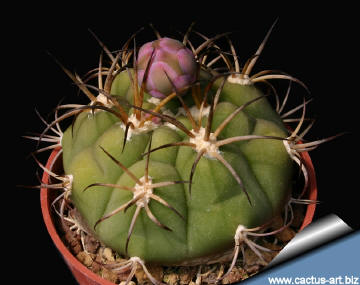
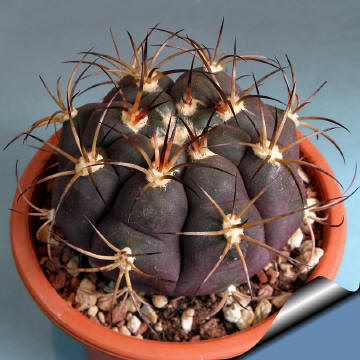
The characteristically purple hue of this specie varies during the year.
The bright colouring depends on sun exposure and is at its best
(and showy) in winter. |
|
. |
|
 |
 |
|
Advertising
|
|
|
|
|
Family:
Cactaceae (Cactus
Family)
Conservation status: Listed in
CITES appendix 2. Gymnocalycium pflanzii v.
albipulpa
n.n. Ritter 1980
Scientific name: Gymnocalycium pflanzii (Vaupel)
Werdermann 1935
Origin: South-east of Bolivia, North-West of Paraguay and
North of Argentina (Provinces of Salta and Jujuy)
Etymology: Named in the honour of K Pflanz.
Synonyms:
- Gymnocalycium marquezii,
- Gymnocalycium milaresii,
- Gymnocalycium izozogsii,
- Gymnocalycium chuquisacanum,
- Gymnocalycium comaparense,
- Gymnocalycium riograndense,
- Gymnocalycium pflanzii var.
lagunillasense,
- Gymnocalycium lagunillasense,
- Echinocactus pflanzii,
- Gymnocalycium zegarrae
|
|
|
Cultivation: Gymnocalyciums are very gratifying plants. They are
easy to cultivate, and their flowering is abundant if we give them a
well drained relatively rich substrate (if possible, not limestone).
Water regularly in summer (but do not over-water). Keep rather dry in
winter. It needs frequent repottings and a very luminous exposure, but
avoid direct exposure to the sun's rays. This species is particularly
easy and accommodating, and seldom suffers from
cryptogamic diseases. Feed with a high potassium
fertilizer in summer.
Hardy as low as -5° C (or less)
if kept dry.
Propagation: By direct sowing after last frost, or by offsets.
Grafting is useless (excluding the cultivars deprived of chlorophyll).
It does not bring anything concrete.
Photo of conspecific taxa, varieties, forms and cultivars of
Gymnoclycium pflanzii:


|
|


 Cultivation
and Mail Sale
Cultivation
and Mail Sale