|
|
|
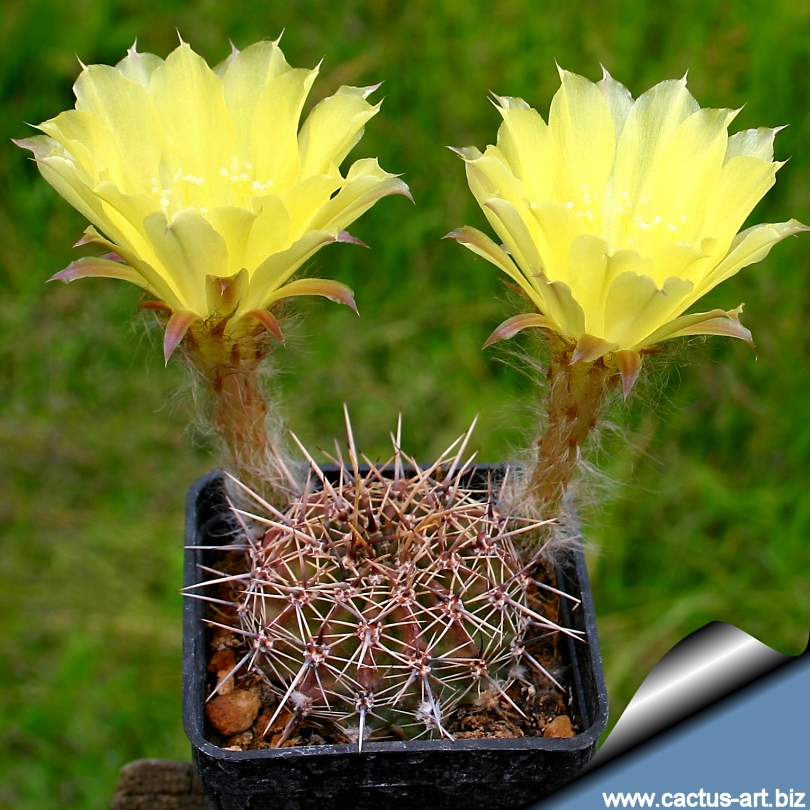
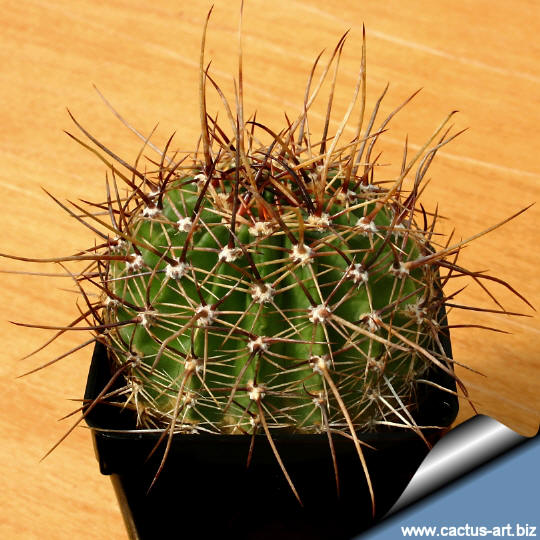
Lobivia aurea DJF235
The specific name means golden flowered
|
|
Description:
Solitary or with many basal and lateral offshoots.
Stems: Dark green globular or elongated reaching a height of
15cm and a diameter of 4 to 10 cm or more.
Ribs: 14 to 15 sharp-edged separated by deep grooves.
Areoles: Brown on young plants.
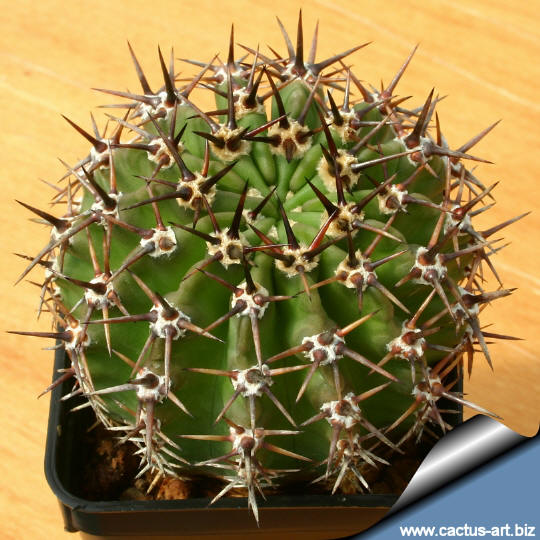
Spines: 8 to 10 radials clear radial about 1 cm. long pointing
outward, usually 4 central spines, 2 to 4(-6) cm long. The one to four
central spines are thicker, sometimes flat, about 3 cm (up to 6cm) long,
and brown to black with yellow tips.
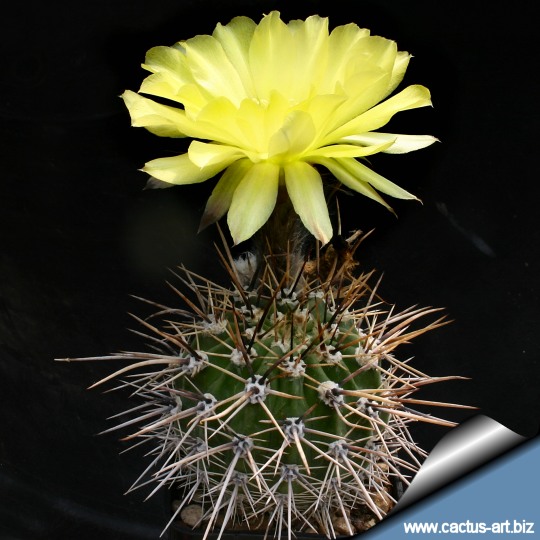
Flowers: (nearly 10 cm.) long. They are usually lemon yellow and
bright yellow inside, but this species also has white, pink or red
flowers. Blooms in flushes in late spring and occasionally in summer.
Buds are covered by long silky hairs and grow laterally from the centre
of the stem. The tube is slightly curved, funnel-shaped, slender and a
greenish white, with pale green scales red at the base, with white and
black down.
|
|
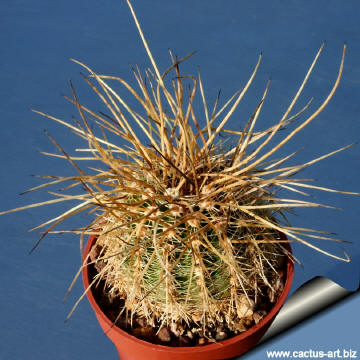
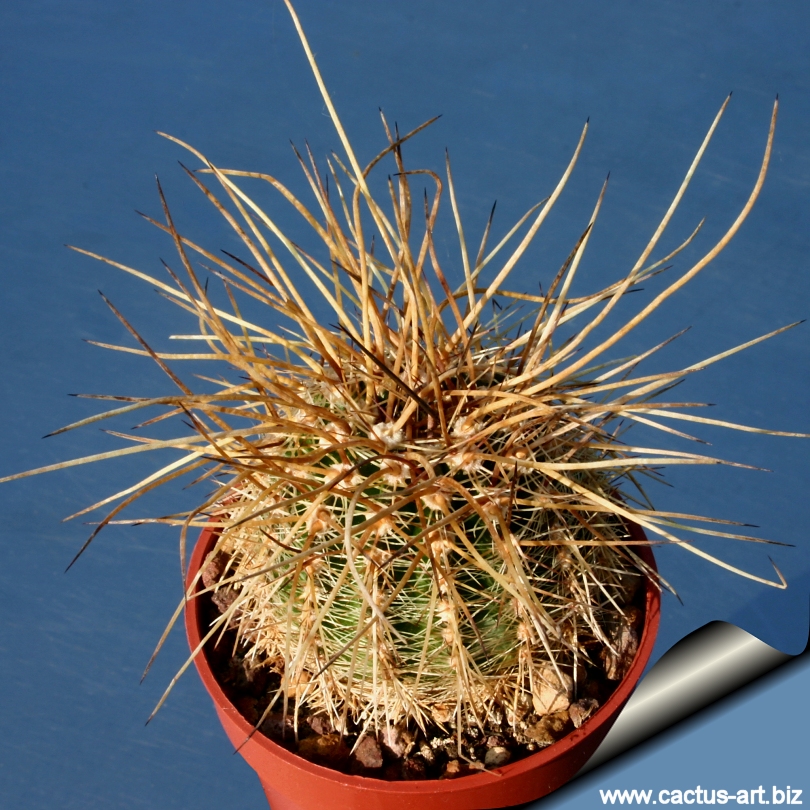
A nice form with long golden spines. |
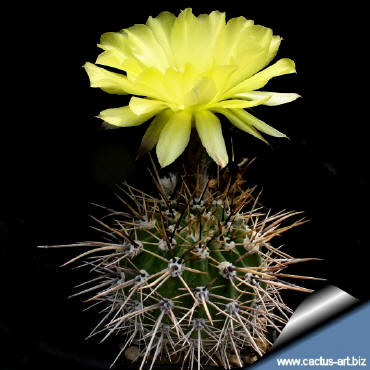
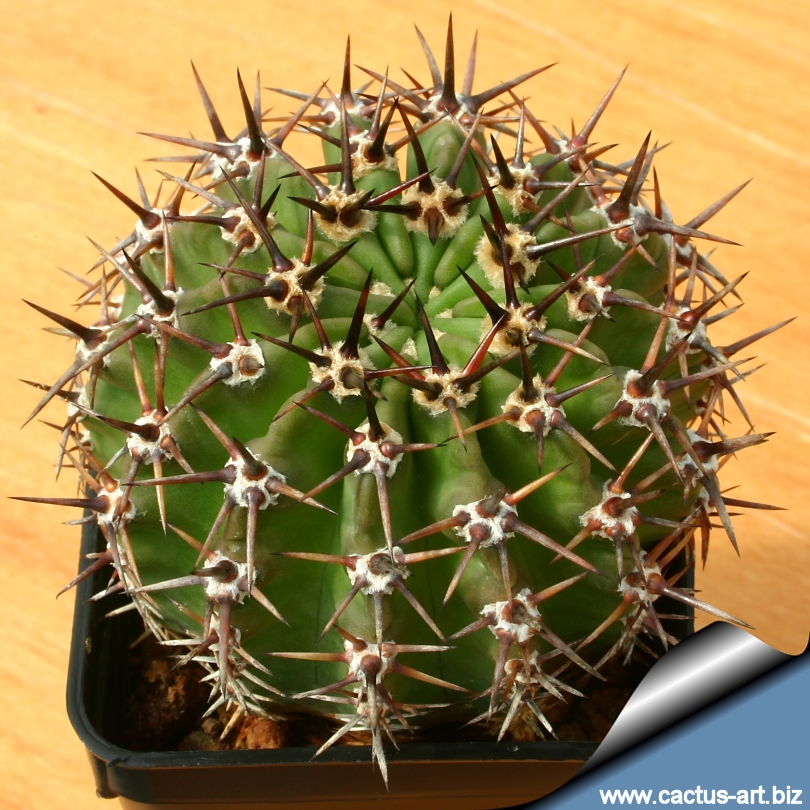
Lobivia aurea var. fallax
|
|
Cultivation: It is a summer grower species that offers no cultivation
difficulties. Water regularly in summer (but do not
overwater ) It is rot prone and should be planted in
a shallow pot. As most Echinopsis cultivated for their blossom, it needs
a soil mixture a little richer than the average cactus with still an
excellent drainage, keep rather dry in winter.
It is quite frost resistant if kept dry (hardy to -5°(-18°) C
Outside full sun or afternoon shade, inside needs bright light, and some
direct sun.
Propagation: Direct sow after last frost, offsets
(if available)
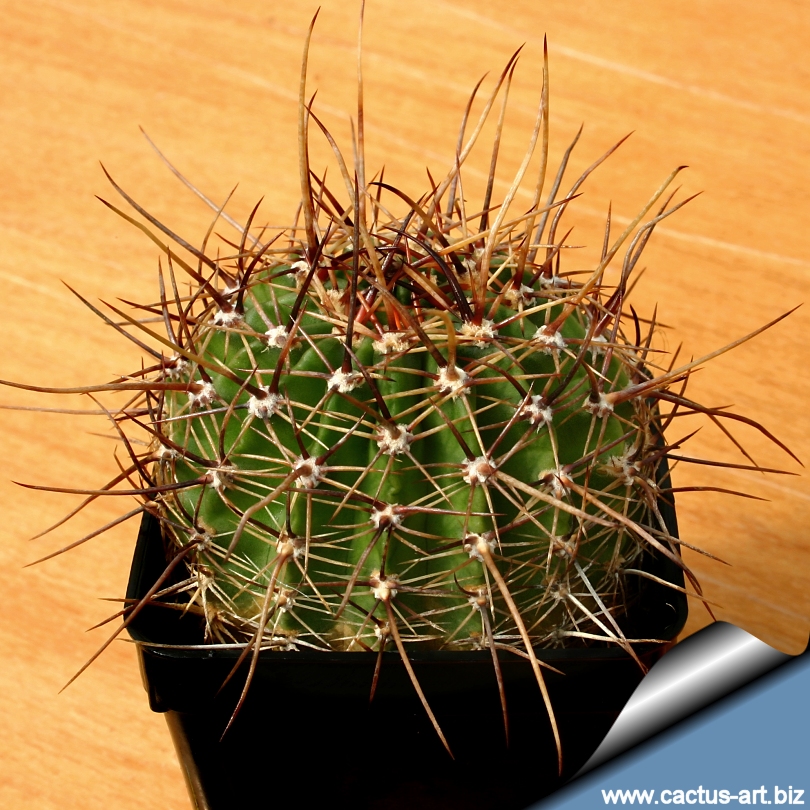
Photo of conspecific
taxa, varieties, forms and
cultivars of Lobivia aurea (Echinopsis
aurea). (This taxon has lots of
synonyms (like most Lobivia) whit several controversial varieties and
subspecies):

 |
|
Advertising
|
|
|
|
|
Family:
Cactaceae (Cactus
Family)
Lobivia aurea
Accepted
Scientific name:
Echinopsis aurea Britton & Rose
Origin: Northern
Argentina.
Conservation status: Listed in
CITES appendix 2.
Common English Names include: Golden Easter Lily Cactus
Etymology: From Latin adjective “aureus” = of gold,
golden for the bright yellow flowers of this species.
Synonyms:
- Lobivia aurea,
- Hymenorebutia aurea,
- Pseudolobivia aurea
Heterotypic synonyms:
- Hymenorebutia quinesensis,
- Lobivia leucomalla,
- Lobivia densispina var. leucomalla,
- Lobivia famatimensis var. leucomalla,
- Echinopsis leucomalla,
- Hymenorebutia leucomalla,
- Echinopsis aurea var. quinesensis,
- Lobivia aurea var. quinesensis,
- Echinopsis quinesensis,
- Lobivia shaferi,
- Echinopsis fallax var. shaferi,
- Lobivia shaferi ssp. rubriflora,
- Lobivia fallax,
- Lobivia shaferi ssp. leucomalla,
- Salpingolobivia aurea,
- Lobivia shaferi ssp. fallax,
- Lobivia ancastii,
- Lobivia cylindracea,
- Lobivia shaferi,
- Echinopsis cylindracea,
- Lobivia cylindrica,
- Hymenorebutia aurea var. cylindrica,
- Echinopsis fallax,
- Pseudolobivia aurea var. fallax,
|
 |
|
|
|
|
There are several varieties with very different
spine shape and length.
One of these,
fallax,
has a greyish-green stem and is very spiny; all the spines are very
long, stout brown to black at first.
|
|


 Cultivation and
Mail Sale
Cultivation and
Mail Sale