|

Lobivia aurea
var. shaferii forma
mostruosa.
|
|
Description:
The standard L. aurea v. shaferi is a very spiny
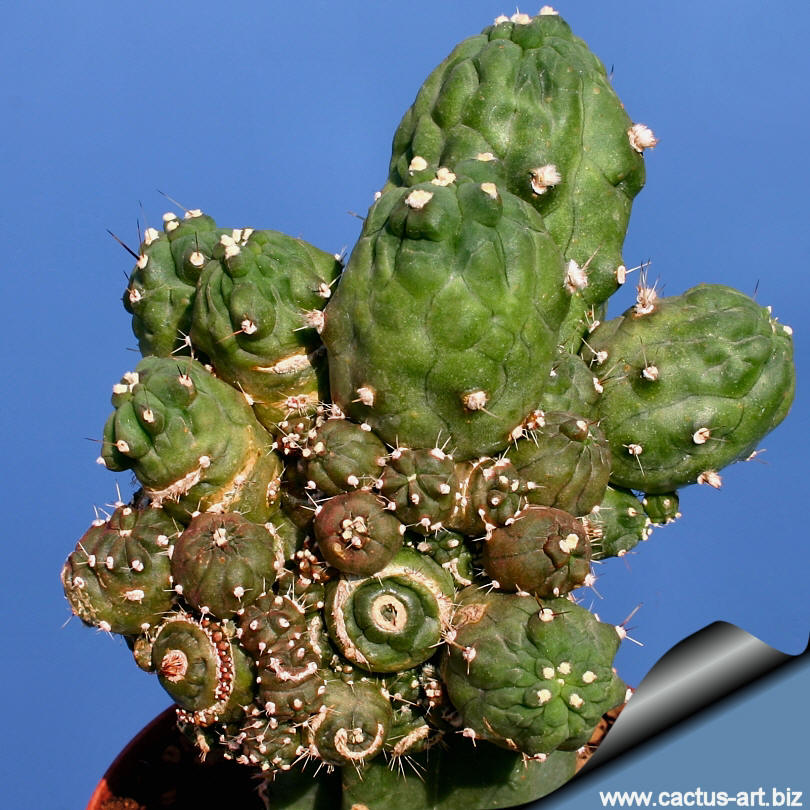
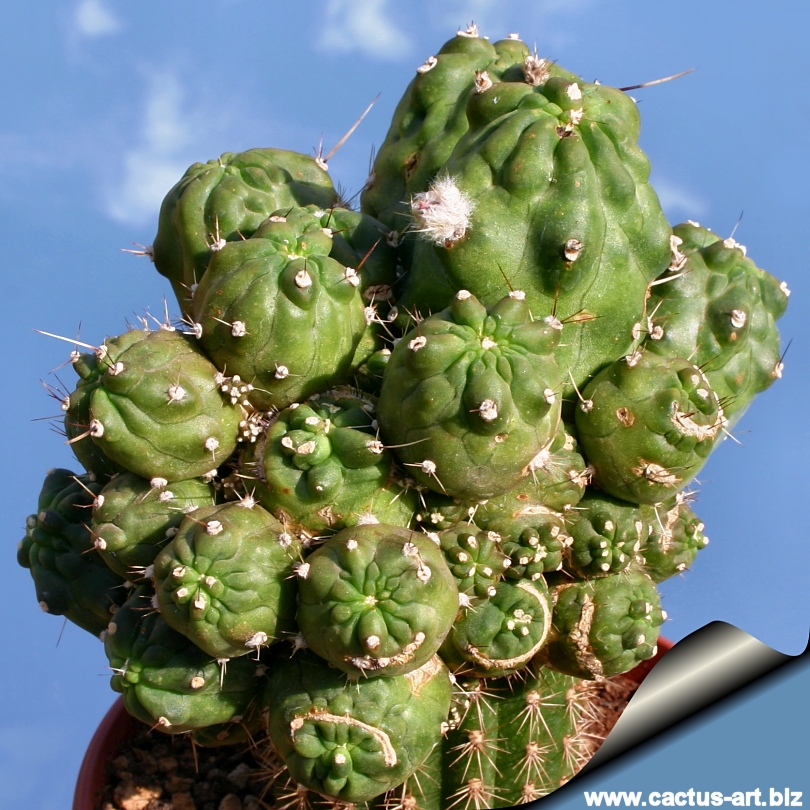
cactus. The monstrous form here described is a quite different
almost spineless clustering plant with ovoidal growth habit that
branches profusely and can slowly grow up to 30 cm tall.
Stem: Composed by upright sections that branches avidly up to 3-8
(-10) cm tall by 3-5 cm in diameter, bright-green to dull olive-green
with purple hues
in full sun, with only a few areoles with a short
white
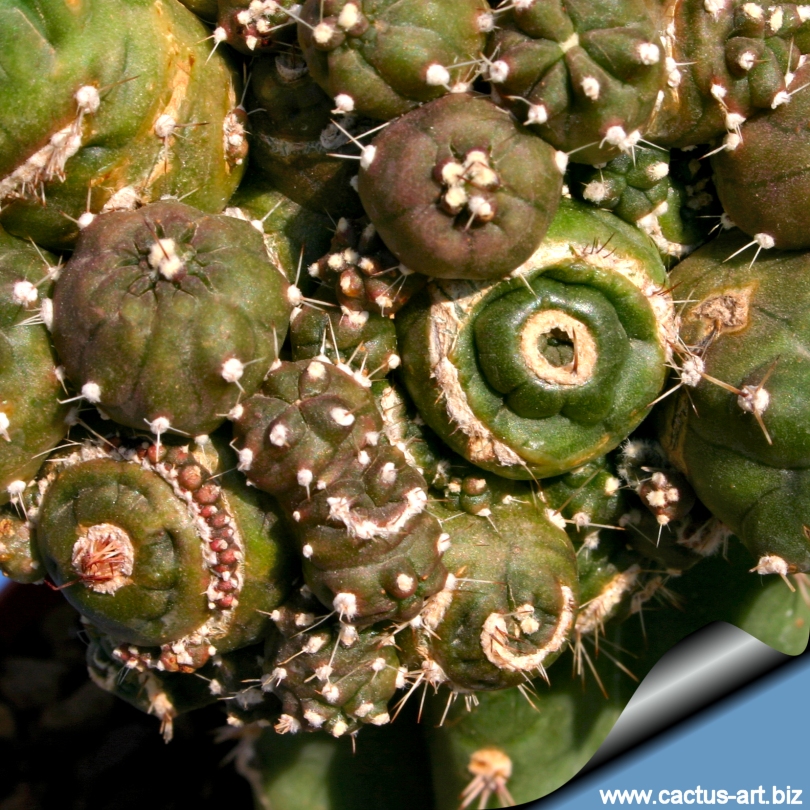
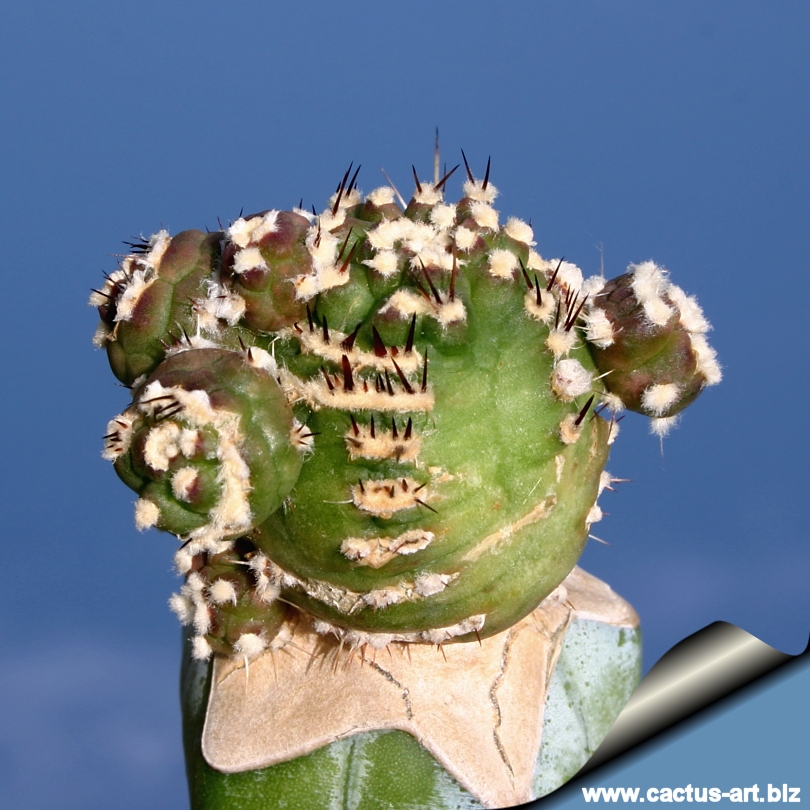
wool. The areoles are arranged irregularly and
often are
fused to form peculiar
horizontal lines
contrast with the stem.
Spines: Few honey-coloured to brown with darker tips, located on
the few areole in groups. They can grow up to 4–25 mm long.
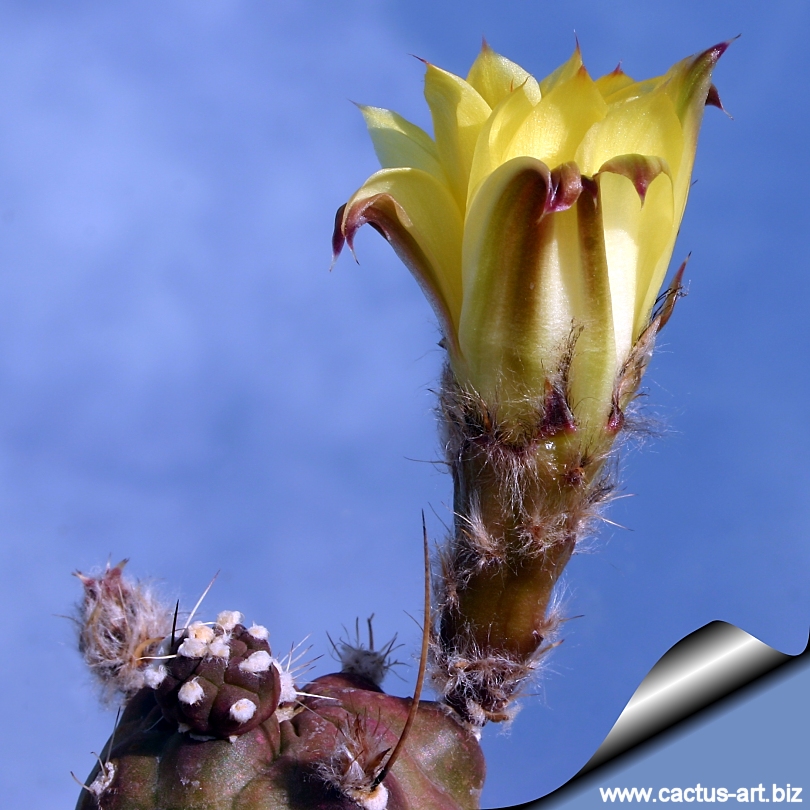
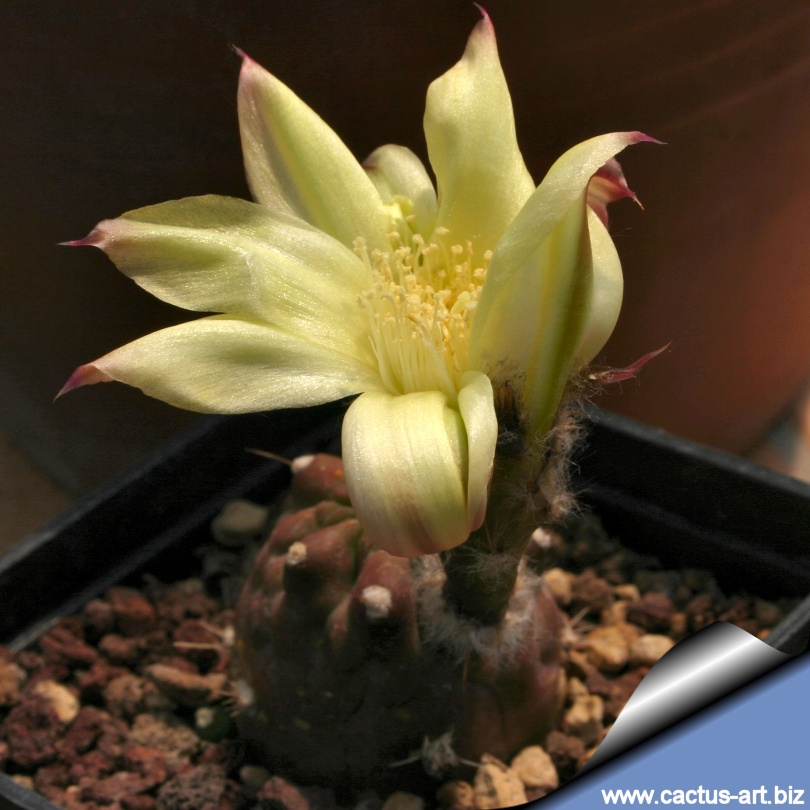
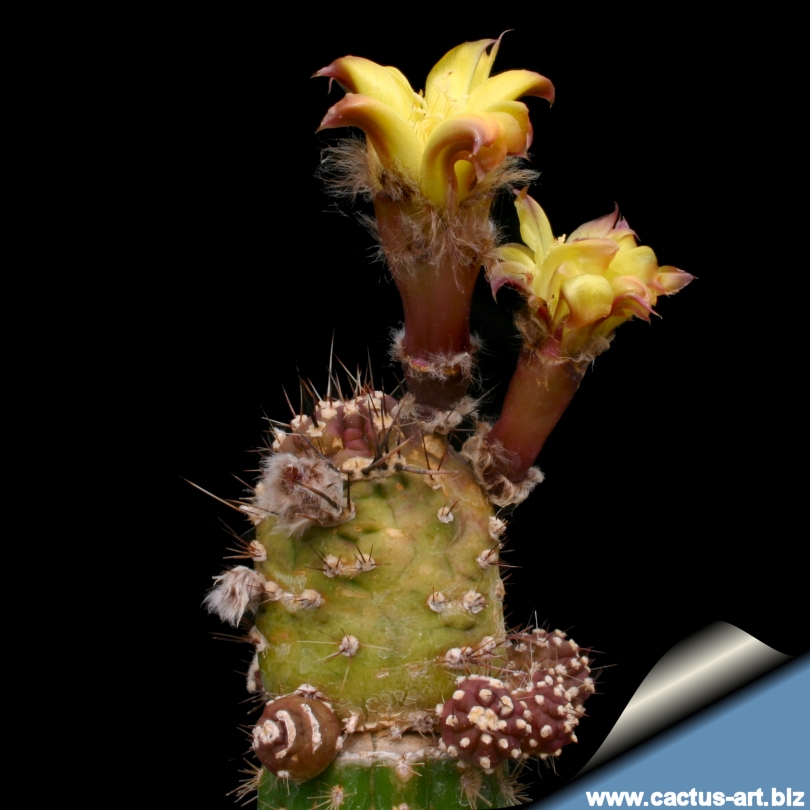
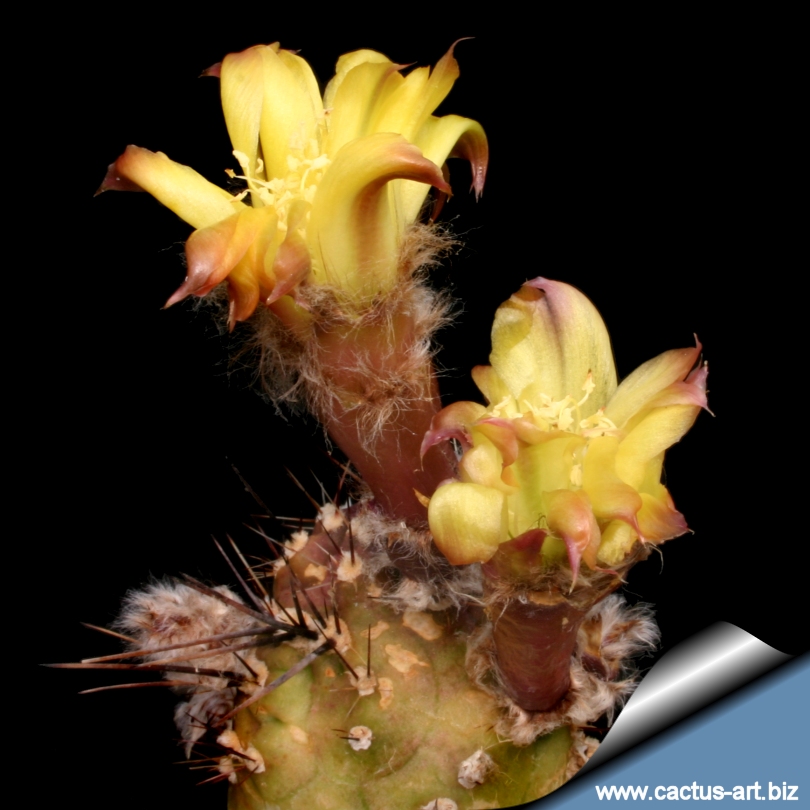
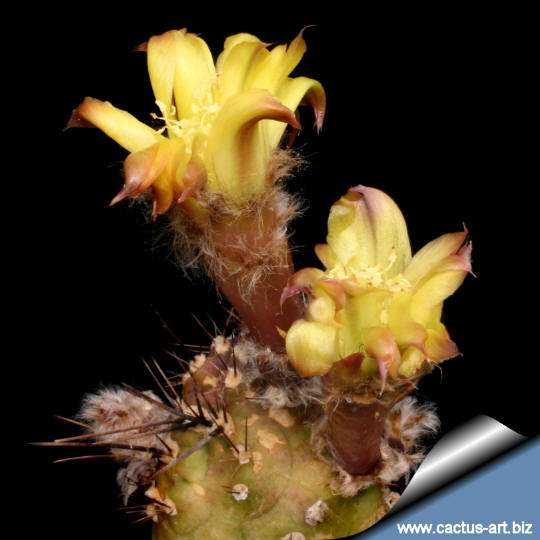
Flowers: Yellow and monstrous looking with short curled petals
and an orangish floral tube. |
 |
 |
|
Cultivation:
It is a summer grower species that offers no
cultivation difficulties. Water regularly in summer (but do not
over water it) It is rot prone and should be planted
in a shallow pot. As most Echinopsis cultivated for their blossom, it
needs a soil mixture a little richer than the average cactus with still
an excellent drainage, keep rather dry in winter.
It is quite frost resistant if kept dry (hardy to -5° C
Outside full sun or afternoon shade, inside
needs bright light, and some direct sun.
Propagation: Grafting (usually) or cutting.


|
|
|
Family:
Cactaceae (Cactus
Family) |
Lobivia aurea var. shaferi
Scientific name:
Echinopsis aurea Britton &
Rose
Origin: Prov. MIZQUE,
dept. Cochabamba (Bolivia)
Conservation status: Listed in
CITES appendix 2.
Common Name: Golden
Easter Lily Cactus
|
|

The flowers are yellow and monstrous looking with
short curled petals and an orangish floral tube.
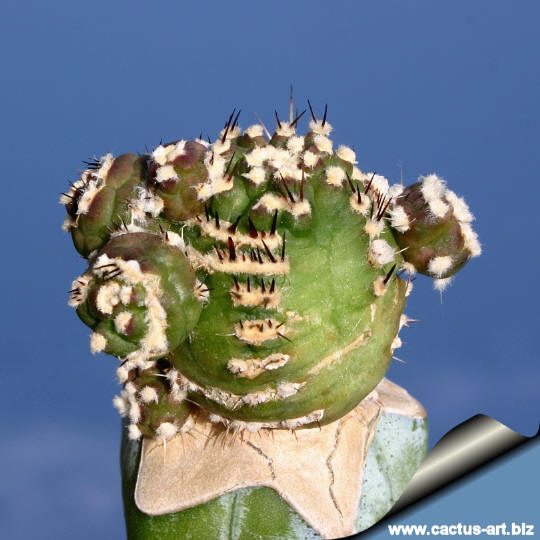
The areoles are arranged irregularly and
often are
fused to form peculiar
horizontal lines
contrasting with the stem.
Photo of conspecific
taxa, varieties, forms and
cultivars of Lobivia aurea (Echinopsis
aurea). (This
taxon has lots of synonyms (like most Lobivia) whit several
controversial varieties and subspecies):
|
|