|
|
|
Family:
Cactaceae (Cactus
Family)
Lobivia saltensis var. nealeana (Backeb.) Rausch,1977
Accepted
Scientific name: Echinopsis
saltensis Spegazzini
Cact.
Plat.Tent. 1905
Origin: Tucumán,
Salta, nothern Argentina
Conservation status: Listed in
CITES appendix 2.
Synonyms:
- Lobivia nealeana
Backeberg
In: Bl. f. K. 1934
-
Hymenorebutia nealeana (Backeberg) Buining 1939
-
Echinopsis nealeana (Backeberg) H. Friedrich 1974
-
Echinopsis saltaensis var. nealeana (Backeberg) J. G.
Lambert 1998
|
|
Description:
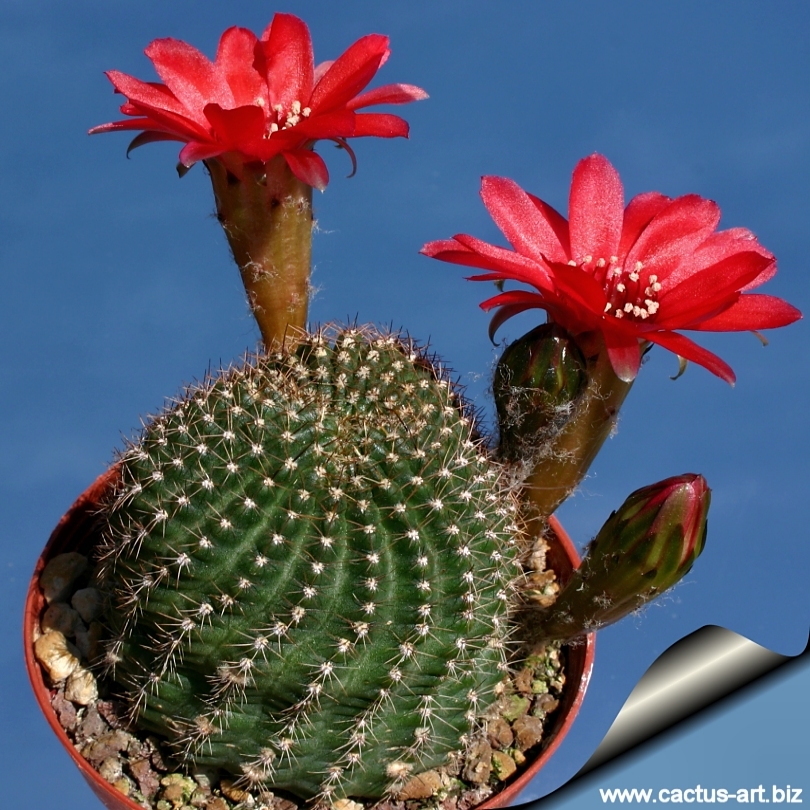
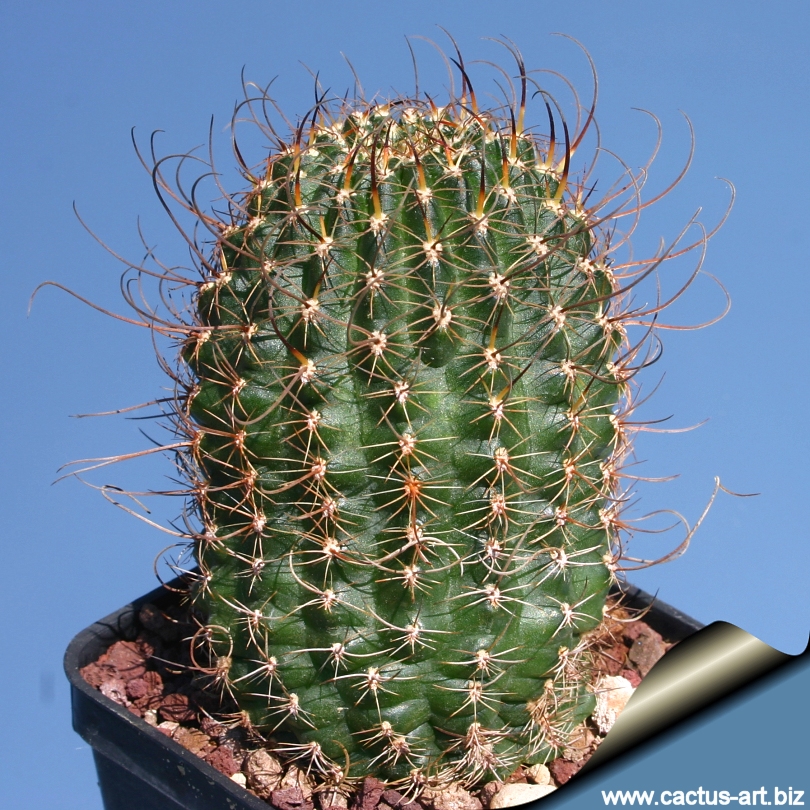
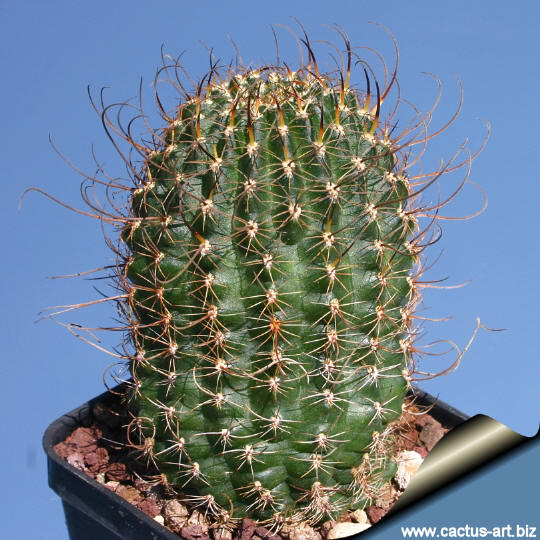
Small cactus, usually
solitary, or heavily clustering.
Stem:
Flattish, egg-shaped or slightly elongated, up to 12 cm tall, 9 cm in
diameter, bright green to dark green or almost black.
Areoles:
5-7 mm
apart.
Ribs:
17-20 (or more).
Root:
Tap
root.
Radial
spines: 10-14 Thin, reddish.
Central spines: 0 - 4
whisker-like, twisted, asymmetrical, more or less long, interlaced up
and
disorderly
curved
up
to 3 cm long
(This taxon comprises both individuals with or without central spines).
The length of these spines greatly depends on sun exposure and
plant's age.
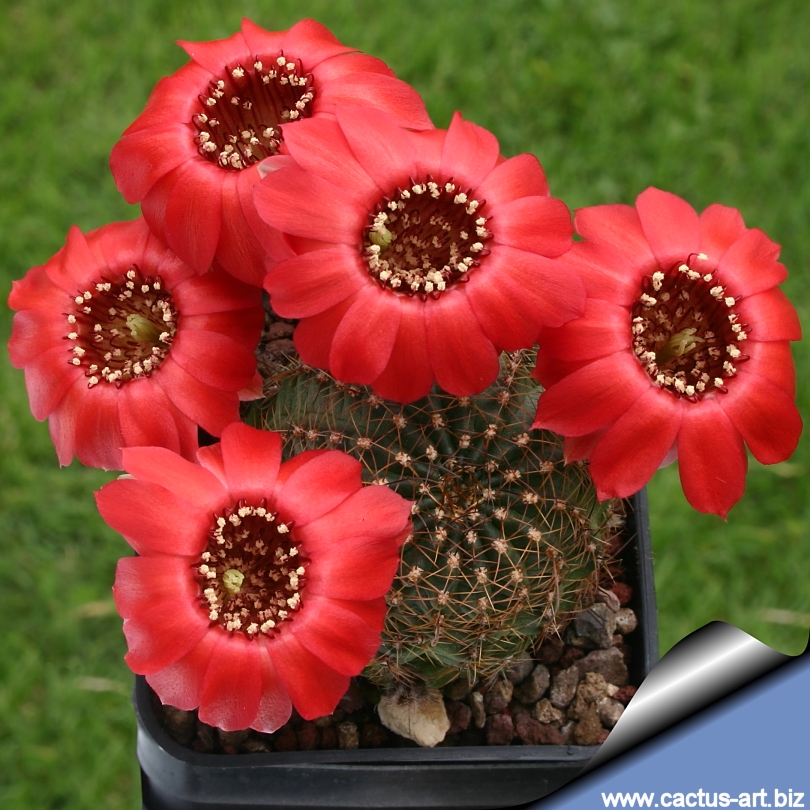
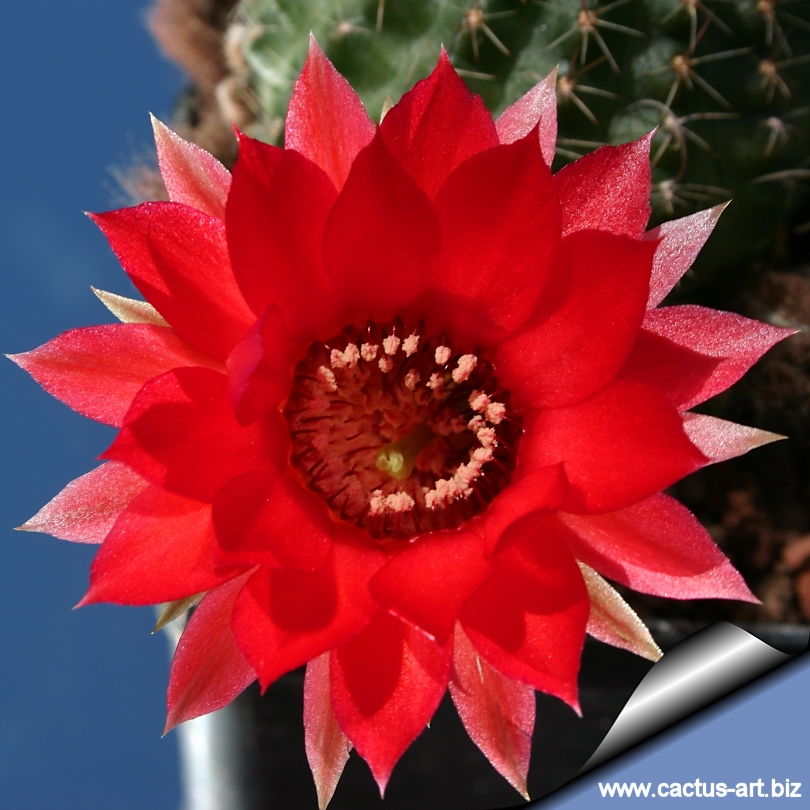
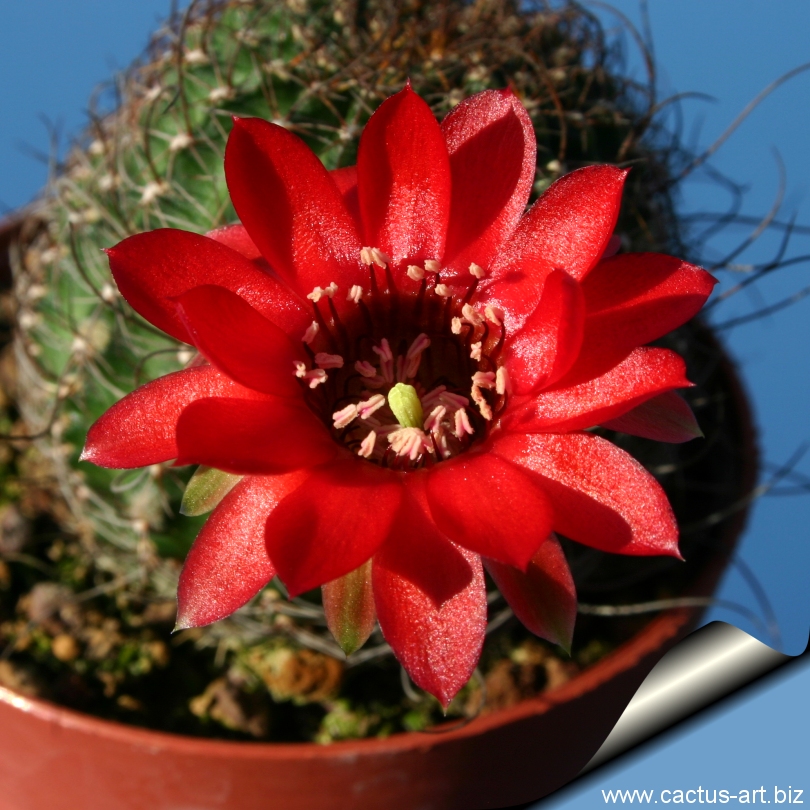
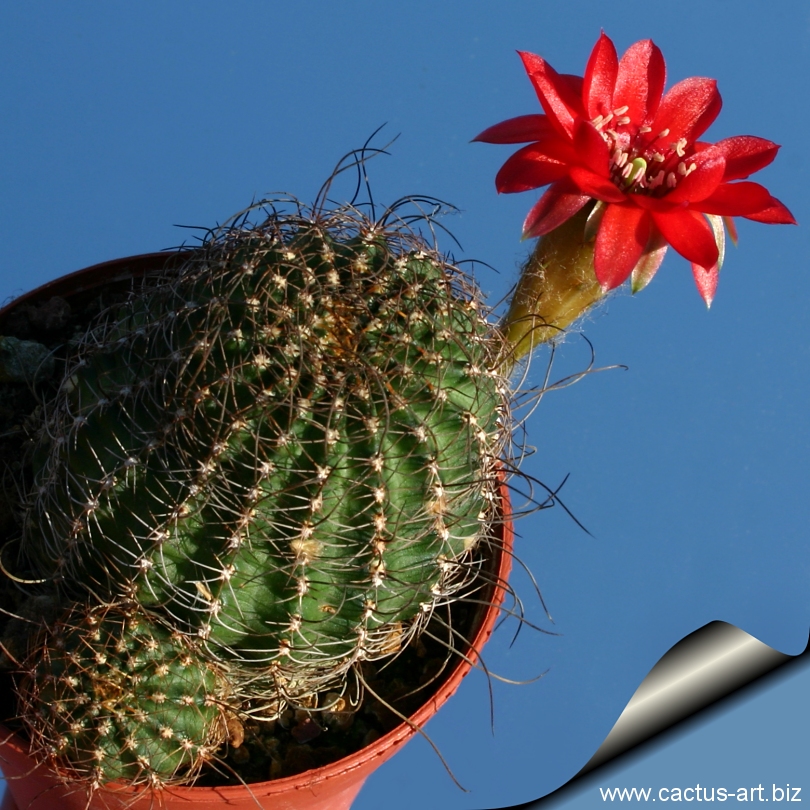
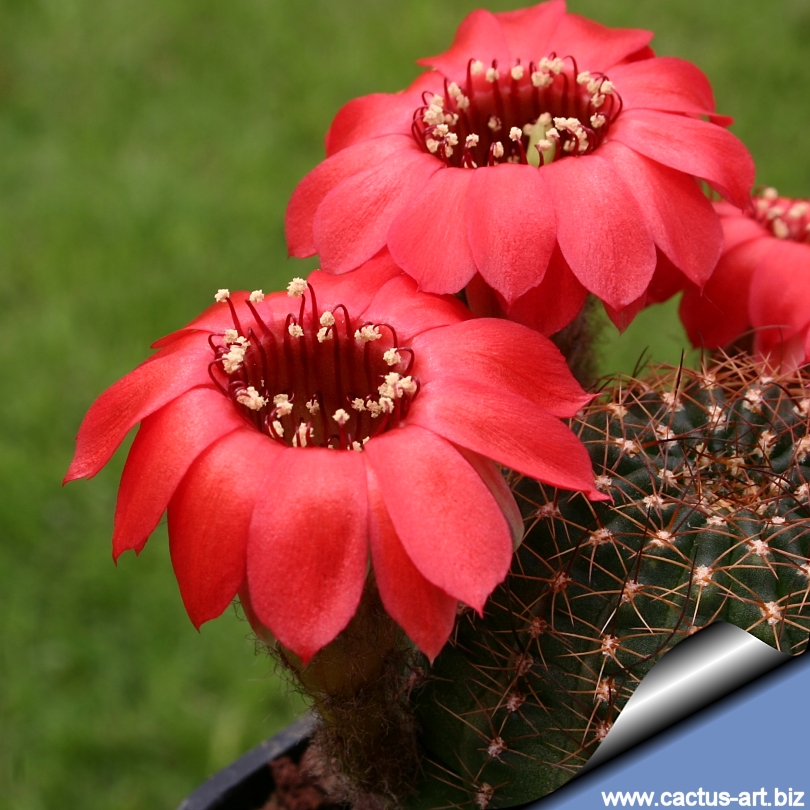
Flowers:
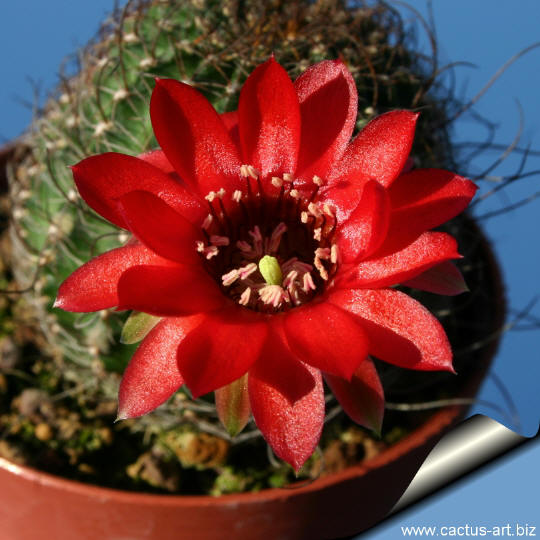
Pretty, shining, small up to
5 cm long, unscented, somewhat bell-shaped-bulgy,
dark
orange-red or crimson that appears almost black when starting to open.
The stamen's filaments are dark red, and bear cream-white contrasting
anthers. The stigma lobes are greenish.
Blooming
season (Europe):
The greater part of flowers appears in spring in the first flowering,
but the plant can erratically produce some flowers in summer too.
Fruit: Globular, 5 mm in diameter,
with little brown wool, up-drying.
Seed: Globular, small grained.
|
|
|
|
Cultivation: It is a summer grower species
that offers no cultivation difficulties.
Lobivia saltensis has a fairly large
tap root, and should be kept in a deep pot with a very draining mineral
substrate. Water regularly in summer (but do
not overwater ) keep dry in winter. Feed with a high potassium
fertilizer in summer.
Repot yearly until reaching about 100 mm in
size, then every two or three years will suffice. Repotting is best done
at the end of winter but can be done at other times. Do not water for a
couple of weeks after repotting to reduce risk of root rot via broken
roots. Repotting will increase size of stems. It
is quite cold tolerant if kept dry (hardy to -5° C). Outside
it need a bright exposure, full sun or half shade in summer,
inside it needs bright light, and some direct sun.
Propagation: Seed, grafting, cutting.
(seldom produces offsets)
|
|