|
|
|
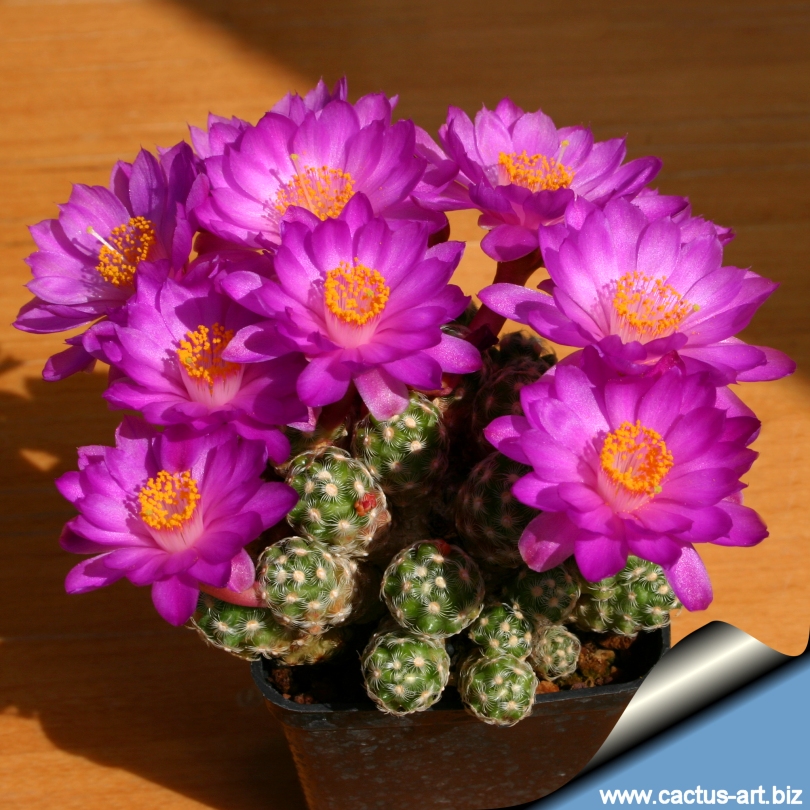
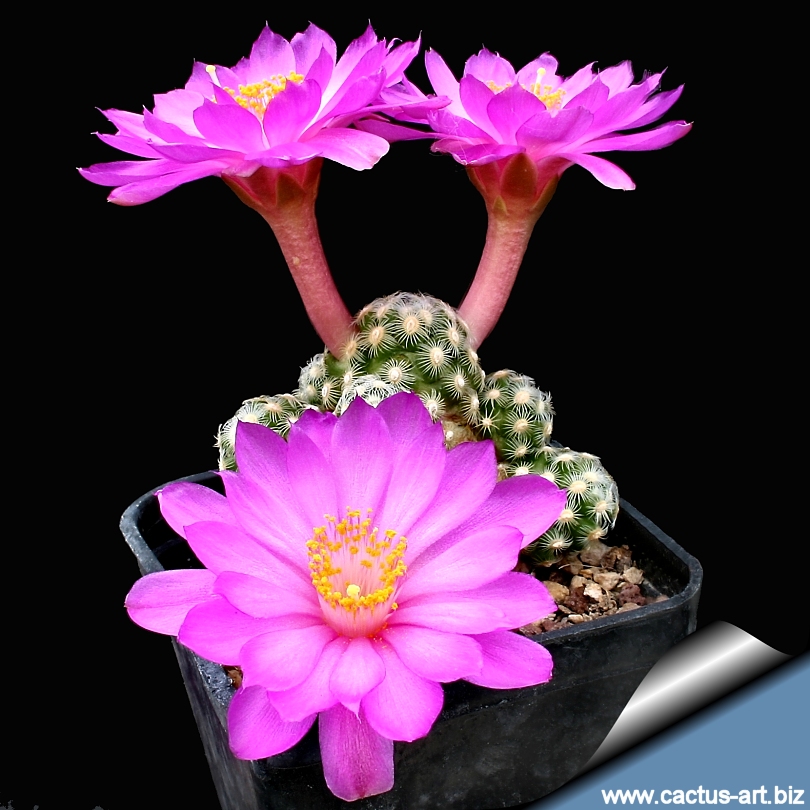
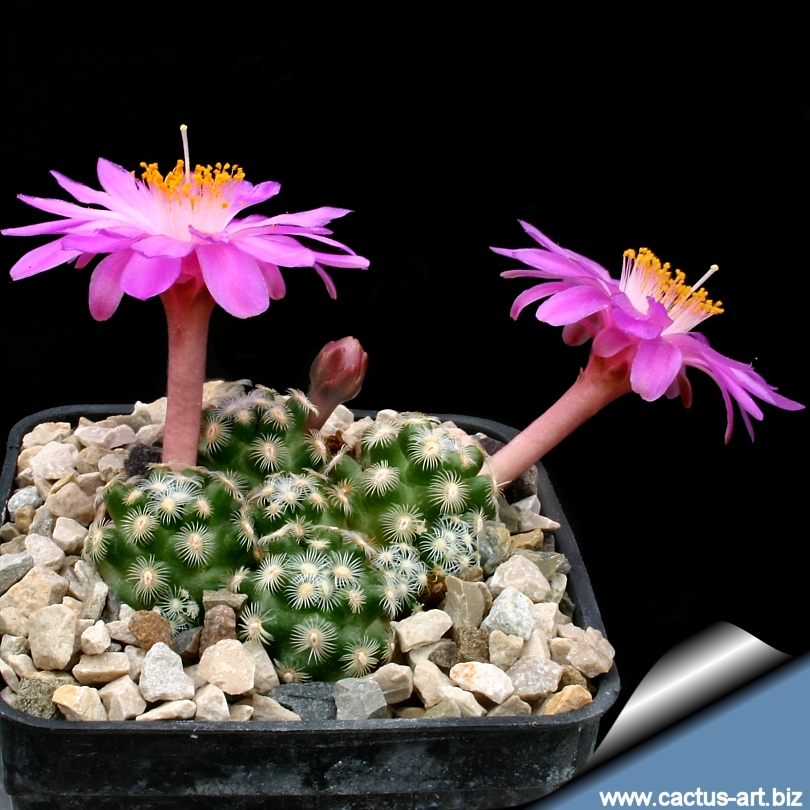
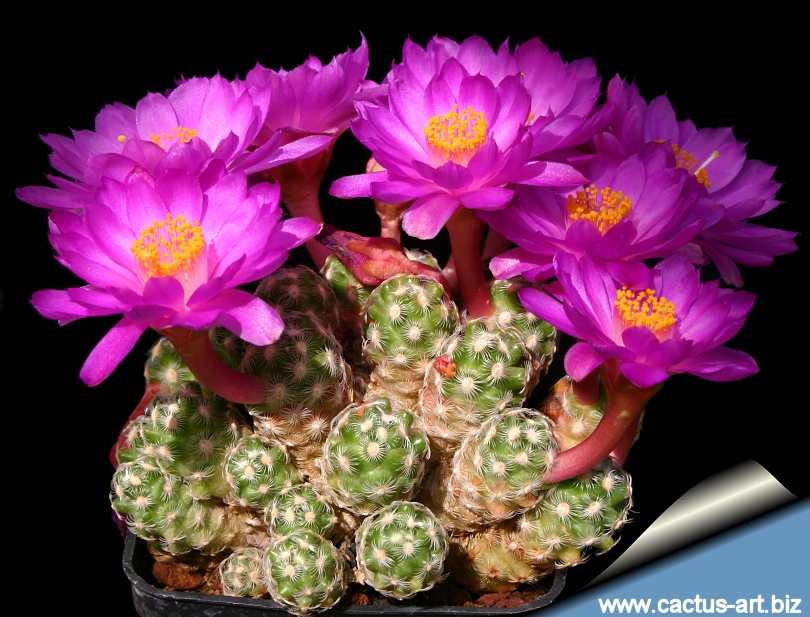
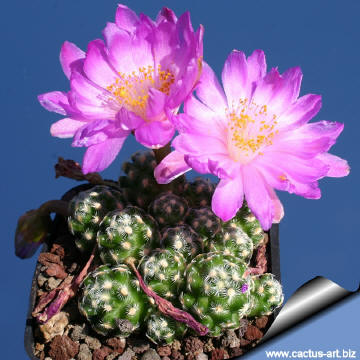
Mammillaria saboae ssp. haudeana will form mats of small soft-bodied stems.
|
|
Morphology (Identifying
Characteristics): Mammillaria saboae is a low clustering, mat-forming
geophyte succulent.
Stem: Tiny, round, soft-bodied, 10-20 mm in diameter, 20-40 mm tall. axils bare, without latex.
Axil: Naked.
Roots: Fleshy branching.
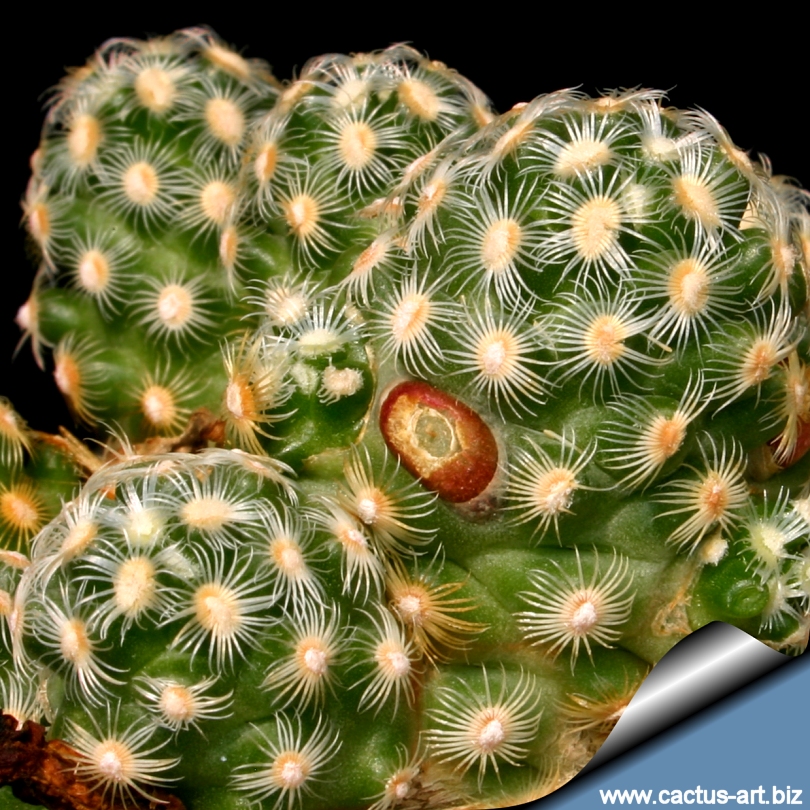
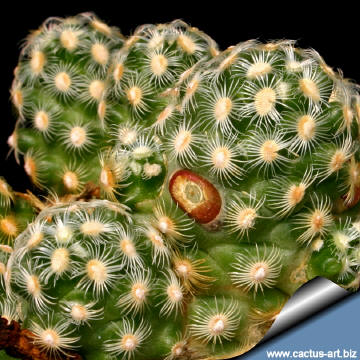
Radial spine: 18 - 27, glassy white with a yellow base, thin,
a little curved, 2 to 6 mm long.
Central spine: Absent.
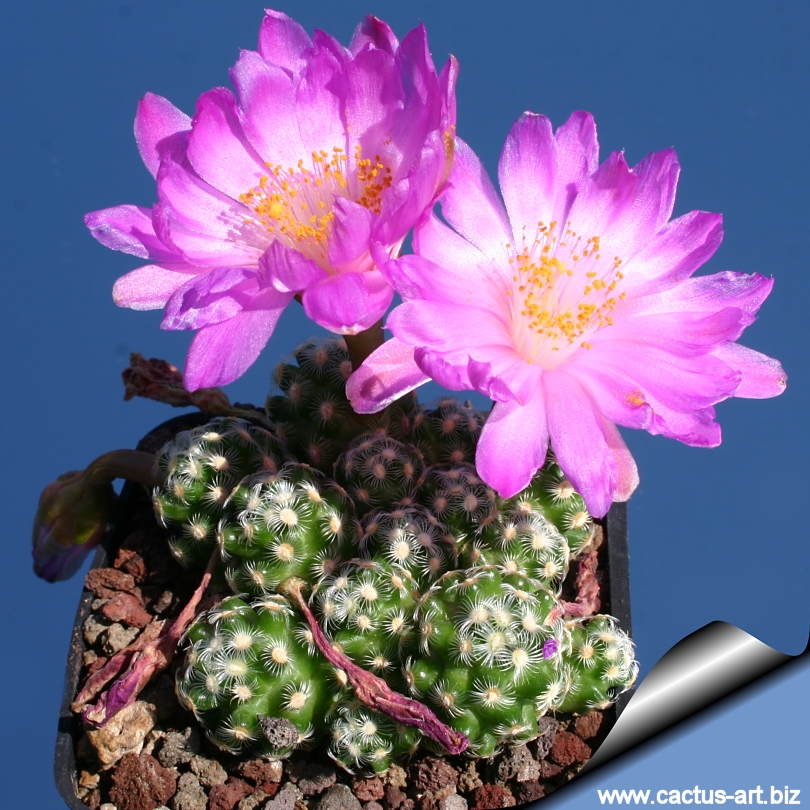
Flowers: Large 4-6,5 cm in diameter, dark lilac-pink to
pinkish magenta, larger and deeper coloured than
the type, stigmas yellowish, blooming in May.
It has a reputation of
being shy to flower, at least when on its own roots.
Fruit: The fruits mature inside the plant and remain for
years sunken into the stems, as in
the type.
-
The subspecies 'saboae' grows in clumps
and has 17-25 radial spines per areole. The flowers are about 4-5 cm
across.
-
The subspecies 'goldii' grows only
solitary stems and has 34-45 radial spines per areole. The flowers are
about 4-5 cm across.
-
The subspecies 'haudeana' grows larger
than the former two subspecies, up to 4 cm high, about
twice the size of the type,.and grows in clumps.
It has 18-27
radial spines per areole, and large flowers 5-6 cm across.
-
The subspecies 'roczekii' has a larger stem,
usually solitary (or rarely clustering from
the base) with large flowers and yellow stamens. It comes from
Canatlán.
|
 |
 |
|
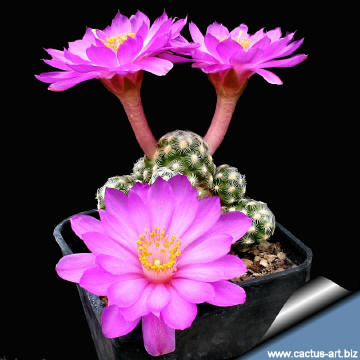
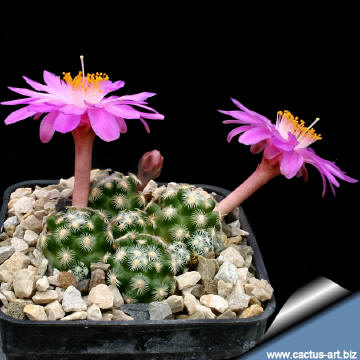
It produces large pink flowers. |
 |
 |
|
The fruits mature inside the plant.
Cultivation:
Clustering in cultivation and easily flowered it is not really easy. It
has a thick
tuberous root system and is
susceptible to
over-watering,
and it's especially
prone to rot.
Therefore,
underpot in a shallow pot with good
drainage, filled with a very open mineral-based potting mix, and only
use the smallest diameter pot that will accommodate the plant. . Plants
need to be kept dry in winter. Feed with a high
potassium fertilizer in summer.
Can be sunburned if moved from shade/greenhouse into full sun too
quickly. During the spring it may be able to take full sun until the
heat arrives at the end of spring. In an area that has hot afternoon
sun, it may be able to take full morning sun, but requires afternoon
shade or afternoon light shade.
If grown correctly, it will reward the grower with generous
displays of huge pink-violet flowers.
Initially this species appears easy to cultivate, but the grower should
not be surprised if clumps suddenly dry up, especially in the winter
season. Hardy to -5°C.
Propagation: Seeds, division
off larger clumps or graft. Seeds can be sown in the spring or summer.
The seedlings should not be disturbed until they are well rooted,
after which they can be planted separately in small pots. To make
cuttings wait
until the
offsets that appear at the
base of old clustered
specimens
are 1/3 the size of the parent and then detach and plant.
|
|
Advertising
|
|
|
|
|
|
|
Family:
Cactaceae (Cactus
Family)
Scientific Name:
Mammillaria saboae ssp haudeana,
(A. B. Lau & Wagner)
D. R. Hunt 1997
Published in: Mamm.
Postscripts 7: 3 (1998).; Lau & Wagner, Kakt. and Sukk. 29(11): 250
(1978) - as M. haudeana.
Synonyms:
- Mammillaria haudeana. Lau &
Wagner
Published in: Kakt.
and Sukk. 29(11): 250 (1978)
- Mammillaria saboae Glass 1966
Distribution: Sonora: Yecora, Mexico. Altitude 1.500 to 2.000 m.
Habitat: Grows on volcanic slabs of rock. In habitat, the
plants
contract considerably during the dry season, sometimes pulling down
completely under the soil. Their flowers can push up through the dirt.
|
|
|
|
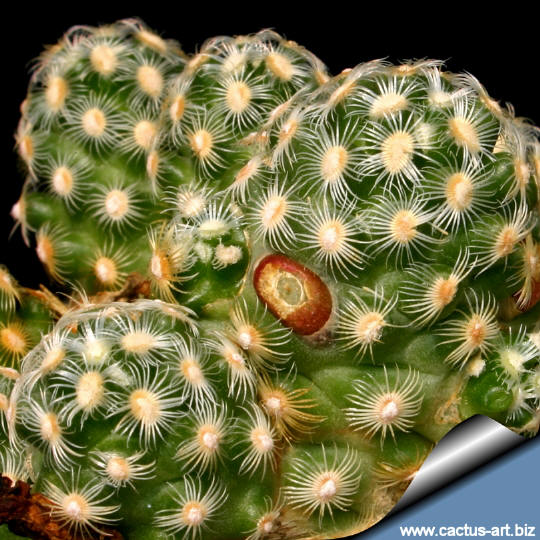
The fruits mature inside the plant.
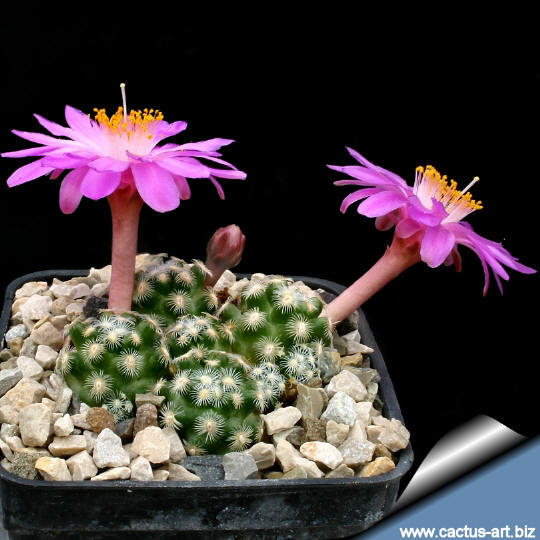
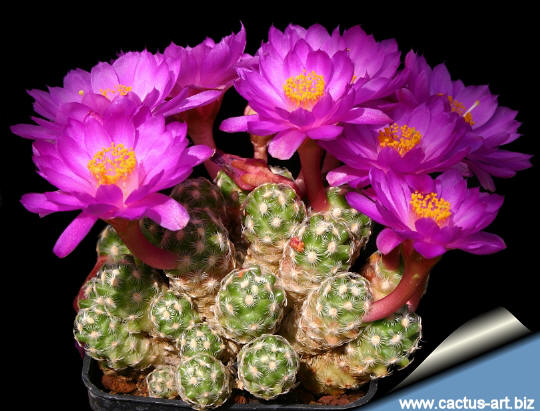
Photo of
conspecific taxa, varieties, forms and cultivars of
plants belonging to the
Mammillaria saboae
complex


|
|


 Cultivation
and Mail Sale
Cultivation
and Mail Sale