|
|
|
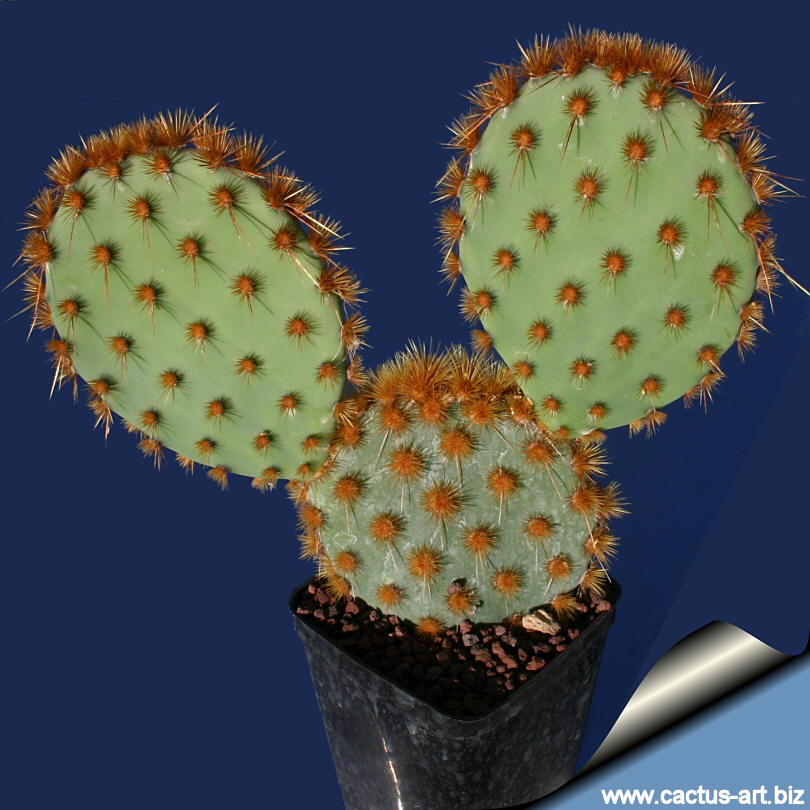
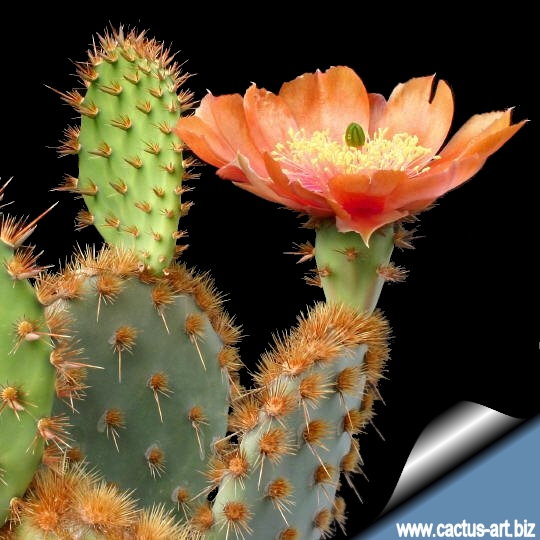
A free-blooming species even when small.
|
|
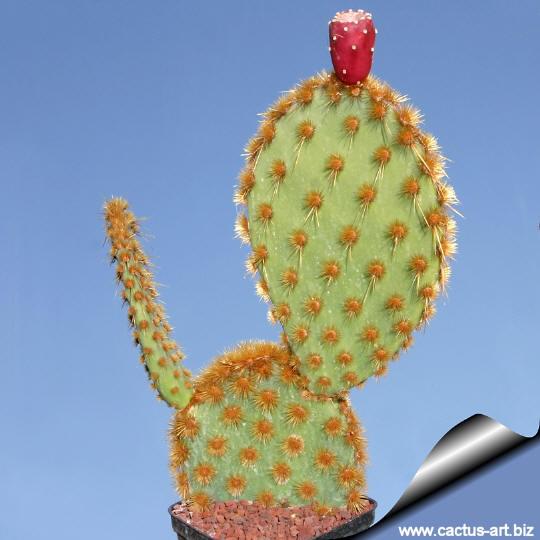
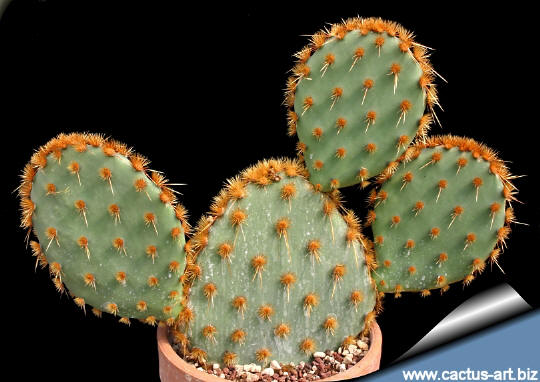
Description: Flattened-padded succulent, forming large, emispherical,
bushy clumps up to 60-90 (or more tall) cm tall and 100-300 cm wide. The
lower branches decumbent and sending up erect branches.
Stem:
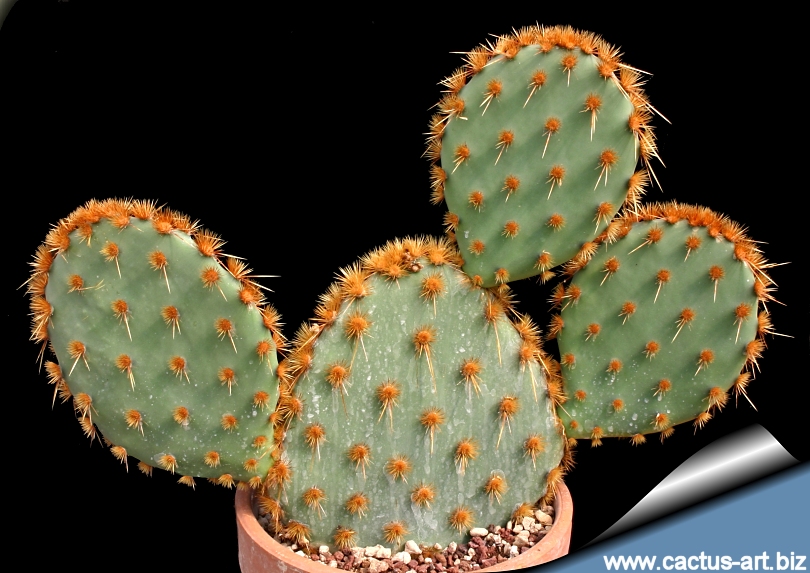
Segments
obovate or partly rounded at apex, faded and
glaucous, dull grey-green more or less glaucous. They measure 10-20
cm. in length.
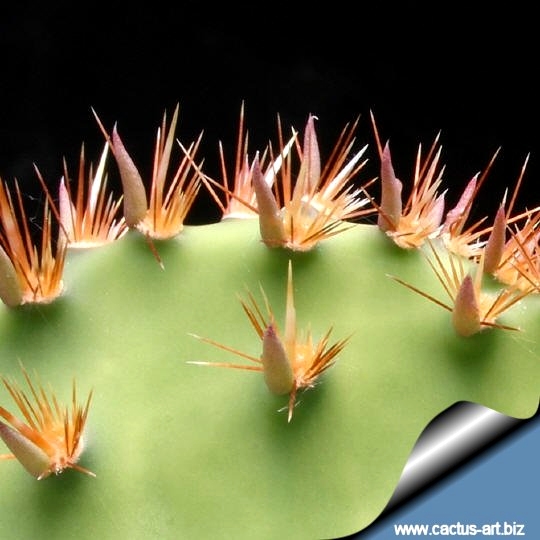
Leaves: Acicular, awl-shapedup
to 7 mm long,
ephemeral
Areoles : Large, widely separated, round. Often spineless.
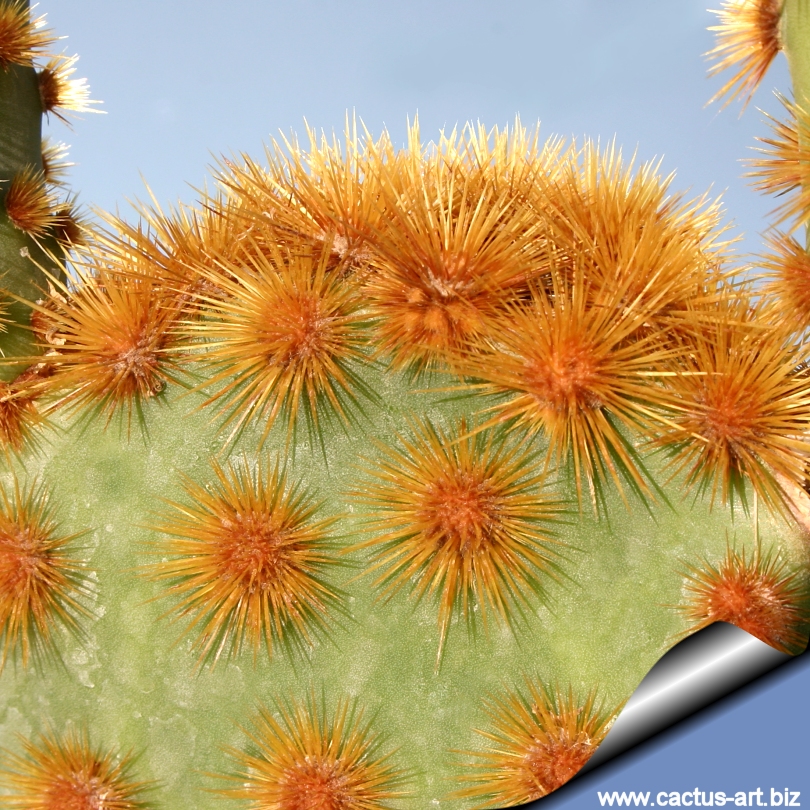
Glochids: Numerous, 3-12 mm long,
acicular, slender, spreading, forming a dense cluster, golden yellow
to dark red, thin, long, from all part of the areoles, persisting for
several years.
Spines: 1-3 , often
absent, reflexed, of a yellowish/toasted colour with a brownish base, up
to 3(-5,5) cm in length. Often folded and seemingly decidous.
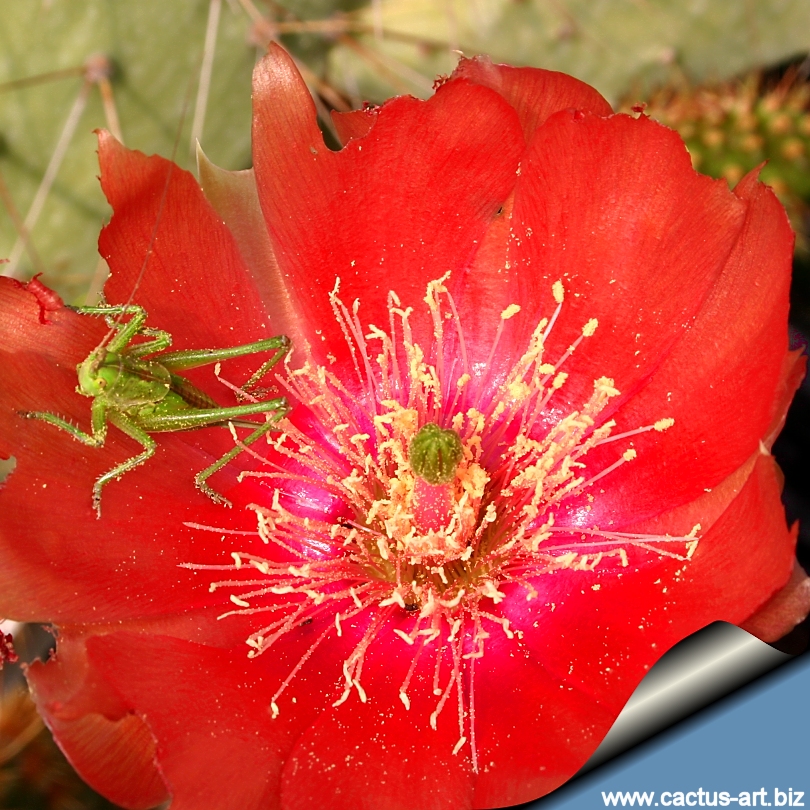
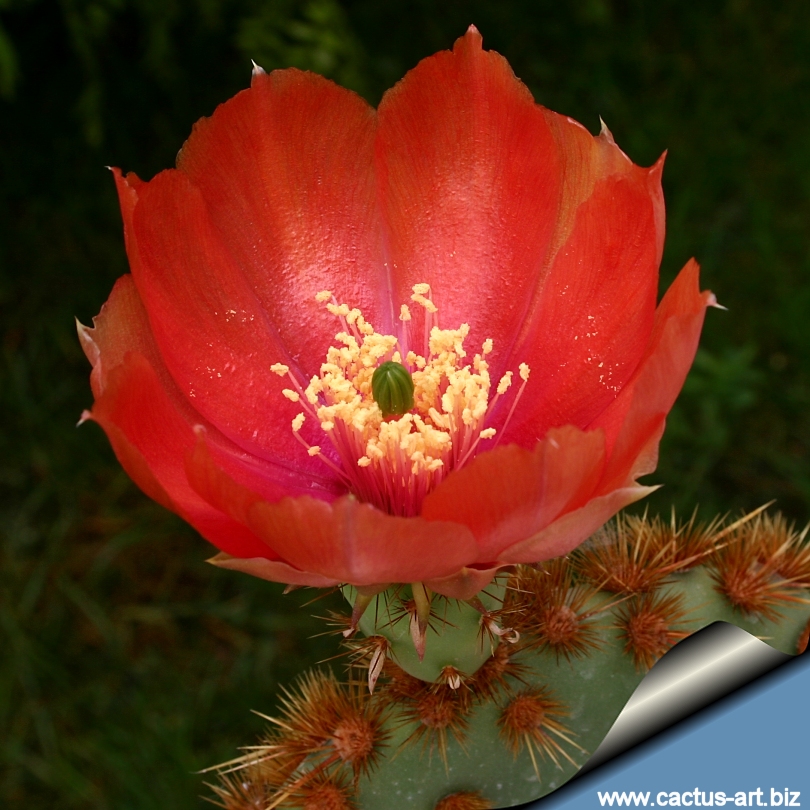
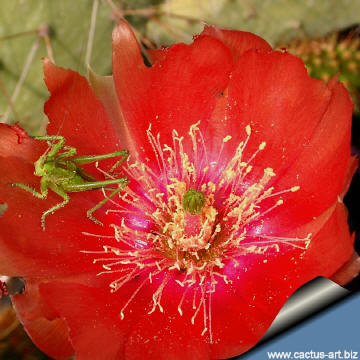
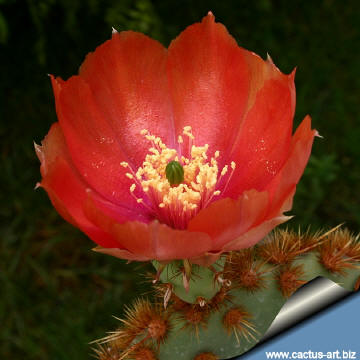
Flower:
Golden yellow,
diameter 8-10 cm. Several sources report the flowers as being
'yellow'. But the plant in cultivation usually has bright red-orange
flowers, and sometimes the centre is greenish. Petals broad rounded or
retuse, filaments yellowhis,
Stigma dull yellowish with 8-10 green
lobes.
Blooming season: Early summer.
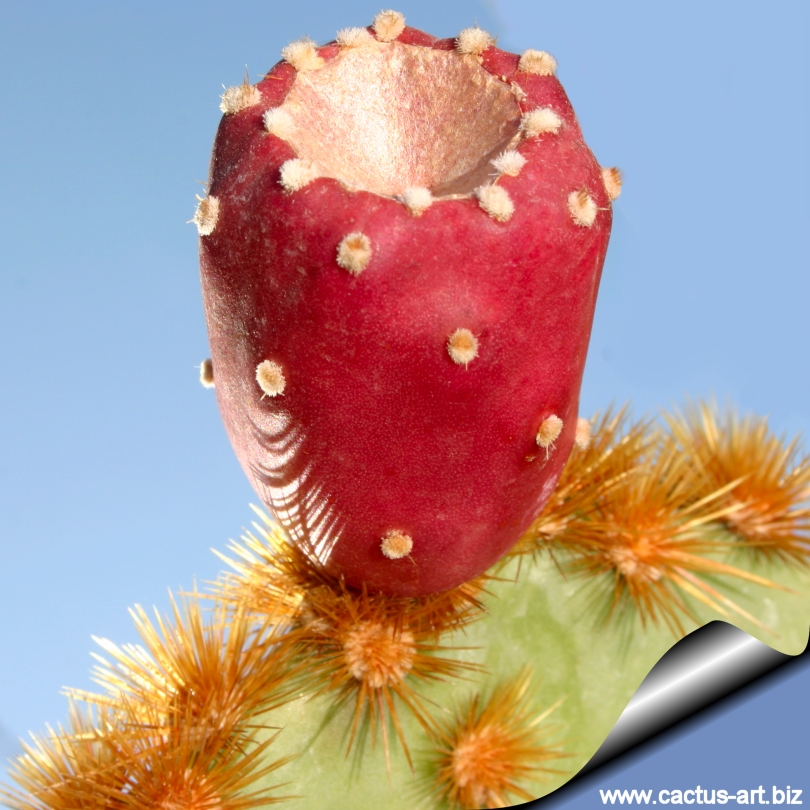
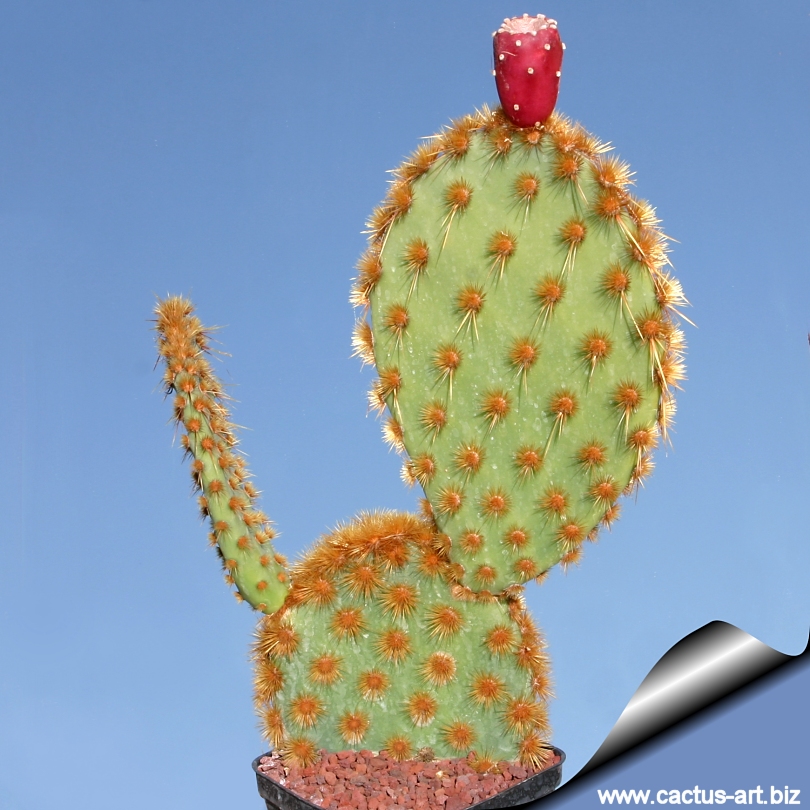
Fruit: Pear-shaped, covered with fine spines and glochids,
purple.
|
|
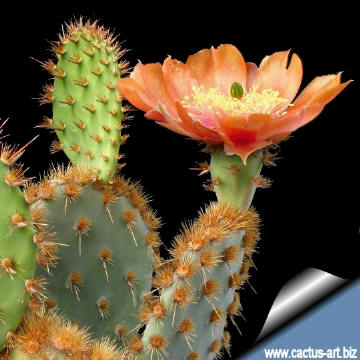
Flowers are big and colourful... |
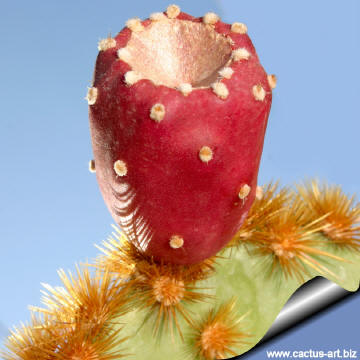
...and are followed by showy long lasting fruits. |
|
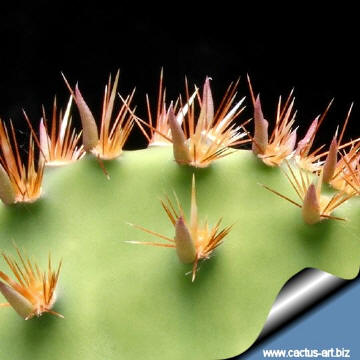
Leaves are
fusiform
and
ephemeral. |
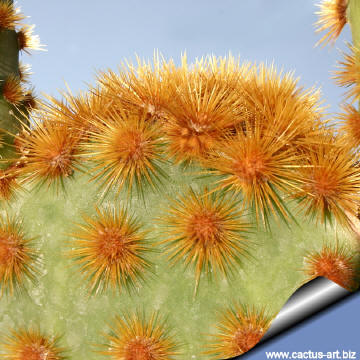
Yellow/orange glochis.
Glaucous epidermis.
|
|
Cultivation:
It is a low maintenance plant that tolerate considerable neglect and
will naturalize, it is
drought-tolerant; and suitable for
xeriscaping. Easy to cultivate outdoor in dry, sandy or gravely,
well-drained soils. May be grown in clay soils as long as drainage is
good and soils do not remain wet, it is very adaptable both in acid,
neutral and basic (alkaline) soils, but prefers a pH in the range 6 to
7.5. No serious insect or disease problems.
Watering Needs:
Outdoors:
little or no water once established, in
the green house irrigate regularly from March to october, keep fairly dry in
winter, tolerate dry condition but suffer if exposed to
prolonged and severe drought. A position at the base of a
south-facing wall or somewhere that can be protected from winter
rain is best for this plant, but is however resistant to
moisture and rain.
Sun Exposure: Full sun
(only), in semi shaded position wont produce many flowers.
Frost hardiness: They are reasonably cold hardy ,
tolerating temperatures down to -5° to -12° C (USDA: 8-10)
depending on clone, they are also quite tolerant
of winter wet. (In good drained soils)
|
 |
 |
|


|
|
Advertising
|
|
|
|
Family:
Cactaceae
(Cactus Family)
Scientific Name:
Opuntia aciculata
Griffiths, 1916
Distribution:
South-western USA, north-western Mexico
Habitat & Ecology: It grows in dry hills
mainly on stony outcrops, often in small colonies usually to the
exclusion of other plants.
Listed in CITES Appendix
II
Type:
Synonyms:
-
Opuntia lindheimeri var. aciculata,
Engelm. (Griffiths) Bravo, 1974.
-
Opuntia engelmannii var. aciculata
Salm-Dyck (Griffiths) Weniger, 1970
-
Opuntia engelmannii ssp. aciculata (Griffiths)
U.Guzmán, comb. et stat. nov.
-
Opuntia tardospina Griffiths
Etymology:
The
genus
name"Opuntia"
refers to a Greek name used by Pliny for a diverse plant which grew in
the region of the town of Opus in Greece.
The
species name
"
Aciculata" derives from the Latin word “acicula” which means
“a small pin for a headdress”, and the adjectival suffix
for nouns “atus” : possessive of or likeness
to something (with,
shaped, made) for verb participles: a completed action, -ed
( The specific name implies:
"covered with small pins").
|
|
|
|
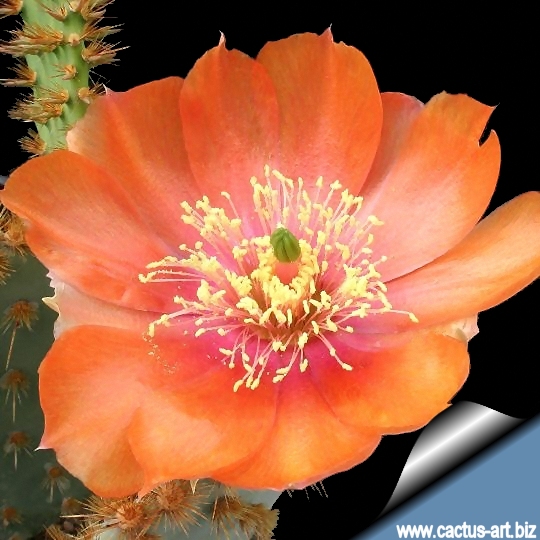
Tepals: orange-yellow with a violet throat.
Stamens
clear yellow,
stigmas green with a fat pink
stylus.
Propagation:
Propagated by
cuttings of leaf pads at any time in the growing
season. (Allow
cut surface
to callus over before planting).
Traditional uses: The fruit are edible
and the tender joints can be coked as a vegetable. In medicine
the plant are used to treat dyspepsia, mumps, swelling and in
veterinary it is used to treat bruises. The joints are also a
good food for cattle (after burning of spines) |
|


 Cultivation and Mail Sale