-
1
-
2
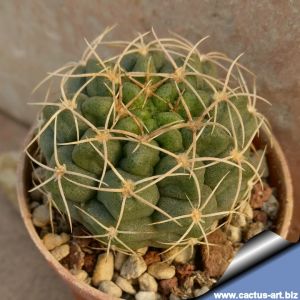
Unlike typical OR-MY hybrids, this cultivar shows no or minimal white spotting, displaying a solid green hue that ranges from bright to blue-, gray-, or mauve-green across clones.
-
3
-
4
-
5
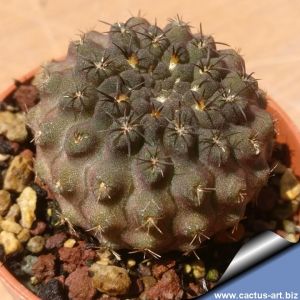
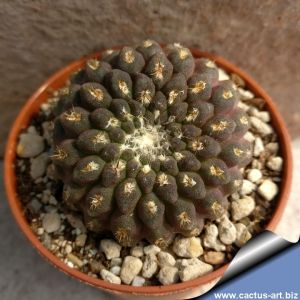
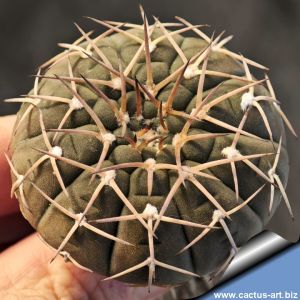
A small geophytic globular cactus with an olive-brown to grey body and a prominent napiform taproot. Features very short black or horn-coloured spines, flattened against the stem. Bears silky flowers from creamy white to light brick-red.
-
6
-
7
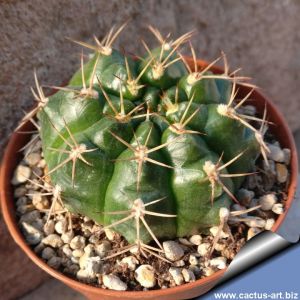
-
8
-
9
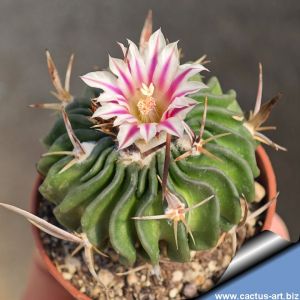
When young, it produces areoles densely packed with spines, which gradually reduce with age to 3–5—featuring a single strong, flattened central spine that points upward. The white flowers are enhanced by a purple stripe running down the center of petals.
-
10
The flowers cluster around the lower part of the stem, they are purple to purplish red or dark red and clover-shented. The spines are short comb-like, spreading out and bent towards the body.
-
11
Forma prolifera, very rare. It branches profusely from the base and forms dense colonies.
-
12
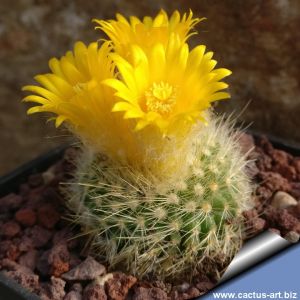
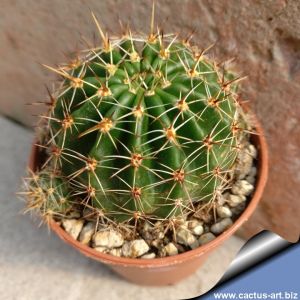
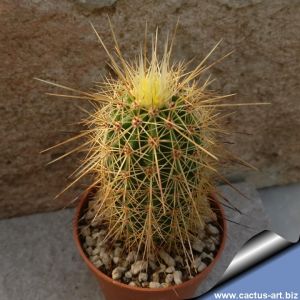
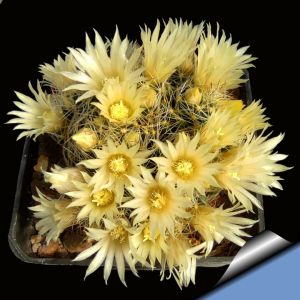
A beautiful species. Distinctive white-yellow spines refer to chrysos (Greek for "gold"), as in its name chrysacanthion – "golden spine". The golden spination and bright yellow blooms create a radiant, eye-catching display.
-
13
-
14
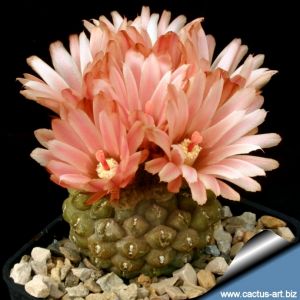
Small geophytic cactus with a solitary, partially buried body ranging in color from gray-purple to dark copper. Straight or slightly curved brown to black spines. Flowers in shades from cream-white to soft pink.
-
15
The woolly areoles on the ribs have a felty line between them so it seems like the areoles are connected with each other.
-
16
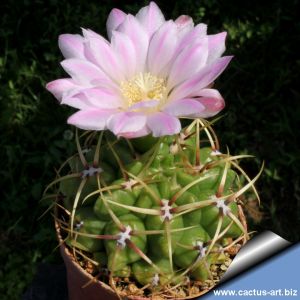
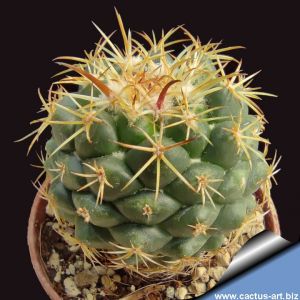
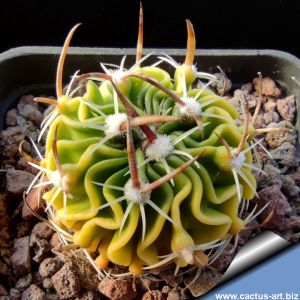
This Gymno dazzles with translucent, amber-yellow spines shaped like curved tusks—dark at the base and glassy at the tips—sentry over its vibrant green body. Its dramatic spines appear hand-carved from amber, making it a perennial showstopper.
-
17
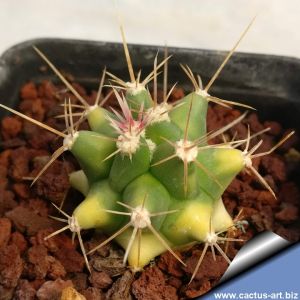
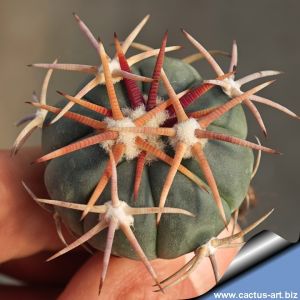
Ferobergia is an hybrid, made by crossing Ferocactus and Leuchtenbergia principis. Variegated plants have sectors, patches or stripes with two or more colours. Plants with variegated body are highly prized. Very variable.
-
18
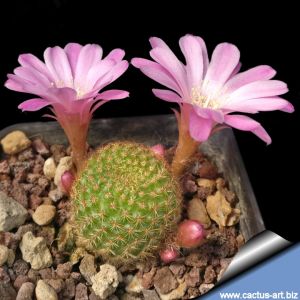
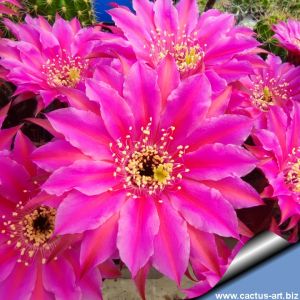
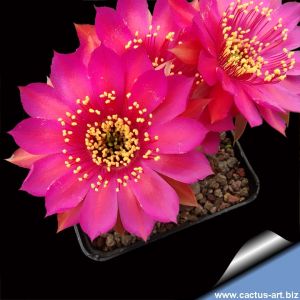
Chamaelobivia ’Lincoln Happy Thoughts’ is a nice hybrid that bears bright, cerise-pink flowers with a yellow throat.
-
19
Mammillaria nejapensis is very variable, especially for the length of the spines, that greatly depends on sun exposure and age of the plant. This species forms large colonies by dichotomous division.
-
20
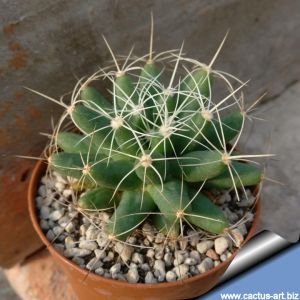
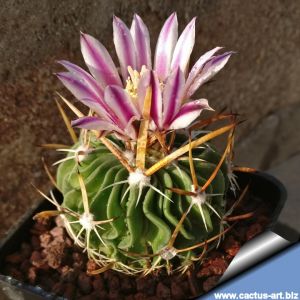
This variety shows a solitary globose body, slightly flattened, green to blue-green, with 5–7 ribs and a strong taproot. Spines few and yellowish. Large pink flowers bloom from the apex in spring or summer.
-
21
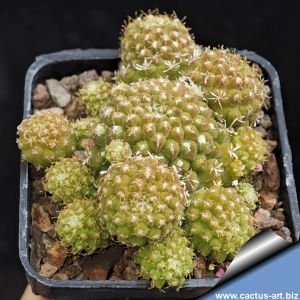
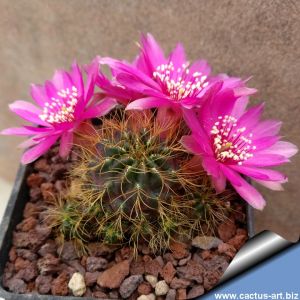
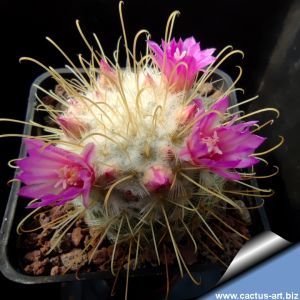
An appealing hybrid marked by dense, long, slender spines. It gradually forms extensive clumps and is adorned with conspicuous pink flowers, which greatly enhance its decorative and visual impact.
-
22
-
23
-
24
-
25
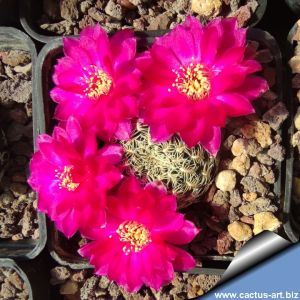
A flattened globular cactus reaching 4 cm in height and 8 cm in diameter, bearing central spines ranging from yellow-amber to reddish-brown and vivid carmine-red blooms.
-
26
Small geophytic cactus with a flattened, dark brown, globular stem and taproot. Features short flattened spines and woolly areoles. Summer blooms in white, pink or yellow.
-
27
Flattened blue-grey stem featuring prominent wide areoles and woolly apex. Spines transition from cream to purple, gaining strength and vibrancy over time. A showstopping botanical wonder!
-
28
A deep dark-green plant flushed with violet, readily forming clusters. Its elongated areoles carry soft, pale-yellow, comb-like spines that are long and flexible. Flowers are a vivid magenta.
-
29
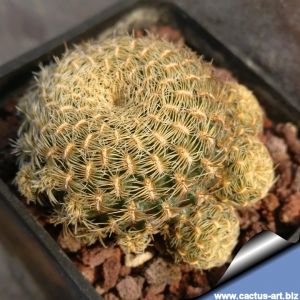
Irregular growth with both bare areoles and spiny areoles in alternating bands.
-
30
-
31
Mammillaria bombycina v. flavispina is a selected form that differs from the standard Mammillaria bombycina for its evenly creamy-yellow or yellow hooked central spines, (tips never dark reddish-brown).
-
32
-
33
-
34
-
35
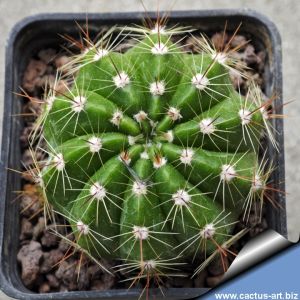
A striking Ferocactus species from Baja California and southwestern California, growing either as a single stem or in dense clusters of up to 20. Its gently spiraled ribs and yellow-green flowers give it a distinctive charm.
-
36
Tiny cacti with pretty long, curly and flexible central spines. They bear nice white flowers even on cm young specimens. Exceptionally beautiful plants!
-
37
Yellow spination, very beautiful plants, dark magenta flowers with spiny tube.
-
38
-
39
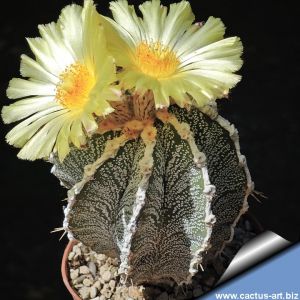
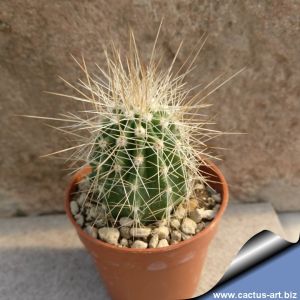
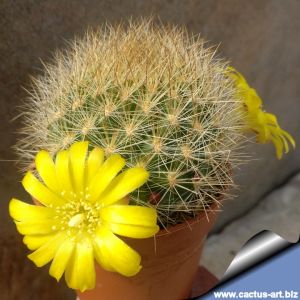
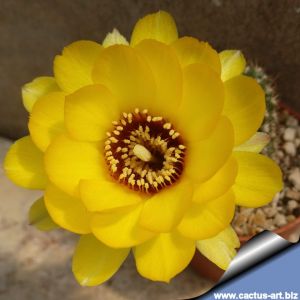
Straight ribs on fresh green stem, yellowish spines, large yellow flower.
-
40
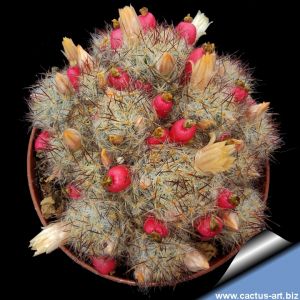
Self-fertile plant. Produces flowers in succession over a long period. The red, edible berries are produced in abundance without the need for fertilization. Easy to grow.
-
41
Native exclusively to San Pedro Nolasco Island in the Gulf of California (Sonora, Mexico), Mammillaria tayloriorum (Mammillaria tayloriana) shares its habitat with Mammillaria multidigitata, Echinocereus websterianus, and the towering Pachycereus pringlei
-
42
-
43
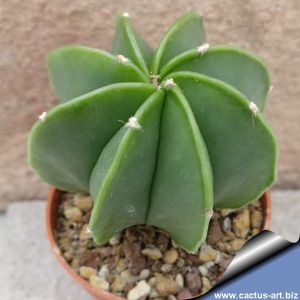
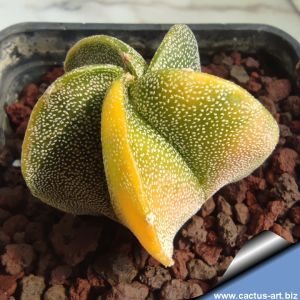
Green star-shaped body, with variegated areas from yellow to pink-purple. Each plant is particular, with a combination of colors and patterns that make it unique.
-
44
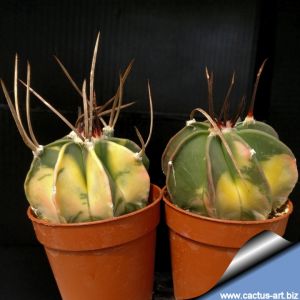
Variegated plants have sectors, patches or stripes with two or more colours. Plants with variegated body are highly prized. Each specimen different and particular.
-
45
Pretty form with darker spines, deep pink-magenta flowers.
-
46
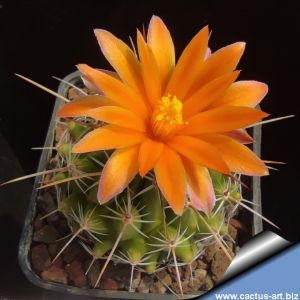
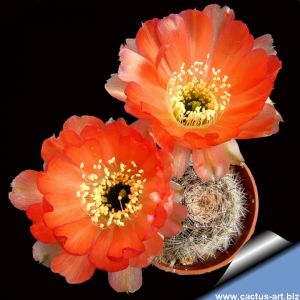
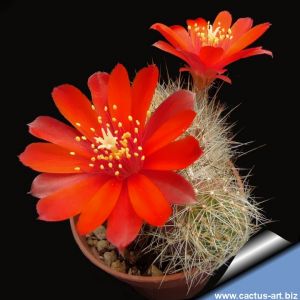
Magnificent orange flowers!
-
47
-
48
-
49
Also known as “Joseph's Coat” is one of the very few naturally occurring white-variegated cacti. As its name suggests, this cactus is variegated or marbled with white, creamy-white, yellow, green and sometimes also with pink in varying patterns.
-
50
-
51
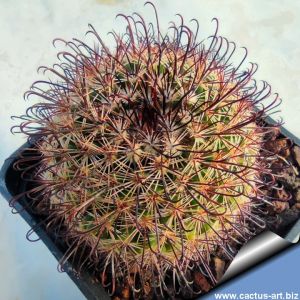
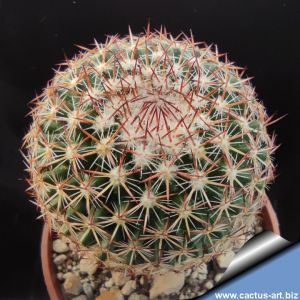
Mammillaria rhodantha is a shortly columnar cactus that characteristically divide dichotomously with age forming large clumps. The spines are the more variable of the trait. The dark form has vivid dark reddish-brown central spines.
-
52
-
53
Escobaria minima is a rare, tiny cactus notable for its miniature size—it can flower at just 1 cm in diameter. Stems are solitary or clumping, with dense ivory to yellowish spines and pink to magenta flowers. It thrives in limestone-rich soils.
-
54
A small, slow-growing cactus with a blue-green to olive stem arising from a thickened, fascicled root. Radial spines are straight, rigid, interwoven, brown turning grey-white with dark tips. Flowers are deep purple with a pale throat.
-
55
Gymnocalycium stellatum is a beautiful slowly growing cactus. The stem is noticeably flatten dark greyish-brown to olive coloured. Spines 3, yellow to brown, becoming grey with age, add-pressed straight to slightly curved and flattened against the stem.
-
56
-
57
-
58
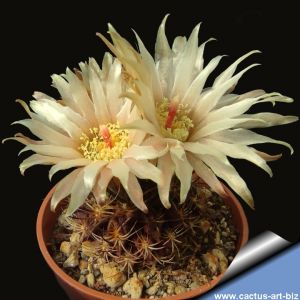
Low, clustering stems with pectinate spines pressed flat against the surface, ranging from off-white to greyish or light brown. Notable for its outstanding glossy purple flowers.
-
59
-
60
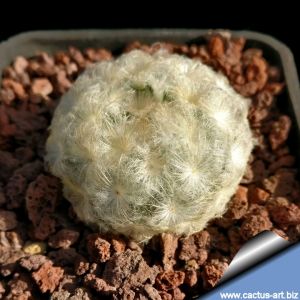
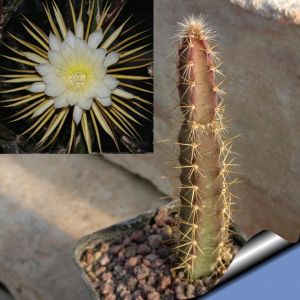
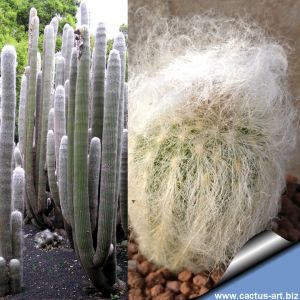
A columnar cactus covered in a dense, woolly white fuzz. Native to the arid, mountainous regions of Peru and Ecuador above 1000 m, where this woolly coat acts as a shield against intense solar radiation and cold nighttime temperatures.
-
61
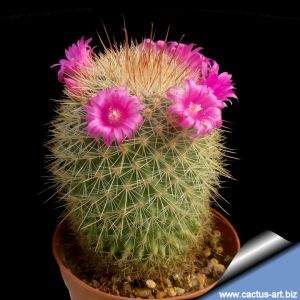
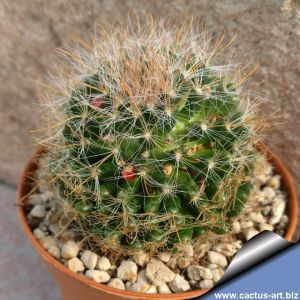
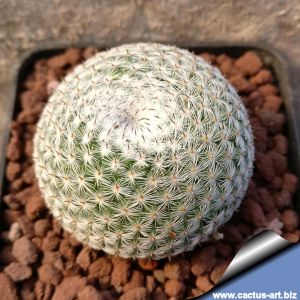
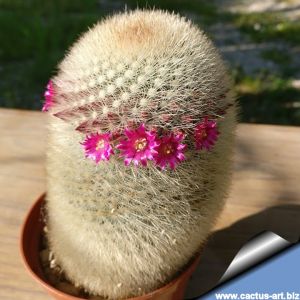
Globose stems with a depressed apex, so densely covered in short spines and woolly axils that the surface is nearly invisible. Small flowers form a crown around the top, in shades from carmine to purplish-pink.
-
62
Variegated plants with yellow-tinged epidermis. Grown from seeds of variegated parents.
-
63
-
64
-
65
-
66
Stem, tuberous at the base, globose to ovoid in shape. Spines are fine, bristle-like and pubescent—yellowish below, white mid-length, brown or amber at the tips. A genuine winter bloomer, producing greenish-white flowers even when very young.
-
67
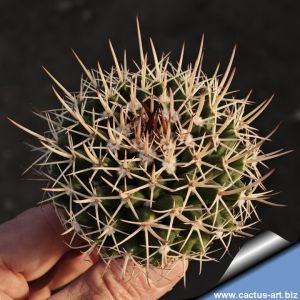
‘Horrida’ is a striking form distinguished by formidable, more robust spines than the typical species. Its low habit and rapid growth make it highly ornamental , and over time it develops into a majestic hemispheric cushion. Flowers are pink-purple.
-
68
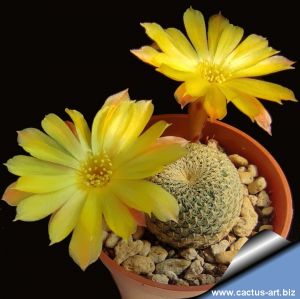
A highly prized and stunning Sulcorebutia, named for its dense, white, comb-shaped spines that closely resemble those of Rebutia heliosa. It produces numerous large blooms with vivid yellow petals that gradate into orange and purple at the tips.
-
69
-
70
Large star-shaped flowers in vivid magenta, fading to lighter edges with a darker central vein. Numerous pale-yellow stamens and a light-green pistil create striking contrast and a remarkable visual impact.
-
71
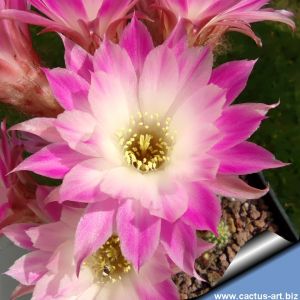
Striking blooms feature a white center softly transitioning to pink-magenta at the edges and outer petals. The light throat accentuates creamy stamens, offering an elegant contrast to the rosy gradients. Profuse, radiant, and subtly bicolored flowering.
-
72