|
|
|
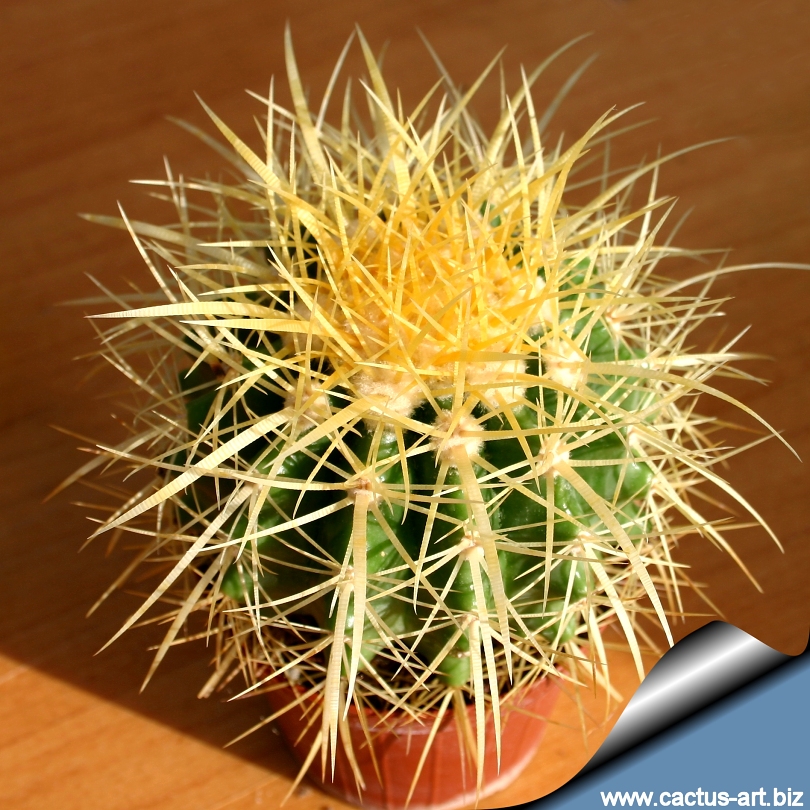
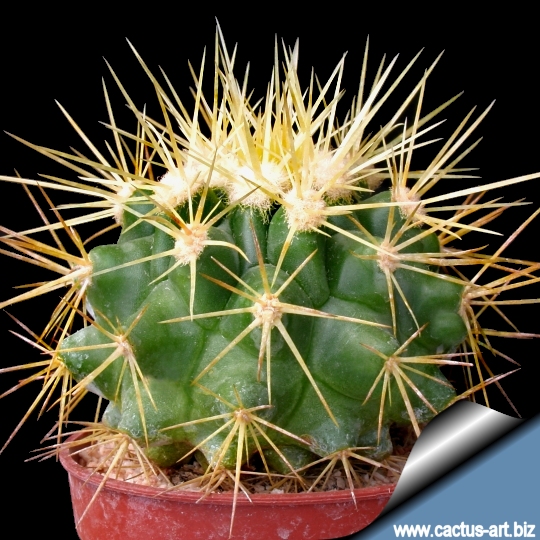
A young specimen |
|
Description: It has a single
slowly growing globe-shaped stem that became elongated (barrel-shaped)
in
maturity, up to 90cm (180cm) in height and spread. This
stem is pale
green and heavily
ribbed with numerous
areoles sprouting
radial, yellow
spines. They normally
offset with advanced age and a few multiples occur
even at small sizes.
The
flowers are produced from end of spring to summer only on larger
mature
specimens receiving enough
full sun. Flower are
diurnal,
vivid yellow (4-5 cm wide) and form a circular ring at the top of the
plant, but are not very visible being small in relation with the size of
the barrel, and lost into the creamy coloured
wool at the plant
apex. |
|
SOME CULTIVARS: |
Echinocactus grusonii var.
albispina |
Echinocactus grusonii monstruosus clone A |
Echinocactus grusonii brevispinus |

Echinocactus grusonii brevispinus cristata |

Echinocactus grusonii
cristata |
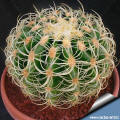
Echinocactus grusonii var.
curvipinus
(cv. Krauskopf) |
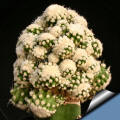
Echinocactus grusonii
setispinus mostruosus |
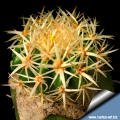
Echinocactus
grusonii "intermedius" |
Landscape value:
E. grusonii is
a wonderful popular plant for adding texture, colour and shape to
landscapes, it gives a huge dose of impact. The striking round shape and
the dramatic golden bright-yellow spines that absolutely light up in
daylight, especially when backlit are unique. It is an eye catcher
without equal. Unlike many plants, the "golden barrels" get more and
more beautiful as they grow. As old specimens they can be truly
majestic. They are best planted close together among large rocks or
boulders.
|
|
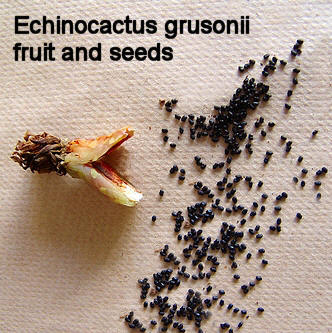 How to Grow E. grusonii from seeds. How to Grow E. grusonii from seeds.
E.
grusonii will produce hundreds of
fruits each season. Several months
after the flower dies off and the pods are ripen it is possible to
collect them from under the dried flower. The pods
will come off with a slight twist, leaving the
wool on the cactus.
Use a knife to slice down one side
of the pod to expose the
seed and scrape them out. The seeds are
mahogany or reddish amber and tiny. Then place
the seeds in some water to
soak overnight. Fill germination trays
with a well blended mixture of 60%
peat moss 40%
vermiculite and one
to one part of coarse
sand
or
pumice. Use a horse syringe to suck the small
seeds and some of the water into the syringe. With the syringe,
distribute the seeds evenly in the
germination tray, shaking the
syringe so the seeds don't settle at the bottom and all come out at
once. Some growers also recommend to cold-stratify seeds in a
refrigerator for a year prior to sow them. But can also be used dry
seeds too. Place then the
trays in
filtered sun, cover with a glass sheet and keep the soil
moist until the seeds
germinate in approximately 2 to 6 weeks. They
will look like small spheres, red in colour not green. Then gradually
remove the glass cover. When the small cacti start to sprout tiny
spines, use a pair of tweezers to transfer them from the propagation
trays into 5 cm pots filled with the same soil mix used in the
germination trays. Allow the small cacti to grow for about one/two
year and then move the cacti to 10 cm pots and allow them to grow
further. |
|
Photo of
conspecific taxa, varieties, forms and cultivars of
Echinocactus grusonii:
Advertising
|
|
|
|
|
|
Family:
Cactaceae (Cactus
Family)
Scientific Name:
Echinocactus
grusonii
Vernacular Names:
- Golden barrel cactus,
- Golden ball cactus,
- Mother-in-law's-seat,
- Mother-in-law's-cushion.
Conservation status: Listed in
CITES appendix 2.
Distribution: Rio Moctezuma Valley,
Queretaro Central Mexico
Habitat: The intense
overcollection in its
native habitat has led this plant becoming
endangered in the
wild, for this reason E. grusonii were the focus of an intensive
rescue effort. In fact the Rio Moctezuma Valley, the native habitat of
this cactus, was scheduled to be flooded after the construction of a
major dam. A Mexican
botanical garden hurried to remove these and other rare plants prior
to the dam’s construction. Despite the fact that few plant remain in the
wild today, their off-site
conservation has allowed for extensive
propagation by nurseries, and the golden barrel cactus is now one of
the most common cacti in cultivation.
Note: Older specimens take on an
oblong shape with age. They also tend to lean to the south or
southwest so that the spines can better protect the body of the plant
from the harsh desert sun. In fact, desert travellers can use the plant
as a compass. |
|
|
|
The juvenile Echinocactus look quite
different from the
mature specimens. |
|
In fact like the other Echinocactus and Ferocactus seedlings, the rib
structure is not yet apparent, and they have pronounced tubercles making
them look superficially like
Mammillarias.
|
|
|
|
Cultivation: E. grusonii are
summer-growing and pretty easy plants to cultivate.
They are suited for any rich, well drained soil such us clay,
pumice, lava grit, and only a little peat or leaf-mould. If potted,
repot preferably in the spring, if their roots become cramped.
Generally, they should be repotted every other year in order to provide
fresh soil. However, this doesn't necessarily mean they'll need larger
containers. Fill about a quarter of the pot with broken crocks, gravel,
etc. to promote good drainage. After repotting, do not water for a week
or more. Water regularly during the aestival growth cycle (this plant
need plenty of water, but do not overwater and let their soil dry out
between waterings),
and also needs to be avoided wetting the body
of this plant while it is in sunlight. A wet cactus in the sun light can
cause sun burning which can lead to scares or even fungal infections and
death, keep rather dry in winter. No water should ever be allowed to
stand around the roots. Feed with a high potassium fertilizer in summer.
Exposure: Outside they need a bright exposure,
full sun or half shade in summer if the location is exceedingly hot or
bright, inside needs bright light, and some direct sun.
It can tolerate moderate shade, and a plant that has been growing in
shade should be slowly hardened off before placing it in full sun as the
plant will be severely scorched if moved too suddenly from shade into
sun.
Frost Tolerance: Light frost protection required for
safe cultivation, but can tolerate sporadic light frost.
Diseases and pests:
Watch for infestations of
mealybug, scale insects and spider mite. Plant in good conditions
will start to bloom when reach the diameter of 40-50 cm.
|
|

 |
|


 Cultivation and Mail Sale