|
|
|
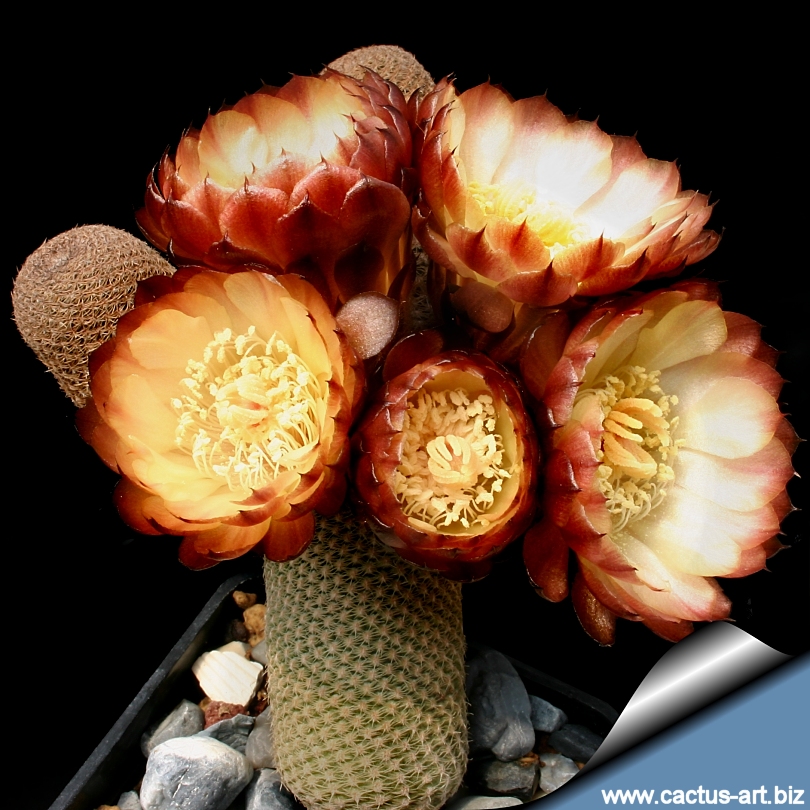
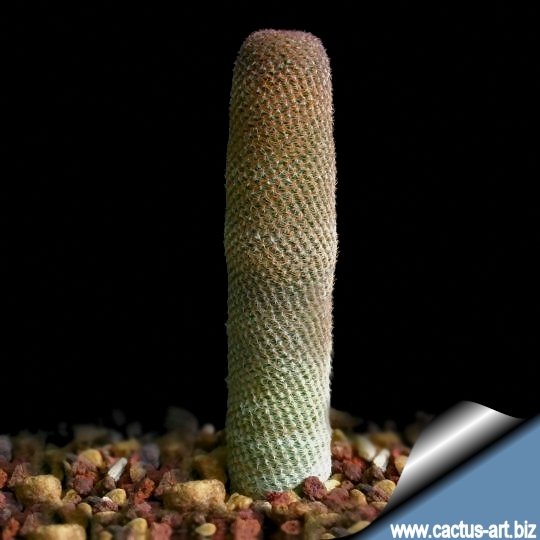
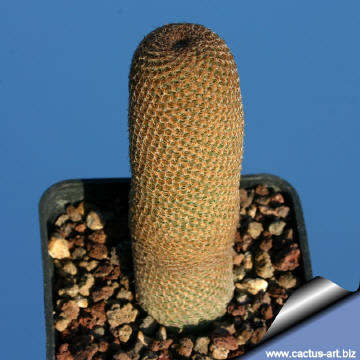
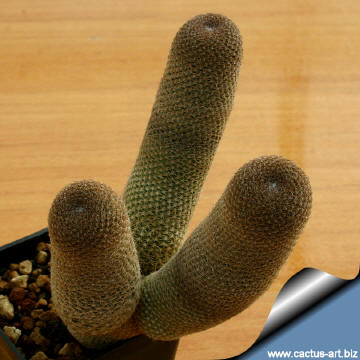
Newly described with thin cylindrical body.
Field number: FK96
Locality: (Kuhas) Fiambla, Rioja, Prov. Catamarca, Argentina
|
|
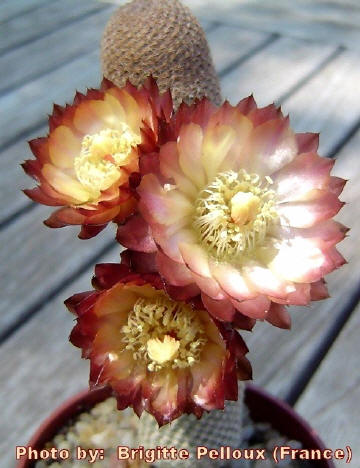
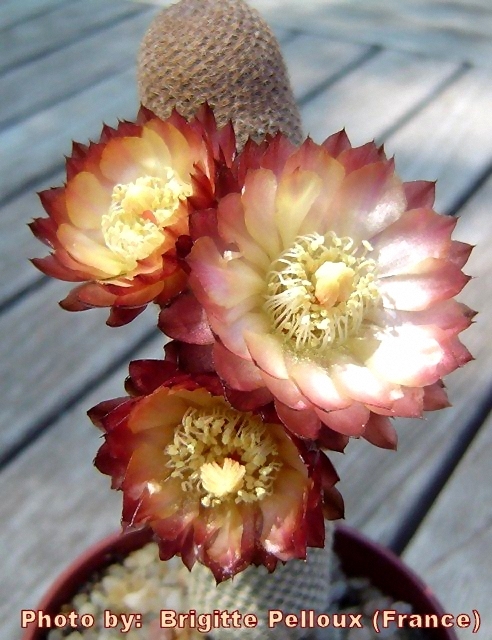
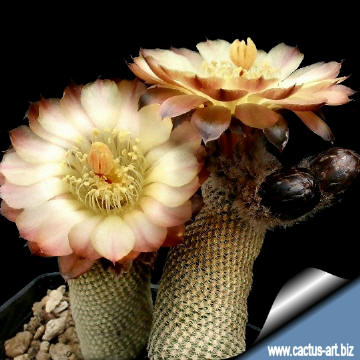
A beautiful photo from Brigitte Pelloux (France) |
Notes: Related to
L. famatimensis, clearly distinguished from it by the narrow
neck that separates the large tuberous roots from the stem
an for the tall cylindrical stem. |
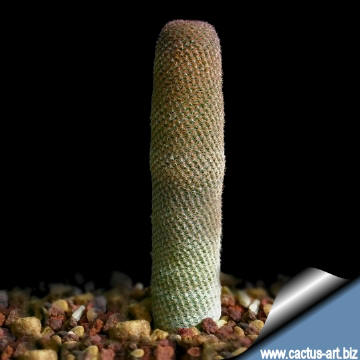
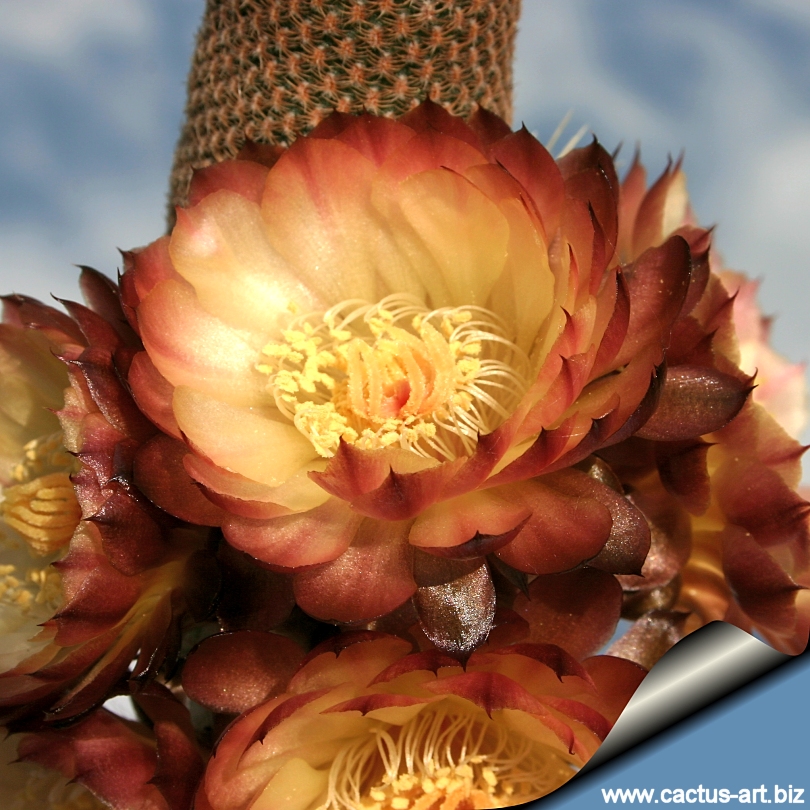
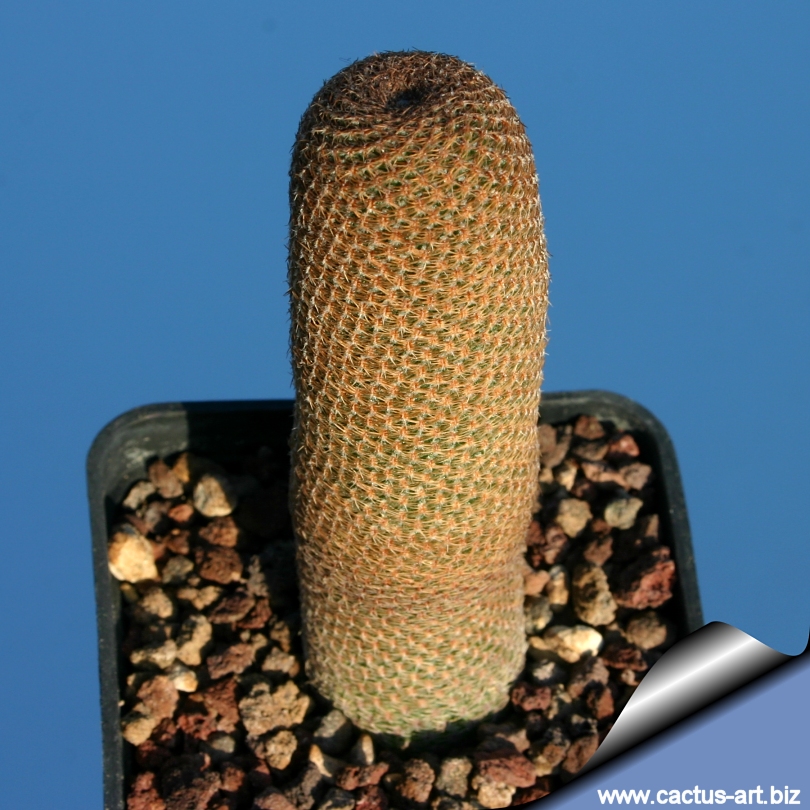
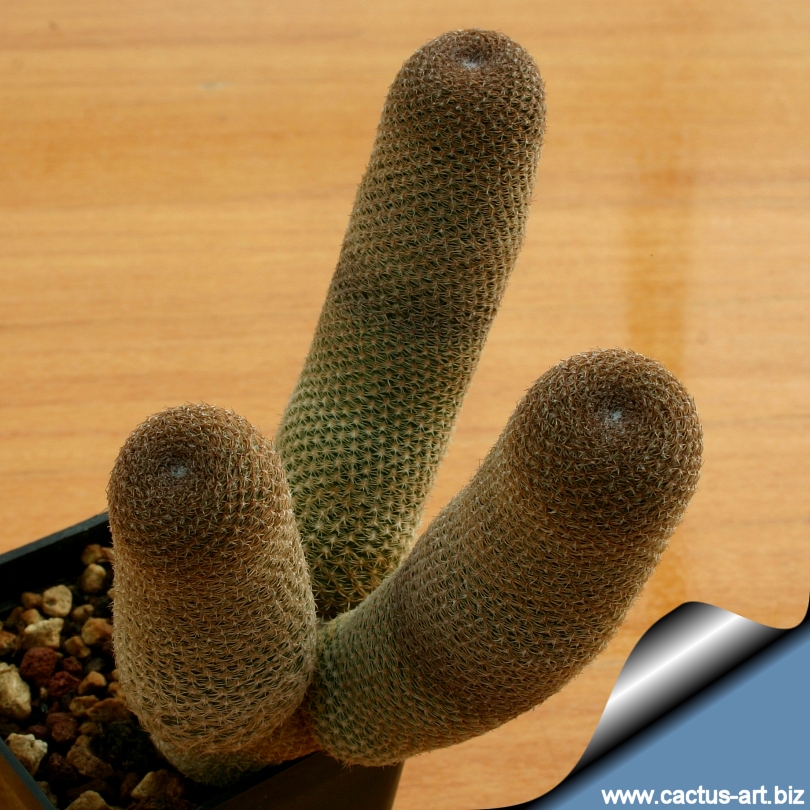
The stem is cylindrical |
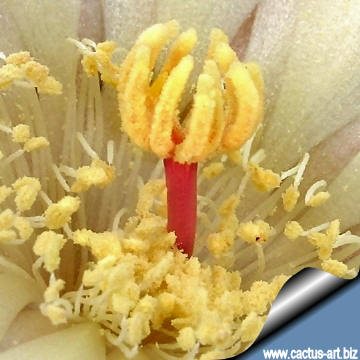
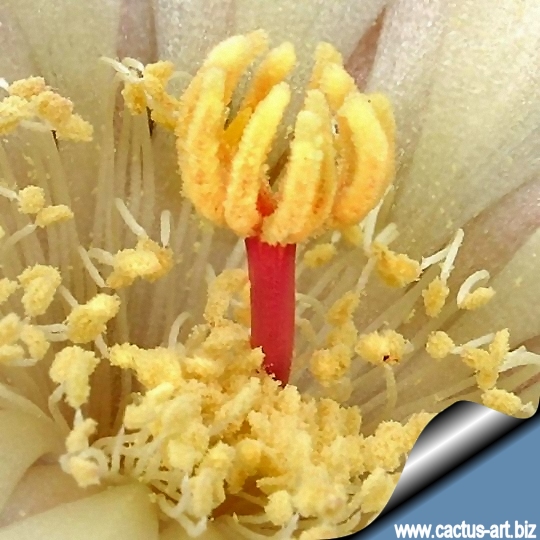
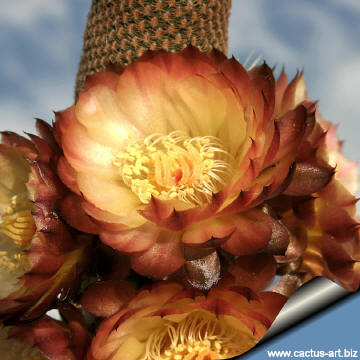
Stigma are yellow, with a red contrasting stylus. |
|
. |
|
 |
 |
|
. |
|
 |
 |
|


Advertising
|
|
|
|
|
Family:
Cactaceae
(Cactus
Family)
Scientific Name:
Lobivia
famatimensis
v. bonniae
Hogan
& Halda
Type:
Janeba 99061503, Deposited in Prague
Basionym:
Lobivia Bonnieae
Halda,
Hogan & Janeba
spec. nov.
Original description : Halda, Hogan & Janeba under Halda & Horácek,
New descriptions and combinations, Acta Mus. Richnov, Sect. Natur. 6(3): 234
(1999)
Distribution: Argentina, Prov. of Catamarca:
Tinogasta, in the mountains around the Fiambalá valley, in the
Sierra de Fiambalá and in the Sierra de Narváez.
Habitat: Grows along
with a very sparse vegetation of
Puna bonnieae,
Echinopsis leucantha,
Pterocactus tuberosus,
Tephrocactus
geometricus, Cumulopuntia sp.,
Maihueniopsis sp. and Opuntia
sulphurea
on gravel slopes, in a very drained
and arid soil (composed of clay, sand and stones) at 1700 - 2.400 m
ASL.
Conservation status: Listed in CITES Appendix
II
Etymology: The
genus name
"Lobivia" is an anagram of Bolivia,
which is the main centre of distribution of this plant.
The
species name "famatimensis" derives from the "Sierra de Famatima"
(LA RIOJA in Argentina) to which the species is native.
The
variety name "bonnieae"
derives from the
name
of
one of the
discoverers: Mrs.
Bonnie brunkow
(moreover "bonnie" means beautiful).
Synonyms:
-
Lobivia
bonnieae
Halda, Hogan & Janeba spec. nov.
- Lobivia
bonnieae
(Halda & Horacek, 1999)
- Lobivia
famatimensis v. catamarcensis
Rausch
- Echinopsis bonnieae (Halda, Hogan & Janeba) Halda & Malina
|
|
Habit:
Small
solitary or
branched,
columnar
geophytic cactus.
Stem: Thin,
cylindrical,
usually not branched,
with a constant diameter
,but
separated from the roots by a narrow
collar. 10(-40) cm
in
height, diameter 1,5-2,5cm. The apex
is depressed. The stems can be
deciduous in the dry season,
as
is usual for the genus
Pterocactus.
Areoles : On small tubercles, arranged in about 30 spiral
lines whit short white hairs.
Spines:
About 10,
pectinate pink-brown that turn grey, 1-1,5mm long.
Roots:
Tuberous,
10-15cm long, up to 5-15 mm
in diameter.
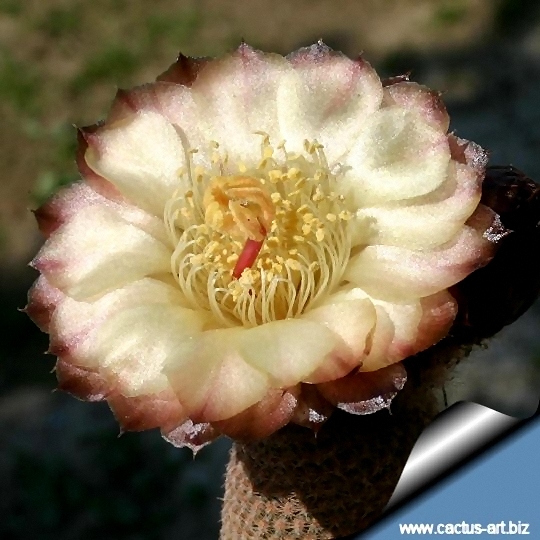
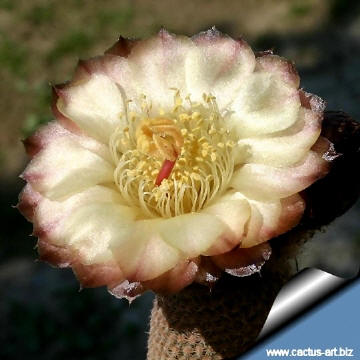
Flower:
Diurnal,
silver-yellow,
shining, outer
tepals
are bronze, diameter and height:
2,5 (-4) cm. Blooming time: May.
Stigma yellow with
red stylus.
Fruit:
Ovate
1,2-1, 8cm long, 0,6-1,1
cm in diameter, dark violet,
longitudinally
dehiscent. Covered by hairy scales.
Seeds: Seed black, up to 400 per fruit.
|
|
|
|
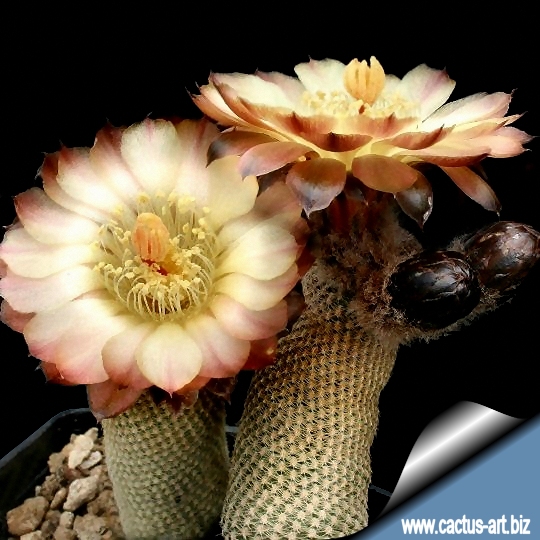 The flowers are really shine! The flowers are really shine!
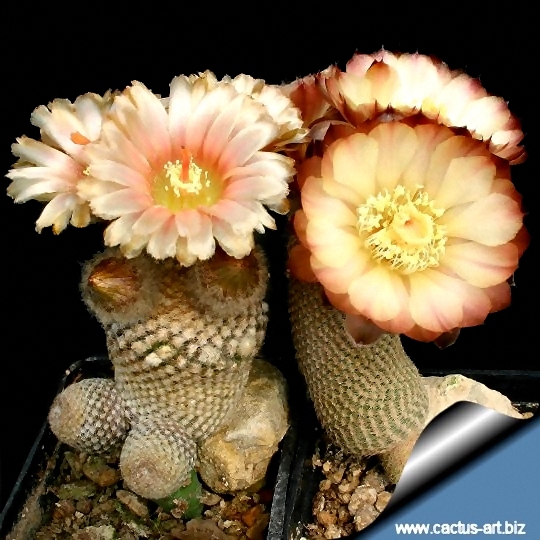
Two apparently similar
geophytic cacti:
L. bonniae and
Eriosyce duripulpa.
An example of
evolutionary convergence ?
Cultivation:
Very slow growing.
The Lobivia famatimensis have a thick
taproot and are
susceptible
to
over-watering.
Sometimes they are
grafted to avoid
root
rot problems. Suited for
sunny-bright exposure;
they can
tolerate
light shade. They
like warmth (recommended minimum winter temperature 5° C). But plant
kept perfectly dry can easily survive in winter night temperatures below
0° C (In our greenhouse there was no damage at -10° C for a few hours in
the winter of 2002-2003 ) They prefer
airy exposures. Water regularly in summer, but do not
overwater, it prefer a completely dry place during winter. Suited for
sunny-brightly exposure; can
tolerate
light shade.
Pests &
diseases:
L. famatimensis is especially
prone to rot, therefore,
underpot
in a smaller but deep pot filled with a
highly gritty compost and much
drainage, to accommodate its
tap root.
Propagation: Seeds or
graft. Seedlings
of the var. bonnieae grow faster than other Lobivia famatimensis.
Seeds can be sown in the spring or summer. The seedlings
should not be disturbed until they are well rooted, after which
they can be planted separately in small pots.
Photo of conspecific
taxa,
varieties, forms and cultivars of Lobivia (Echinopsis maximiliana):
|
|


 Cultivation and Mail Sale