|
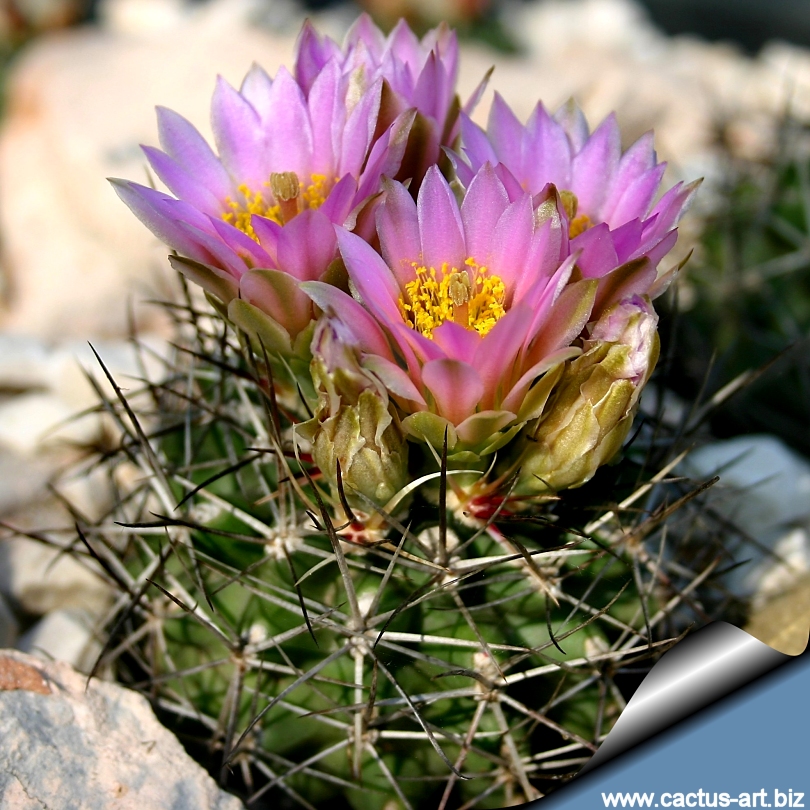
Sclerocactus glaucus (Field number: SB 1749 De
Beque, Garfield County, Colorado, USA)
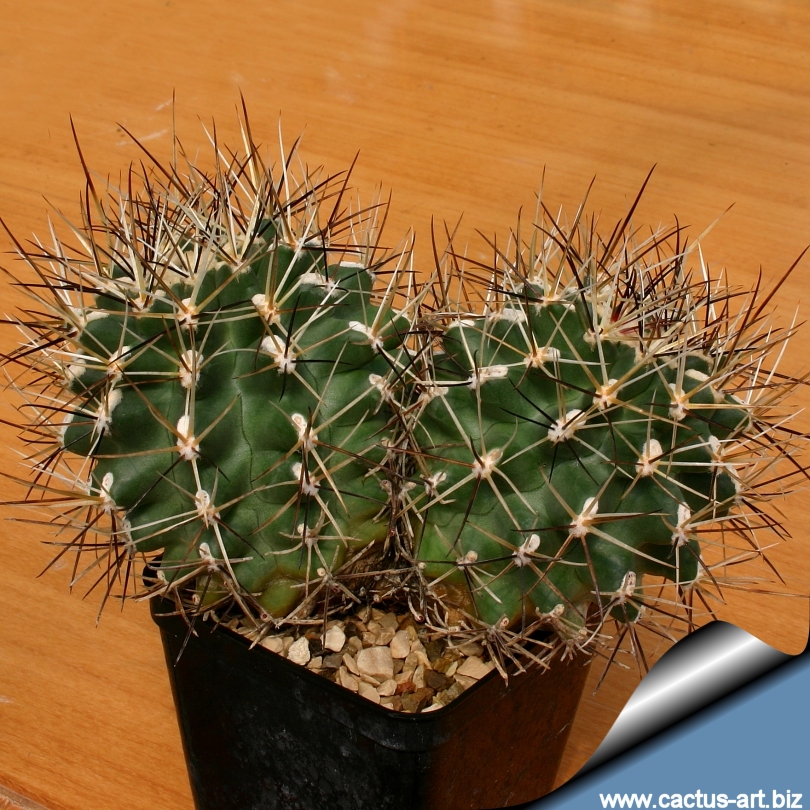
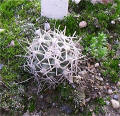
A plant grafted on Opuntia compressa out of doors in the rock garden.
This species does better in the garden than in the green house; no
problem for frost, rain and very humid winter season. Resistant till
-20° C.
|
|
Description: S.
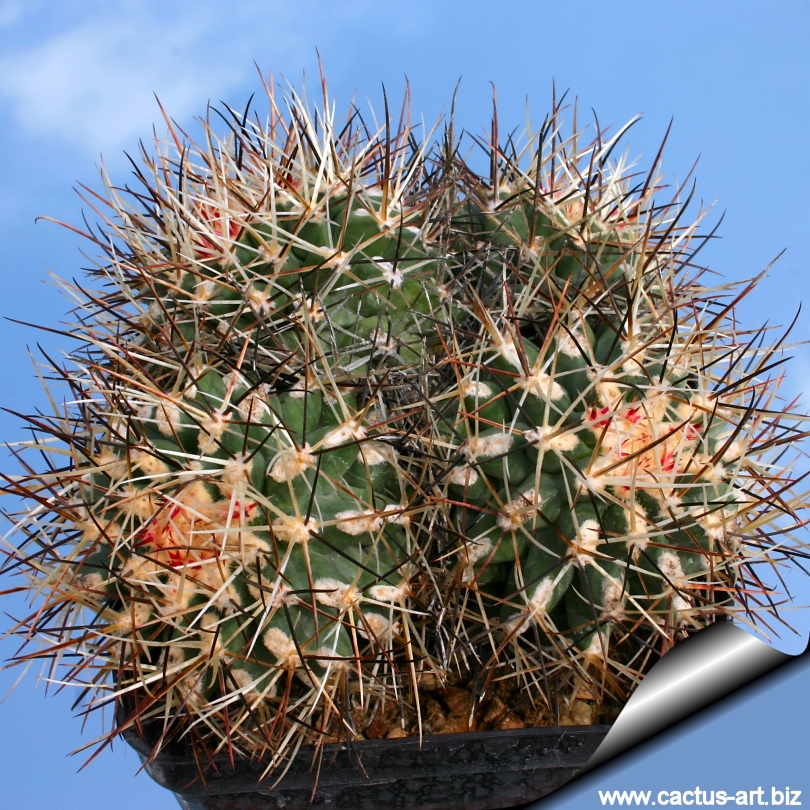
glaucus is a ball cactus with a squat, ovoid or globular shape. Single
or clumping, in groups of up to 9 green or powdery blue coloured stems,
like the scientific name, They have 8-15 ribs and the rib is sometime
tuberculous 4 to 30 cm tall, 4 to 9 cm in diameter.
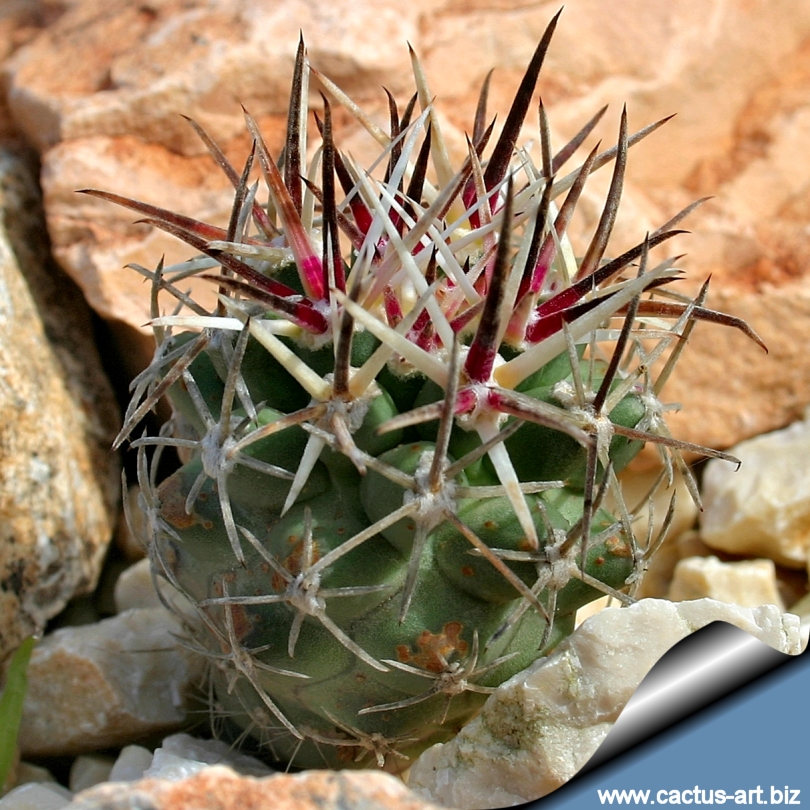
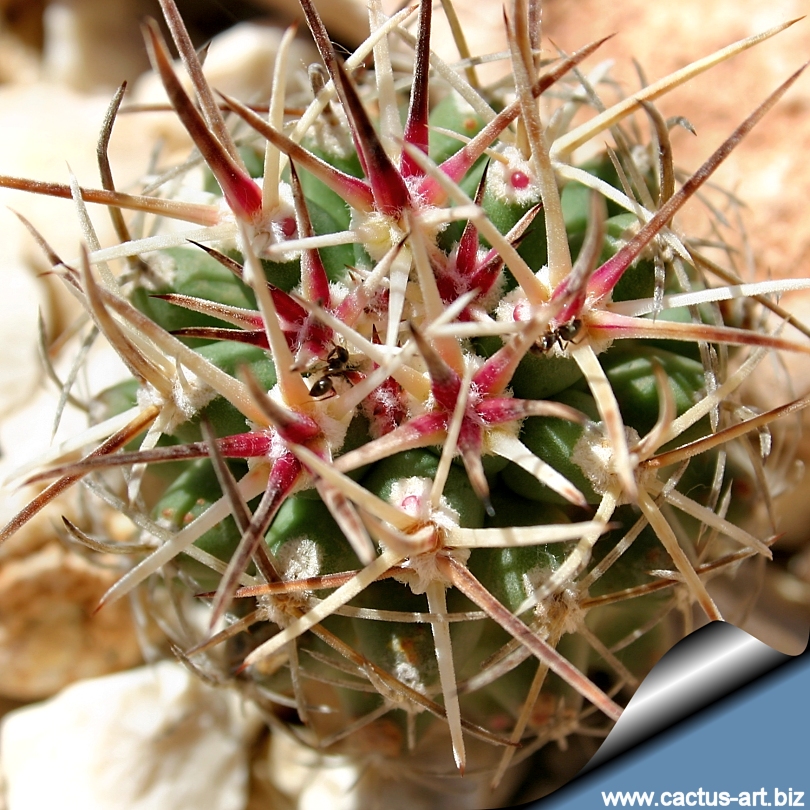
Spines: (0 or) 1 to 3 generally characteristic unhooked central
spines, the lower ones brown, the upper ones white 1-3 cm long,; 6 to 8
radials, 5 mm long. Some specimens lack central spines or have central
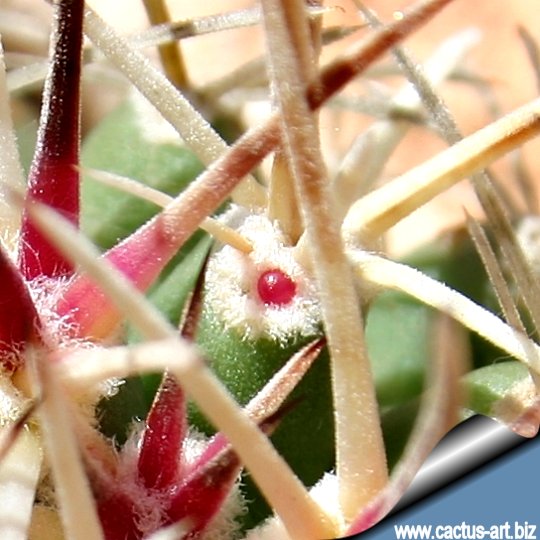
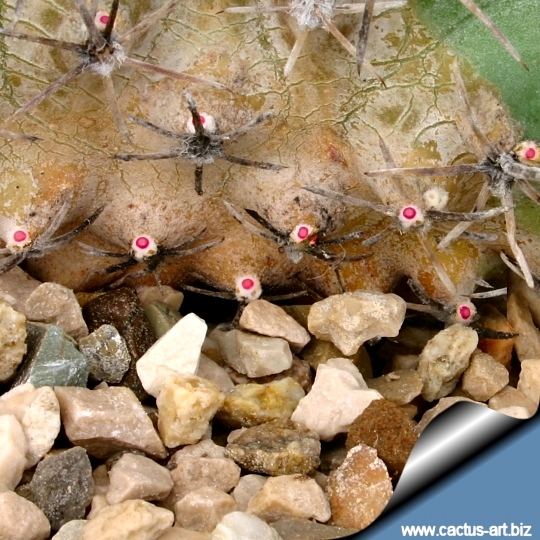
spines which are hooked. Red nectar glands are found above each areole.
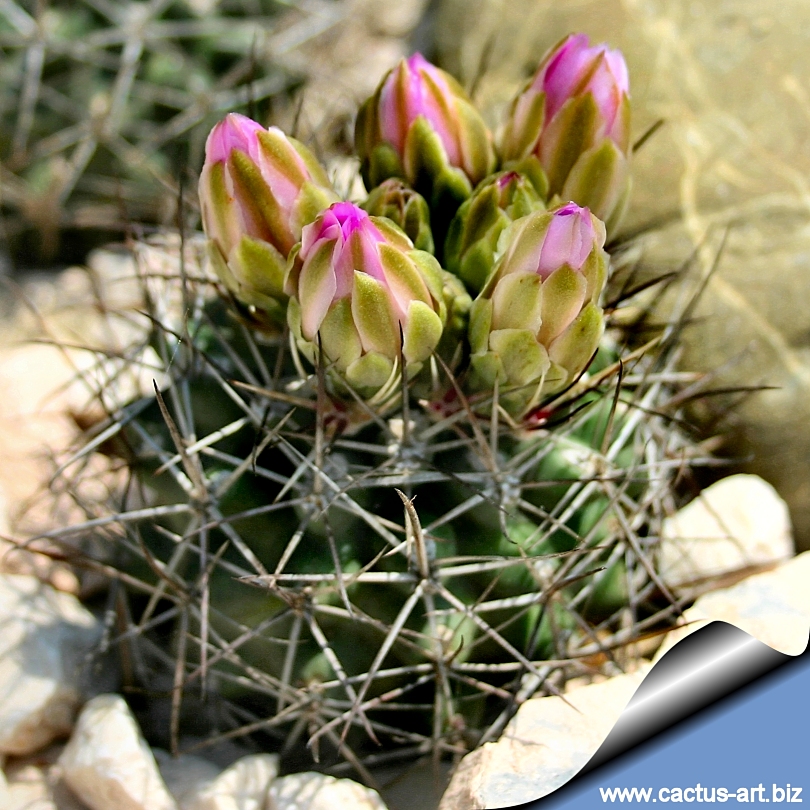
Flowers: Beautiful purplish-red flowers Purple
or pink flowers, 4-5 cm in diameter, 3-4 cm long.
NOTE: The "Debeque form" has tall
larger blue body with stiff spines. It grows in northern edge of
distribution for this species.
|
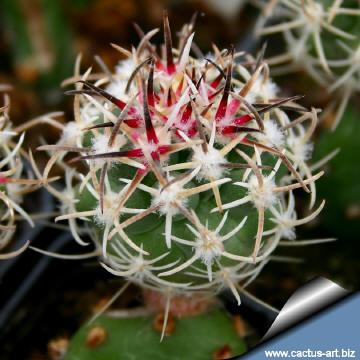
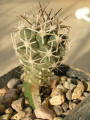
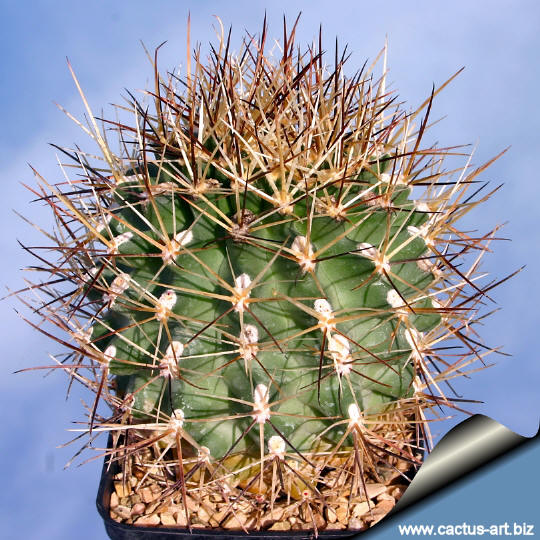
Two years old Sclerocactus glaucus
"De Beque form"
|
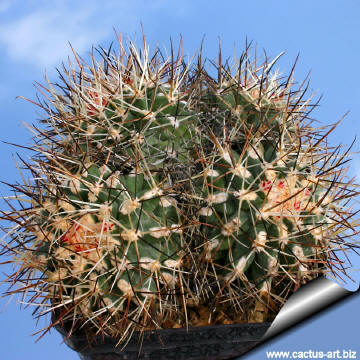
A mature specimen
grafted
on Opuntia compressa. |
|
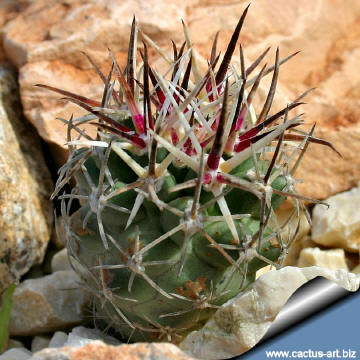
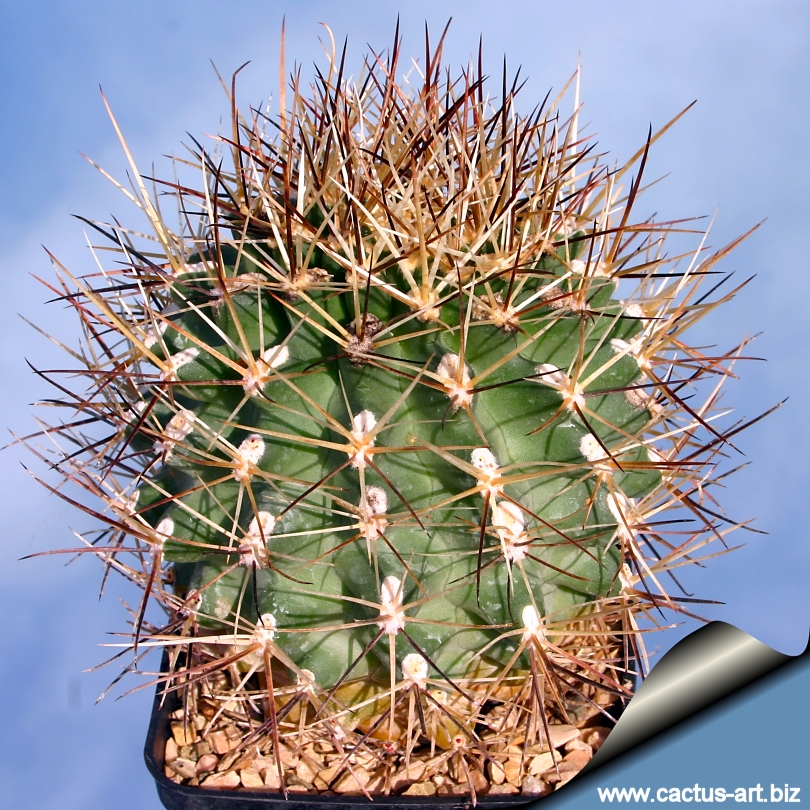
A plant grown outdoors
without any sheltering. |
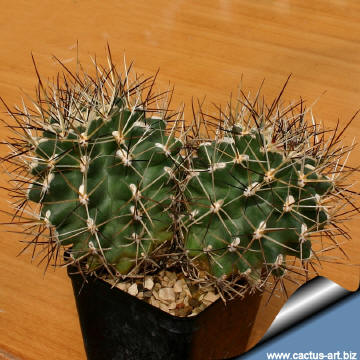
Very strong and wild spines. |
|
. |
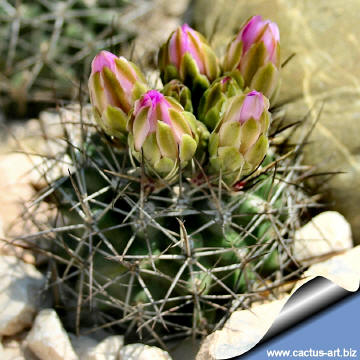
Buds |
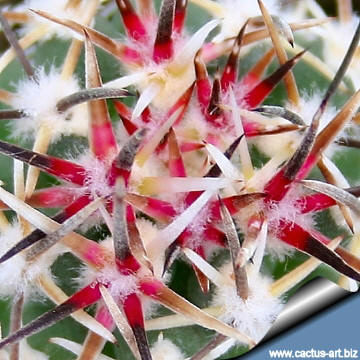
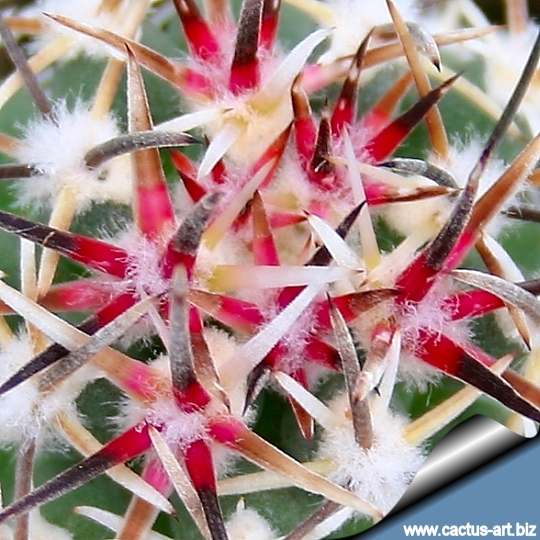
The new
pubescent spines are astonishing |
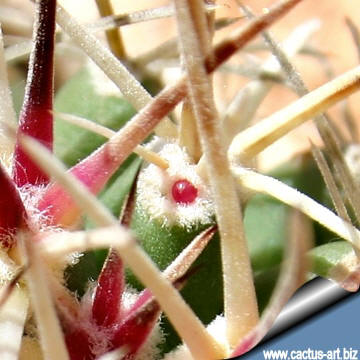
A nectar gland. |
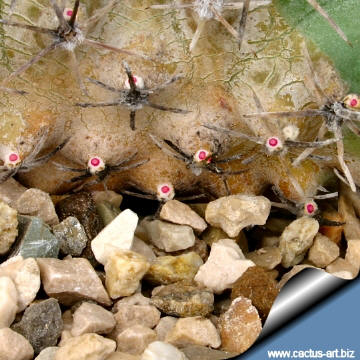
The basal
areole have bright red
nectaries |
|
Advertising
|
|
|
|
|
Family:
Cactaceae (Cactus
Family)
Scientific name:
Sclerocactus glaucus
(J. A.Purpus ex K. Schum.)) L. Benson
Published in: Cact.
&Succt.
J. (US) 38:53, 1966
"Debeque form"
Conservation status: Listed in
CITES appendix 1.
Common Names include:
-
Uinta basin hookless cactus
-
Grand Mesa Purpus Cactus
Synonyms:
-
Echinocactus glaucus (J.A. Purpus ex K. Schum.) L. Benson
-
Pediocactus glaucus (J.A. Purpus ex K. Schum.) Arp
-
Sclerocactus whipplei var. glaucus (J.A. Purpus ex K.
Schum.) Welsh
-
Echinocactus subglacus
-
Sclerocactus franklinii
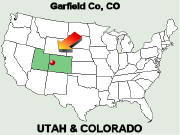 Origin:
S. glaucus is very rare and highly
endemic from three known
population
groups, is restricted to the west-central portion of
Colorado (Gunnison River &Upper Colorado River ) and the Uintah Basin of
north-eastern Utah. It is one of the most northern species among the
genus. Origin:
S. glaucus is very rare and highly
endemic from three known
population
groups, is restricted to the west-central portion of
Colorado (Gunnison River &Upper Colorado River ) and the Uintah Basin of
north-eastern Utah. It is one of the most northern species among the
genus.
Habitat:
is
found scattered on gravely or rocky soils on hills, riverside and mesas
of varying
exposures on Salt-Desert/Grassland sites, occasionally on
clayey plains. It is more abundant on south-facing exposures, and on
slopes to about 5-30 percent grade; Elevation ranges from 1,300 to 1,600
meters.
Etymology:
The
generic name
"Sclerocactus"
derives from the Greek word
“sclero” meaning "hard ", "cruel”
referring
to the hard seed tegument or to the
formidable spines,
and the word “cactus”
(an old genus name)
( The
genus name implies:
"hard cactus").
The
specific name "glaucus "
derives from
the
Greek word
“glaucus”
meaning "bright,
gleaming; greyish, bluish-green”
(for plants, a white bloom giving a bluish-greyish appearance)
|
|
|
|
|
|
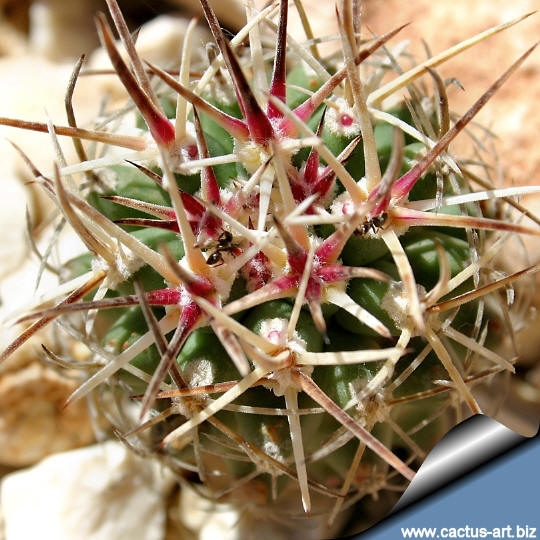
The nectar attracts ants
|
|
Cultivation:
This plant
is very rare
in cultivation, it
does not do well, it is very difficult to grow
its own roots.
Mature individuals easily rot
and die especially after planting. The seeds germinate with extreme
difficulty and a low rate of success, seedling did not do well either,
and more die each year. S. glaucus is extremely
xerophytic and
adapted to very dry soils, but plants grafted an hardy Opuntia compressa
stock are very easy to grow and no special skill is required, they can
stay in a non heated green house or outdoors in
raised beds,
terraces,
window sills etc.. This cactus continues to be, a particular prize among
collectors
Propagation:
Seeds are extremely difficult to
germinate (only 2-3 percent of seeds
germinate). Grafting is often used to speed growth rate and to
create a back-up for plants in collection.
|
|
Photo of conspecific taxa, varieties, forms and
cultivars of plants belonging to the
sclerocactus glaucus
complex
(This
Taxon
has several synonyms
(like many other cacti) with controversial varieties and subspecies,
and comprises different forms, but where each form
is linked to others by populations of plants with intermediate
characteristics):

 |
|


 Cultivation and Mail Sale