|
|
|
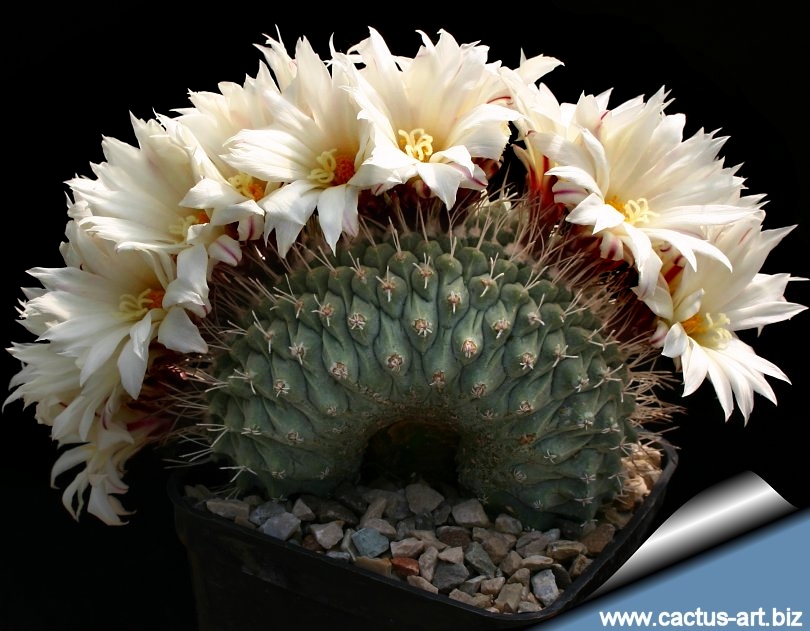
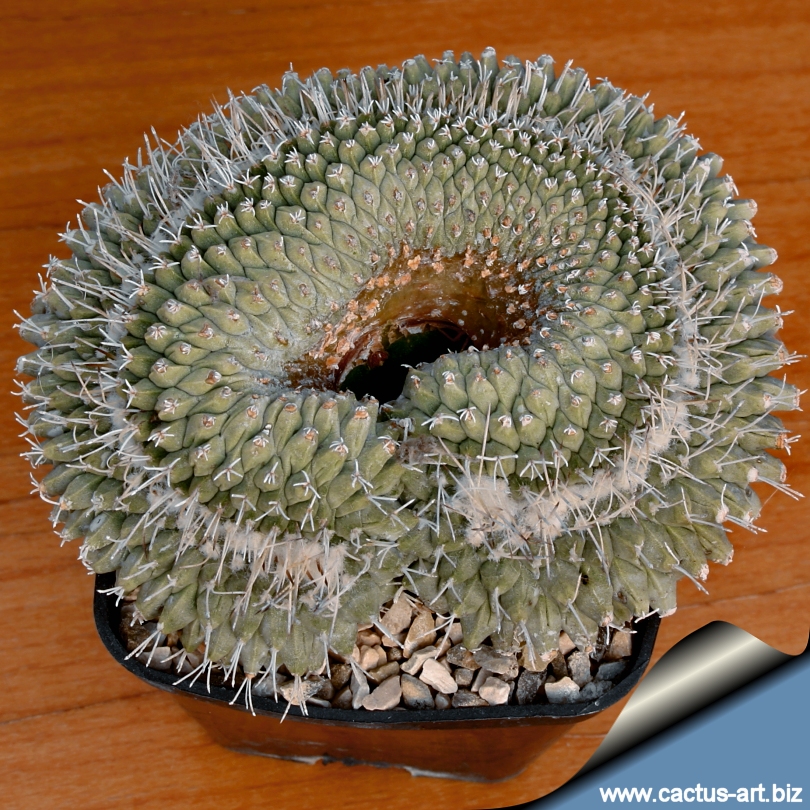
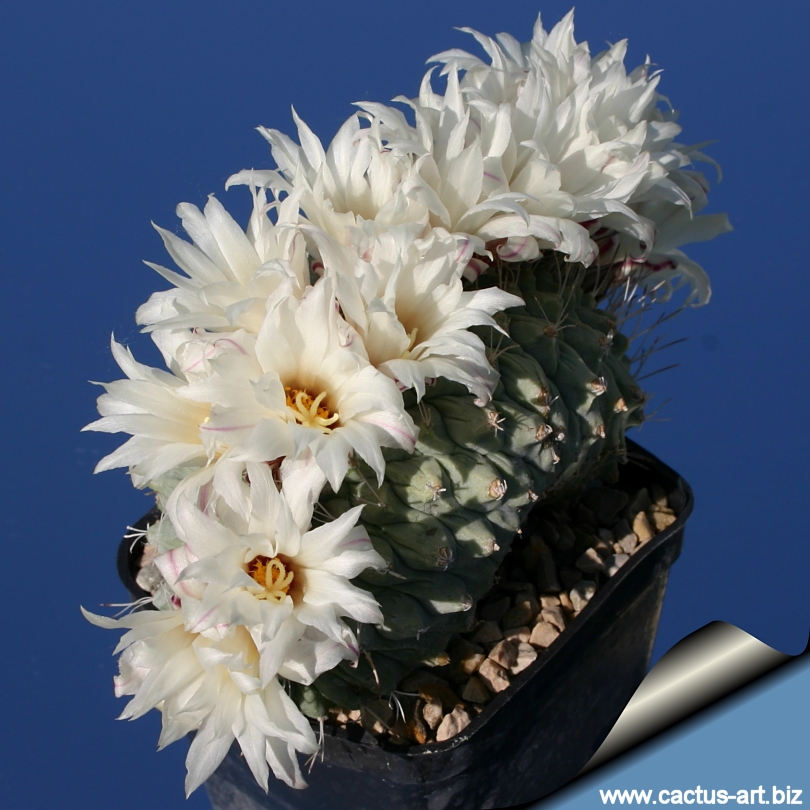
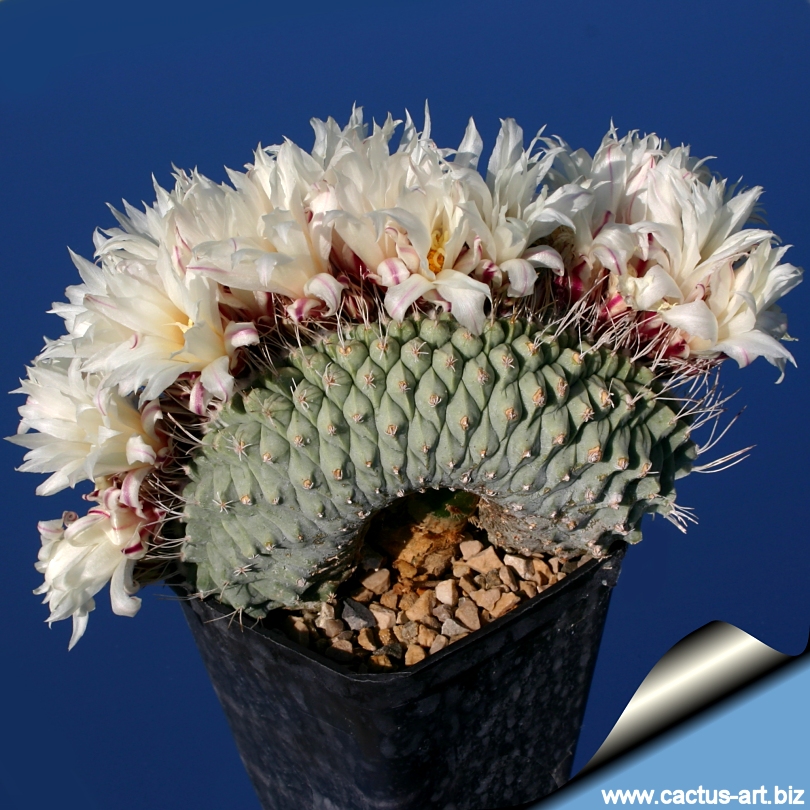
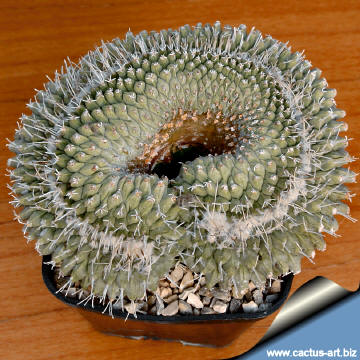
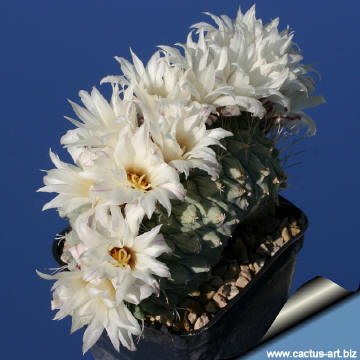
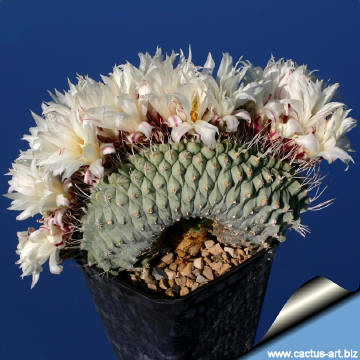
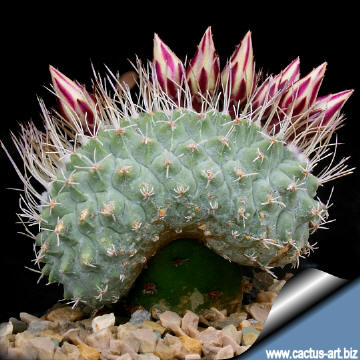
Strombocactus disciformis forma cristata.
A beautiful line of flowers!!!
|
|
Description:
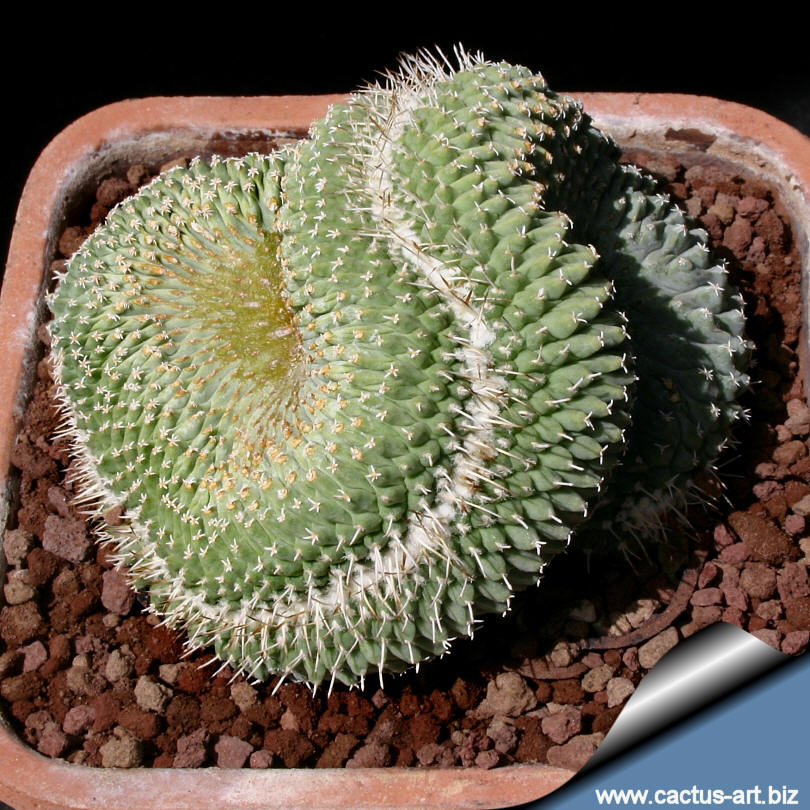
This is the rare beautiful crested form of Strombocactus disciformis.
the standard species is usually a singled stemmed small
geophytes cactus.
Stem:
The body is
flattened or
spherical,
3 to 8 cm high,
reaching 20 cm in age, and 3 to 9 cm across. The
crown is slightly
depressed and
felted. The colour is blue-green with greyish tinge, the
base covered with brown
corky spots in
age. It is composed of hard,
spirally arranged
rhomboid and
imbricate tubercles,
1 to 1.8 cm high. These tubercules are flattened and almost
truncated above and somewhat
horny or
keeled below.
Spines:
4 to 5, erect and dark grey at the tips and pale grey at the base,
1.2 to 2 cm long, they become calcified, they are
caducous and in age fall at the stem base.
Roots:
Strong
napiform (turnip-like).
Flower:
Arise on the
crown, measure about 3.5 cm in length and breadth, are shiny
cream coloured with occasional spots at the tip and in the
throat, The
filaments are white or reddish, the
anthers yellow. The 8 to 10
lobed
stigma are white or yellowish.
Fruit:
7 mm across,
splits down its length.
Seeds: Very small.
Blossoming time: flowers emerge early in
spring and are freely produced throughout the
summer, remaining open for several days. |
 |
 |
|
The
cause of cresting: The cause of cresting is not fully explained.
Biologists disagree
as to why some plants grow in this unusual form.
Some
speculate that it is a genetic mutation. Others say it is the result of
a strike of
lightning or freeze damage, but whatever the stimulus, the growth
point of the stem has switched from a geometric point, to a line, which
folds and undulates as the crest expands. Though these crested
Strombocactus are very rare, cresting occurs naturally, and can be
encountered in many other cactus species.
|
|
|
|
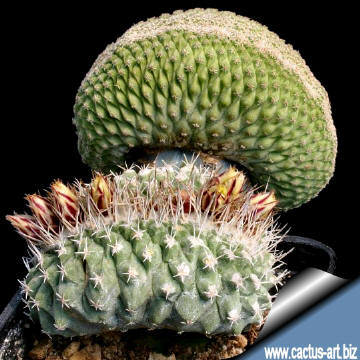 |
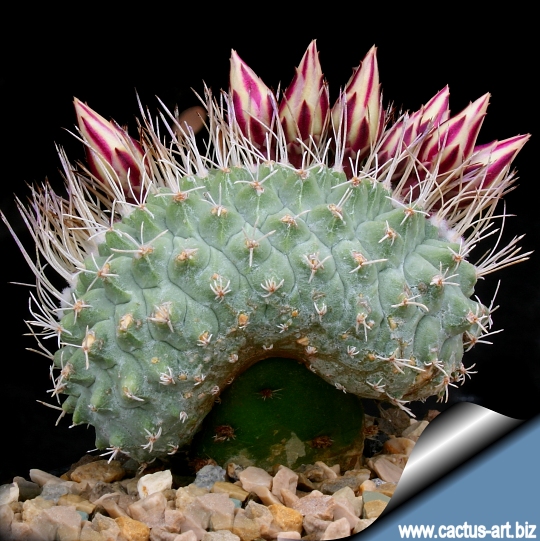
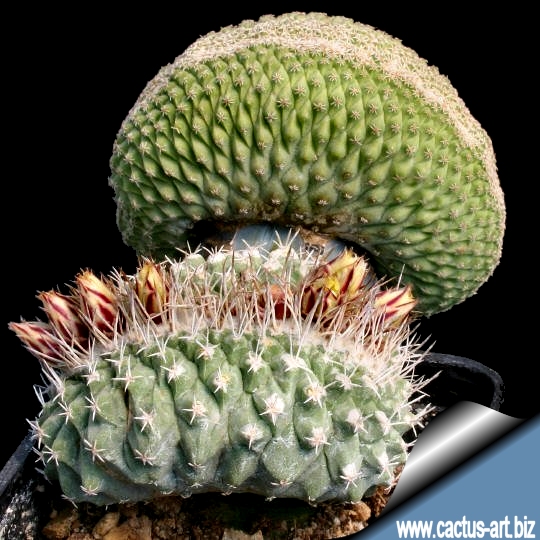
The effect of different grafting
stocks:
◄ (Above) A plant grafted on
Myrtillocactus geometrizans
stock: the plant remain in a
juvenile condition with short
spines, no
flowers, small
rounded
tubercles and a lettuce green
epidermis. The
crest is unstable and tends to
break in individual apexes, the
growing rate is high, the
stem is swollen and
unnatural.
◄
(Below) A plant grafted on a short
Opuntia compressa
stock: the plant soon develops
adult features: long
spines, plenty of
flowers on the
apical line ,
rhomboidal
tubercles and the typical colour of
mature
Strombocactus. The
crest is very stable, the
growing rate is moderate and the plant looks very
natural.


|
|
Advertising
|
|
|
|
|
Family:
Cactaceae
(Cactus
Family)
Family:
Cactaceae
(Cactus
Family)
Strombocactus disciformis
forma
cristata
Origin:
Garden origin
(Nursery produced cultivar) Crrested plants are also foun in habitat
even though with a very
low frequence.
Notes: This plant is an original
clone from Cactus Art Nursery
Conservation status: Listed in
CITES appendix I
|
|
|
|
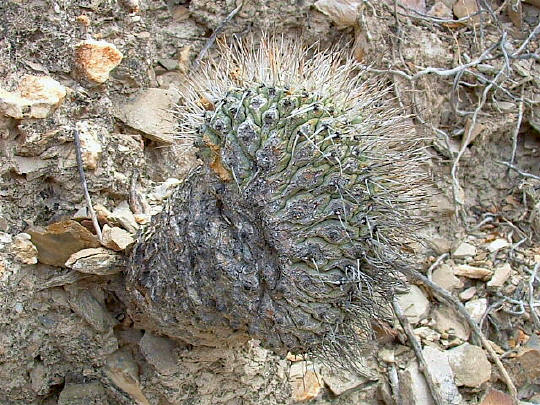
Photo & ©
copyright by
Jürgen Menzel
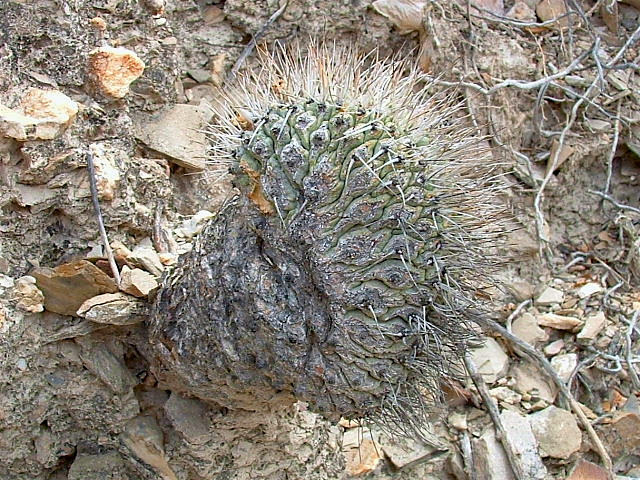
Strombocactus disciformis (v. seidelii)
cristata (In habitat)
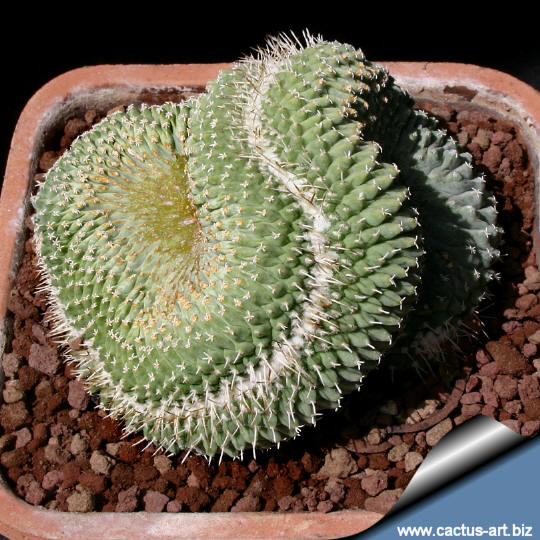
This plant is very rare and beautiful.
|
|
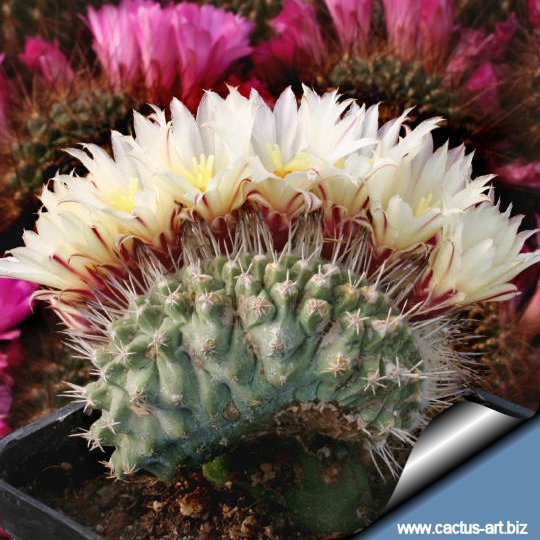
Flowers emerge early in
spring and are freely produced throughout the
summer, remaining open for several days. |
|
Cultivation: It likes a sunny position.
It does best in a mineral soil; good drainage is essential. Water
sparingly during the summer months and keep dry in winter. It can
tolerate moderate shade, and a plant that has been growing in shade
should be slowly hardened off before placing it in full sun, as the
plant will be severely scorched if moved too suddenly from shade into
sun.
Propagation: Grafting, since it is difficult for cuttings to root.
|
|
Photo of conspecific taxa, varieties, forms and cultivars of
strombocactus disciformis.
|
|


 Cultivation and Mail Sale