-
1
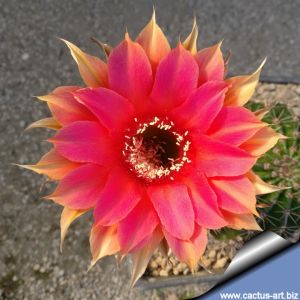
Striking hybrid with 11 cm flowers: deep red-purple inner petals with orange midribs, soft reddish-pink outer petals with pale tawny tips, and deep scarlet filaments—boldly contrasting.
-
2
-
3
Stems of very dark green to nearly black-purple contrast sharply with long, slender white areoles. Short, comb-like spines start red and turn brown, making this cactus exceptionally striking even without flowers.
-
4
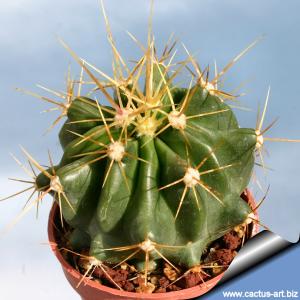
A cactus with a unique look! Blue-green "elephant skin" tubercles and tusk-like spines, topped with yellow blooms. The "prolifera" form is a burst of life: it pups abundantly, creating dense clumps quickly.
-
5
-
6
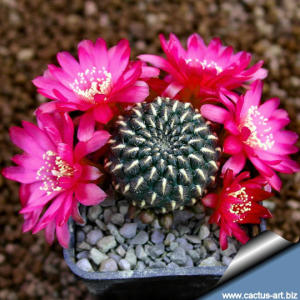
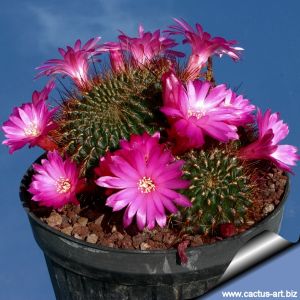
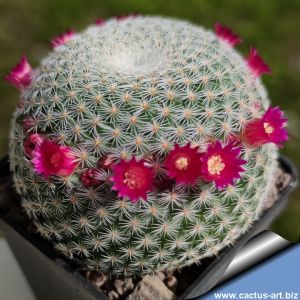
A beautiful variety, sought after by collectors for its attractive mahogany red spines and rings of light purple flowers in spring (From the typical locality)
-
7
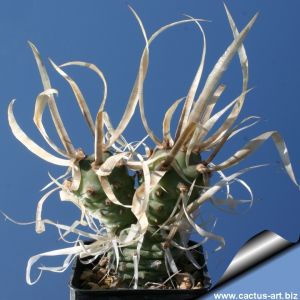
Outstanding harmless cactus with soft wide, papery spines. It will slowly growing up to up to 30 cm tall forming a segmented succulent bush.
-
8
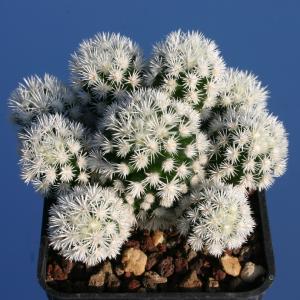
"Arizona Snowcap" shows an odd thickening and shortening of the spines, resulting in a most attractive, unusual candid white looking plants.
-
9
After several years the old plants divide at their apex, ramifying dichotomously (to form two or more distinct joints) and in 10-15 years they forms small colony. It is a pleasing sight, even in the depths of winter.
-
10
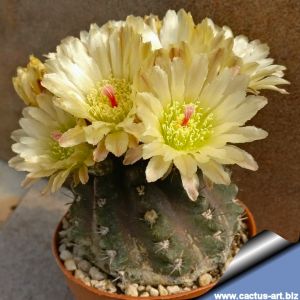
The 'victoriensis' variety is lesser common than the standard "echidnae", it has stems that are more cylindrical and sturdy, straight central spines longer than 4,5 cm. The flowers are yellow with reddish tones.
-
11
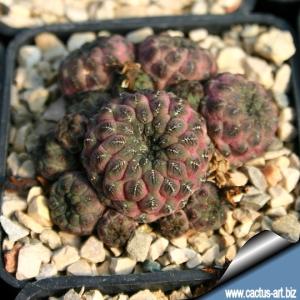
Fascinating species with flat grey-gree to dark-violet body. The spines are usually very reduced but it is quite variable. Flower greenish-yellow to pink.
-
12
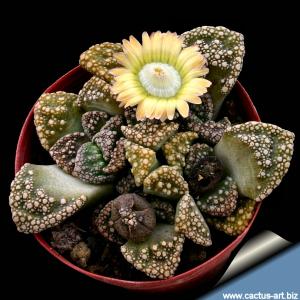
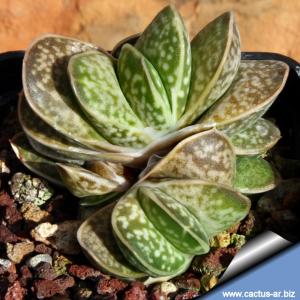
Basal rosettes of blue-green to grey leaves topped with variable whitish, ochre, red or bluish crusts. Confined to limestone habitats, it is a remarkable case of plant camouflage, merging seamlessly into its environment.
-
13
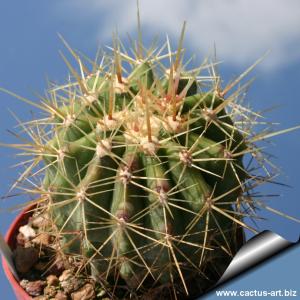
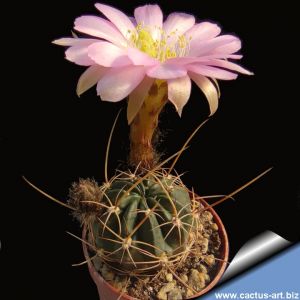
F. reppenhagenii as old plants are of a small diameter, nearly cereoid growing with usually less than 13 ribs .
-
14
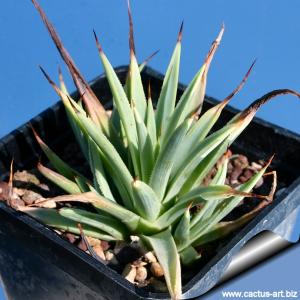
This is a beautiful dwarf plant, whose leaves are quite stiff and ...delightfully painful. It is particularly suited for pot culture because its maximum size is less than 25 cm.
-
15
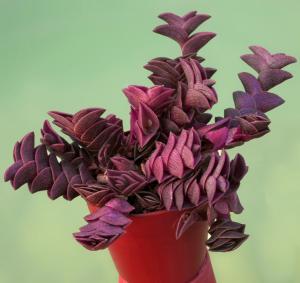
It is a succulent plant with beautiful boat-like formation of grey-green to viney leaves. It needs a little sun to show it's true beauty. It will have Lav/pink flowers and does well in a small basket.
-
16
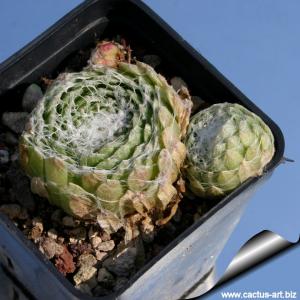
Its name "arachnoideum" refers to ancient Greek "arachnion" (αραχνιον), or spiders for its furry central rosettes, resembling spider webs.
-
17
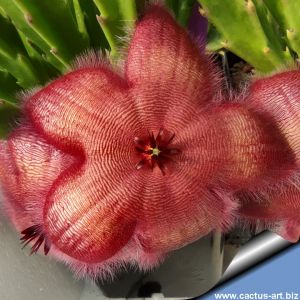
Produces large star fish-shaped deep brown-purple flowers with transverse brow to whitish corrugation. The flowers are densely covered by long purplish hairs at the centre that remember the fur of a dead animal.
-
18
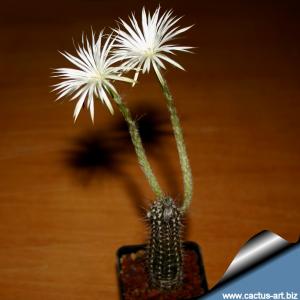
This tiny plant is one of the most fascinating and showy cacti! Flowers are of a superlative beauty, opening in the moonlight on a summer night and lasting for only till dawn, but a number are produced in succession.
-
19
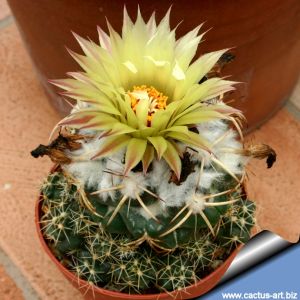
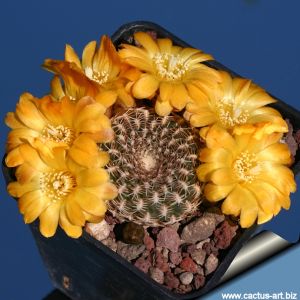
Sulcorebutia arenacea, is a choice solitary, user-friendly cactus, with perfectly neat, symmetrical spination and profuse yellowish-orange (or rarely magenta) flowers. The spines are pectinate and held so tightly that give a sandy effect.
-
20
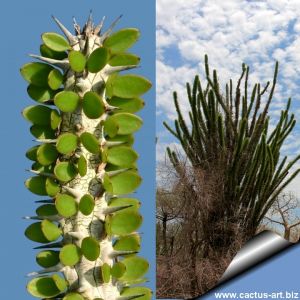
This is an interesting succulent and one that is not seen in every collection. This plant matures into a vertical tower of stems reaching over 18 m high (in habitat).
-
21
Long spines, irregularly curved or contorted, differing in color and length—sometimes reaching 20 cm. Polychromatic blooms: white, yellow, orange, pink, or red.
-
22
-
23
-
24
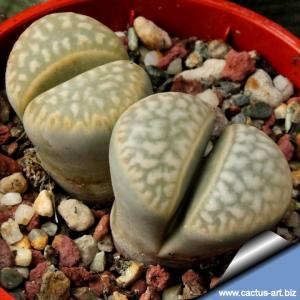
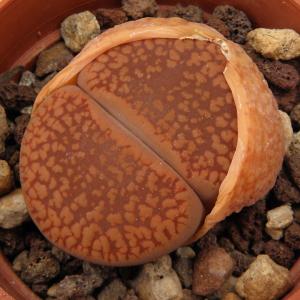
An ochre body highlighted by delicate, branching dendritic designs in pinkish-red or brown