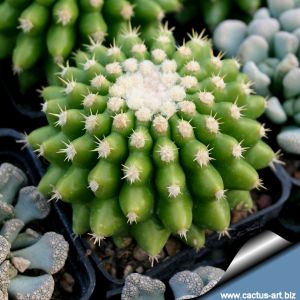
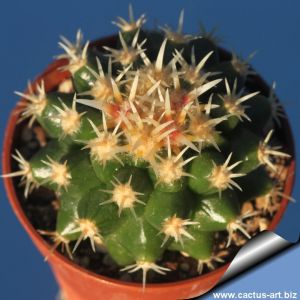
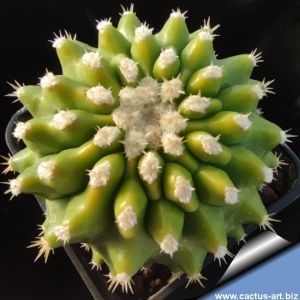
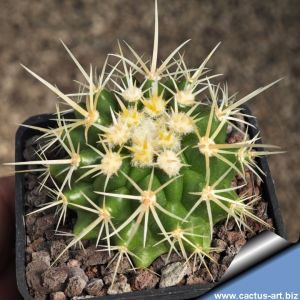
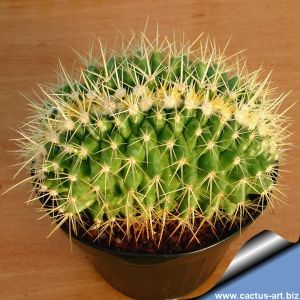
OWN ROOTS ! This is a free offsetting small form of E. grusonii that is covered by yellowhish-white wool with short yellow spines. The rib structure is not yet apparent, and they have pronounced tubercles making them look superficially like Mammillaria.
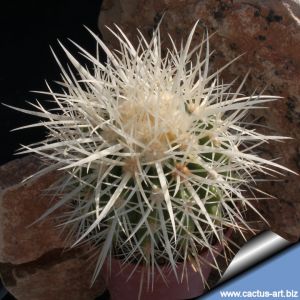
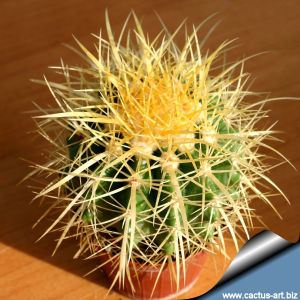
The Echinocactus grusonii v. albispinus looks just like a regular golden barrel but the spines are all glassy-white instead of yellow.This is a very nice plant.
Named for the State of Texas where it is widely distributed. it is a round-shaped barrel with numerous flat ribs that grows very low to the ground with short but very thick pink or grey spines that can live for decades.
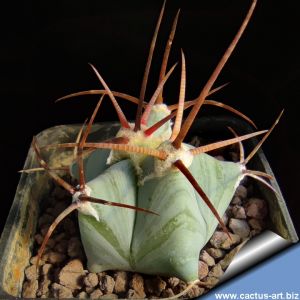
Flattened blue-grey stem featuring prominent wide areoles and woolly apex. Spines transition from cream to purple, gaining strength and vibrancy over time. A showstopping botanical wonder!
Echinocactus ingens is easily recognized by it's large size, being the largest of all barrel cacti. It is usually solitary and may grow up to 2,5 m tall and 1,5 m wide. In habitat it could live more than a hundred years.
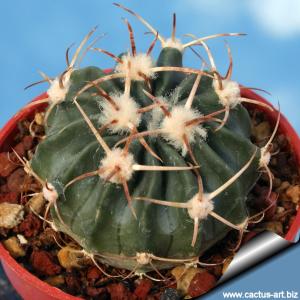
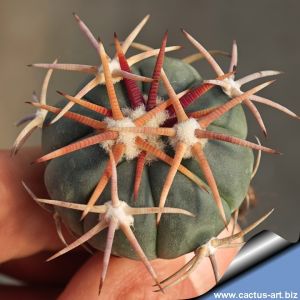
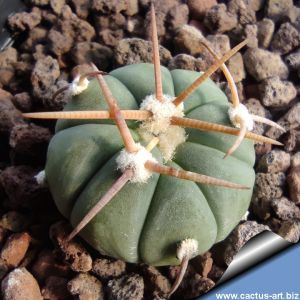
Globose grey-green to grey-blue stem with a flattened apex, typically 8 ribs and circular areoles. Creamy wool shields the growing tip. Strongly recurved, subulate, somewhat flattened spines in pink, grey, tan, or brown leave the stem surface visible.
Beautiful hybrids between Echinocactus grusonii forma inermis and Ferocactus. Selection of only plants with very short thorns (f. brevispunus/inermis). Very rare and hard to find. Only a few plants available.
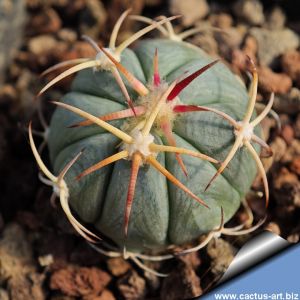
Glaucous stem with large, circular, wool-covered areoles. Subulate radial spines arranged radially, pale with deep purple tips; as they mature, they grow stronger and more colorful. A stunning botanical wonder!
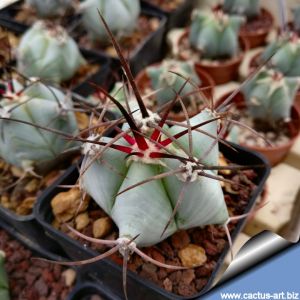
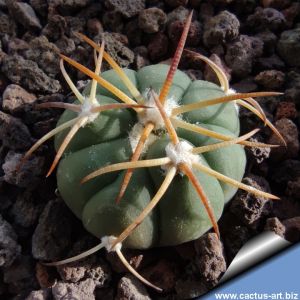
Flattened glaucous-gray body with sword-like beige-purple spines addpressed and pointing downward. They grow stronger and more vibrantly colored as the plant matures, becoming increasingly magnificent.
This is the authentic, original intermediate form of Echinocactus grusonii, distinct from the common commercial variant. It features spines shorter than the classic type and straight in conformation, never curved. A rare find for collectors.
A crested Echinocactus grusonii (the famous “Mother-in-law’s Cushion”) with long, rigid, golden spines. The body forms fan-shaped or brain-like crests, and no two specimens are ever perfectly alike.