-
1
-
2
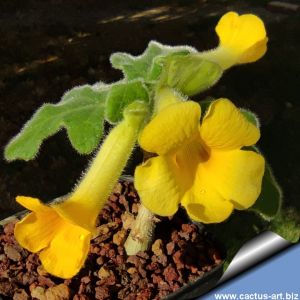
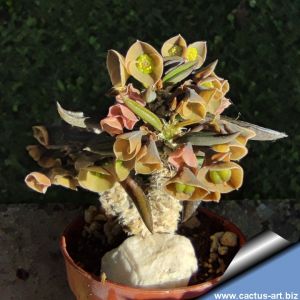
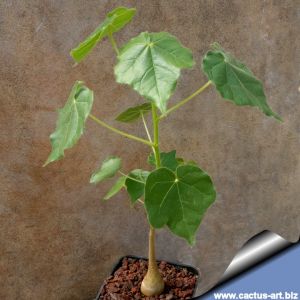
A tropical shrub growing to 2 m tall, forming an attractive irregular caudex at its base. The abundant flowers feature yellow petals with green centers and a distinctive petunia-like shape.
-
3
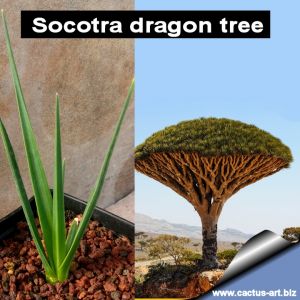
Dracaena cinnabari is native to the Socotra archipelago, in the Arabian Sea. It is so called due to the red sap that the trees produce. The dragon blood tree has a densely packed crown having the shape of an upturned and uprightly held umbrela.
-
4
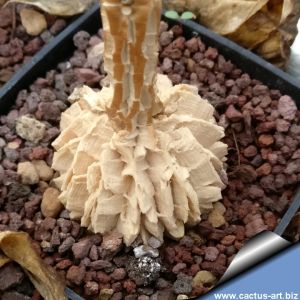
E. cylindrifolia ssp. tuberifera is a caudiciform that forms a rounded tuber that can grow to fist-size or larger. This is a SEEDLING not a CUTTING, plants propagated from cuttings, only form fibrous roots and never form the typical caudex.
-
5
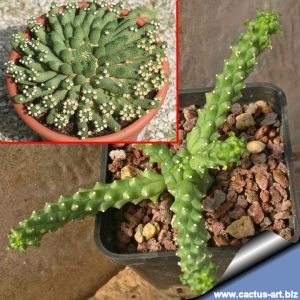
Euphorbia inermis is a medusaeform euphorbia up to about 50 cm in diameter with branches radiating like fingers from a central stem, continued below ground as a large fleshy tuber. A properly grown plant is a joy, especially when it is in flower.
-
6
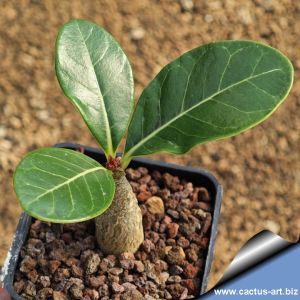
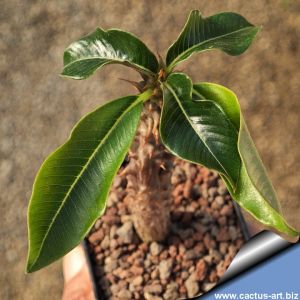
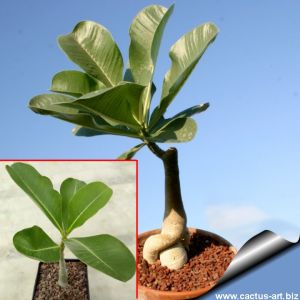
A remarkable caudiciform wonder resembling a miniature baobab, endemic to the Dhofar coast of Oman and the mountains of Yemen at around 960 m. Its large, glossy leaves drop in autumn; pink flowers appear in early summer, before leaf flush.
-
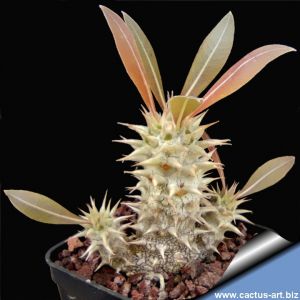
7
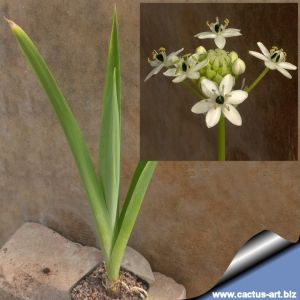
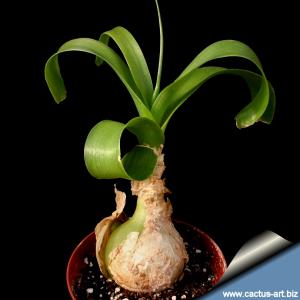
Ornithogalum saundersiae or giant chincherinchee is a bulbous plant 30 to 100 cm tall. The leaves are shiny dark green less than half as long as the flower stem. Produces numerous flowers white with a very dark green center. The plant flowers in summer.
-
8
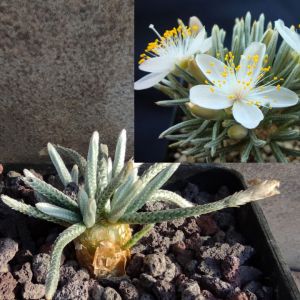
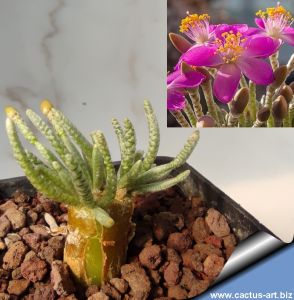
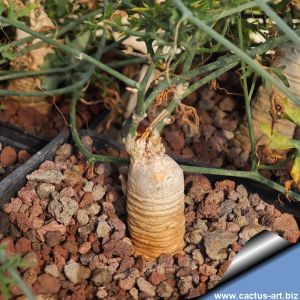
Avonia quinaria ssp. Alstoni is one of more facinating succulent with a turnip-shaped, crowned rootstock or caudex from which many white worm like stems develop. Flowers are white up to 3 cm in diameter (the most stunning flowers among the Avonia)
-
9
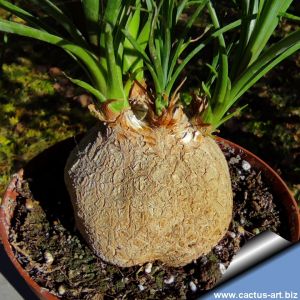
Beautiful smooth, opalescent, pale apple-green bulbs, that sit on top of the medium and will reach up to 10 cm in diameter. When larger produce bulbils on their sides.
-
10
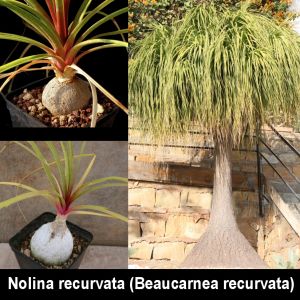
Once known as Beaucarnea recurvata it is a very decorative caudiciform plant (often called the ponytail palm in English, even though it is not a true palm) It can be also grown indoor.
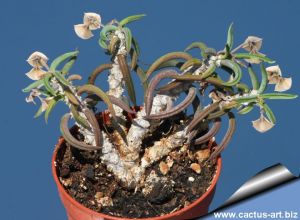
-
11
# # # SPECIAL PLANT# # # (Selected specimen)
Caudex diameter 6+ cm (at the base).
-
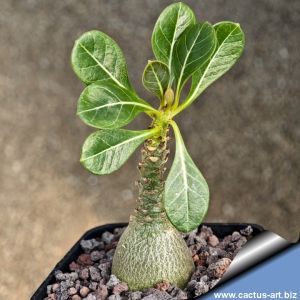
12
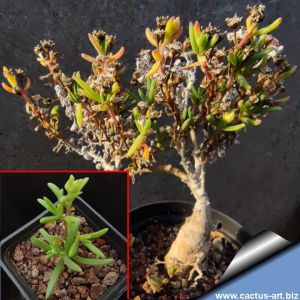
Of all the dwarf succulent South African Euphorbia this is undoubtedly one the most striking and popular.
-
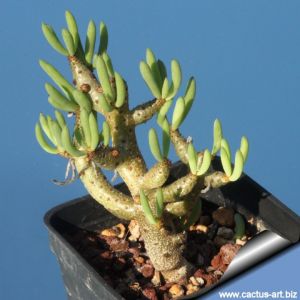
13
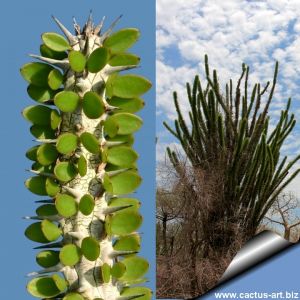
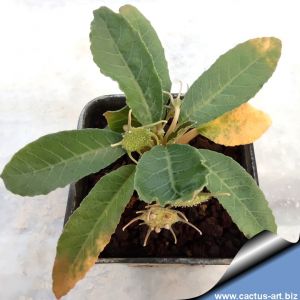
This is an interesting succulent and one that is not seen in every collection. This plant matures into a vertical tower of stems reaching over 18 m high (in habitat).
-
14
What a character! Irregularly twisted, gnarled succulent caudexes give rise to speedy vines
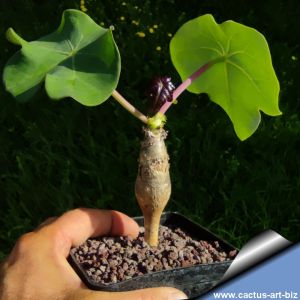
with funny swollen joints. Like a Dr. Seuss plant come to life! When grown in containers, it can be easily trained to grow vertically on a trellis or support.
-
15
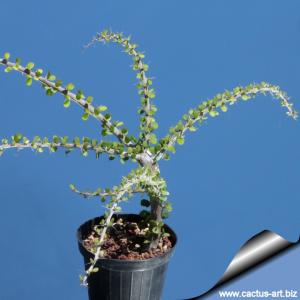
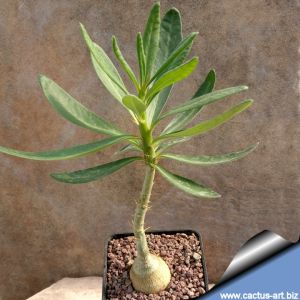
A dwarf pachycaul shrub or tree native only to Madagascar. It has a short trunk that branches just above the soil, bearing long, thin, gracefully arching branches. Fleshy, obovate leaves appear in opposite pairs, each pair subtended by a pair of spines.
-
16
-
17
-
18
Pachypodium horombense is a succulent shrublet about 1.5 m high with a plump, bottle-shaped, main stem surmounted by a number of short fat spines. Produces Chrome-yellow flowers during the warm months of the year.
-
19
Odd succulent with fleshy stems and lance-shaped leaves ranging from green to bronze. It produces unique star-shaped inflorescences in green or brown tones. Its unusual appearance makes it a prized specimen among succulent enthusiasts.
-
20
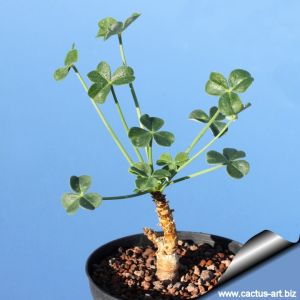
Also known as Great-rooted Wood-sorrel, it is a perennial herb, up to 20 cm tall with a swollen rootstock and short woody stems leafy and floriferous only at apex. This species is also renowned for the acidic flavor of its foliage, rich in oxalic acid.
-
21
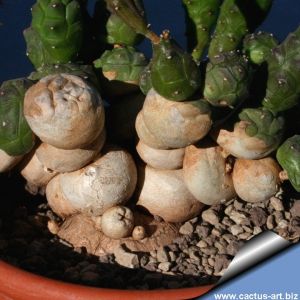
A compact and unusual succulent with a geometric, quirky appearance. From its carrot-shaped root it produces green, globular, spineless segments that branch over time, forming a small clustered group.
-
22
Pachypodium baronii is a compact succulent shrub with a thick, bottle-shaped caudex native to northern Madagascar (300–1200 m). Known for its striking red flowers with a contrasting white center, creating a bold and dramatic display.
-
23
-
24
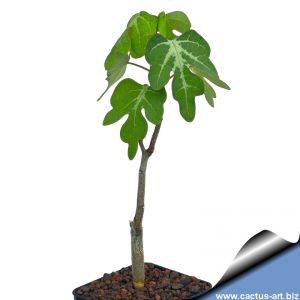
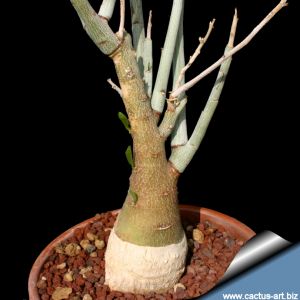
Medium sized tree with a stout caudiciform trunk. Bark smooth silvery-grey, often mottled with purple-brown, peeling. Origin: East Africa from Sudan to Mozambique; Malawi, Zimbabwe, Botswana and Namibia.
-
25
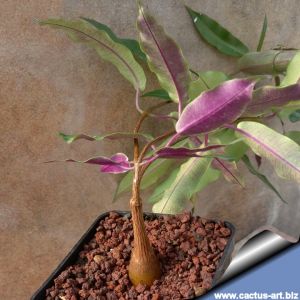
Petopentia natalensis is a perennial-climber with a tuberous rootstock to 40 cm in diameter, bark red-brown, finely fissured. The leaves are mooth and shiny, leathery, and have a distinctive purple underside. The flowers are greenish yellow.
-
26
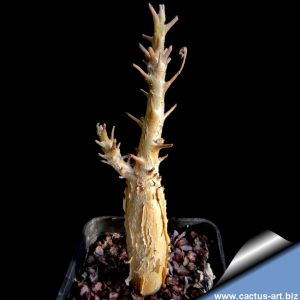
Sesamothamnus guerichii is a pachycaul with shiny swollen trunks topped by stiff erect branches. The stiff branches bear thorns and grey-green leaves in clusters on short shoots. The leaves can have a white-wooley covering on them.
-
27
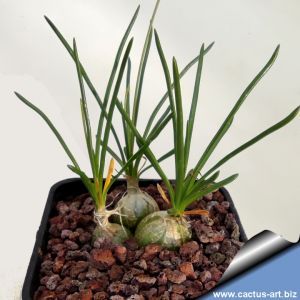
Ornithogalum juncifolium is a charming specie growing in small clumps of above ground bulbs. It has narrow ribbed leaves and white flowers with central green stripes. Entire plant only 10-12 cm tall.
-
28
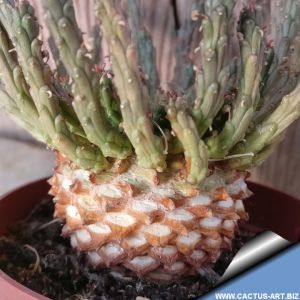
Avonia quinaria is a dwarf succulent with a turnip-shaped caudex, often flattened above, with a crown of thin branches up to 2,5 cm above ground. Leaves in a spiral. The flower is purple or pink, 1,2-1,5 cm in diameter. Still rare in collections.
-
29
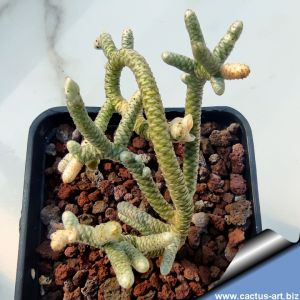
Avonia ustulata, a.k.a Anacampseros ustulata, is a tiny succulent with tufted silvery-grey worm-like branches sprouting from a more or less developed caudex partly underground, much branched from the base. Flower small, terminal, pale cream.
-
30
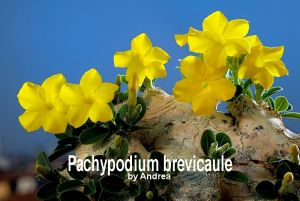
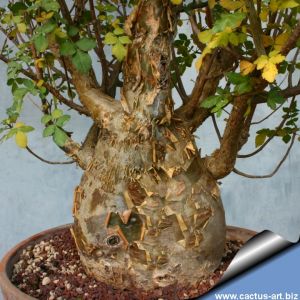
P. brevicaule is the smallest and more strange species in the genus, with a remarkable rock-mimic caudex remembering a sack of potatoes. This is the one every Pachypodium lover should have. Grafted on a very short P. lamerei.
-
31
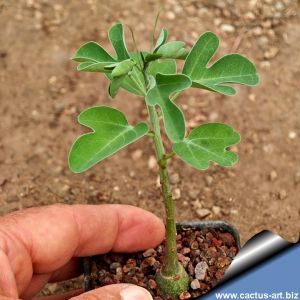
Perhaps this is the nicest species of the genus, it has a thick peeling caudex and leaves that release a delightful citrus odor when crushed. In autumn the leaves change to yellow, orange and red.
-
32
-
33
Adenium socotranum is the largest of the Adeniums and can reach 3 meters in height, but its growth is very very slow. The flowers are bright pink. 2-3 years old seedlings. VERY RARE.
-
34
A slow-growing, caudiciform succulent. From its swollen caudex arise branches bearing large, glossy green leaves with prominent veins. Highly prized for its variable flowers—white, cream, pale pink, red, or violet. Mature specimens resemble true bonsai.
-
35
The most notable feature of Mestoklema is its thick rootstock. This species is popular with bonsai enthusiasts. It endures temperatures several degrees below freezing without complaint.
-
36
Adenia olaboensis, endemic to Madagascar, is a large vine with conical stem bulging at base. The stem surface somewhat resembles crocodile skin and the species is called by the Sakalava tribe "olaboay", meaning the crocodile.
-
37
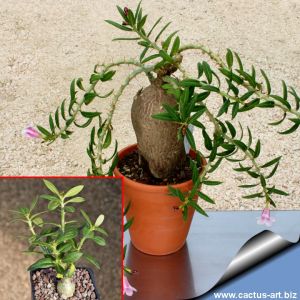
Impressive caudiciform with short, thick and knotty caudex. Above the main stem it produces climbing or slightly climbing twigs. Found in Limpopo Province, Botswana and Zimbabwe.
-
38
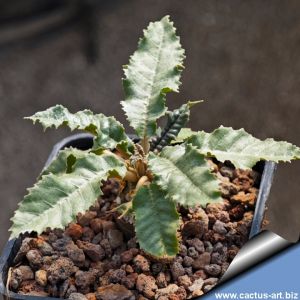
Dorstenia crispa is an odd caudiciform with lanceolate, textured leaves (deciduous in winter) and a woody caudex. Its distinctive "disc flowers" are unmatched among succulents: petal-less green, and with star-shaped appendages.
-
39
A living fountain of flowers: this caudex-bearing wonder is the most floriferous cultivated species in the genus. Its caudex becomes a pedestal for floral fireworks,
making it the ultimate sun-worshipping showstopper.
-
40
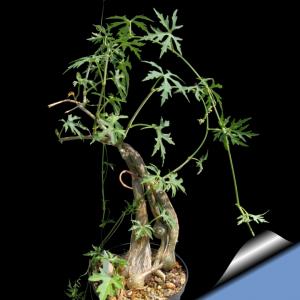
Caudeх-forming with woody base reaching 30 cm diameter. Vine-like branches bear deeply incised green leaves with toothed edges. Tiny yellow flowers yield miniature watermelon-like fruits.
-
41
A very rare and exceptionally beautiful caudiciform with a swollen base and short grey-green branches resembling a hedgehog. Extremely slow-growing and long-lived, some old specimens in the Namib Desert may be over 2,000 years old.
-
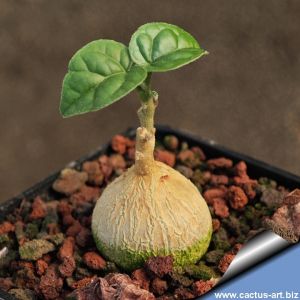
42
Pyrenacantha malvifolia is regarded as one of the species with the largest above-ground caudex, semi-spherical and usually irregular in form, almost fully exposed. Its leaves are green, heart-shaped, and reminiscent of mallow.