MAKING ROOM FOR THE NEW: Final chance before our 2025 arrivals!
SUCCULENTS & CACTI AT 50% OFF
Why this special offer? Our greenhouse is evolving! We're making space for new species, rare specimens, and exclusive botanical collections arriving in 2025.
Limited time offer: Only in Genuary. While stocks last | Online only
The perfect opportunity to: • Expand your collection at half price • Start the new year with new greenery • Acquire quality plants nurtured with care
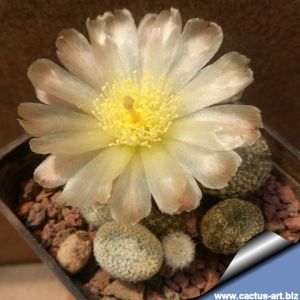
Extraordinary cactus with a large turnip-like root; from it arise flying-saucer-shaped bodies densely covered in pressed white spines, resembling a cluster of white mushrooms. Cream or pale pink flowers exhibit an extraordinary silken sheen.
A flattened globular cactus reaching 4 cm in height and 8 cm in diameter, bearing central spines ranging from yellow-amber to reddish-brown and vivid carmine-red blooms.
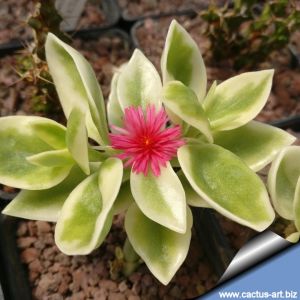
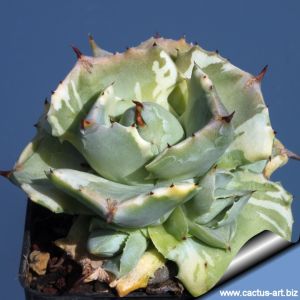
A dwarf, compact cultivar with rosettes only 5–7 cm across. The variegated form features blue-gray leaves edged in markings ranging from cream to light green; the intensity of variegation varies with sun exposure.
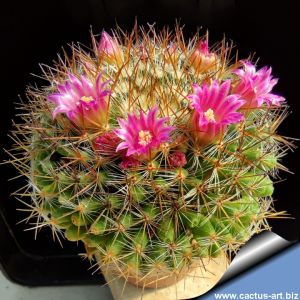
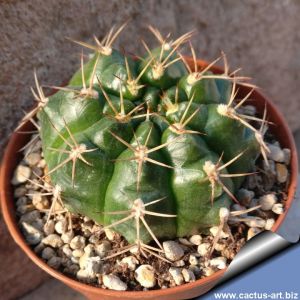
‘Horrida’ is a striking form distinguished by formidable, more robust spines than the typical species. Its low habit and rapid growth make it highly ornamental , and over time it develops into a majestic hemispheric cushion. Flowers are pink-purple.
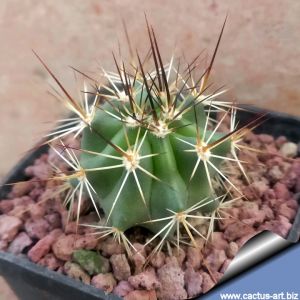
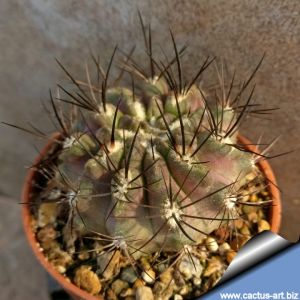
Eriosyce taltalensis is spiny geophytic cactus with stems rising barely above ground level. The stem is globose or semi-globular dull dark green, in the sun often tinged with purple. The roots are fibrous, arising from a short, conical taproot.
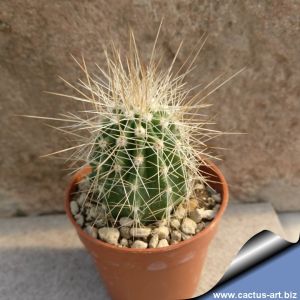
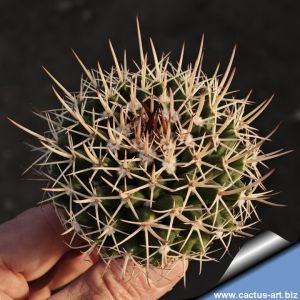
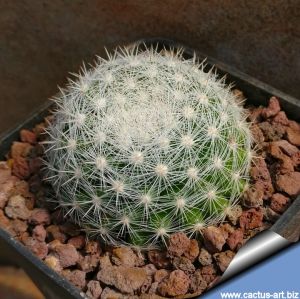
Mammilloydia candida called 'Snowball' is a choice cactus with a so dense snowy white, spination, that its body appears hidden by spines. Mammilloydia are clearly related to the genus Mammillaria, but it is usually recognized as a segregate genera.
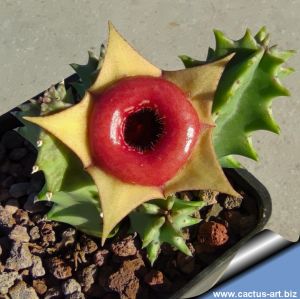
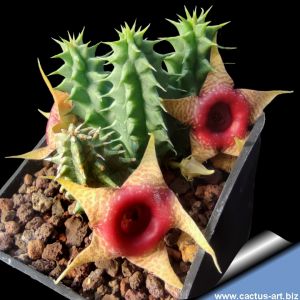
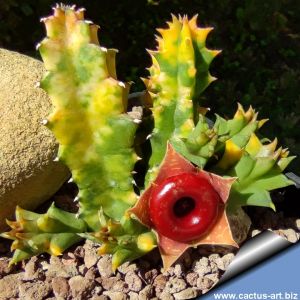
Huernia insigniflora has flowers that opens one at a time in succession in summer and autumn. Flowers have liver-coloured or purple annulus, and ivory to pink lobes unmark. Stems greyish-green with smaller teeth.
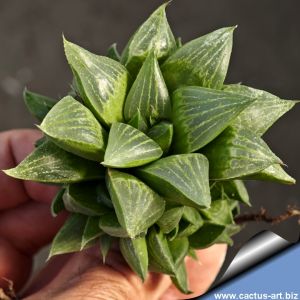
A Haworthia featuring succulent, thick leaves spirally arranged into dense, compact rosettes. The green leaves exhibit a translucent, glass-like surface marked by delicate longitudinal striations.
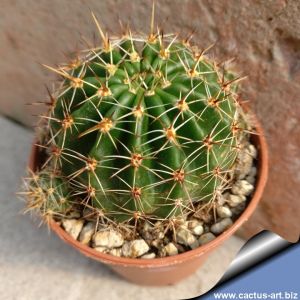
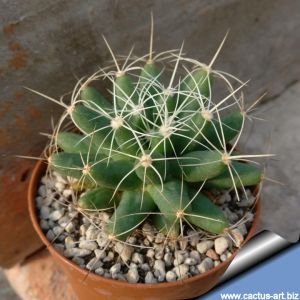
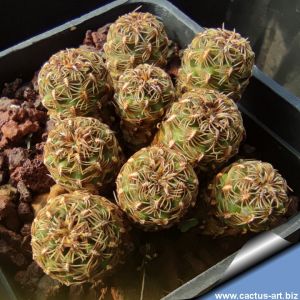
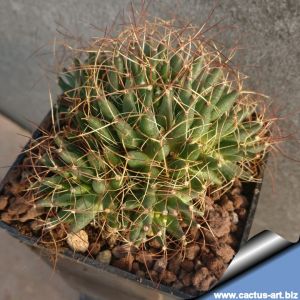
Short, combed spines from yellow-beige to light brown, with darker bases. Fast-growing and quick to cluster, it forms tight cushions packed with numerous heads.
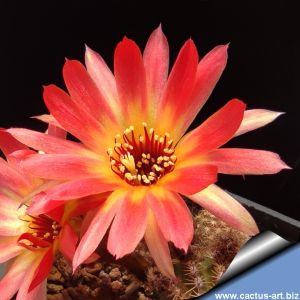
Chamaelobivia ‘Golden Eye’ is a striking hybrid featuring vibrant orange-red blooms and a prominent golden-yellow center—the “Golden Eye” that inspired its name.
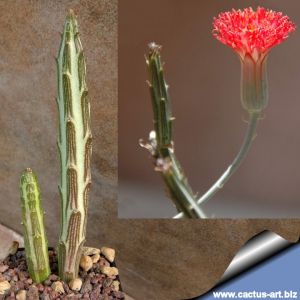
Senecio stapeliiformis has pencil-like stems prettily marked with purple-green patterns and soft spines along the sides, the whole recalling a Stapelia in form (hence the name), but has a large orange hawkweed-like flower.
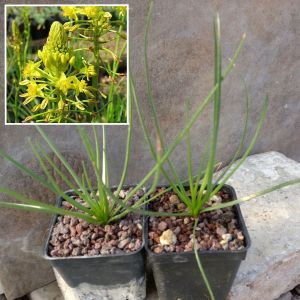
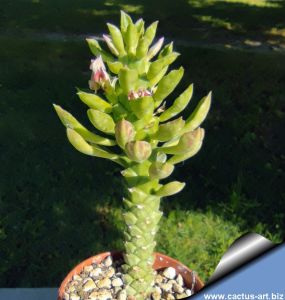
Monadenium stapelioides branches at the base of a large fleshy rootstock and forms a domed cushion to 60 cm in diameter. The stems tend to flop over and hang with this species. The flowers are white or light pink, they are small but showy.
Huernia zebrina variegata is one of the most beautifully flowering huernias. The stems are green and yellow. The corolla is patterned with wine-red zebra stripes. Very sought after by impassioned this variety is a must in stapelias collections
Mammillaria camptotricha (Dolichothele camptotricha) - Flat clusters of small stems with elongated tubercles and slender, twisted spines that envelop the body (hence "Bird’s Nest Cactus"). This variety has spines in dull cream to brown tones.