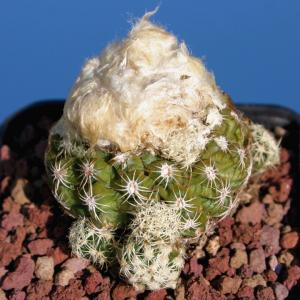
Among the tiniest in its genus, this cactus reaches just 4–5 cm at maturity and stays that size. It grows in small clusters and produces a woolly cephalium with long, cream-white, delightfully fragrant flowers.
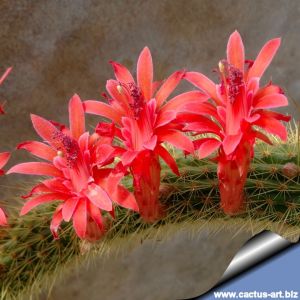
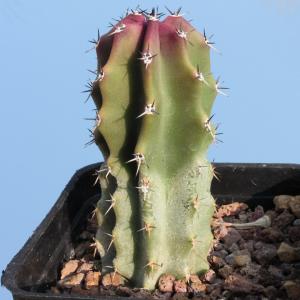
Tall, columnar, slow-growing cactus, usually trunkless, forming numerous tall, ascending columnar stems with 5–7 prominent ribs. Branching occurs mostly at or near the base in a candelabra-like arrangement. Mature plants develop longer spines.
Entirely without spines or glochids, this plant can be touched safely. It develops appealing groups of oval to gently elongated cladodes, an excellent choice for those preferring non-spiny ornamental plants.
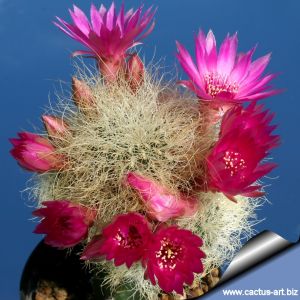
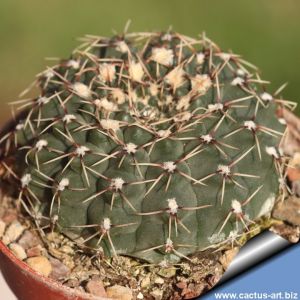
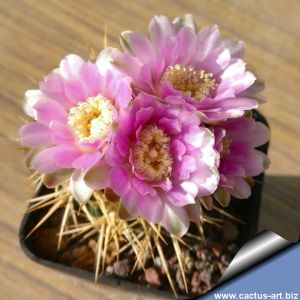
A remarkable species featuring flattened spherical stems clad in dense, hair-like, yellowish-white, contorted spines, giving a soft, cloud-like look. Its magenta flowers are vivid and dramatic.
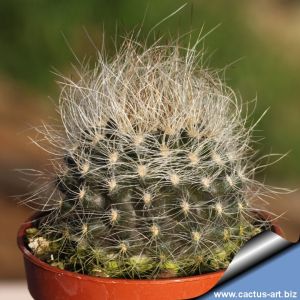
Highly distinctive species with long, thin, soft, and flexible spines ranging from white to creamy-yellow. In some specimens, spine color deepens to beige, light brown, or nearly black, giving each plant a unique appearance.
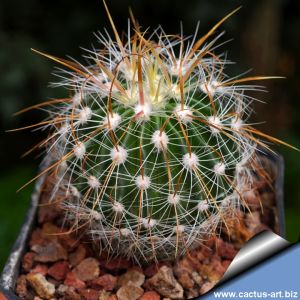
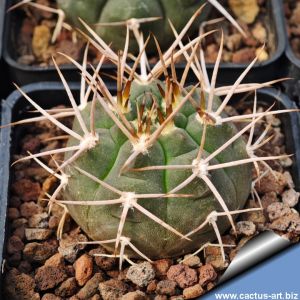
White-woolly depressed apex. Rounded stems with about 35 slender ribs featuring sharp, wavy edges. Radial spines are bristle-like, silky, near-transparent (whitish-cream), while centrals are thicker, longer, and amber to tan-colored.
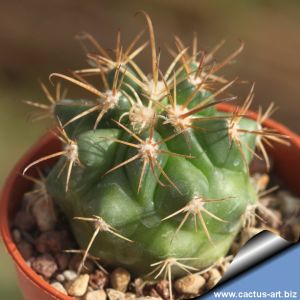
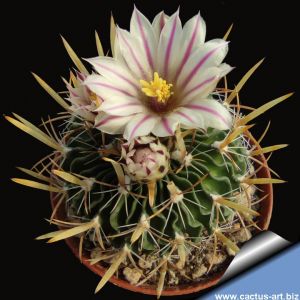
Very long, flat, and papery spines. A stunning plant even when not in bloom. Flowers white and feature a pink midline on the petals.
Previously classified under different names, such as E. multicostatus, E . zacatecasensis and E.phyllacanthus.