-
1
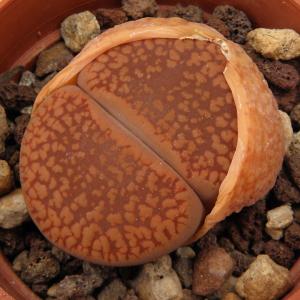
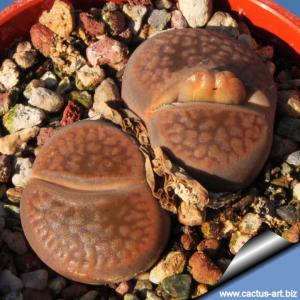
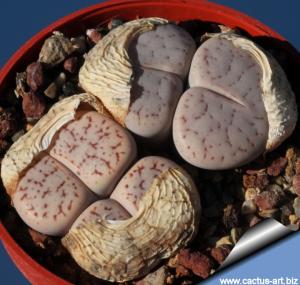
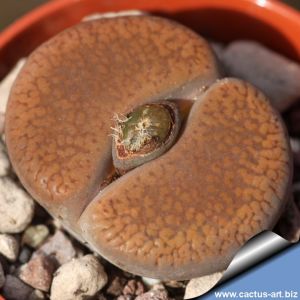
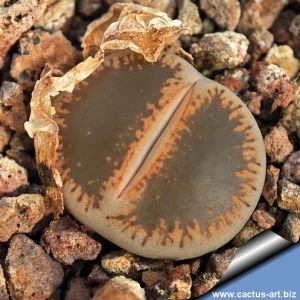
Orange grey body with thin dark brown lines.
-
2
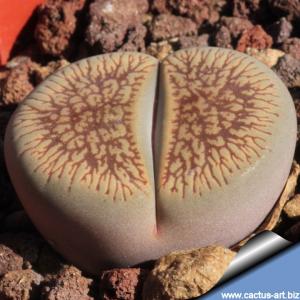
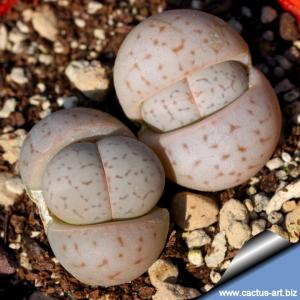
An ochre body highlighted by delicate, branching dendritic designs in pinkish-red or brown
-
3
-
4
-
5
-
6
-
7
-
8
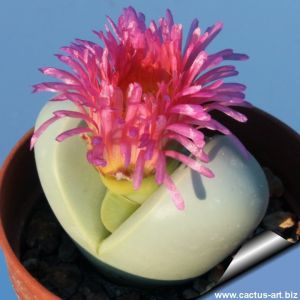
Green cream top.
-
9
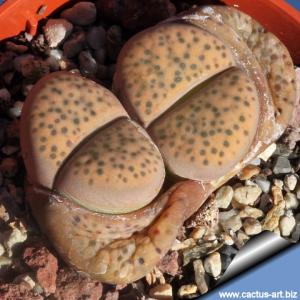
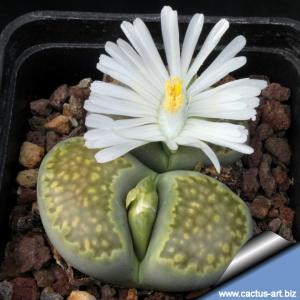
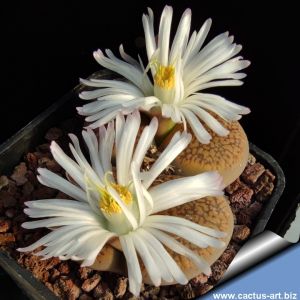
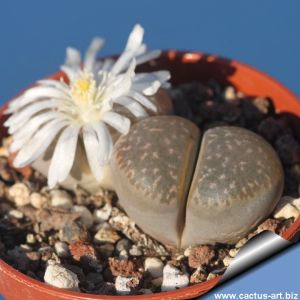
Lithops aucampiae C392 cv. Storms’ Snowcap is a higly valued cultivars. The body is red brown with darker brown markings like the "Kuruman form" of Lithops aucampiae but it has a lovely white flower instead of yellow.
-
10
Flattened top with finely incised margins. The edge features a delicate, engraved-like pattern, resembling precise sculpting. A distinctive morphological trait. This textured, graphic appearance adds ornamental value and is highly appreciated.
-
11
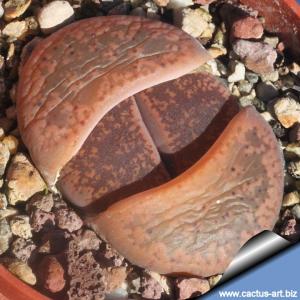
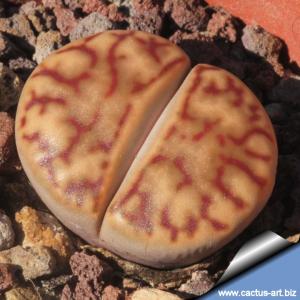
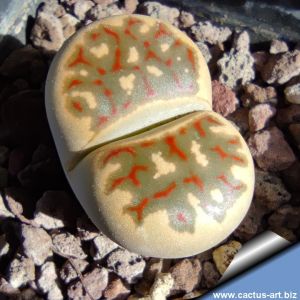
Rusty orange, red lines.
-
12
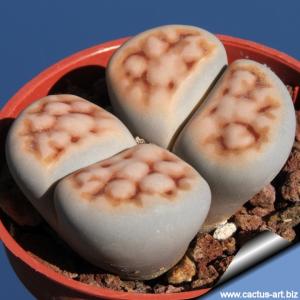
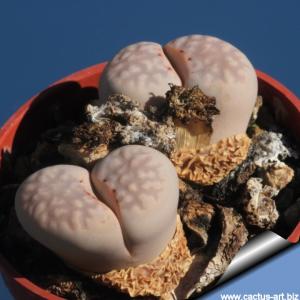
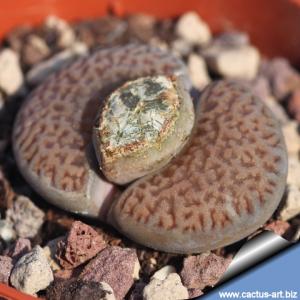
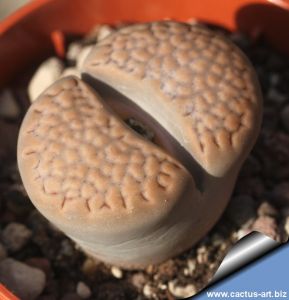
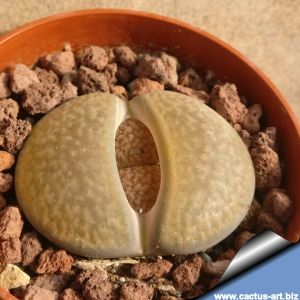
Wonderful form with a rugose, reticulate surface in shades of reddish-brown, faint bluish nuances, and fairly distinct, irregularly toothed margins. Shoulders beige to milky bluish-grey.
-
13
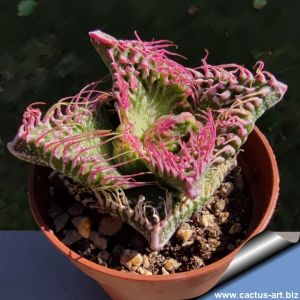
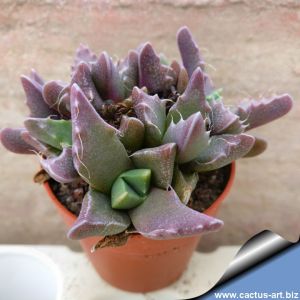
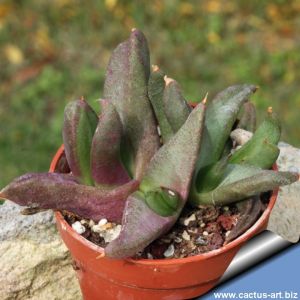
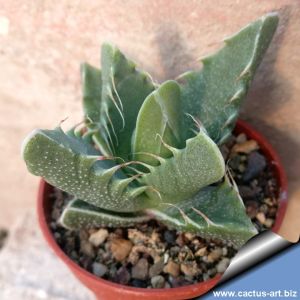
This striking cultivar features pronounced warts on its upper leaves and serrated margins with purple-pink filaments. Its surreal texture evokes the gaping maw of some bizarre deep-sea predator—an otherworldly twist on the typical succulent form.
-
14
-
15
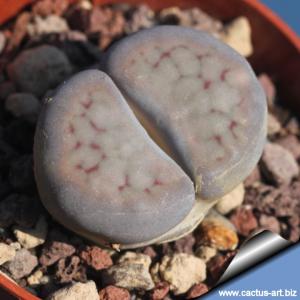
Vivid pink grey pattern.
-
16
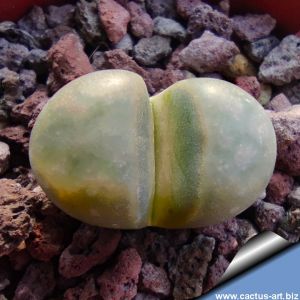
Transparent blue green windows.
-
17
-
18
-
19
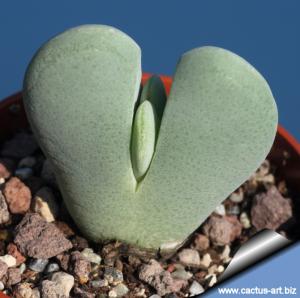
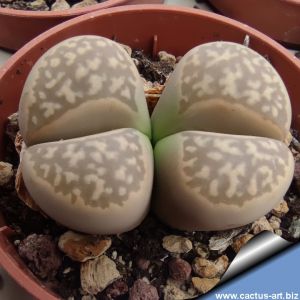
Pale milky grey body.
-
20
-
21
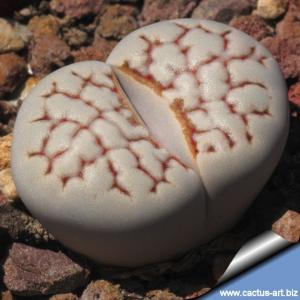
Bright red lines on pale top.
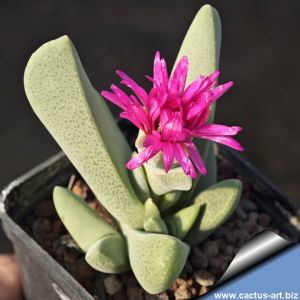
-
22
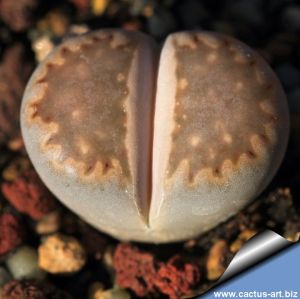
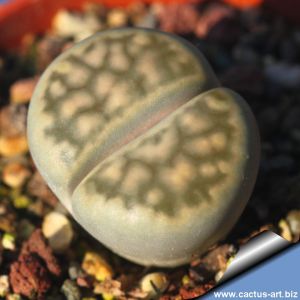
Grey-beige upper face adorned with a network of brown markings, delicately veined with fine dark red lines.
-
23
-
24
-
25
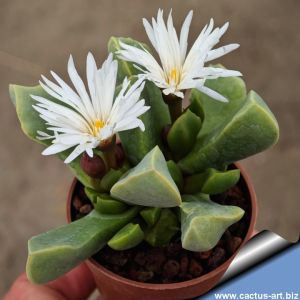
White flowers!!!
-
26
-
27
-
28
-
29
-
30
Coke bottle green.
-
31
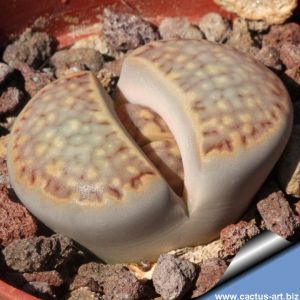
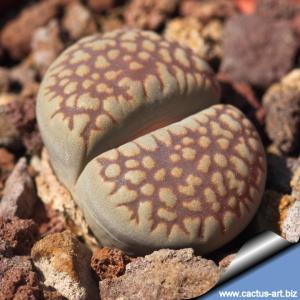
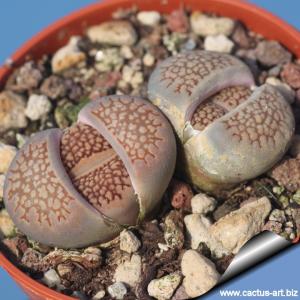
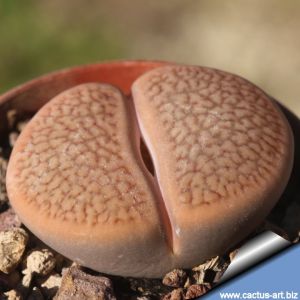
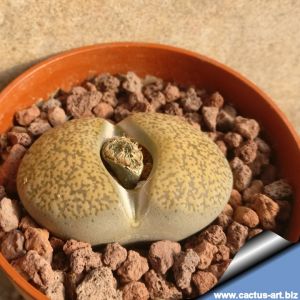
Top surface gently convex or nearly flat, densely textured with irregular beige-to-ochre bumps set within an intricate web of simple and branched vermiform grooves in warm reddish-brown tones.
-
32
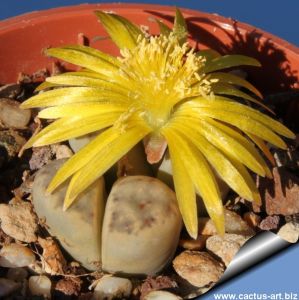
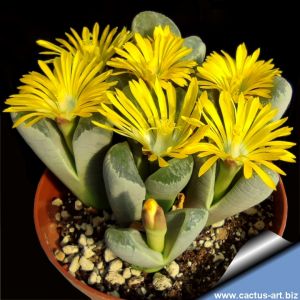
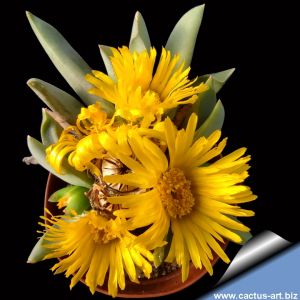
Compact tufter, bright yellow flowers.
-
33
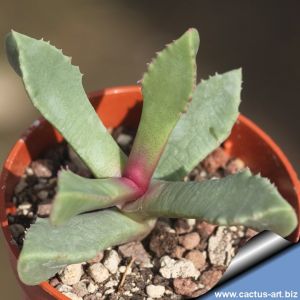
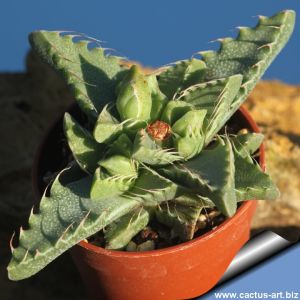
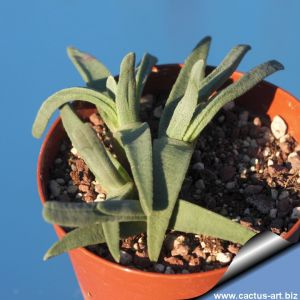
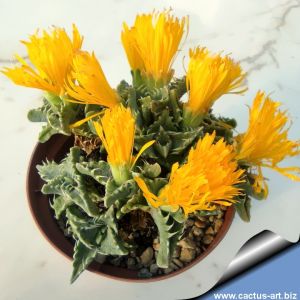
Grey green leaves, reddish teeth
-
34
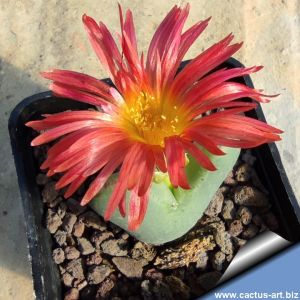
A Conophytum from the bilobum group, distinguished from similar forms by its striking bright orange blooms—large and opening during the day in autumn. It forms dense clusters, is notably hardy, and thrives with minimal care.
-
35
-
36
Grey to light pink, large windows.
-
37
Tiny quartz or jade eggs. Silvery-blue to blue-green body. Large daisy-like flowers in purple, pink, violet, or rarely white, but also in various yellow shades—always a surprise!
-
38
-
39
-
40
Translucent body of gray green color, not well endowed florally.
-
41
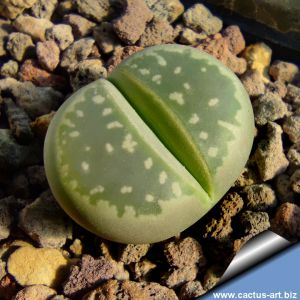
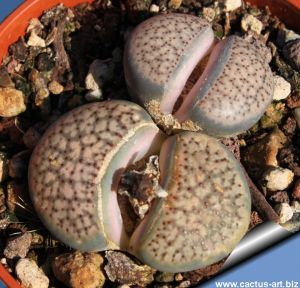
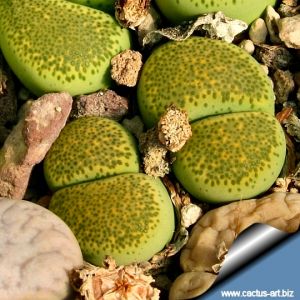
Bright yellow-green surfaces speckled with fine dark-green spots, creating a delicate contrast and ornamental appearance.
-
42
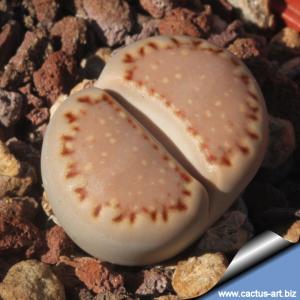
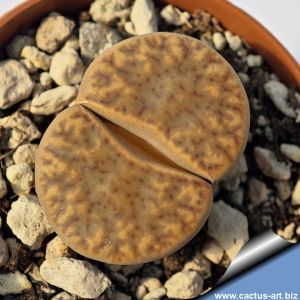
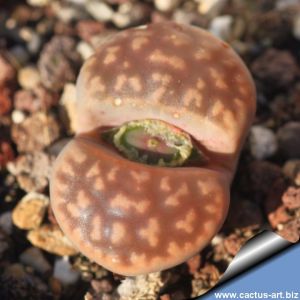
Ochre-grey to pale copper-orange top with red mottling. The surface shows a fascinating mix of earthy tones and reddish accents, creating a unique marbled effect.
-
43
Dark chocolate-brown top with a well-defined open window. Exceptional for its deep color and contrast with jagged margins. Highly sought after for its dramatic look and rare elegance among Lithops.
-
44
Handsome.
-
45
Dark milky window.
-
46
-
47
-
48
-
49
Tesselate wax layer.
-
50
deep green short leaves
-
51
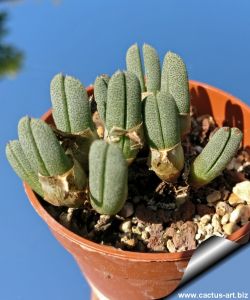
Mini fresh green clumper.
-
52
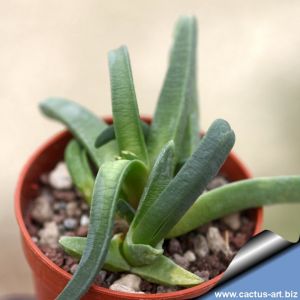
good tapered leaf shape .
-
53
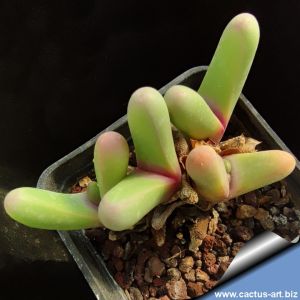
Fine purple leaves, small.
-
54
Small tufted succulent that, when mature, forms large clumps. Notable for being one of the rare species with purple blooms.
-
55
-
56
-
57
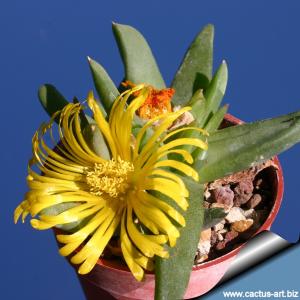
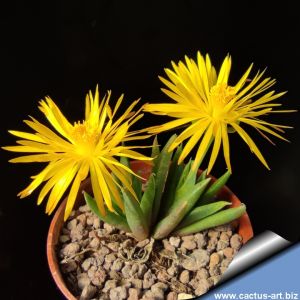
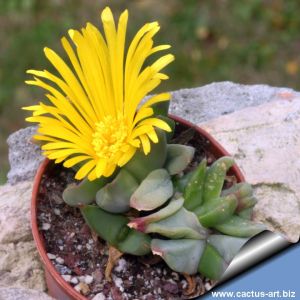
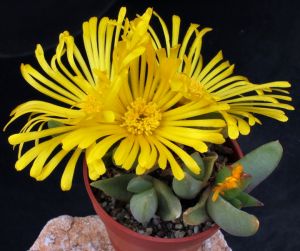
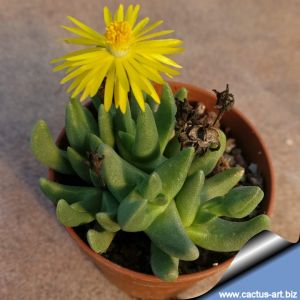
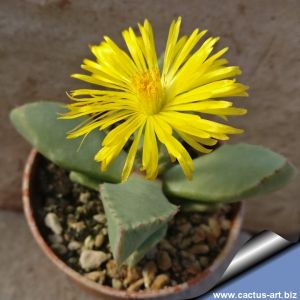
A delightful dwarf plant, nearly lacking a stem, featuring a dense habit and smooth, angular leaves that are pointed and triangular when cut crosswise. Spring brings stunning yellow blooms with many slender, extended petals.
-
58
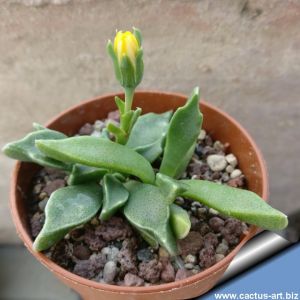
Thick broad gaping leaves .
-
59
-
60
Grey brown top, red lines.
-
61
-
62
stays small, red edged teeth.
-
63
-
64
-
65
-
66
-
67
-
68
a miniature, short and fat .
-
69
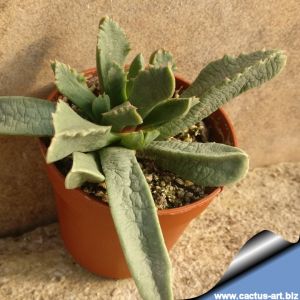
Scalloped green leaves.
-
70
-
71
Yellow flowers, recurved white teeth.
-
72