-
1
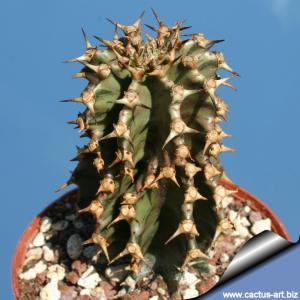
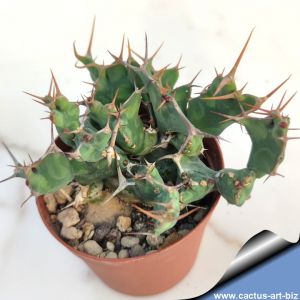
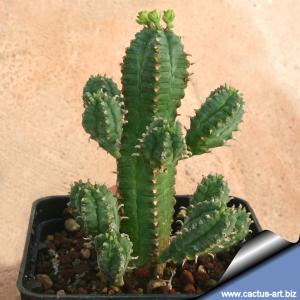
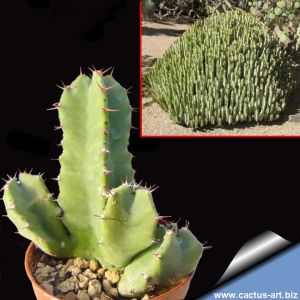
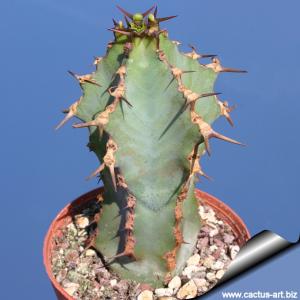
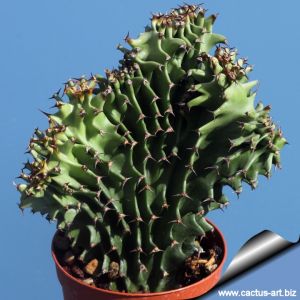
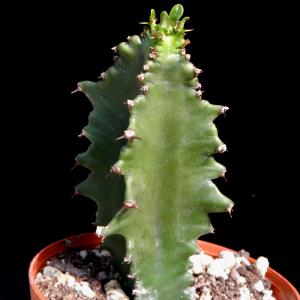
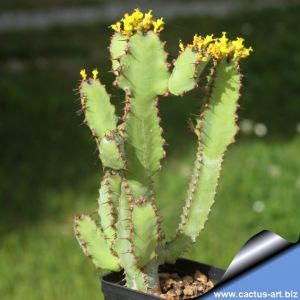
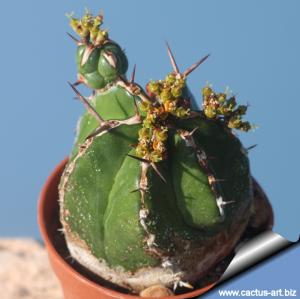
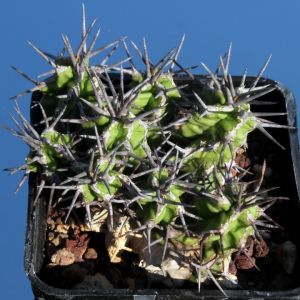
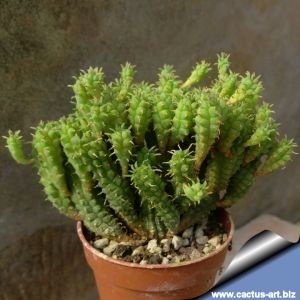
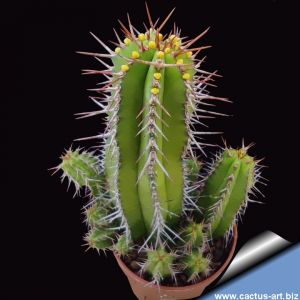
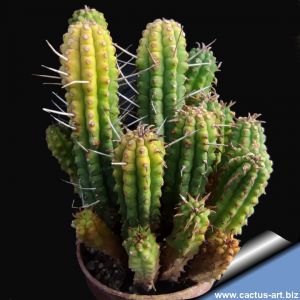
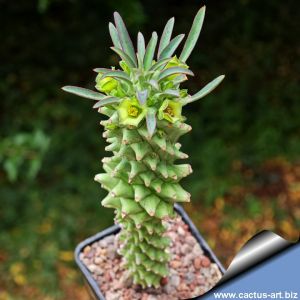
This is a very showy candlestick tree-like plant which grows arms over time. Stems edges are ridged with short, pairs of closely packed (almost touching) triangular, corky, spines up to 7 mm wide and 10 mm long .
-
2
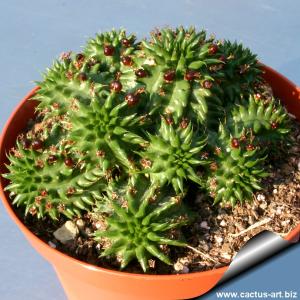
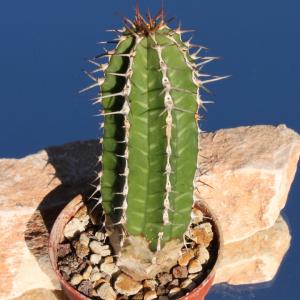
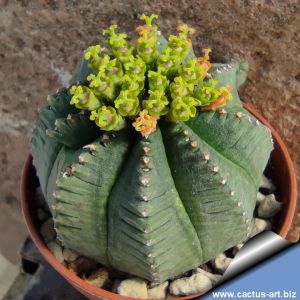
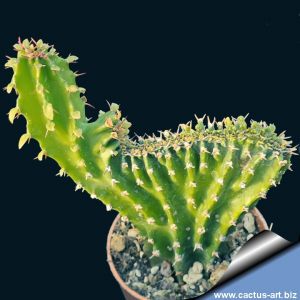
A unique succulent from Madagascar’s coastal forests. It features bright green, angular stems with spiraling white thorns and produces vibrant red cyathia. Slow-growing, it develops textured patterns as old leaves shed.
-
3
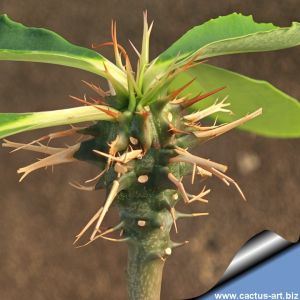
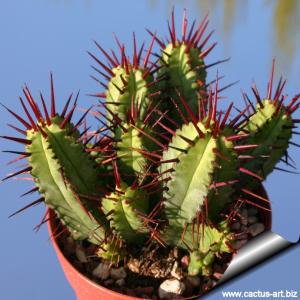
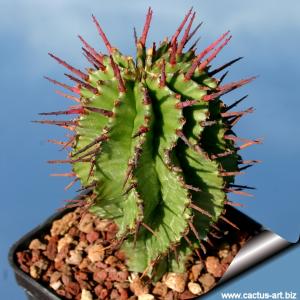
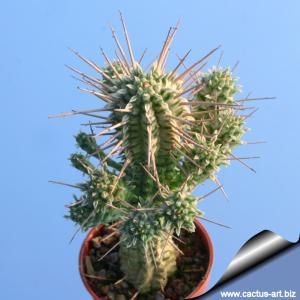
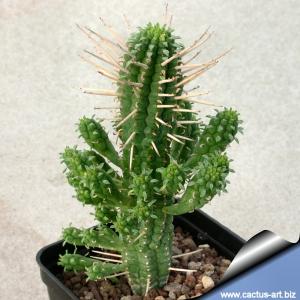
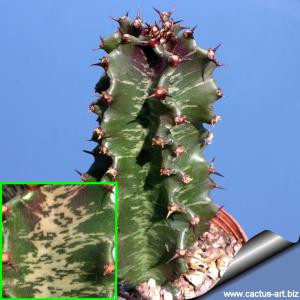
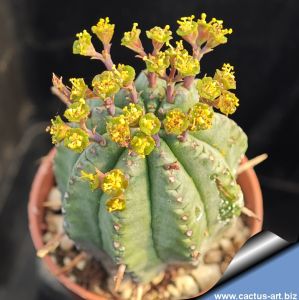
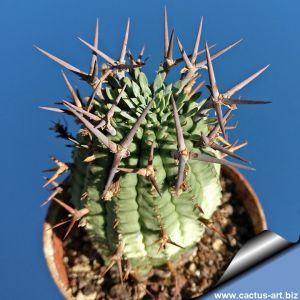
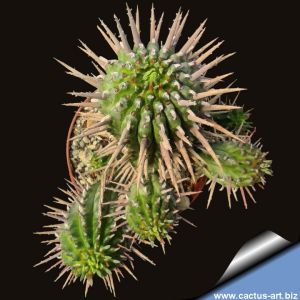
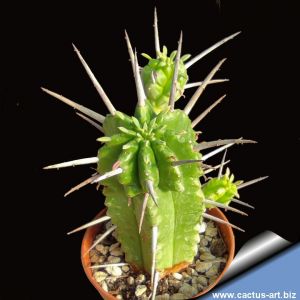
Long spines. Very nice.
-
4
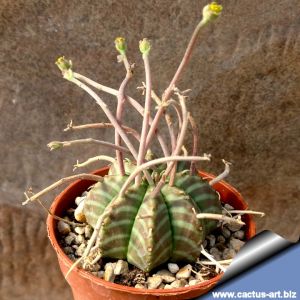
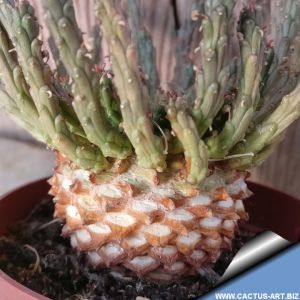
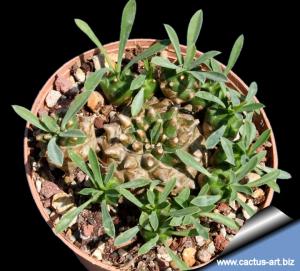
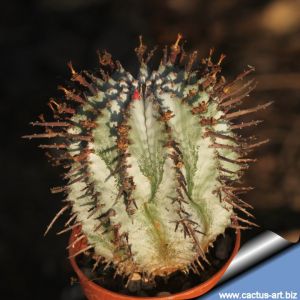
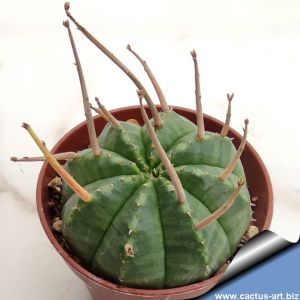
E. cylindrifolia ssp. tuberifera is a caudiciform that forms a rounded tuber that can grow to fist-size or larger. This is a SEEDLING not a CUTTING, plants propagated from cuttings, only form fibrous roots and never form the typical caudex.
-
5
Euphorbia inermis is a medusaeform euphorbia up to about 50 cm in diameter with branches radiating like fingers from a central stem, continued below ground as a large fleshy tuber. A properly grown plant is a joy, especially when it is in flower.
-
6
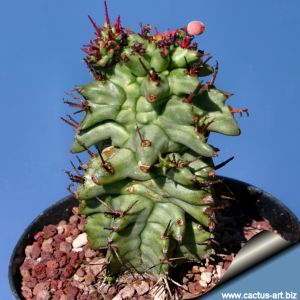
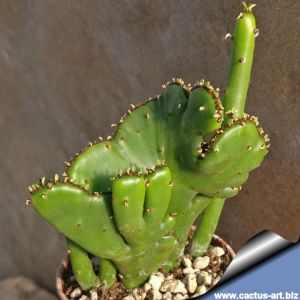
Euphorbia grandicornis f. mostruosa is a small segmented form that grows into mounds of tiny stems or joints. Segmented growth is quite unusual among euphorbias. This form is seldom seen in cultivation.
-
7
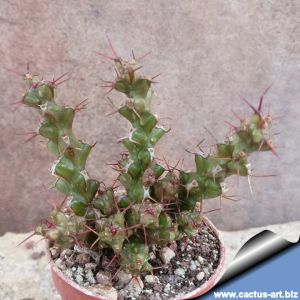
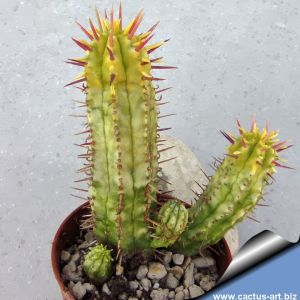
Beautifu plant with lovely red spines. it is very popular and easy to grow. It can form soon a large bunch. It isn't an actual cactus, but it looks a lot like one.
-
8
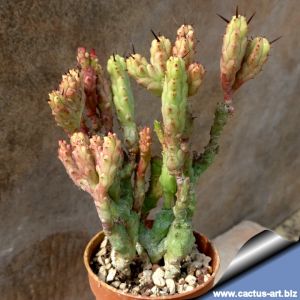
A delightful plant with green stems and red spines resembling a cactus. This plant will reward the grower with innumerable velvety red blooms in summer.
-
9
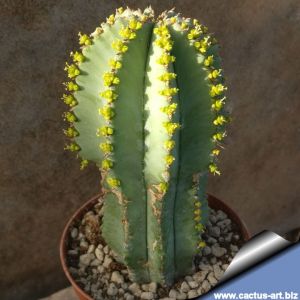
-
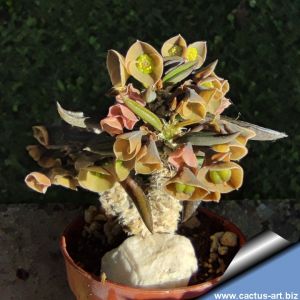
10
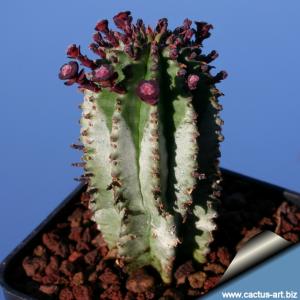
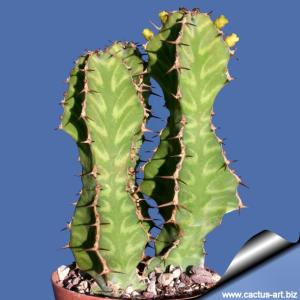
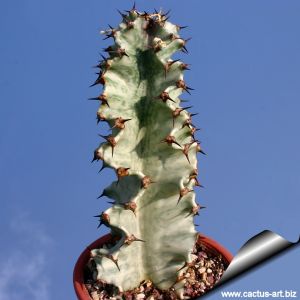
Beautiful variegated succulent with subtle-cream to frosty greenish-white coloured stems splashed with emerald green. In cold temperatures, stems become blushed with delicate rose.
-
11
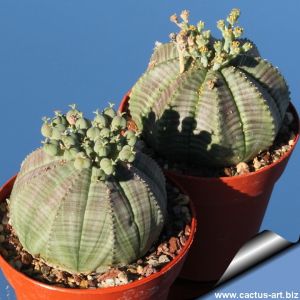
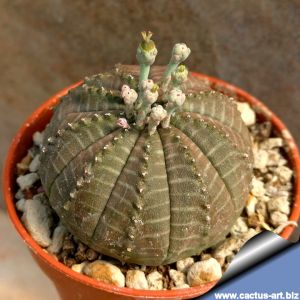
Euphorbia obesa is a peculiar ball shaped succulent plant that
resembles a stone but becomes taller with age.
-
12
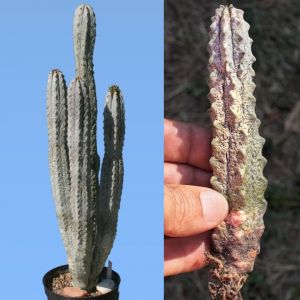
Very nice and distictive grey stemmed form. Deep maroon-purple flowers on the plant apex in late winter - early spring.
-
13
This is a great little plant and one of the most beautiful and most characteristic species of the genus Euphorbia.
-
14
This Euphorbia looks much like a cactus, although the two are not closely related, it is a small rapidly suckering plant that will form dense multi-stemmed cushion-shaped clumps up to 2 m wide.
-
15
Small succulent that forms erect club-shaped stems with squarish or hexagonal tubercles in rows resembling "corn cobs".
-
16
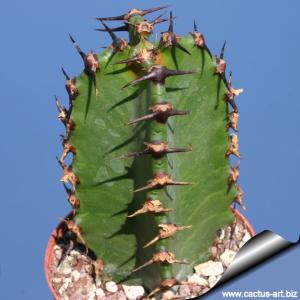
This is a very showy tree-like plant from Yemen and Saudi Arabia which grows arms over time.
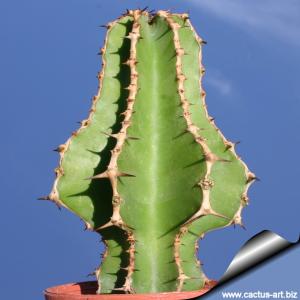
Plant edges are ridged with short, brown, cow-horn spines.
-
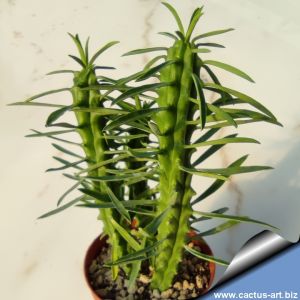
17
Great looking blue stemmed Euphorbia freely branching. It is characterized by periods of rapid growth, designated by the wide sections, and minimal growth which are the narrow sections.
-
18
Nice candelabra-like cultivar. particularly priced for its dark green stems stripped with creamy-white. Strong and easy to grow.
-
19
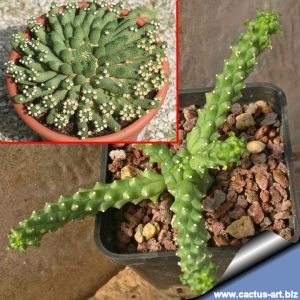
Delightful plants of variable shape and colour resembling cacti. These plants will reward the grower with their ease of cultivation and beauty.
-
20
Euphorbia cooperi is one of the most beautifull of all tree-like euphorbia, characterized by periods of rapid growth, designated by the wide sections, and minimal growth which are the narrow sections.
-
21
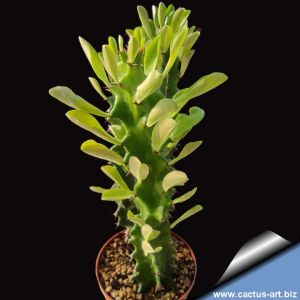
Particularly fine and beautiful cultivar. It produces erected branches and will soon form a large green bush. The large and rounded long lasting leaves confers to this plant a very strong and healthy appearance.
-
22
Where a potted plant with a strong sculptural quality is required this Euphorbia is the right one. In a few year will form a beautiful admired group.
-
23
Euphorbia lactea cristata or Elkhorn is beautiful dark green
crested plant attractively marked with silver-gray zig-zag patterns.
-
24
Probably one of the more popular of all the columnar Euphorbias with very attractive markings. Grows in a candelabra form and branches.
-
25
Of all the dwarf succulent South African Euphorbia this is undoubtedly one the most striking and popular.
-
26
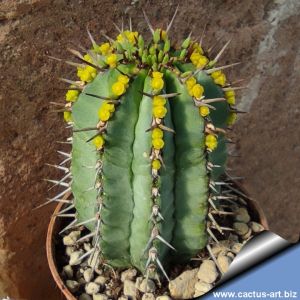
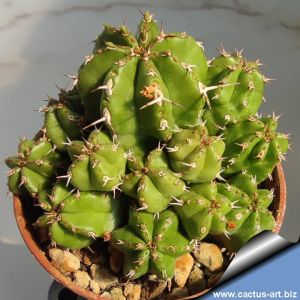
A cactus-like succulent shrub, branching densely from the base into a thorny, ribbed structure. Its stems feature prominent ridges with forked spines. Bright yellow flowers emerge in abundance, primarily near the top of the plant.
-
27
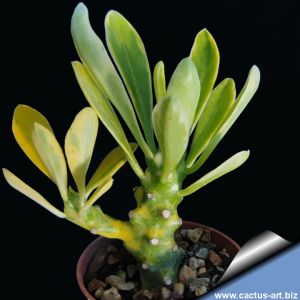
Cream, yellow and pale-green variegated stems and leaves.
-
28
-
29
-
30
-
31
-
32
-
33
-
34
-
35
Euphorbia infausta is a small species that offsets from the base. The stem is spherical to obovoid, succulent, leafless and spineless up to 9 cm in diameter, bright deep green, marked with oblique transverse darker green (or purplish) stripes.
-
36
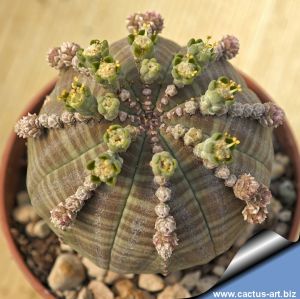
A stunning and prolific hybrid. Towards the end of winter, it is adorned with numerous small green flowers, highlighted by prominent yellow stamens. The plant has a grey-green body and few spines. Extremely decorative during flowering.
-
37
-
38
-
39
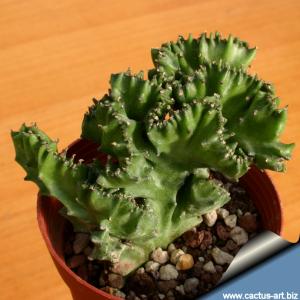
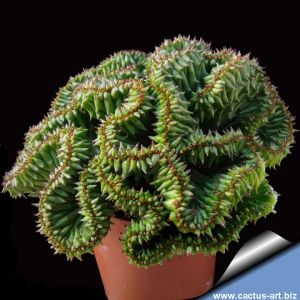
Euphorbia cv. GREEN ELF cristata forms hemispherical mounds with twisted ridges that resemble a green brain, in a few years the plants become really beautiful.
-
40
-
41
This is a rare cultivar distinguished for its roun tubercles along the ribs edges. The furrows which appear transversely on the ribs cuts the continuity of the ribs and the plants appears decorated with a geometrical design raised above the surface.
-
42
-
43
Prized by connoisseurs for its stellar star-shaped spines. Each specimen forms a living geometric sculpture, with spines radiating in perfect symmetry. An absolute must-have for serious collectors of botanical oddities!
-
44
-
45
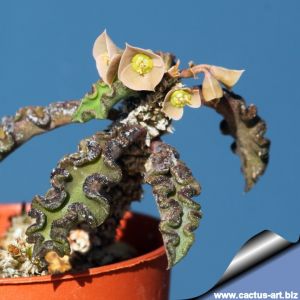
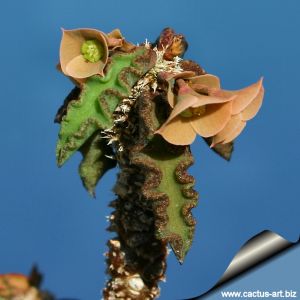
Euphorbia decaryi is a small Euphorbia species with beautiful wavy, zig-zag edged leaves. It is a mat-forming plant and spreads almost horizontally on the ground by means of rhizomes. The var. spirosticha is smaller and slow growing.
-
46
This is a cultivar that forms emispherical mounds composed of countless small heads. Nice and compact.
-
47
-
48
-
49
Small euphorbia forming spiny mounds up to 10 cm tall and 50 cm wide. Slender, erect green stems bear prominent tubercles and stiff, pointed gray-brown spines.
-
50
Small euphorbia with erect stems which, over time, tend to group together at the base. It has tuberculate green veins, from which long lanceolate leaves emerge. Yellow-green flowers on long peduncles. The leaves fall in the winter.
-
51
-
52
-
53
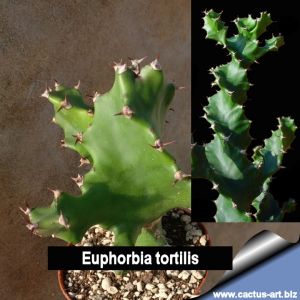
Euphorbia tortilis is a rare tree forming spurge native to Peninsular India and Sri Lanka. It grows in a crazy unique way, spiraling and twisting stem in a one of a kind way. Spines are short, hard and sharp.
-
54
-
55
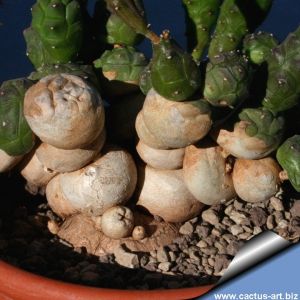
A compact and unusual succulent with a geometric, quirky appearance. From its carrot-shaped root it produces green, globular, spineless segments that branch over time, forming a small clustered group.
-
56
-
57
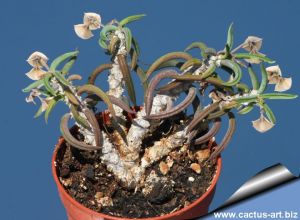
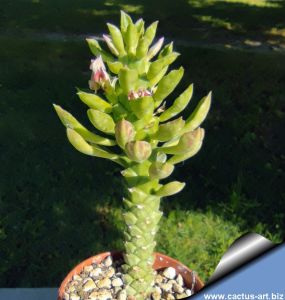
Monadenium stapelioides branches at the base of a large fleshy rootstock and forms a domed cushion to 60 cm in diameter. The stems tend to flop over and hang with this species. The flowers are white or light pink, they are small but showy.
-
58
Euphorbia leucodendron f. cristata is an outstanding, succulent plant with shiny green, fan-shaped , crested branches .
-
59
-
60
-
61
This is a horticultural intergeneric hybrid, made by crossing of an Euphorbia obesa as a female and a Euphorbia valida as a male. These hybrids are variable, due to the intersection of characters deriving from bolth the parents.
-
62
-
63
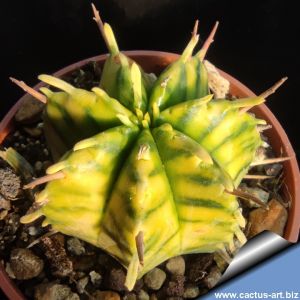
NEW!!! This is a special form of Euphorbia meloformis f. variegata, with bright yellow variegation (instead of cream-white). Some consider it to be a variegated form of Euphorbia valida. A fascinating and rarely available plant.
-
64
Euphorbia tubiglans is a tufted nearly spineless species that branches near the base.
-
65
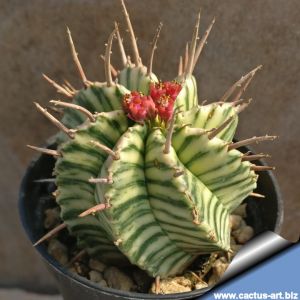
Euphorbia meloformis f. varegata is a rare succulent spurge, known for its stunning variegations that make it truly unique. Transverse green and white streaks enhance its striking appearance. A must-have for any succulent collection!
-
66
-
67
-
68
Beautiful variety with a milky white body. Easy to grow on its own roots, does not require grafting. Rarely offered for sale.
-
69
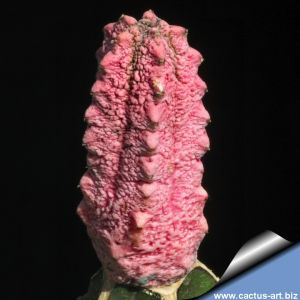
Grafted. An unusual candelabra-like succulent that looks like a pink-reddish candle adorned with pink-grey drips of melted wax. Its coloration shifts in intensity depending on light exposure. ‘Damask’ is among the most highly prized Euphorbia cultivars.
-
70
Dull green solitary stem with numerous conical and protruding tubercles. Its name comes from the Latin 'clandestinus' which means clandestine, hidden, in reference to its tiny yellowhis-green flowers hiden among the tubercles and leaves. RARE.
-
71
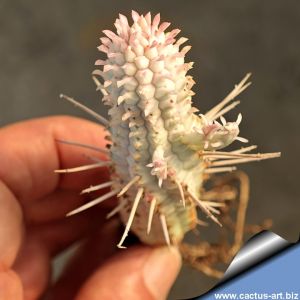
A highly distinctive and rare succulent, Euphorbia abdelkuri resembles a grey candle draped in pale, waxy layers. Its unique candelabra form and ghostly tones make it a true collector’s piece.
-
72
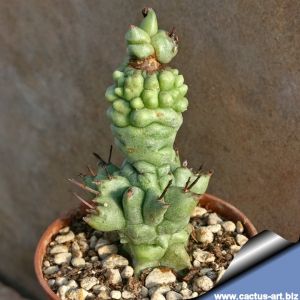
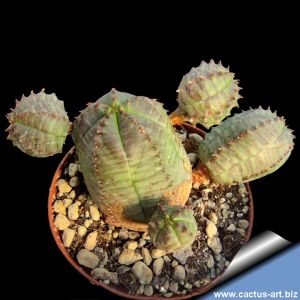
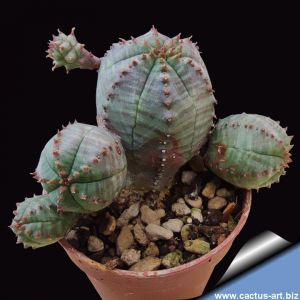
Beautiful Euphorbia obesa cultivar featuring abundant shoots along areoles. Tiny lateral shoots arranged in series on every rib node — EXTREMELY RARE. FEW AVAILABLE.