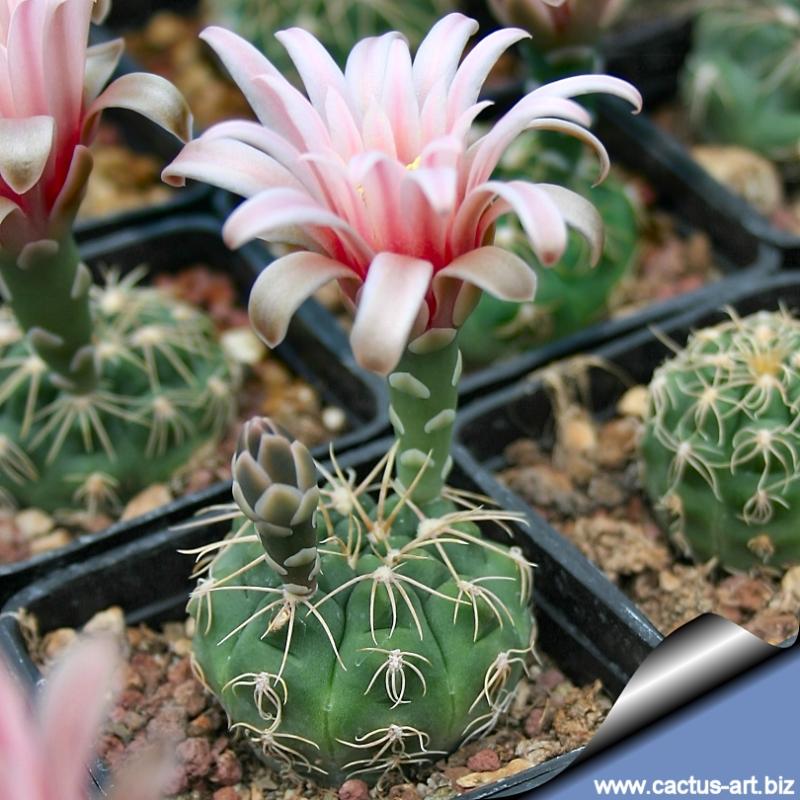
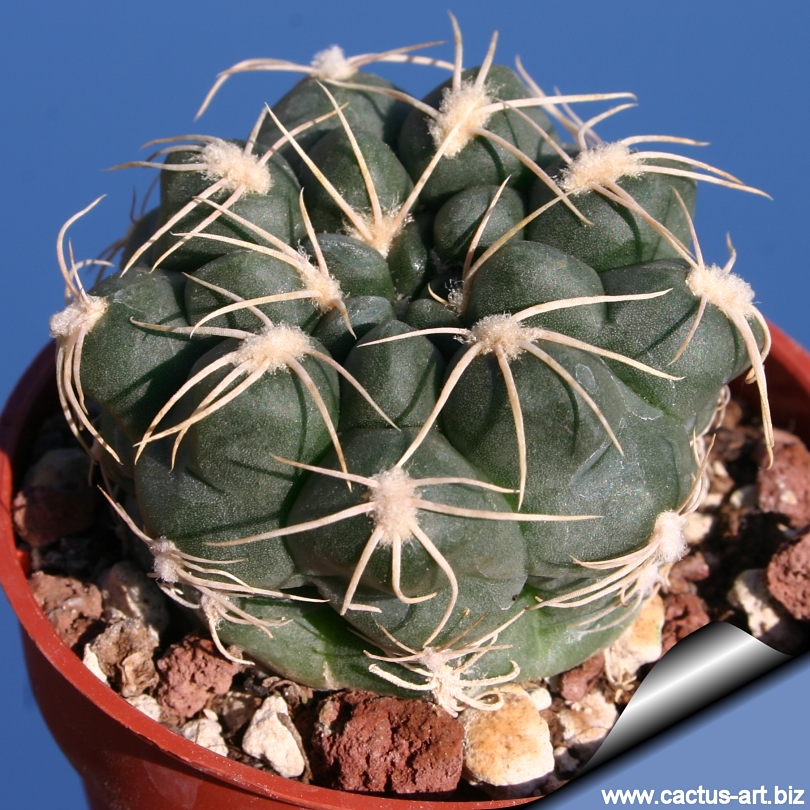
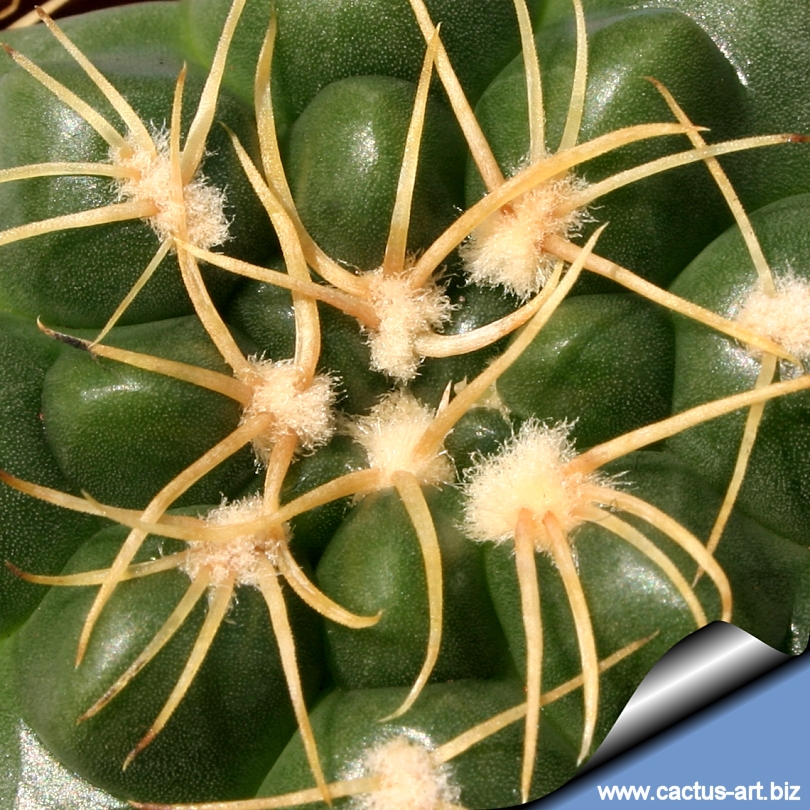
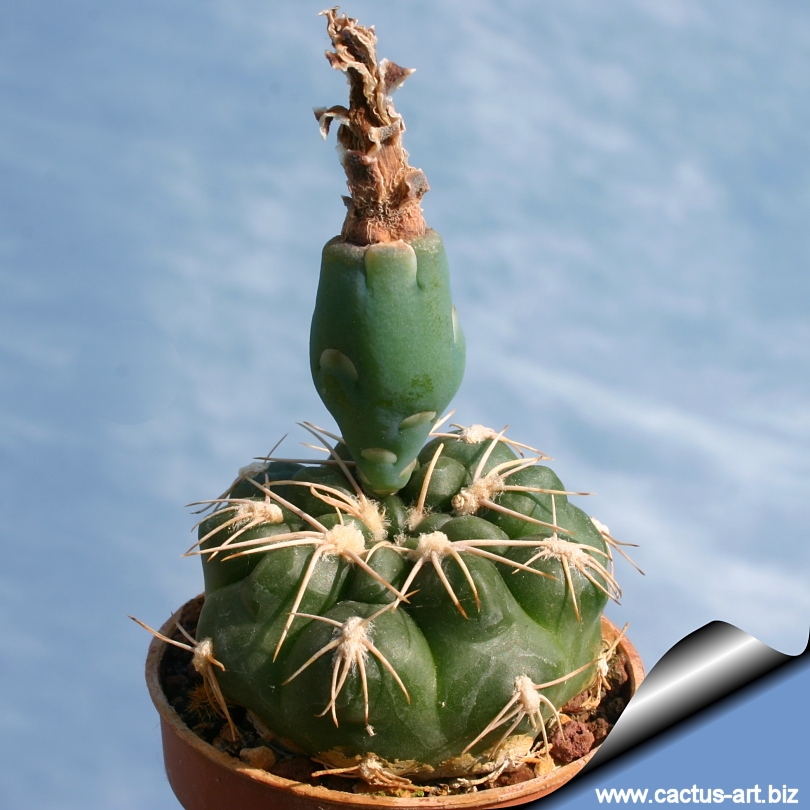
Small plants with a very flattened body, the flower are large pinkish-white and the fruits are blue and very decorative.
Family: Cactaceae (Cactus Family) Scientific name: Gymnocalycium capillaense (Schick) Hosseus
In: Revista del Centro Estudiantero de Farmacia Cordoba 2(6):16,1926
Basionym: Echinocactus capillaensis Schick 1923
Origin: Argentina, north-western part of the province of Cordoba (Sierra Chica, Rio Tercera, Capilla del Monte, Cosquin, San Luis) Grow at an altitude of 900-1000 metres. Conservation status: Listed in CITES appendix 2. - Gymnocalycium capillaense (Schick) Backeberg,
In: Backeberg & Knuth, Kaktus ABC 287 (1935)A - Gymnocalycium capillaense var. sigelianum (Schick) Till
In: Gymnocalycium 16(1): 489-498 (2003) - Gymnocalycium capillaense var. sigelianum form deeszianum (Schick) Till
In: Gymnocalycium 16(1): 489-498 (2003)B - Gymnocalycium capillaense var. mucidum (Oehme) Till
In: Gymnocalycium 16(1): 489-498 (2003) - Gymnocalycium sigelianum (Schick) Hosseus 1926
- Echinocactus sutterianus Schick 1923
- Gymnocalycium sutterianum (Schick) Hosseus 1926
- Gymnocalycium deeszianum
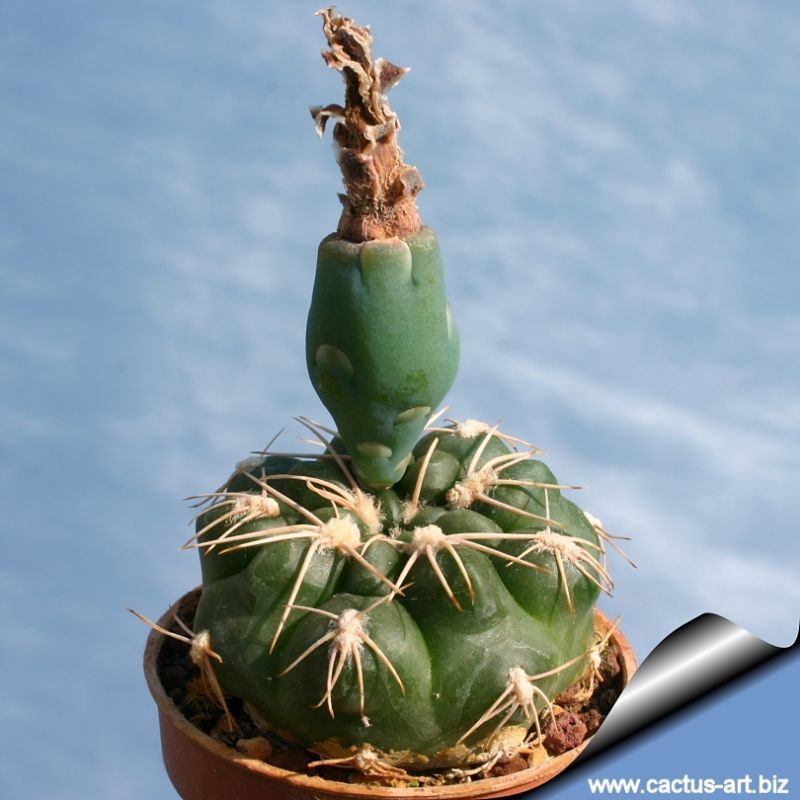
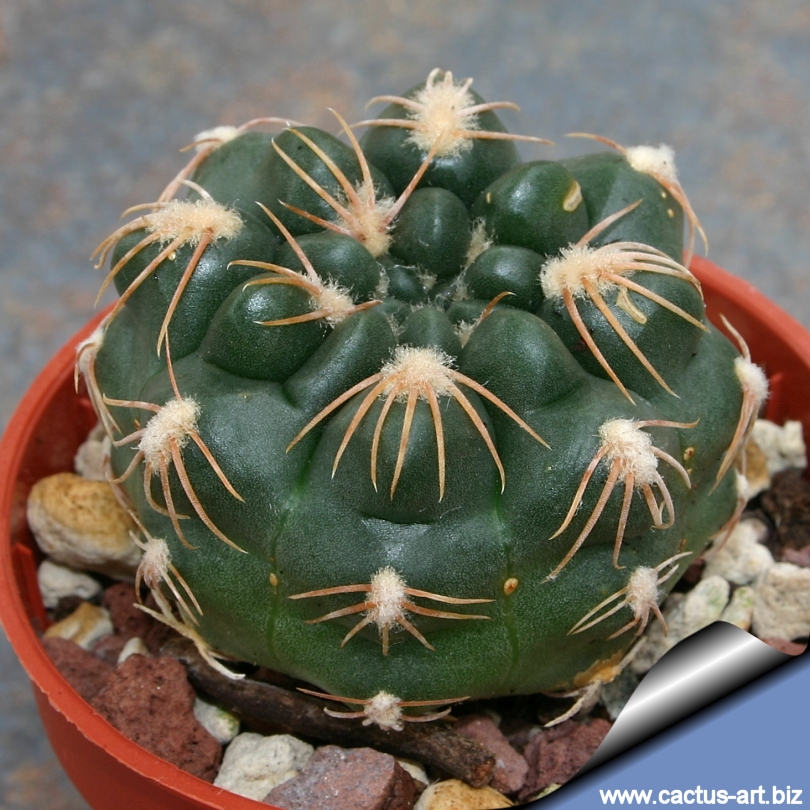 Gymnocalycium capillaense (Capilla del Monte, Cordoba, Argentina) Gymnocalycium capillaense (Capilla del Monte, Cordoba, Argentina)
Flowers are colourful and very stricking.
|
Description: It is a weak spined small species notable for the comparatively large flowers that branches forming numerose offsets. This plant is part of a very confused group comprising G. siegelianum and G. sutterianum.
Stem: Dull blue-green, very flattened to globular, up to 9 cm tall and in diameter.
Root: Large tuberose root apparatus.
Ribs: Up to 13 with low, rounded, chin-like tubercles..
Areoles: Oval with white wool.
Spines: 5 up to 12 mm long yellowish or whitish, weak, long, stinging.
Flower: Large wide delicate pink-white, up to 7 cm tall, 6 cm in diameter.
Fruit: Club-shaped, light blue when ripe.
NOTE: This species is closely related to Gymnocalycium sigelianum (which has paler flowers and some differences in the number and the colour of spines)
|
| Cultivation: It is a summer grower species that offers no cultivation difficulties. Water regularly in summer (but do not overwater ) Keep this plant almost dry in winter at a minimum temperature of 0°C, prefer relatively rich substrate and low pH compost (if possible not limestone) otherwise growth will stop altogether. Feed with a high potassium fertilizer in summer. It is quite frost resistant if kept dry (hardy to -5° C)
Sun Exposure: Light shade. It may tolerate bright situations but is likely to suffer from sun scorch or stunted growth if over exposed to direct sunlight during the hottest part of the day in summer. This plant needs plenty of space for its roots, repotting should be done every other year or when the it has outgrown its pot. This species is particularly easy and accommodating, seldom suffer of cryptogamic diseases.
Propagation: Direct sow after last frost. (seldom produces offsets) Seed Collecting: Permit fruit to ripen. Fruit must be significantly overripe before harvesting seed; clean and dry seeds |