-
1
-
2
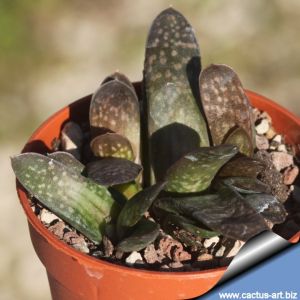
Dwarf distichous plant with dark glossy-green leaves bearing prominent, pale spots in transverse rows. Leaf tips are obtuse (hence the species name) and mucronate.
-
3
-
4
-
5
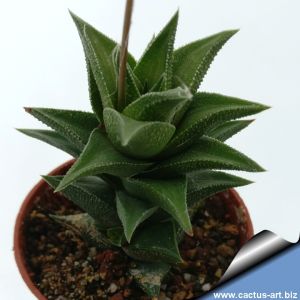
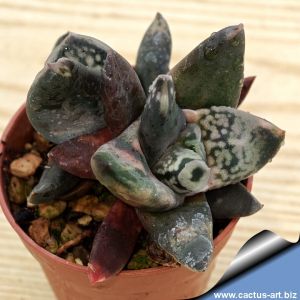
Seed-grown hybrids from a cross between H. maughanii and H. truncata. Every plant is distinct—no two are identical, ensuring truly unique and unreproducible specimens.
-
6
-
7
-
8
-
9
Leaves curve slightly at the tip, smooth and heavily streaked with white dots. A highly eye-catching species with strong visual impact. Very beautiful.
-
10
-
11
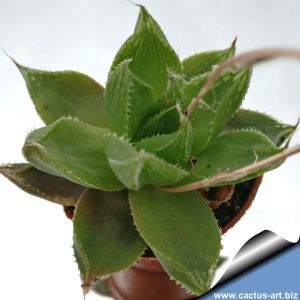
The glossy green leaves take on a beautiful red color in winter. Very nice and showy hybrid.
-
12
Compact, stemless rosettes with a strong tendency to clump. “Brevifolia” refers to the species’ notably short leaves. The inflorescence is an unbranched stalk ending in a dense raceme of tubular red-orange flowers. Blooms in November.
-
13
Aloe reitzii is a robust and spectacular aloe species, it is easily distinguished by the handsome erect red flower spikes that are produced in summer (unlike most aloes that produce their flowers in winter.)
-
14
Living Jewel - H. parksiana is the smallest, darkest (near-black), and rarest. Its slowly clustering, mathematically recurved leaves create perfect shadowy rosettes - a Lilliputian masterpiece for the discerning succulent enthusiast.
-
15
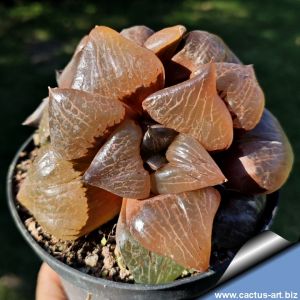
A giant among Haworthias, forming exceptional rosettes up to 20 cma cross. Its massive, glossy leaves undergo chromatic alchemy through bronze patinas, deep brown tones, and ethereal amber to sea-green translucencies that seem to trap sunlight within.
-
16
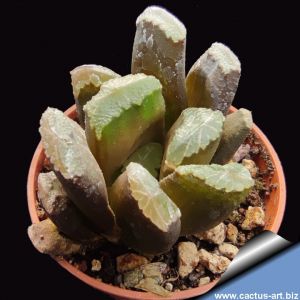
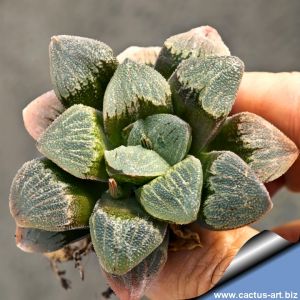
A “pygmaea-retusa-truncata” hybrid with triangular leaves and windowed tips marked by translucent veins. The raised minute tubercles give the surface an icy, glass-matte appearance, making this cultivar particularly decorative and highly desirable.
-
17
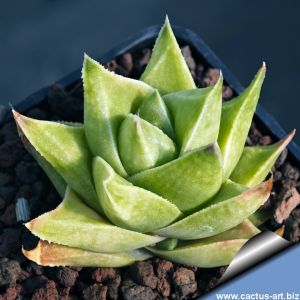
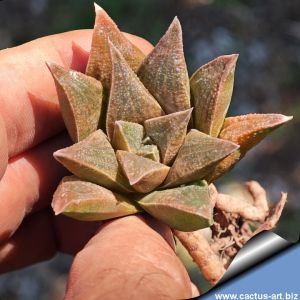
A no-fuss hybrid with firm, triangular, light green leaves and finely serrated edges. Slow-growing and exceptionally low-maintenance, it’s perfect for beginners. Thrives in pots and adapts easily to various
indoor conditions.
-
18
-
19
Haworthia limifolia ''spiralis'' forms a small compact rosette, characterized by triangular leaves that grow in a spiral, hence the name 'spiralis'. The dark green leaves, in winter, due to low temperatures, can take on a bronzed color.
-
20
-
21
-
22
-
23
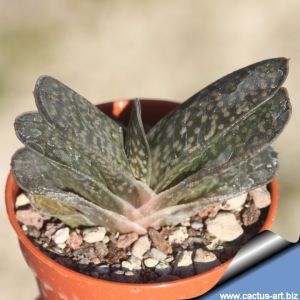
Sharply pointed succulent leaves arranged in three tiers or spiraling columns, scabrous and sticky (“viscosa” means “sticky”), densely packed along the stems. The plant offsets from its base and can eventually form large clumps.
-
24
-
25
-
26
-
27
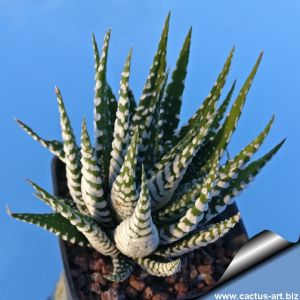
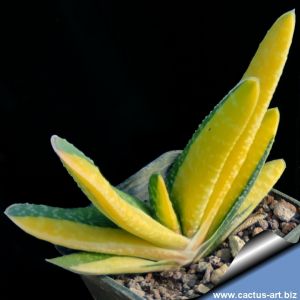
Variegated Wonder - This standout hybrid features elongated leaves with a mesmerizing trio of deep green with white freckles, and logitudinal lime stripes. Both breathtakingly beautiful and forgiving—a rare combination that dazzles beginners and expert.
-
28
A strange slow-growing succulent with fleshy, lanceolate-tongue-shaped leaves that shift shape and color as they mature, deep green to near-black, with light speckles and purple-red or brown hues in sunlight. Forms tight rosettes and grows slowly.
-
29
‘Hayashii’ captivates with velvety-smooth leaves in shades of midnight green to bittersweet chocolate, glazed with an almost metallic luster. Its rosettes, as if shaped by a master craftsman, distill the essence of Japanese minimalism—depth of hue in perf
-
30
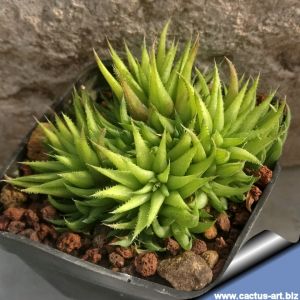
Miniature pale-green rosettes with soft, upturned leaves. Tiny white teeth edge each tapered leaf. Prolific branching creates dense botanical "pillows" over time.
-
31
-
32
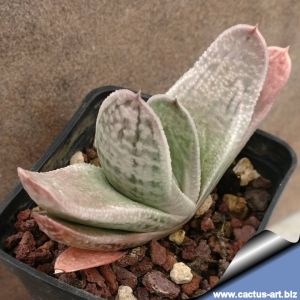
Tongue-shaped leaves in pale grey to dark grey-green, adorned with small cartilaginous tubercles in grey-white bands, creating a textured, silvery appearance. Turns pink under strong light. Slow-growing.
-
33
-
34
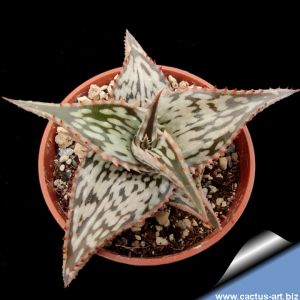
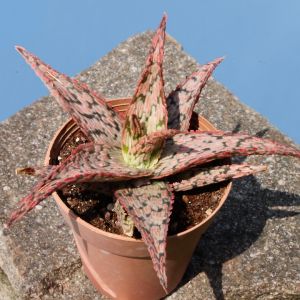
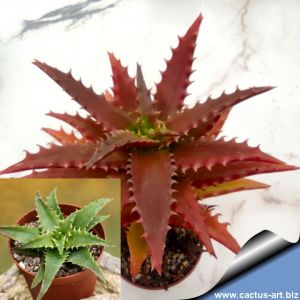
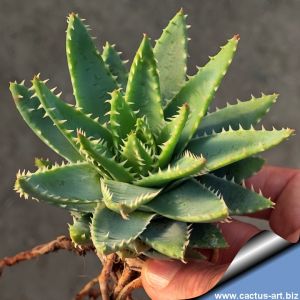
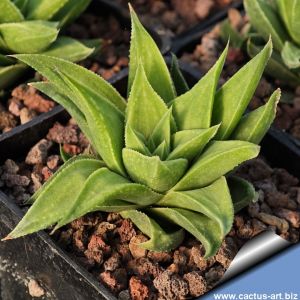
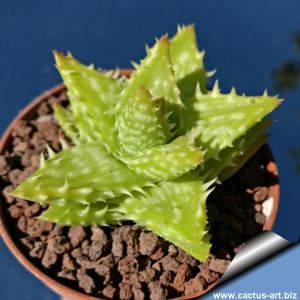
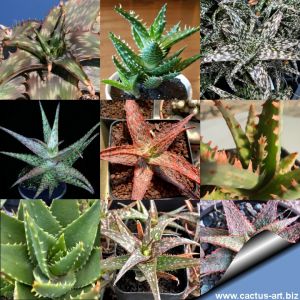
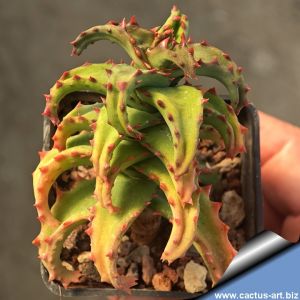
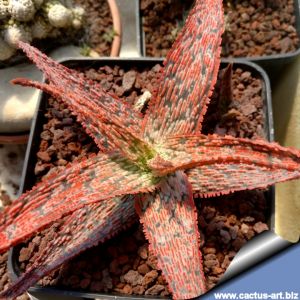
Aloe hybrid from seed. Each different.
-
35
-
36
-
37
-
38
-
39
-
40
-
41
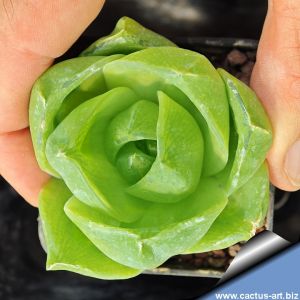
Large fresh green leaves in a rose-shaped bud.
-
42
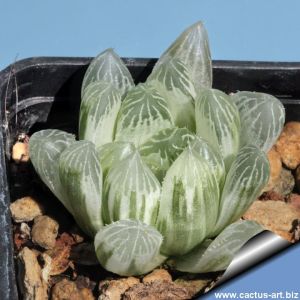
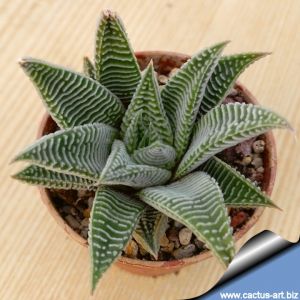
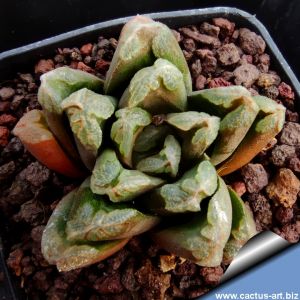
This is one of the best and cute haworthia cultivars. The leaves are banded with raised horizontal strips. The rosette is perfect, compact and elegant.
-
43
-
44
Tight rosettes of
emerald-green translucent leaves, etched with delicate cream veining. The
namesake "pilifera" refers to the hair-like filament (Lat. "pilus")
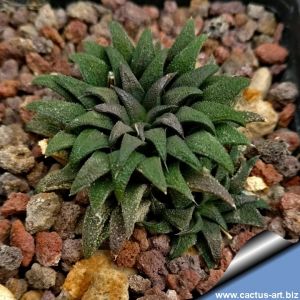
crowning each leaf tip. A gem-like miniature!
-
45
-
46
-
47
-
48
-
49
-
50
-
51
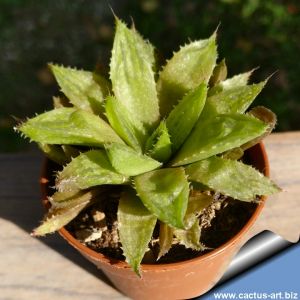
A captivating variety that develops a unique 5-pointed star-shaped rosette, ranging from olive-green to deep hazelnut under direct sunlight. Eventually, it forms a dense, compact cluster. Gorgeous.
-
52
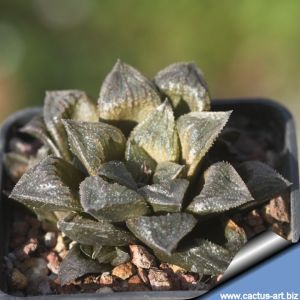
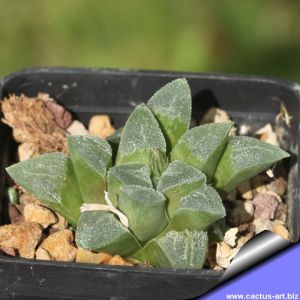
Stunning hybrid blending H. koelmaniorum's distinctive form with H. asperula's textured foliage.
While maintaining compact growth, it develops more vigorously than the extremely slow-growing koelmaniorum, offering the best traits of both species.
-
53
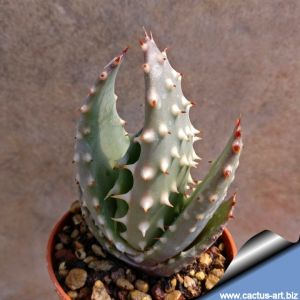
The plant features fleshy, curved, grey-blue leaves bearing white, brown-tipped teeth along the edges and lower surface. Juvenile growth is fan-like, maturing into a tight rosette over time.
-
54
-
55
-
56
Petite Malagasy aloe clinging to limestone cliffs. Arching leathery leaves boast red marginal spines. Even young plants produce short inflorescences of orange-yellow tipped flowers - a rugged jewel of recent discovery with surprising ornamental vigor.
-
57
-
58
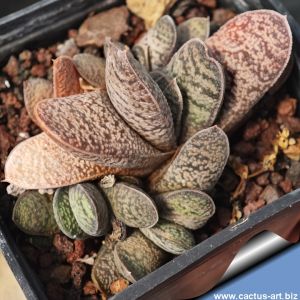
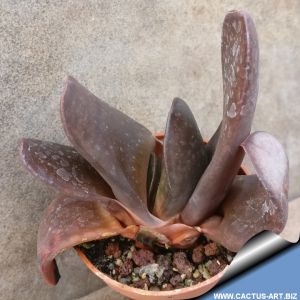
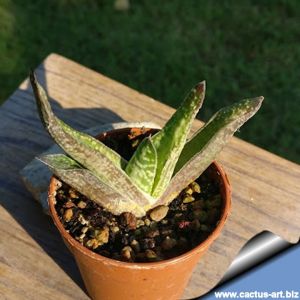
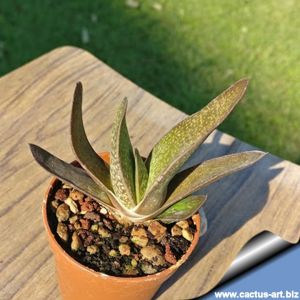
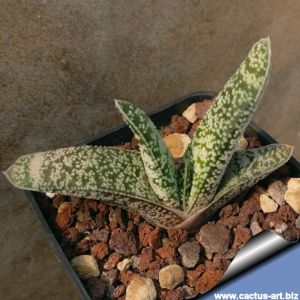
Compact Gasteria with thick, tongue-shaped leaves arranged in a fan pattern. Features longitudinal gray-green stripes and silver mottling that turn pink under bright light. Leaves have a slightly rough texture with rounded tips.
-
59
-
60
-
61
-
62
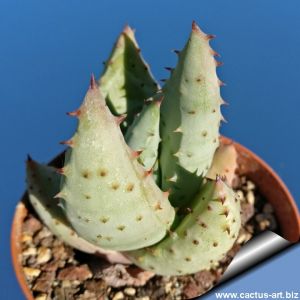
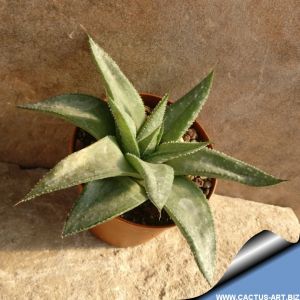
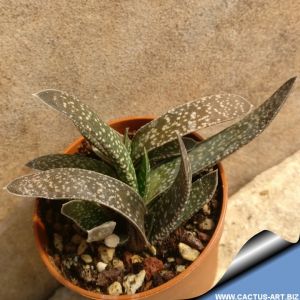
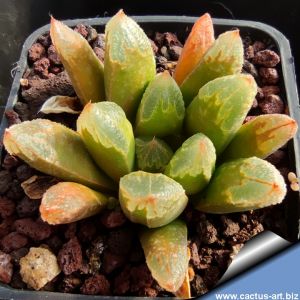
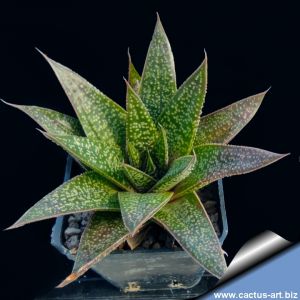
Gasteraloe derbetzei is an intergeneric hybrid involving Aloe striata and Gasteria acinacifolia. Its succulent leaves are smooth, spotted with an original pale green-yellow tint.
-
63
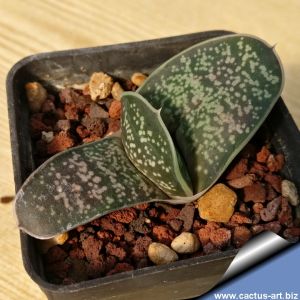
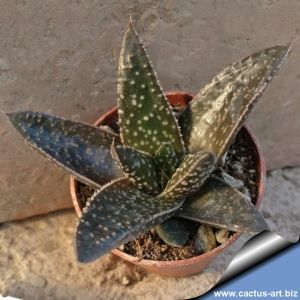
It is a rosette-shaped succulent plant, resulting from the cross between an Aloe and a Gasteria. It has thick leaves with white dots that contrast with the bright green color.
-
64
Very beautiful hybrids.
-
65
-
66
-
67
-
68
-
69
-
70
-
71
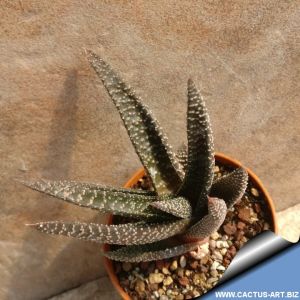
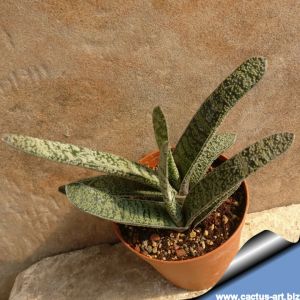
Gasteria pulchra is an upright, highly decorative species, solitary or offsetting, with narrow, finger-like marbled leaves tapering to a sharper point. The Humansclora form shows dense white raised warts and eventually forms a tight clump.
-
72