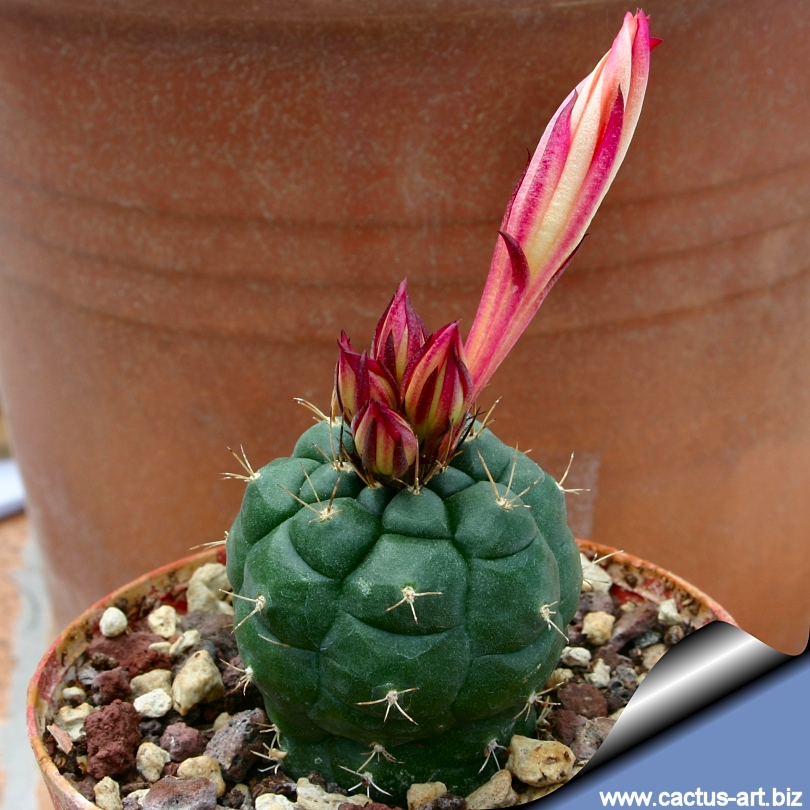
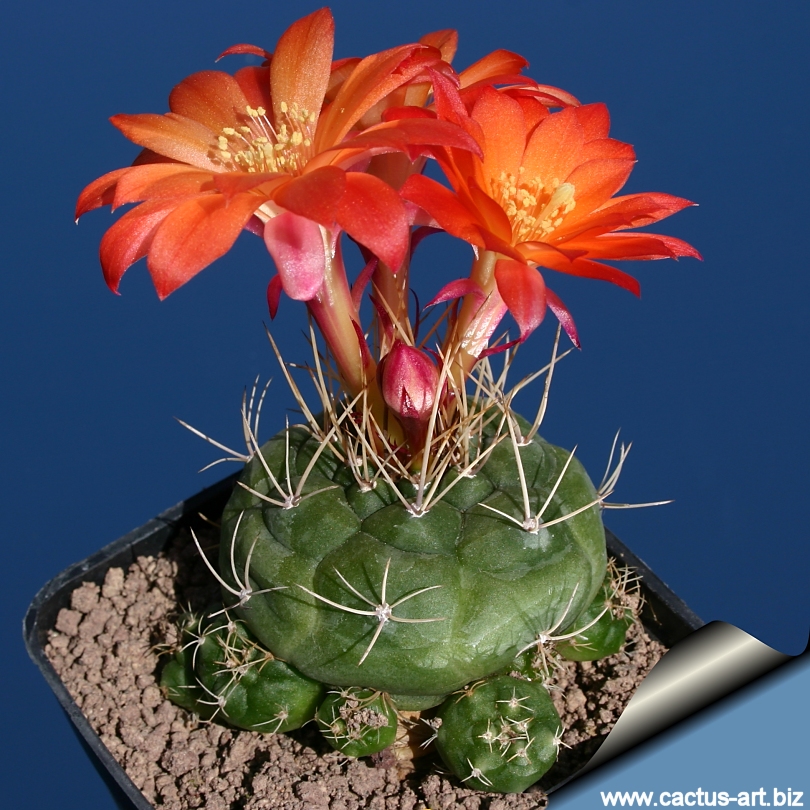
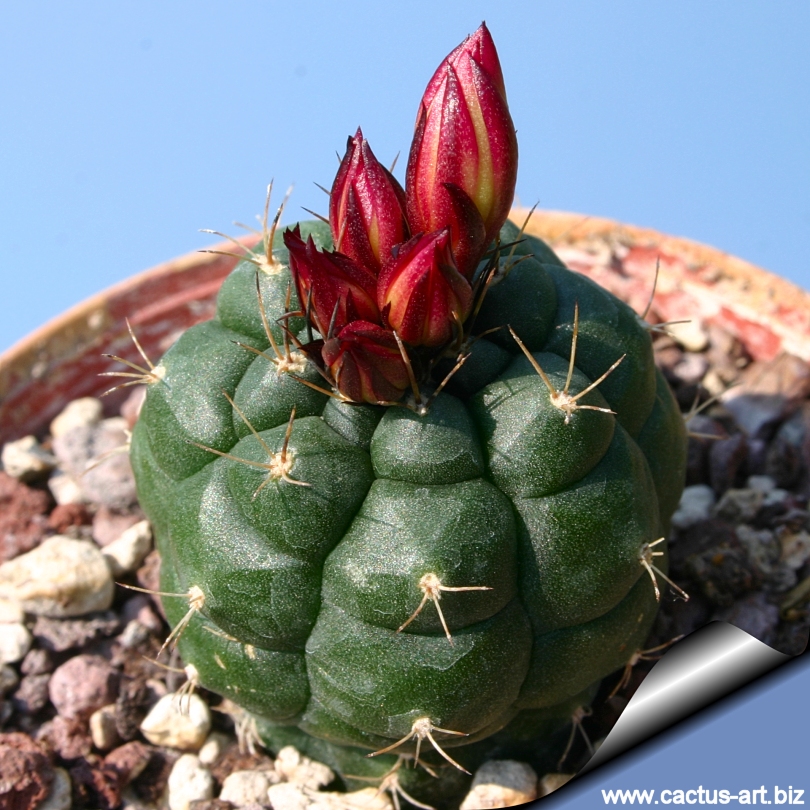
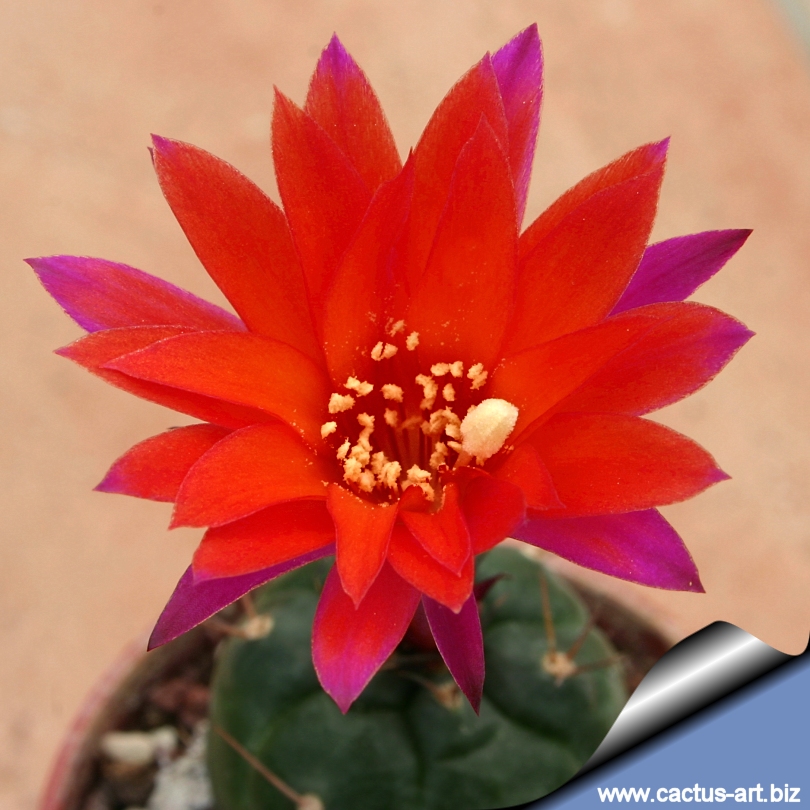
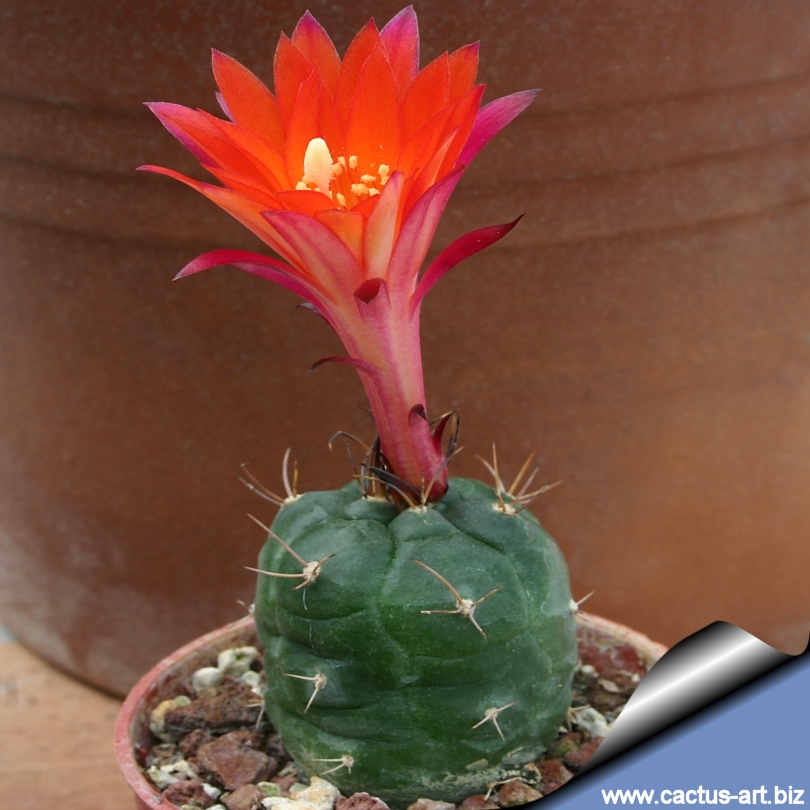
Very strange and unusual tap-rooted plant vaguely remembering of Lophophora. The long, slender orange-red flowers are funnel shaped and very showy.
Family: Cactaceae (Cactus Family) Scientific name: Matucana oreodoxa (Ritter) Slaba
Kaktusy (Brno) 22:128. 1986
Origin: Peru (Valley of the Rio Puchca, Ancash, at an elevation of about 1800-3000 m). Type: Ancash, mountains north of Pushea, Ritter 1311 Conservation status: Listed in CITES appendix 2. Synonyms: - Borzicactus oreodoxus (Ritt.) Donald 1971
- Eomatucana oreodoxa Ritter
In: Kakteen Sukk. 16:230. 1965 - Submatucana oreodoxa
- Neomatucana oreodoxa
- Matucana eriodisca n.n
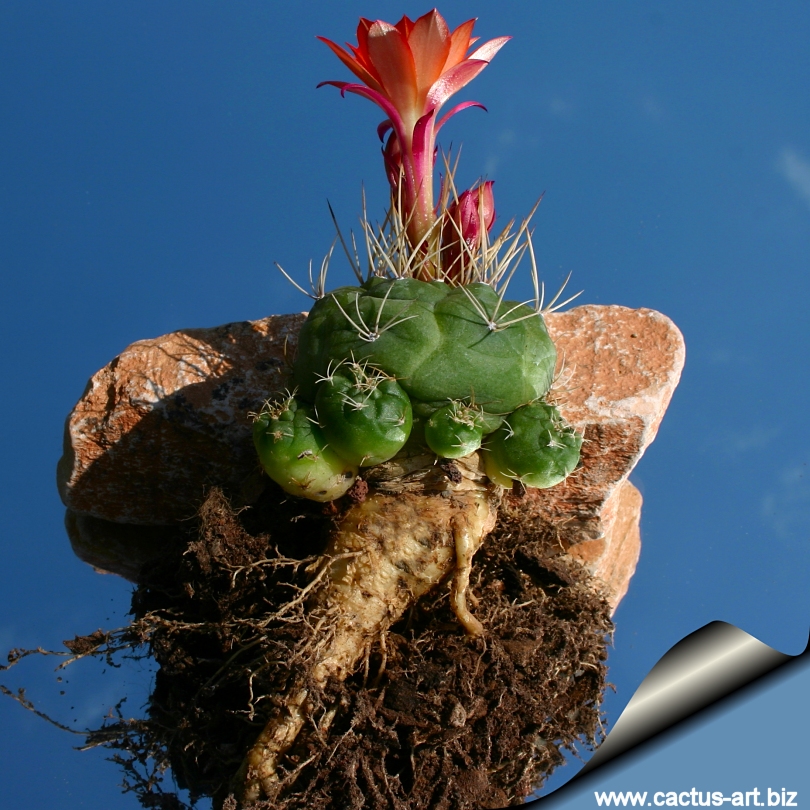 Matucana oreodoxa Matucana oreodoxa
Tap-rooted with orange flowers.
|
| Description: Small species with usually solitary, or slowly branching from the base. For its particular shape it vaguely remembers of Lophophora.
Stem: Flattened globose to short columnar, grass green, dull grey-green to dark green, 8-15 cm tall, up to 8 cm in diameter.
Ribs: 7-12, Broad, flattened. Forming round tubercles, with transverse grooves.
Root: Large taproot.
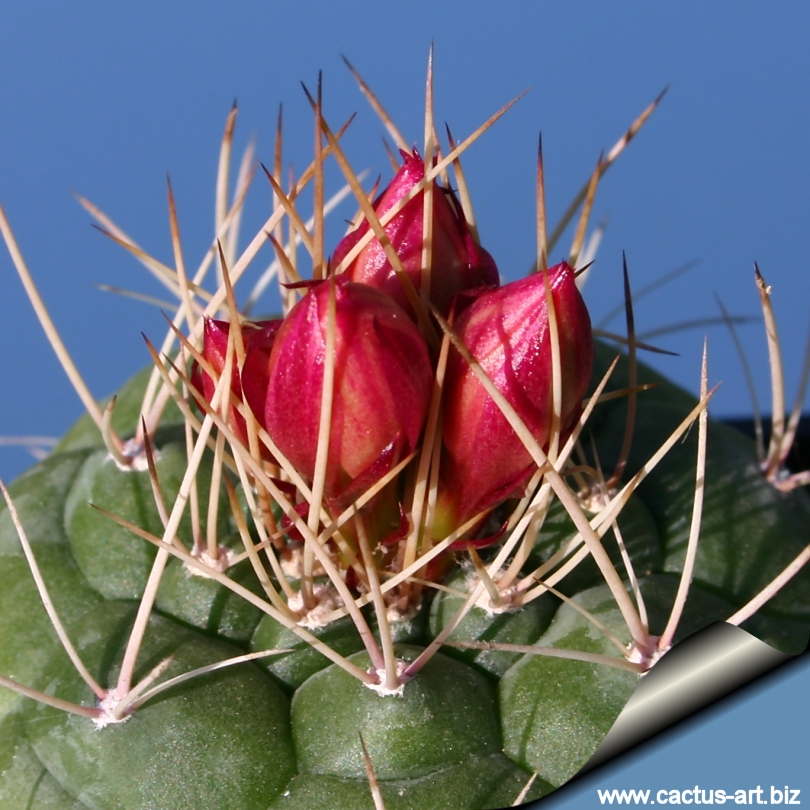
Radial spines: 4--10, 10-30 mm long, cream coloured, brownish to blackish, becoming grey, flexible, straight or somewhat curved. They are fragile and detach easily, so the older basal parts of the stem are often naked.
Central spines: None or sometime 1 or 2, 15-40 mm long.
Flowers: Slender, infundibuliform, radially symmetrical, bright orange-red, 8-10 cm long and 3-5.5 cm in diameter.
Fruit: Oval, pale green, about 8 mm in diameter. |
Cultivation: Matucana oreodoxa grow slowly in their natural habitats, but in greenhouses or grafted they grow quickly, with tissues that are less firm. They benefit from a good light but not severe sunlight.
Grow in rich, porous soil and let their soil dry out between waterings. They need good drainage.
Repot in the spring when their roots become cramped. Generally, they should be repotted every other year, in order to provide fresh soil. However, this doesn't necessarily mean they'll need larger containers. After repotting, do not water for a week or more.
Propagation: Seeds.
|