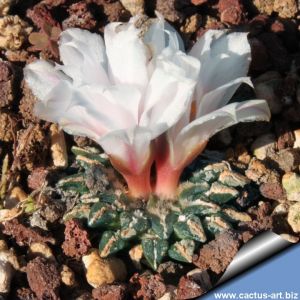
A small and highly attractive variety with disk-like bodies and flattened triangular tubercles barely rising above the soil. The main body is a large underground caudex. Flowers are white or very pale pink.
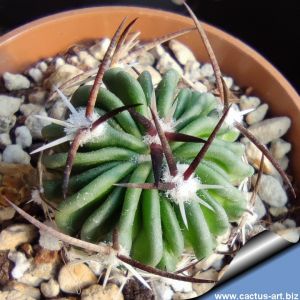
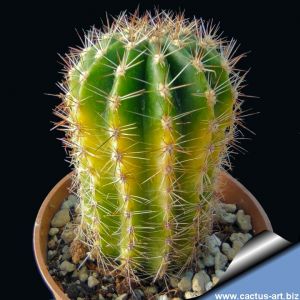
Cactus with globular stems that elongate with age. The name “pentacanthus” comes from its five spines per areole: three major upper spines, two conical and ascending, one flattened yellow to brown, and two minor lower spines.
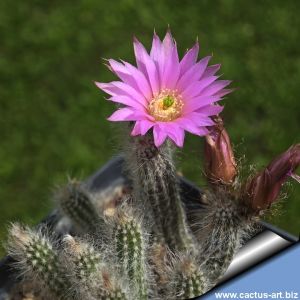
Small, branched cactus with tuberous roots and slender stems up to 25 cm long and 1 cm in diameter. The spines are hairlike, ranging from cream to whitish-grey, reddish at the tips, giving the stems a woolly look. Synonim: Wilcoxia schmollii.
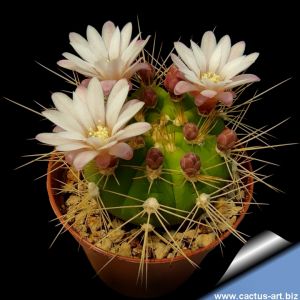
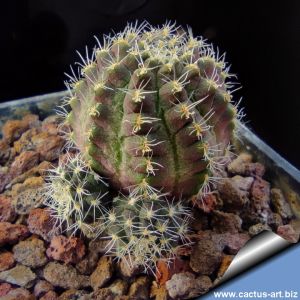
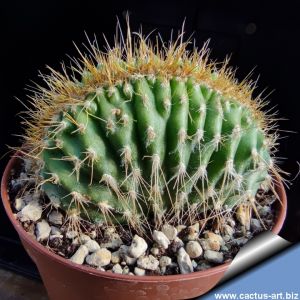
Gymnocalycium chacoense is a highly interesting species, distinct from others in the genus, with straight, golden, bristly spines giving it a unique look. Flowers are white or pinkish. Forms large clusters as it matures.
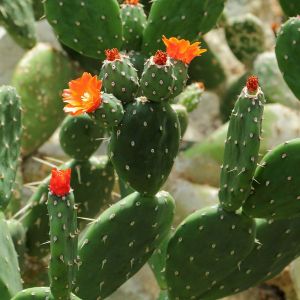
Opuntia Quitensis is a bushy species formed by small bright green segments. The orange to bright red flowers create a wonderful contrast to the green of the segments, giving this plant a truly exotic look overall.
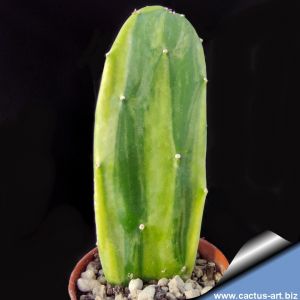
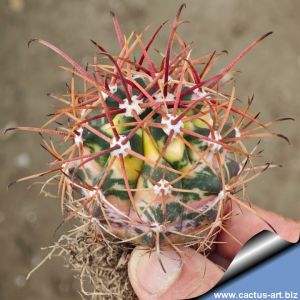
Ferocactus acanthodes featuring red spines and yellow, white, or pink variegation on the body. Each plant is distinct, with unique patterns and colors. Rare and captivating specimens.
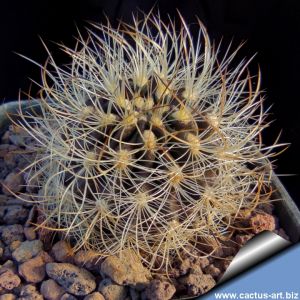
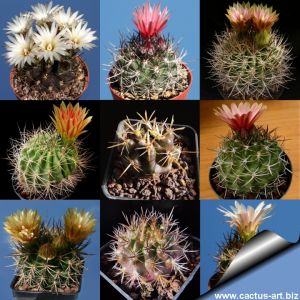
Mix of Eriosyce from the Horridocactus group, assorted with various species and seed-grown hybrids. Each plant is one-of-a-kind, featuring unique shapes, spination, and flower colors.