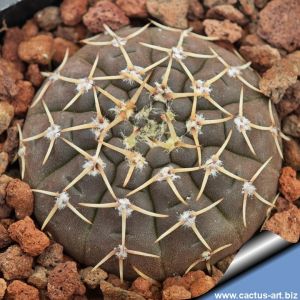
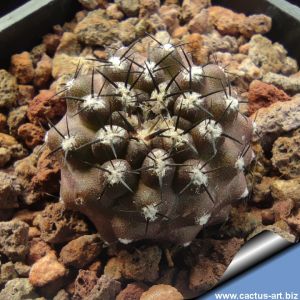
Disc-shaped to hemispherical stem, often flattened. Brownish-grey to brown-green epidermis, with pearl-white fragrant flowers and 3 short claw-like spines. A uniquely elegant cactus.
It grows in the same area of Lobivia ferox, Lobivia huascha, Tephrocactus alexanderi, Tephrocactus articulatus, Echinopsis leucantha and Gymnocalycium schickendantzii.
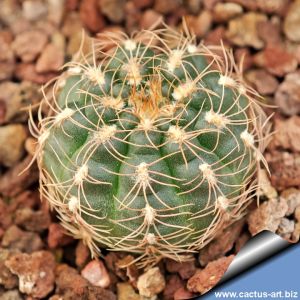
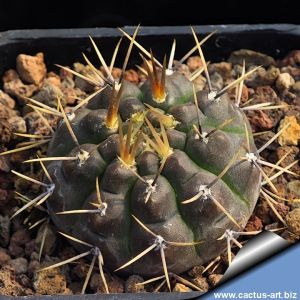
Slow-growing flattened-globose body with slight apical depression, featuring prominent ribs. Coloration ranges from deep olive-green to matte grey-green. Straight radial spines, cream-white with darker bases. Silky white funnel-shaped flowers.
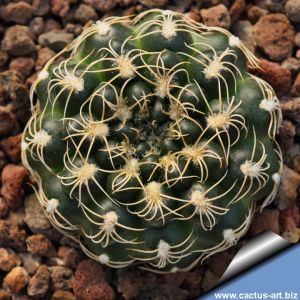
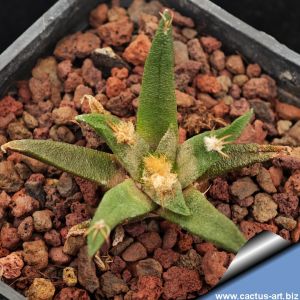
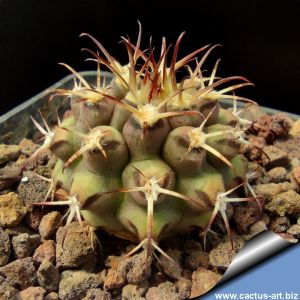
Variety with greener, elongated tubercles and a firm lizard-skin-like texture. Short yellow spines emerge from large woolly areoles. Green in shade, it turns purple in full sun.
Very particular species distinguishable from all the others. At the base of each tubercle there is a mahogany-colored spot in the shape of a V or U. Very beautiful.
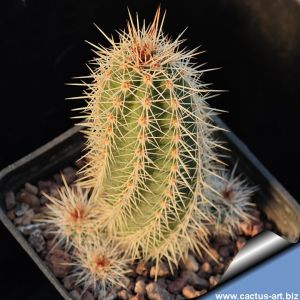
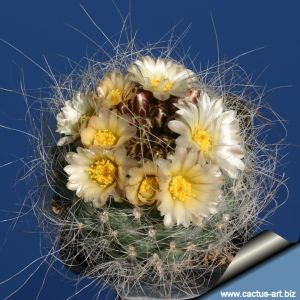
Pediocactus paradinei (syn: Pilocanthus paradinei) is a pretty, small, globose plant that in time forms bristly white spines. Winter hardy/Winterhart. Flowers cream to pink. NOT GRAFTED.