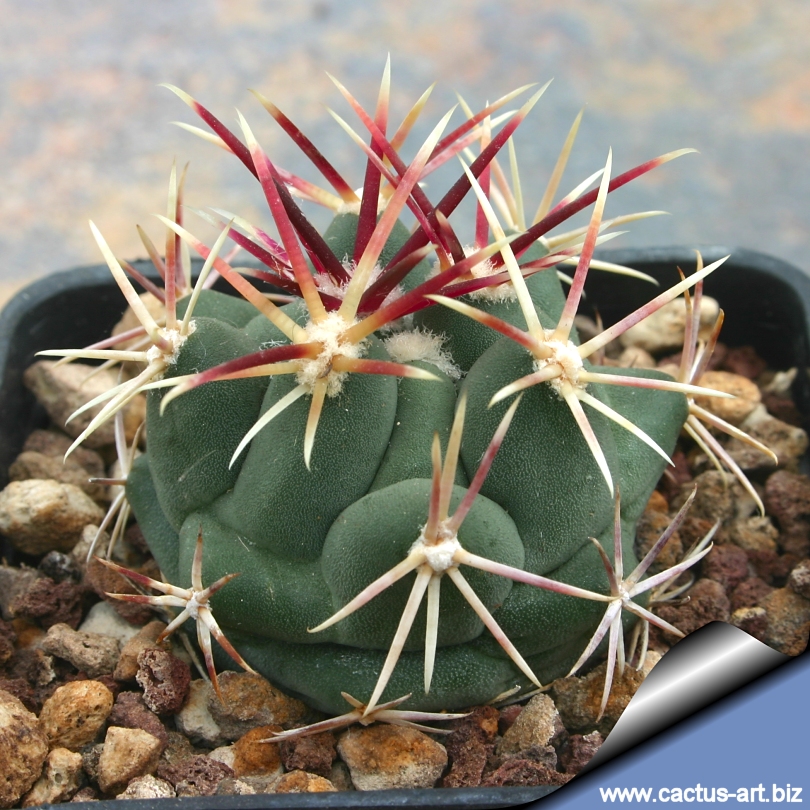
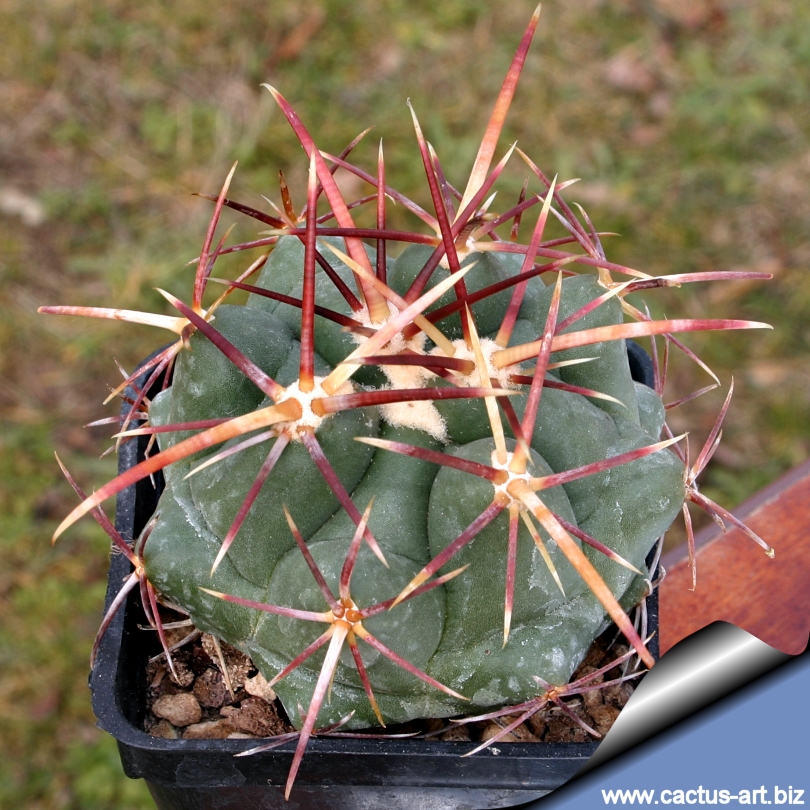
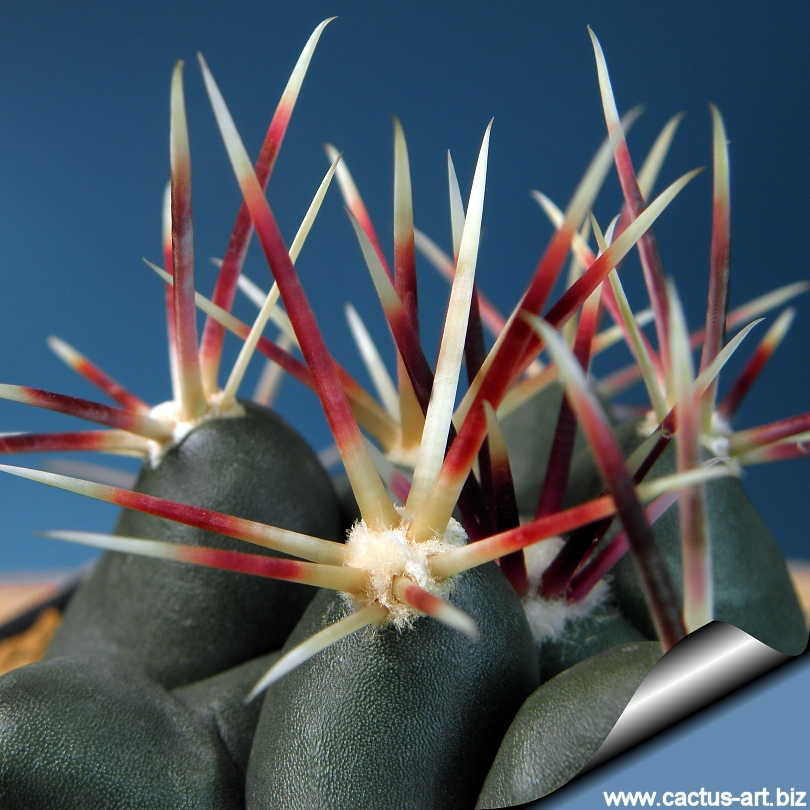
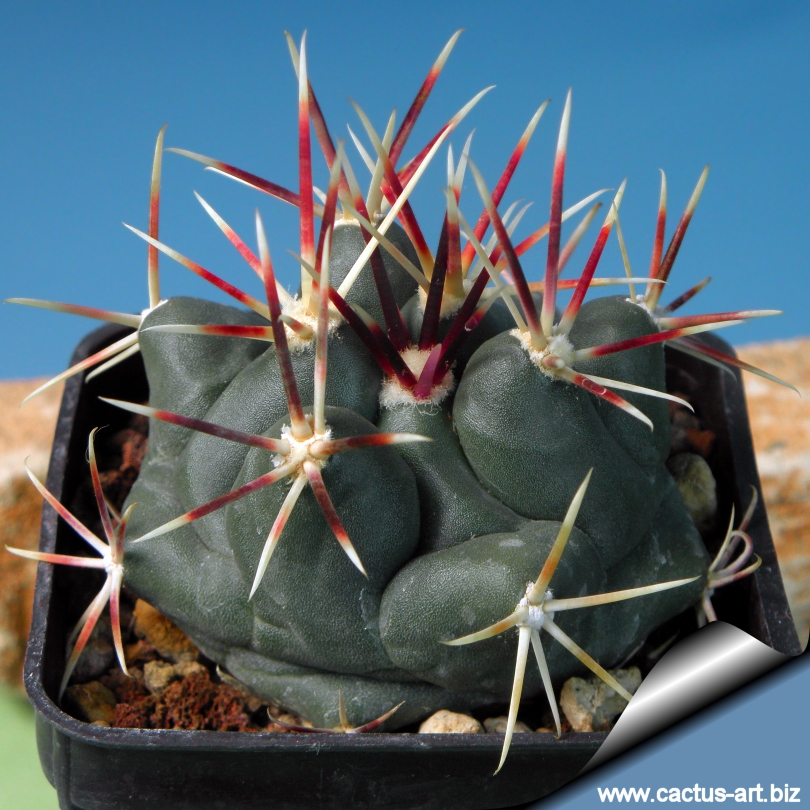
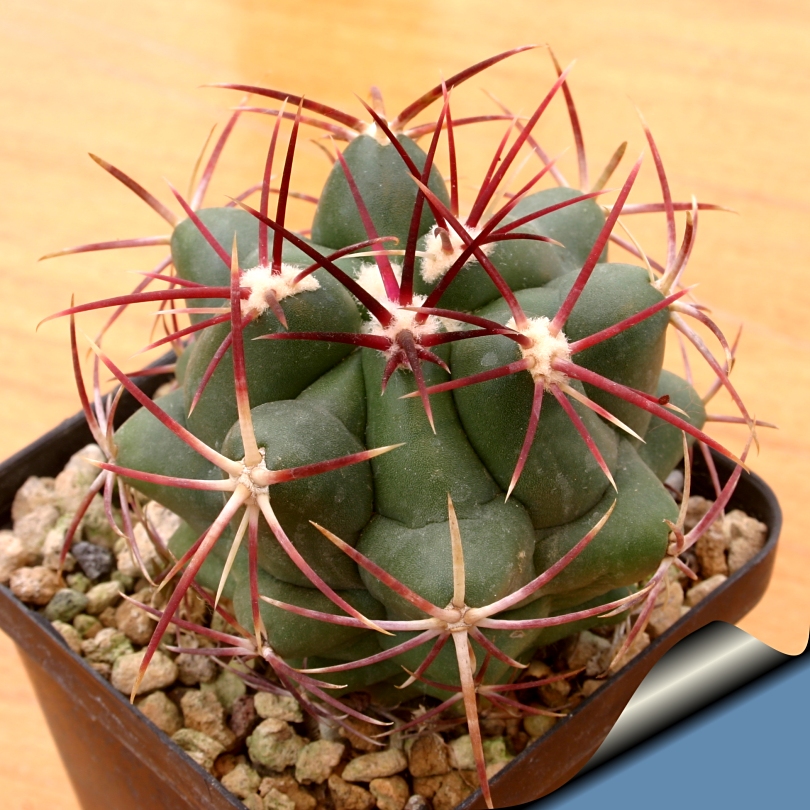
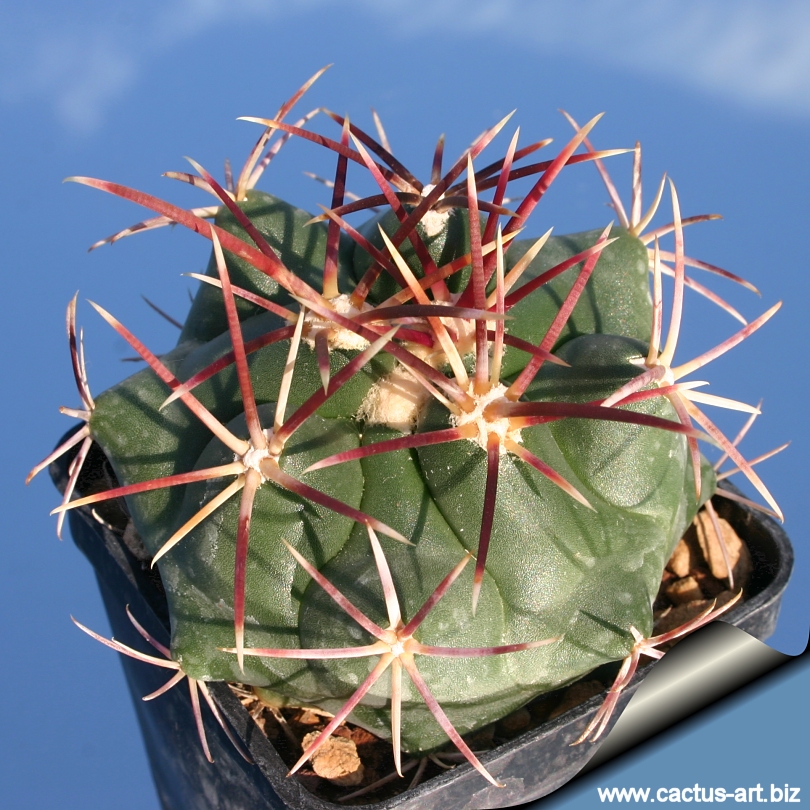
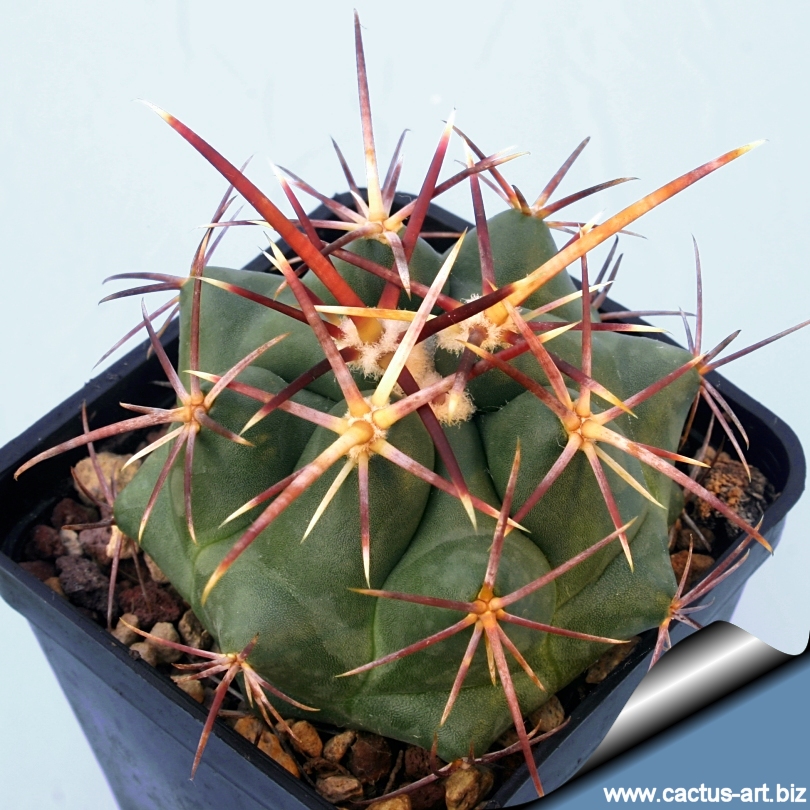
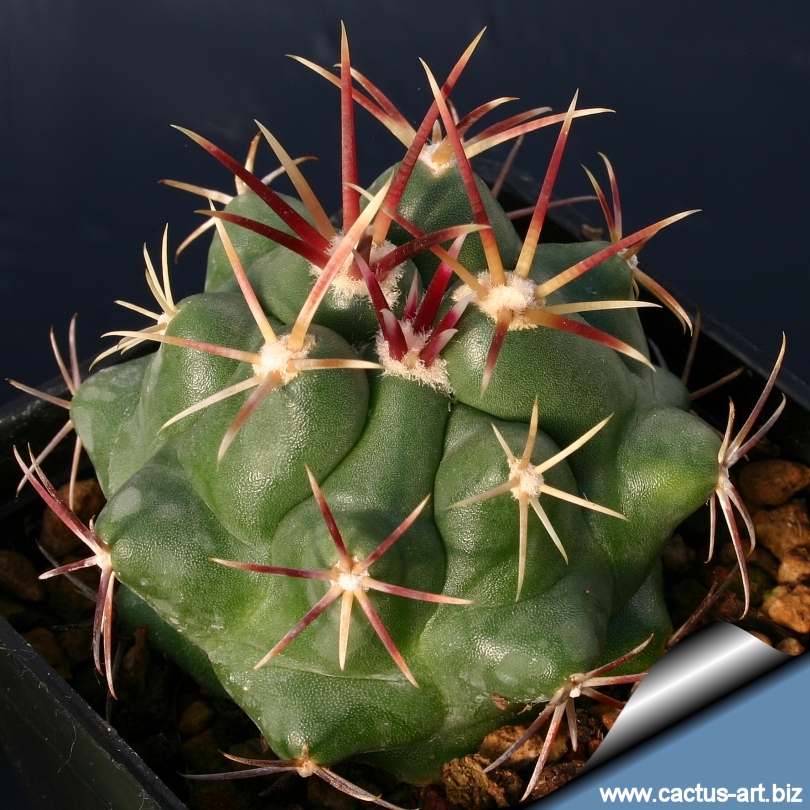
This is one of most beautiful Thelocactus heavily armed with amber to red spines. But, unfortunately, this plant is supplied only, rarely, sometimes by the name T. pottsii. Big magenta flowers with a reddish throat in spring. Family: Cactaceae (Cactus Family) Scientific name: Thelocactus bicolor ssp. heterochromus (Weber) Mosco & Zanovello
Published in: Bradleya 18: 62 (2000). Basionym: Echinocactus heterochromus F.A.C. Weber,
Dict. Hort. Bois. 466 (1896).
Lectotype: 3.5 km al Oeste de la Soledad, Durango, R.D. Worthington 10902 (TEX).
Conservation status: Listed in CITES appendix 2 Origin: Northeastern Mexico (Durango, Coahuila)
Habitat: Grows in matorral xerofilo on limestone hills. Synonyms: - Thelocactus heterochromus (Web.) Van Oosten
Kakteenkunde 58 (1940). - Echinocactus heterochromus F. A. C. Weber
In: " French garden lexicon " 1896 - Thelocactus heterochromus (F. A. C. Weber) van Oosten 1940
- Ferocactus heterochromus (F. A. C. Weber) N. P. Taylor
Cact. Succ. J. Gr. Brit. 41: 90 (1979). - Echinocactus bicolor var. pottsii Salm-Dyck,
Cact. Hort. Dyck. 173 (1850).
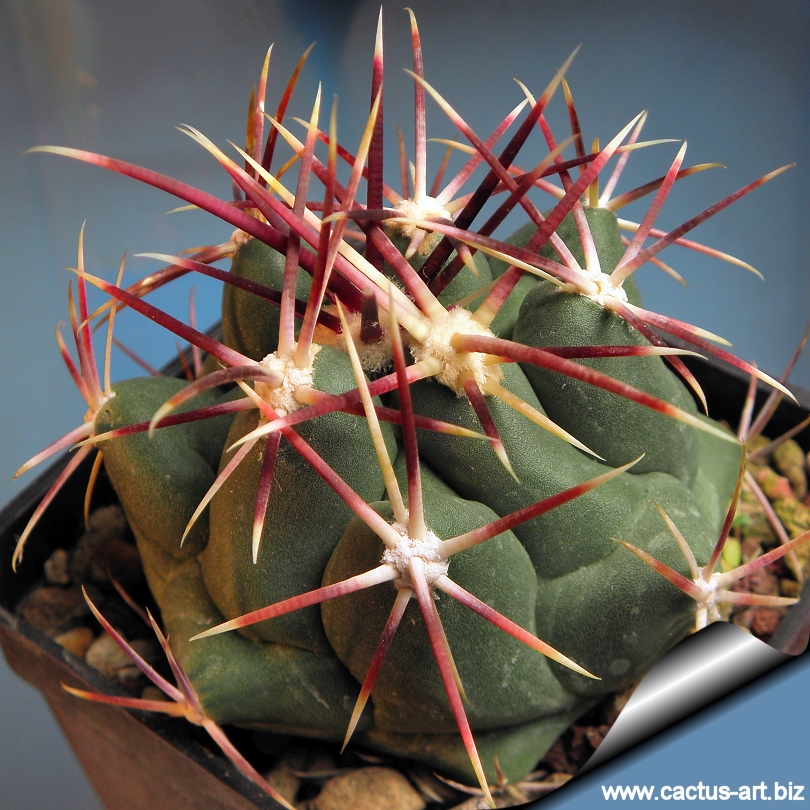 Thelocactus bicolor ssp. heterochromus is heavily armed with amber to reddish spines and produces magenta flowers with a reddish throat in spring. Thelocactus bicolor ssp. heterochromus is heavily armed with amber to reddish spines and produces magenta flowers with a reddish throat in spring.
|
| Description: Usually solitary. Like many cactus forms of dry, hot region of Mexico, plants are strongly variable; therefore a precise description is impossible.
Stem: Depressed to globose, 4-7 cm tall, 6-15 cm wide.
Ribs: 8, distinct.
Tubercles: rounded.
Areoles: Without glands.
Central spines: 1-4, 20-50 mm long, ochre to reddish, straight, subulate.
Radial spines: 6-10, 16-40 mm long, ochre to reddish, straight, acicular to subulate.
Flowers: 45-80(-100) mm wide, Deep pink- magenta with a red throat , base orange,
Blooming season: Flowers appear exclusively from June through August.
NOTE: This is the westernmost taxon in the genus. Usually, it has a depressed to globose stem with wider ribs. Spines are stouter, subulate, banded in red. The var. pottsii applies to those entities from Chihuahua that are intermediate between "heterochromus" and "bicolor", but definitely belong to heterochromus for their lack of areolar glands. |
| Cultivation: It is a summer grower species of low maintenance. Water regularly from Spring to Autumn, but do not overwater, can become too elongated if compost is too rich. Requires full sun or light shade and careful watering to keep plant compact with strong coloured spines. Needs good drainage and very porous potting mix, In Winter, keep dry.
Reproduction: From seed, since the plant rarely produces plantlets. This is one of most beautiful Thelocactus. But, unfortunately, this plant is supplied only, rarely, sometimes by the name Thelocactus pottsii. |