-
1
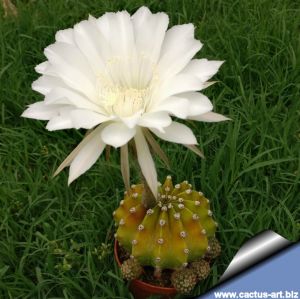
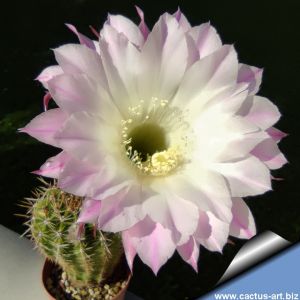
A clustering plant forming dense groups around the main body. The stem is globose, dark green, with well-defined ribs and short dark spines. White trumpet-shaped flowers exceed 20 cm and appear repeatedly from spring through summer.
-
2
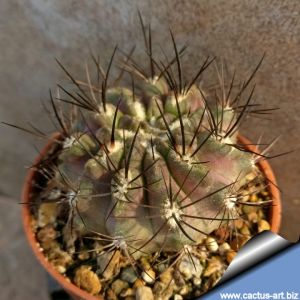
A spiny geophytic cactus with stems scarcely above soil level. Globose or semi-globose, dull dark green, frequently purple in strong sun. Fibrous roots develop from a short conical taproot.
-
3
-
4
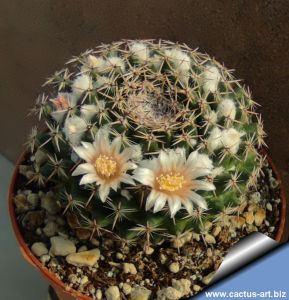
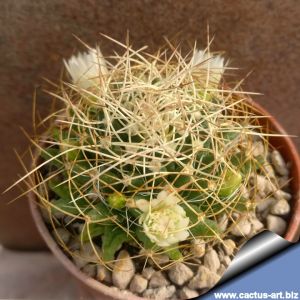
Mammillaria woodsii, white stem with small tubercles, each adorned with white radial spines and brown-black centrals, set in thick wool. Flowers form a reddish-purple crown in spring and summer. Beautiful!
-
5
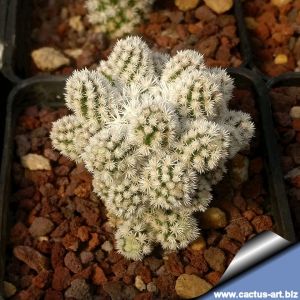
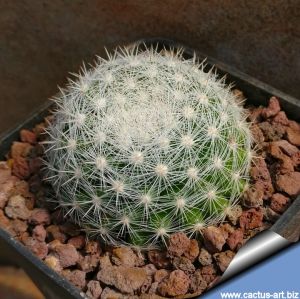
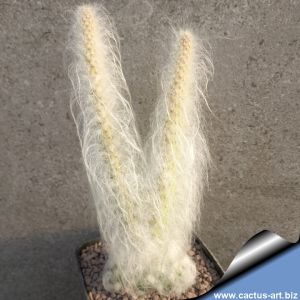
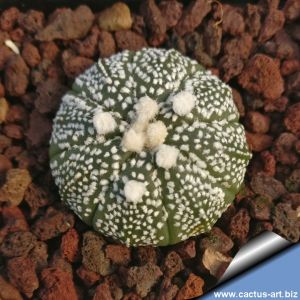
A miniature version of 'ARIZONA SNOWCAP', this dwarf form retains the iconic snowy-white elegant spines, yet stays especially small and tightly clustered.
-
6
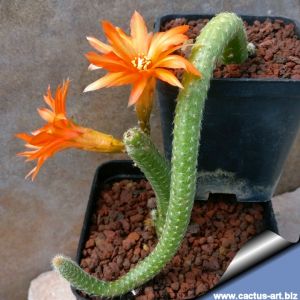
A newly introduced trailing cactus similar to Chamaecereus silvestrii, yet featuring markedly thinner and longer stems. Ideal for hanging baskets. Showy orange blooms. Available in limited numbers!
-
7
Mammillaria camptotricha (Dolichothele camptotricha) - Flat clusters of small stems with elongated tubercles and slender, twisted spines that envelop the body (hence "Bird’s Nest Cactus").
-
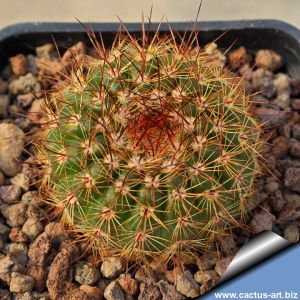
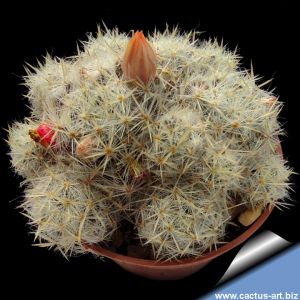
8
-
9
Solitary stem boasting a stunning grey-blue-green hue with purple hints, topped with white wool. Its flowers are subtly hued in green, cream, or pink.
-
10
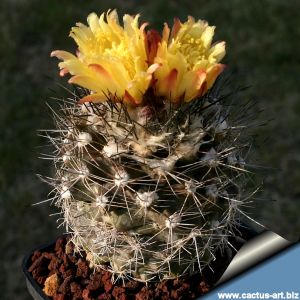
-
11
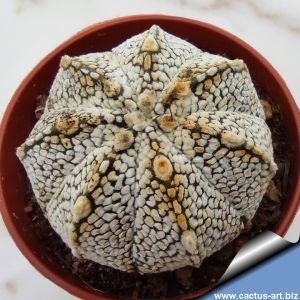
Stem with a metallic sheen between aquamarine green and bronze, bearing fishbone-shaped spines in rust or light brown tones. Freely offsets to form small, flattened cushions. Beautiful and rare.
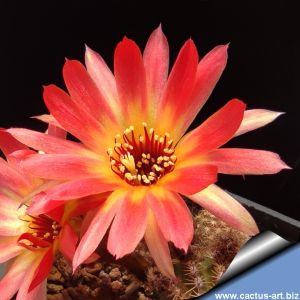
-
12
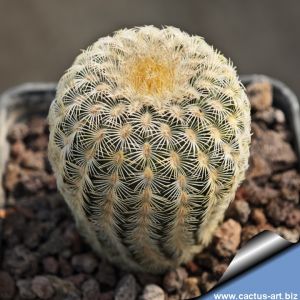
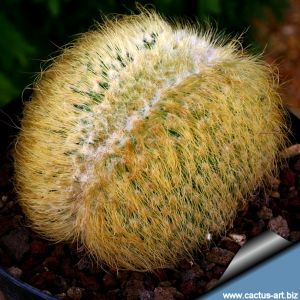
Mammilloydia candida called 'Snowball' is a choice cactus with a so dense snowy white, spination, that its body appears hidden by spines. Mammilloydia are clearly related to the genus Mammillaria, but it is usually recognized as a segregate genera.
-
13
This flower dazzles with vivid hues: rich violet margins, a bold carmine-red central band blending into warm salmon-orange at the center. The white throat and purple stamens add elegant contrast.
-
14
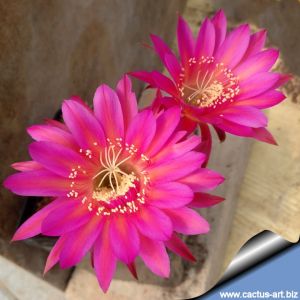
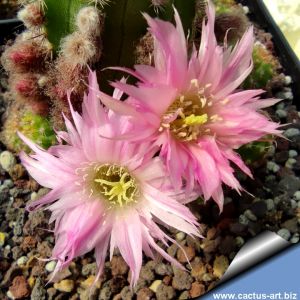
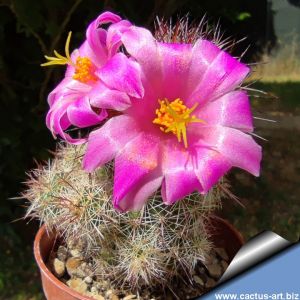
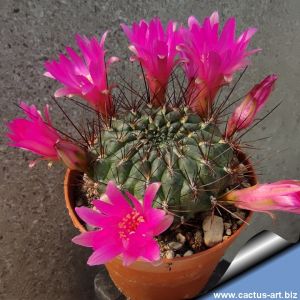
Showy pink-violet blooms paired with remarkable spines—central ones begin short but elongate and flatten dramatically as the plant ages, creating a unique silhouette.
-
15
-
16
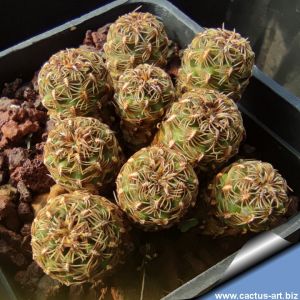
Short, combed spines from yellow-beige to light brown, with darker bases. Fast-growing and quick to cluster, it forms tight cushions packed with numerous heads.
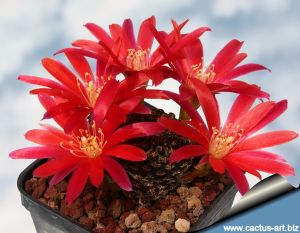
-
17
Turbinicarpus schmiedickeanus ssp. dickisoniae closely resembles ssp. gracilis, its nearest variety. Young areoles bear 18–24 white radial spines about 2 mm long; older areoles retain only central spines.
-
18
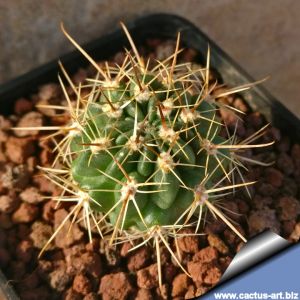
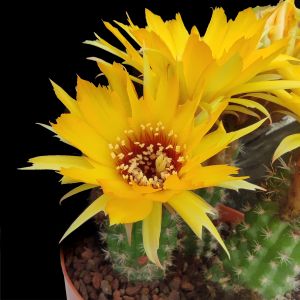
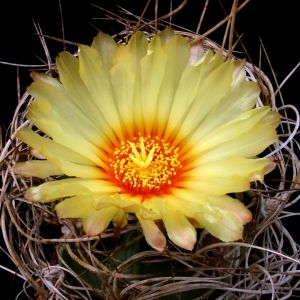
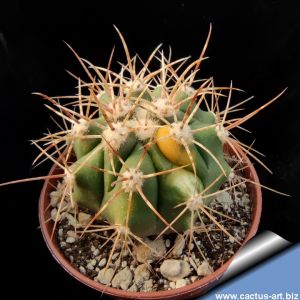
Variety with a round, dark green body and stiff, pectinate spines. It produces large yellow flowers with red anthers. A truly captivating plant.
-
19
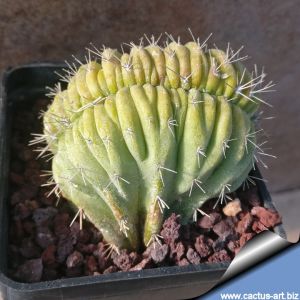
Compact and distinctive cultivar with ribs divided into small tubercles and very short spines that define its uniqueness. This specific structure creates a characteristic look that stands out clearly.
-
20
Lobivia jajoiana is a very popular small cactus priced for the throat ring of the flower that is always of a very dark purple-violet to black. The var. fleischeriana has orang or red flowers.
-
21
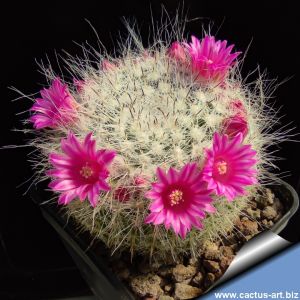
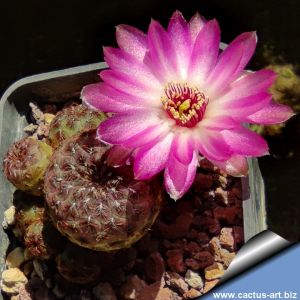
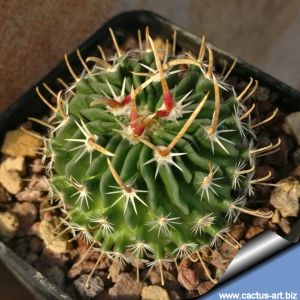
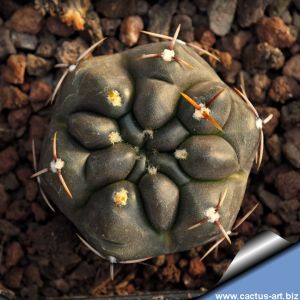
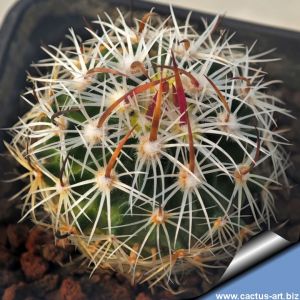
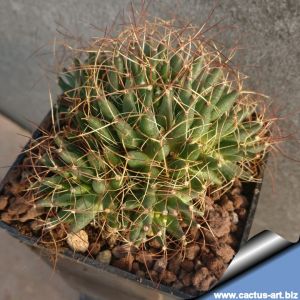
A very pretty Mammillaria with long, pale amber to reddish central spines and pink flowers arranged in a ring around the stem apex.
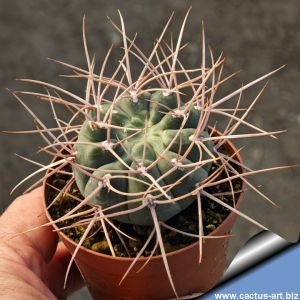
-
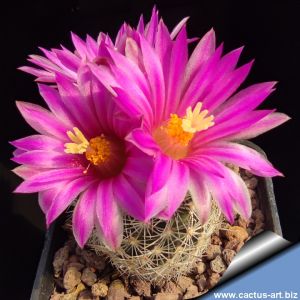
22
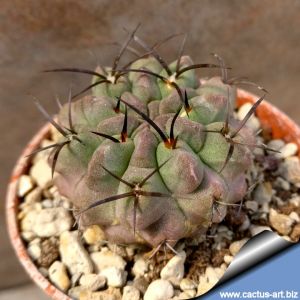
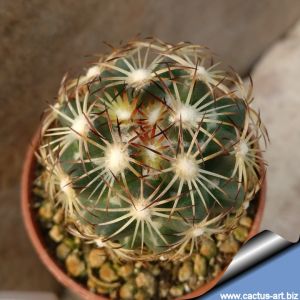
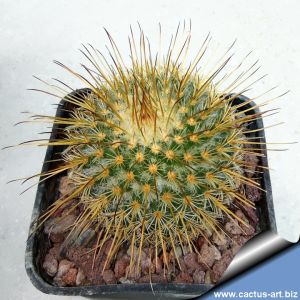
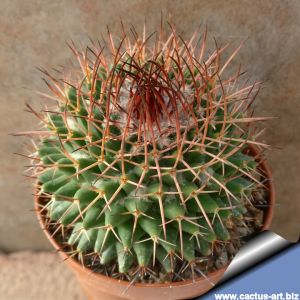
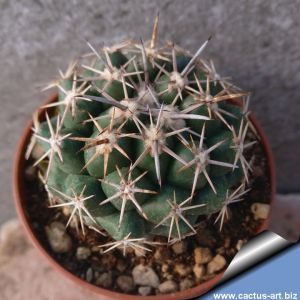
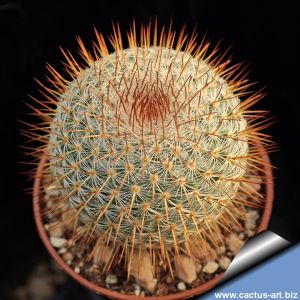
Spherical stem with umbilicate depression at apex, armored by interlocking copper-brown spines.
-
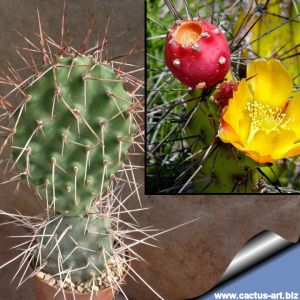
23
Opuntia sulphurea has conspicuously tuberculate joints. The spines are very dense and stiff, horncolored. Flowers about 4 cm. long, yellow.
-
24
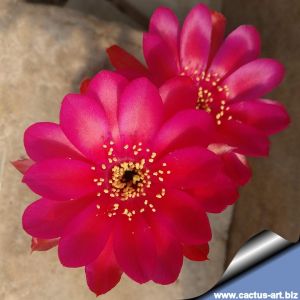
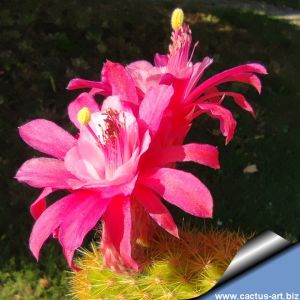
Copiapoa maritima comes from a habitat with an extremely arid climate, they are remarkably tolerant of pot culture. These plants have thick taproots and are susceptible to overwatering.
-
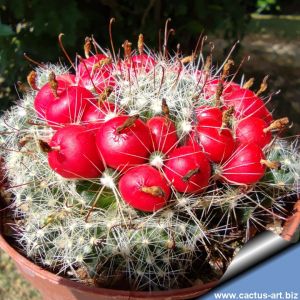
25
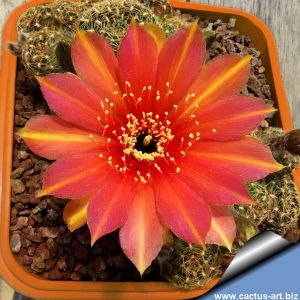
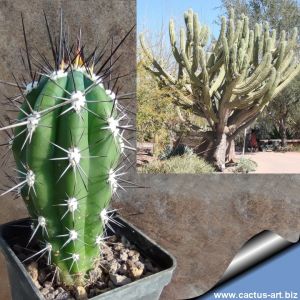
Spectacular bicolored flower: brick-red petals with a central orange midline, outer petals gradually brightening to vivid orange-yellow. A dark throat and dense cream stamens complete a vibrant, radiant, and visually striking bloom.
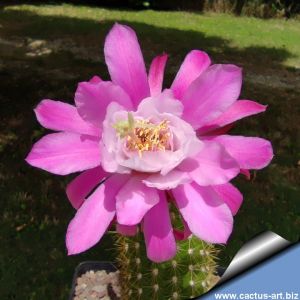
-
26
Notocactus claviceps is a smaller growing form of Notocactus schumannianus that does not exceed 50 cm in height. It has attractive light yellow (nearly white) flowers in summer.
-
27
Globular cactus with prominent tubercles and showy yellow blooms. Its straight vertical central spines (2-7 cm long) range from golden to reddish-brown when young, fading to grey. The vibrant flowers offset the spination beautifully.
-
28
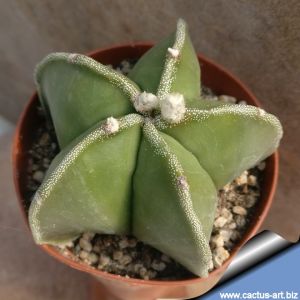
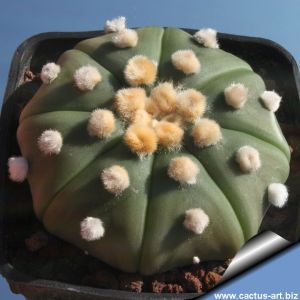
Astrophytum myriostigma var. subnudum (partially naked form) is similar to A. myriostigma nudum, but deviates from it for having only a few white spots. The spots often form nice patterned designes on the dark green body.
-
29
Mammillaria carnea is a rather robust cactus species. The plant typically has 4-sided angular tubercles with yellow, woolly axils and only 4 reddish radial spines. It will reward the skilled growers with ring of fine flesh-pink flowers circling the crown.
-
30
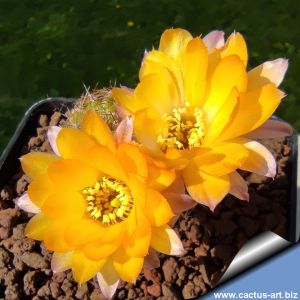
Chamaelobivia ‘Golden Eye’ is a striking hybrid featuring vibrant orange-red blooms and a prominent golden-yellow center—the “Golden Eye” that inspired its name.
-
31
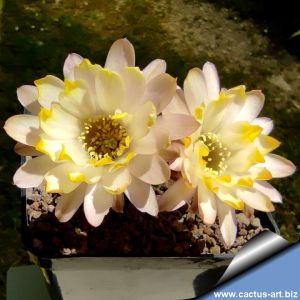
G. gibbosum var. chubutense stands out for its dark green to nearly black stem and cream-white or pinkish flowers. In its native habitat, winters bring heavy snow, and frosts can occur throughout the year..
-
32
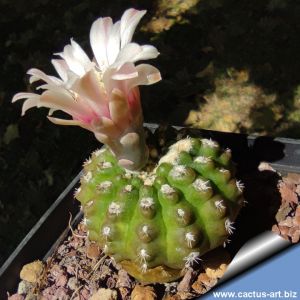
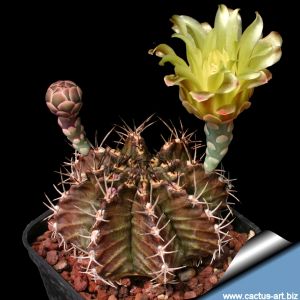
A truly unusual Gymnocalycium: once it reaches about 4 cm, the vegetative apex becomes atrophied (“blind”). Loss of the apex triggers new side shoots from the lateral areoles, which themselves turn blind when around 4 cm.
-
33
Flowers happen different to each other. Some have thin sharp petals while others are most normal. Odd features!
-
34
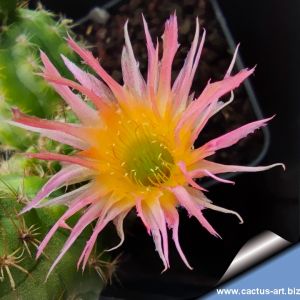
Pale pink flower. The shape of the petals varies a lot during the various blooms. Sometimes they are thin and very jagged while other times they can have smooth edges without indentations, or they can be intermediate in shape (even on the same plant).
-
35
-
36
-
37
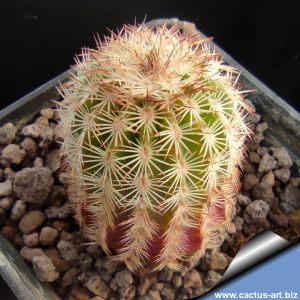
The pale spines form of the famous Echinocereus rigidissimus v. rubrispinus L088 has creamy white spines (not ruby-violet). Its unique-looking tight spination makes it one the the best Echinocereus species.
-
38
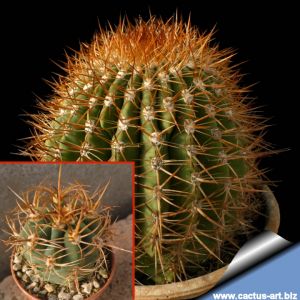
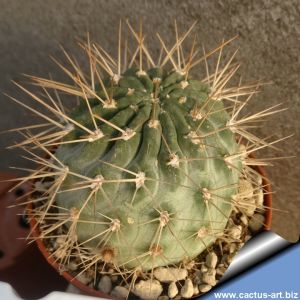
Denmoza rhodacantha cv. Orange Spines is an outstanding cultivars with strong orange to rich-amber coloured spines instead of brownish red. This plant has been selected in cultivation and is propagated by controlled pollination.
-
39
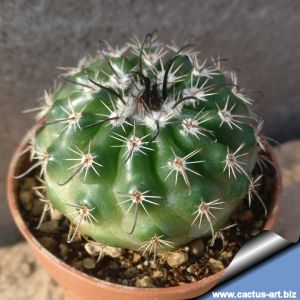
A globular cactus featuring numerous thin, wavy ribs. Boasts glassy white radial spines and three sharp brown central spines, with the middle one distinctively flattened.
-
40
Eriosyce chilensis v. albiflora is a beautiful cactus with pale green stems cowered with dense whitish-yellow to brownish spines. The flowers are produced in summer, closely packed apically from young areoles, they are flattish, usually creamy white.
-
41
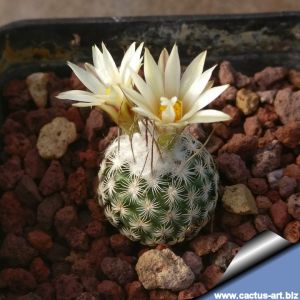
Parodia subterranea (also found in cultivation as Notocactus occultus) is an amazing white-topped cactus species from Bolivia that reputedly grows almost completely hidden below the soil. The flower colour is usually red, but can be quite variable.
-
42
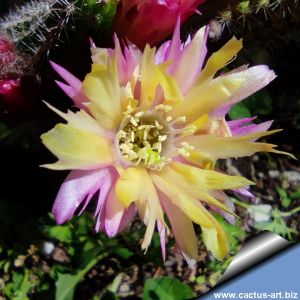
A beautiful bloomer, Chamaecereus hybrid (Chamaelobivia) cv. LINCOLN LEMON SORBET, features gorgeous white and yellow flowers from spring to summer.
-
43
Coryphantha difficills (difficult pincushion) is a long-lived cactus that only starts reproducing after 15 years. The curved spines range from white to rust red. Generally, it does not offset into clusters.
-
44
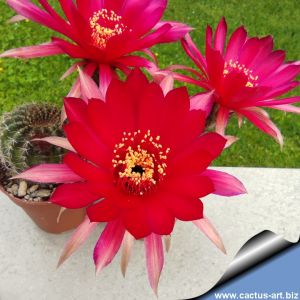
Echinocereus x roetteri (Echinocereus dasyacanthus v. roetteri) is Natural hybrid involving Echinocereus coccineus and Echinocereus dasyacanthus. The form SB 993 (Collected by Steven Brack collectein the Otero County, New Mexico) has brilliant red flowers
-
45
-
46
Gymnocalycium mihanovichii v. filadelfiense is usually solitary. The stem is dark bronze-green with sharp ribs more or less striped with white up to be 4 cm talland 5-6 cm in diameter. The flowers are greenish/tan o pink and silky-shining.
-
47
Mammillaria camptotricha (Dolichothele camptotricha) - Flat clusters of small stems with elongated tubercles and slender, twisted spines that envelop the body (hence "Bird’s Nest Cactus"). This variety has spines in dull cream to brown tones.
-
48
-
49
Charming variegated form with yellow-cream tubercle bases. The
variegation peaks under filtered light, while harsh sun encourages
reversion to green. A fascinating dance between color and light
exposure.
-
50
Mammillaria conspicua, can be distinguished from the other forms of the Mammillaria haageana complex because it is often solitary and has larger stems up to 10-11 cm in diameter. Each head is surrounded by a full ring of magenta pink star-like flowers.
-
51
Astrophytum asterias cv. Ooibo is similar to the standard A.asterias, but it has very large characteristic and woolly areoles. So it is easily distinguishable from the common asterias that has relatively small scarcely woolly greys-white areoles.
-
52
Astrophytum senile is a variety of A. capricorne that has beautiful yellow flowers with a red center and long flexible spines so densely wrapped that the body is barely visible and looks like a bundle of dry grass.
-
53
Hybrids from controlled pollination of ♀A. asterias "Superkabuto" × ♂A. coahuilense. Typically show 8 sharper ribs than Superkabuto (clearly expressing coahuilense traits), with stems covered in large white wool-like flecking. Stunning intermediate forms.
-
54
Mammillaria occidentalis also known as Mammillaria mazatlanensis var. occidentalis is a clumping species which has large pink flowers in summer. The flowers are slightly scented. These can be followed by red fruits.
-
55
(Seedling on its own roots) This is a Japanese selected strain with very large characteristic and woolly areole in combination with the green epidermis of "RURI KABUTO" (nudum). It is one of the most famous and peculiar Japanese Astrophytum cultivars.
-
56
-
57
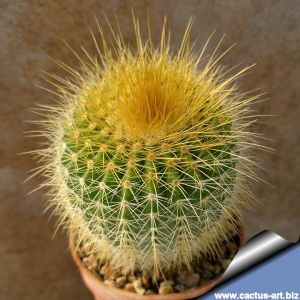
Notocactus leninghausii or the "Golden Ball Cactus" is very popular and widely grown for its yellow bristly appearance, but this beautiful crested form is still rare in cactus collection. The most striking feature is the harmless, bristly golden spines.
-
58
A globose dwarf cactus forming clumps with age. The body is flattened, dark green to purplish. Spines are needle-like, brown to nearly black, with 3–6 stronger centrals. Flowers are bright purple.
-
59
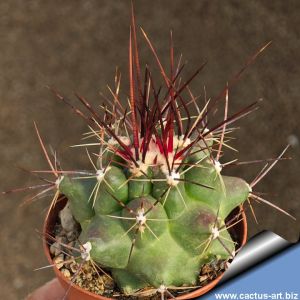
Thelocactus rinconensis is one of the most decorative cacti of the deserts of Mexico and extremely variable in its spines. The remarkable characteristics of this cultivar are the glaucous body and long dark-brown central spines.
-
60
Compact globular cactus, typically solitary, producing vivid magenta funnel-shaped blooms. Features dark chrome-yellow anthers and a creamy white style.
-
61
A miniature Mammillaria that rapidly develops tight clusters of many small, ivory-spined stems. It produces abundant yellow flowers and, without requiring pollination, sets edible red berries thanks to its self-fertile nature.
-
62
Noted for its deep red blooms, the condorensis variety has larger, spherical stems densely set with minute spines, creating the illusion of being covered in tiny white spiders.
-
63
-
64
-
65
-
66
-
67
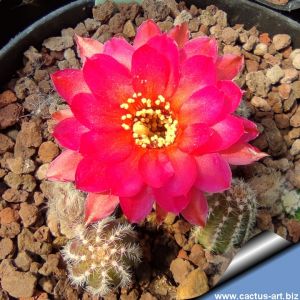
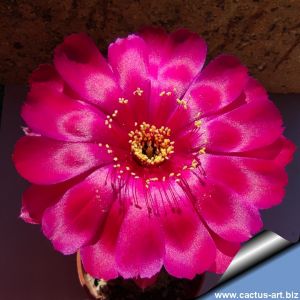
A spectacular flower in vivid red-purple with fluorescent highlights that seem to glow in light. Glossy, multi-layered petals form a dense, compact corolla, while the dark throat accentuates the golden-yellow stamens.
-
68
-
69
Mammillaria oteroi clusters freely and the offsets detach readily. It has some of the roundest fruits among mammillarias. The fruits are globose, 7-8 mm long, bright red. Flowers are pale yellowish green with muddy cerise midstripe.
-
70
Stetsonia coryne, the only species in its genus, is a towering columnar cactus reaching 3–10 meters in height and a defining element of Argentina’s arid landscapes. It is famous for its formidable spines, which can grow up to 10 cm long.
-
71
Blooms with rose-white inner petals with a touch of violet. Inner petals stay in a semi-funnel form with crinkled petal edges and tips. Outer petals are darker, rose-violet and recurving. Occasionally has a pinkish-orange overcast on back petals.
-
72
Flowers 10-12 cm diameter bloom similar to Hildewintera 'Otto Schultz' in light white-pink inners to darker pink outer petals but larger. Good grower, easy to bloom.