-
1
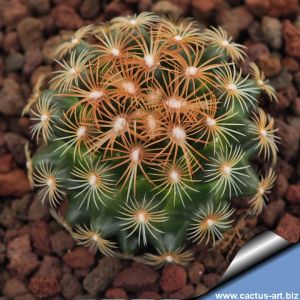
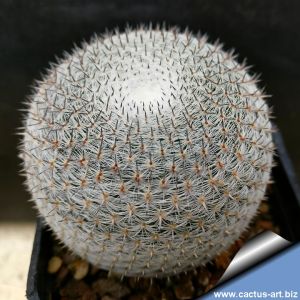
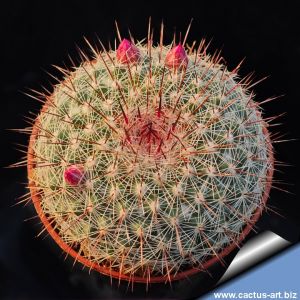
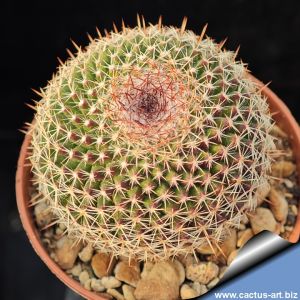
Collector's Jewel - Compact solitary globe with showy blooms (2" dia) in rose-violet to deep-red. 30+ white-yellow radials and 1+ reddish-brown centrals (occasionally absent). Slow-growing, with mature specimens being exceptionally scarce in cultivation.
-
2
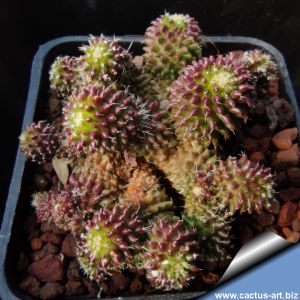
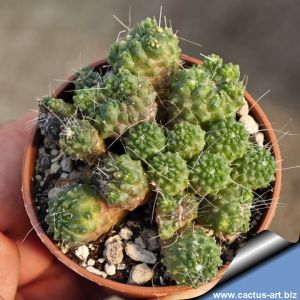
Compact clumping form with many miniature dark green–purple heads. The tubercles are minute and nearly unarmed, or equipped with short, soft hairs, resulting in a gentle, non-spiny appearance.
-
3
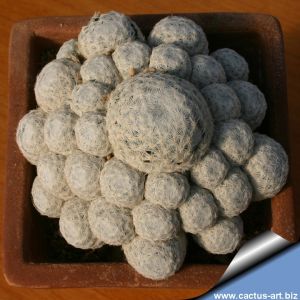
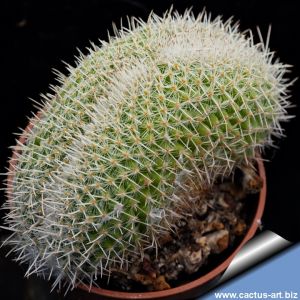
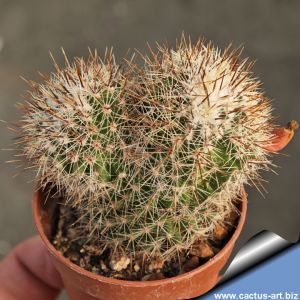
A compact humboldtii selection with slender, elongated stems that branch profusely. It quickly forms numerous heads, each densely covered with pure white spines, creating a striking and snowy appearance.
-
4
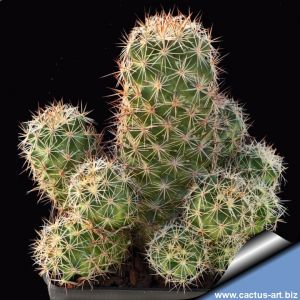
Cylindrical, greyish-green stems. In summer, beautiful, large flowers appear, which take on different shades of pink, from lighter to darker. Forms soon large clusters.
-
5
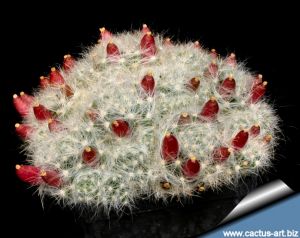
Mammillaria brauneana is distinguished by its symmetry and the neat arrangement of spines with white wool. Flowers range from violet and purplish-red to deep pink, followed by bright carmine-red fruits.
-
6
-
7
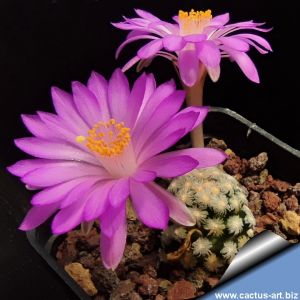
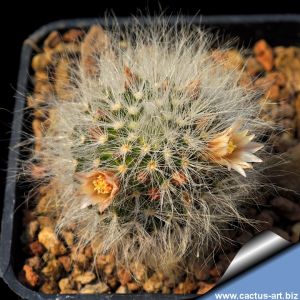
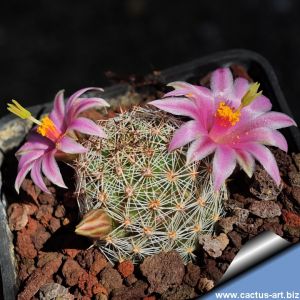
An even smaller dwarf form than the already tiny M. theresae, with soft, feathery, appressed spines. It bears huge, crocus-like flowers in a vibrant pink-violet. Simply enchanting!
-
8
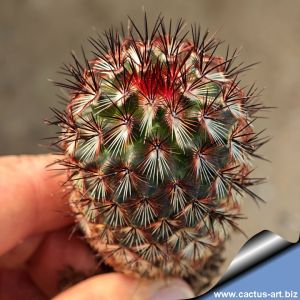
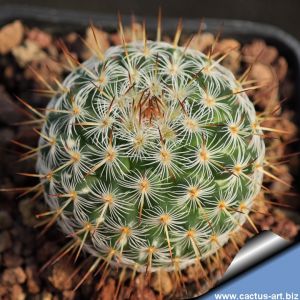
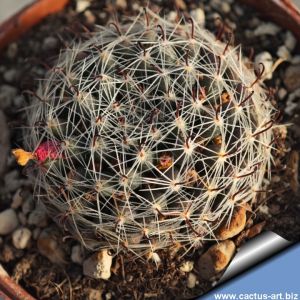
A cactus of remarkable beauty! Its dark green body showcases reddish to dark mahogany central spines and a halo of 30-50 thin, radiating, cream-colored radial spines. The striking color and textural contrast make it a standout in any collection.
-
9
The whole habitat of this plant (discovered only in 1997) disappeared under the water of a man-made dam. It is extinct in nature. The stem covered by numerous hairlike radial spines, giving the plant a shaggy appearance.
-
10
A stunning cactus that quickly forms dense cushions covered in soft white spines. Its pale pink blooms last over two months, followed by highly ornamental, long-lasting red fruits.
-
11
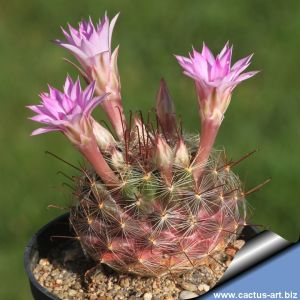
A small, globular cactus featuring white radial spines and hook-shaped central spines. The flowers, unusually large for a mammillaria, have long tubes and a vibrant pink hue.
-
12
White radial spines, red-orange or tan central spines, and white wool nestled between the tubercles. The purple flowers measure up to 12 mm in length.
-
13
Compact, flattened stem, either solitary or branching over time, covered in numerous small, tightly clustered tubercles. Radial spines are short and white, while central spines are brick red. Truly stunning!
-
14
Native to Sierra de Álamos (Mexico), M. alamensis coexists with M. pseudoalamensis but reveals its identity only through green pistils - starkly contrasting with the latter's dark orange. Without blooms, they're perfect morphological duplicates.
-
15
Among the most attractive clones of the “Fred” variety, it features many small heads—unlike the typical form. Smooth, spineless, glossy, and fleshy stems coalesce into dramatic, visually striking mounds.
-
16
Rounded body with white radial spines and stouter, dark central spines. It produces vivid carmine red flowers. In its natural habitat, it grows in association with Mammillaria kraehenbuehlii, sharing the same arid, rocky environment.
-
17
Grows in low, spreading mats of small stems bearing long tubercles and fine, long spines that envelop the plant like woven threads, resembling a bird’s nest. he "albescens" form has white-cream spines and flowers.
-
18
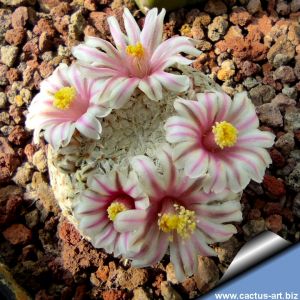
Tiny small cactus with feather-like spines arranged helicoidally. Flowers are white with striking
magenta-striped petals—a delicate and beautiful contrast.
-
19
Beautiful clumping form with soft, low flat stems that tend to produce offsets over time. It displays tightly packed, cream spines with yellow
bases, radiating from each areole—short, pubescent. Elegant and unique.
-
20
Vigorous plants with a rounded body becoming cylindrical over time. Dense, delicate pale pink spines and pink flowers. Very attractive.
-
21
A cultivated form of Mammillaria bombycina, var. albispina features pure white, hooked central spines faintly tipped brown. The plant’s luminous, snow-white look is strikingly elegant.
-
22
These compact plants display elongated tubercles, thin white radial spines, and brown-reddish central spines. Enormous, vivid yellow flowers provide a spectacular, highly ornamental display.
-
23
White areoles bear dense, rigid, straight spines in creamy white to ochre tones, with darker tips. Small flowers, usually yellow, appear arranged in a crown-like ring near the apex.
-
24
A special, highly proliferous form that branches vigorously from the base, producing numerous small green heads. The white areoles are typically spineless or occasionally bear a single fine, soft, non-prickly spine.
-
25
Distinctive variety featuring elongated stems that spontaneously fork in dichotomous branching, resulting in large clusters. Highly uncommon, offered in very few specimens.
-
26
A charming dwarf Mammillaria with short, curved, hairy central spines that range from brown to yellow-orange when young and gradually fading to gray as the plant matures..