-
1
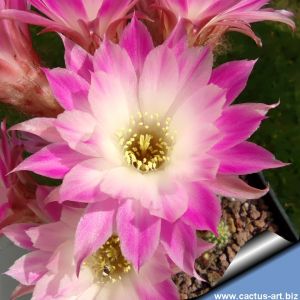
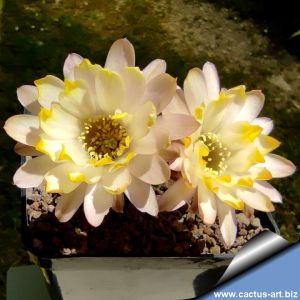
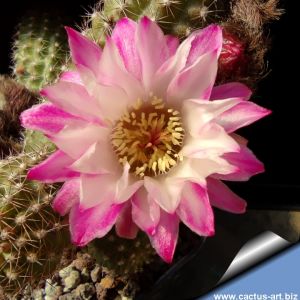
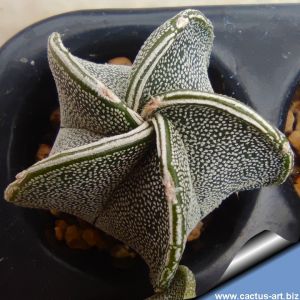
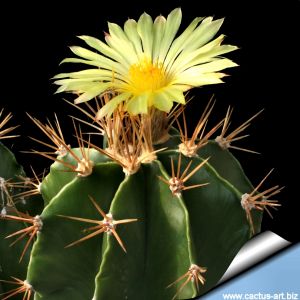
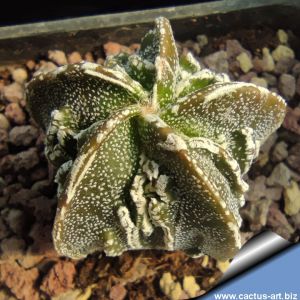
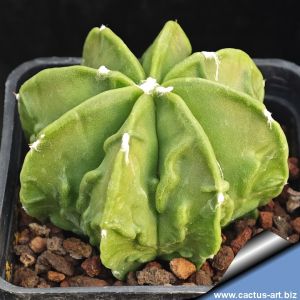
Striking blooms feature a white center softly transitioning to pink-magenta at the edges and outer petals. The light throat accentuates creamy stamens, offering an elegant contrast to the rosy gradients. Profuse, radiant, and subtly bicolored flowering.
-
2
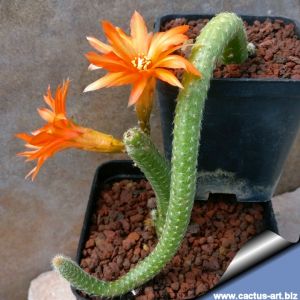
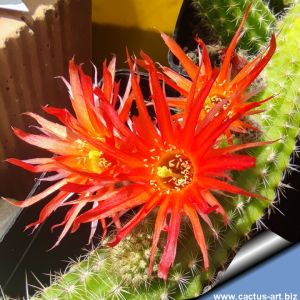
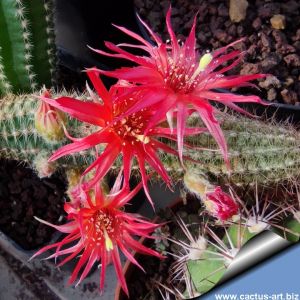
A newly introduced trailing cactus similar to Chamaecereus silvestrii, yet featuring markedly thinner and longer stems. Ideal for hanging baskets. Showy orange blooms. Available in limited numbers!
-
3
-
4
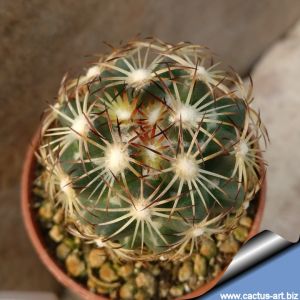
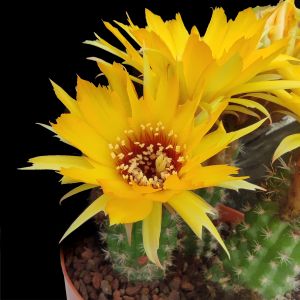
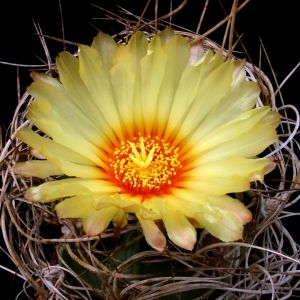
Variety with a round, dark green body and stiff, pectinate spines. It produces large yellow flowers with red anthers. A truly captivating plant.
-
5
Copiapoa maritima comes from a habitat with an extremely arid climate, they are remarkably tolerant of pot culture. These plants have thick taproots and are susceptible to overwatering.
-
6
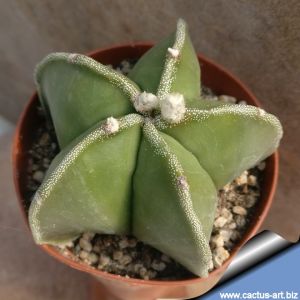
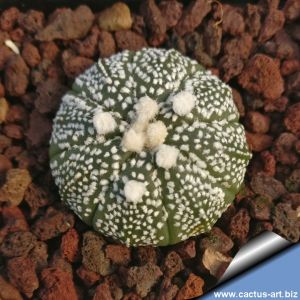
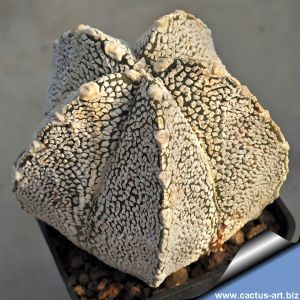
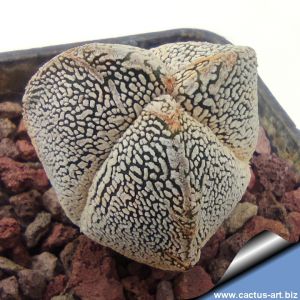
Astrophytum myriostigma var. subnudum (partially naked form) is similar to A. myriostigma nudum, but deviates from it for having only a few white spots. The spots often form nice patterned designes on the dark green body.
-
7
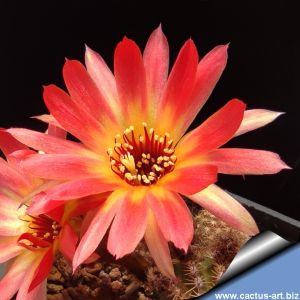
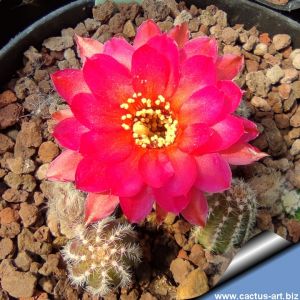
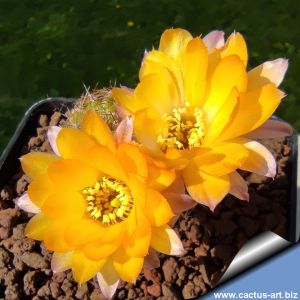
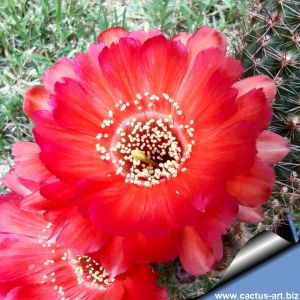
Chamaelobivia ‘Golden Eye’ is a striking hybrid featuring vibrant orange-red blooms and a prominent golden-yellow center—the “Golden Eye” that inspired its name.
-
8
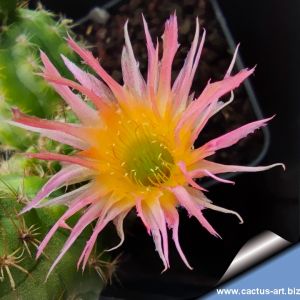
Flowers happen different to each other. Some have thin sharp petals while others are most normal. Odd features!
-
9
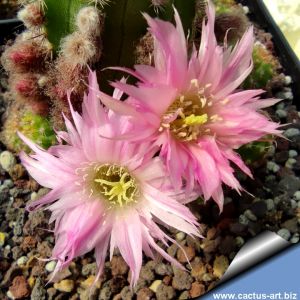
Pale pink flower. The shape of the petals varies a lot during the various blooms. Sometimes they are thin and very jagged while other times they can have smooth edges without indentations, or they can be intermediate in shape (even on the same plant).
-
10
-
11
-
12
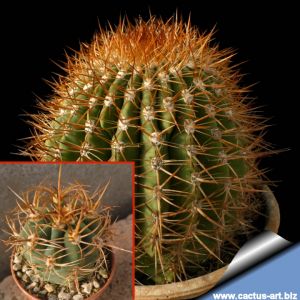
Denmoza rhodacantha cv. Orange Spines is an outstanding cultivars with strong orange to rich-amber coloured spines instead of brownish red. This plant has been selected in cultivation and is propagated by controlled pollination.
-
13
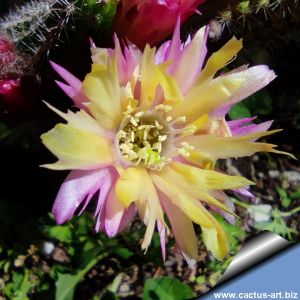
A beautiful bloomer, Chamaecereus hybrid (Chamaelobivia) cv. LINCOLN LEMON SORBET, features gorgeous white and yellow flowers from spring to summer.
-
14
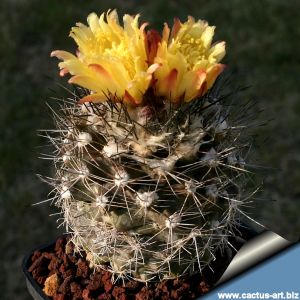
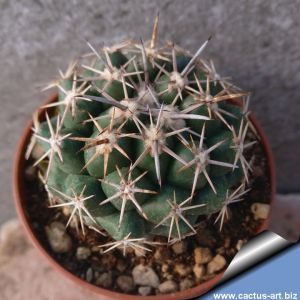
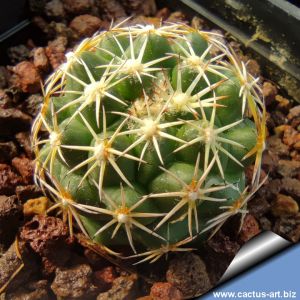
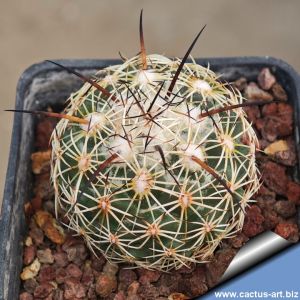
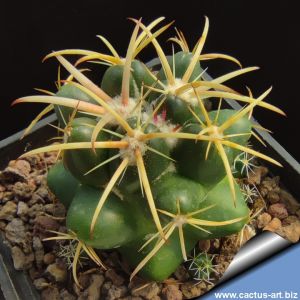
Coryphantha difficills (difficult pincushion) is a long-lived cactus that only starts reproducing after 15 years. The curved spines range from white to rust red. Generally, it does not offset into clusters.
-
15
-
16
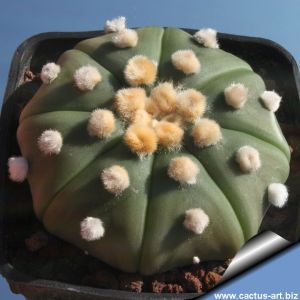
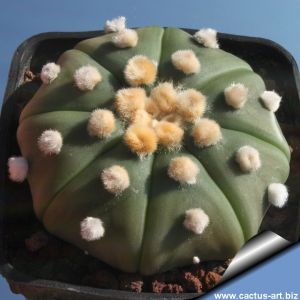
Astrophytum asterias cv. Ooibo is similar to the standard A.asterias, but it has very large characteristic and woolly areoles. So it is easily distinguishable from the common asterias that has relatively small scarcely woolly greys-white areoles.
-
17
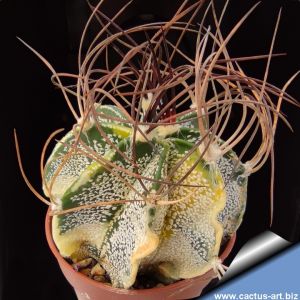
Astrophytum senile is a variety of A. capricorne that has beautiful yellow flowers with a red center and long flexible spines so densely wrapped that the body is barely visible and looks like a bundle of dry grass.
-
18
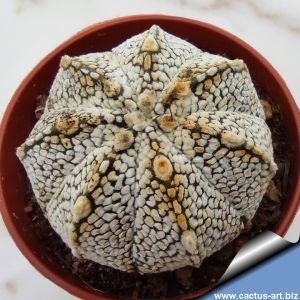
Hybrids from controlled pollination of ♀A. asterias "Superkabuto" × ♂A. coahuilense. Typically show 8 sharper ribs than Superkabuto (clearly expressing coahuilense traits), with stems covered in large white wool-like flecking. Stunning intermediate forms.
-
19
(Seedling on its own roots) This is a Japanese selected strain with very large characteristic and woolly areole in combination with the green epidermis of "RURI KABUTO" (nudum). It is one of the most famous and peculiar Japanese Astrophytum cultivars.
-
20
-
21
-
22
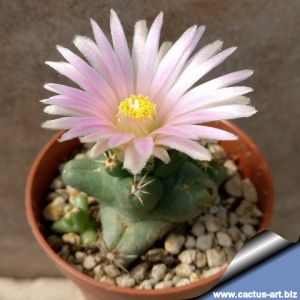
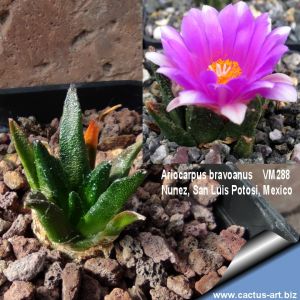
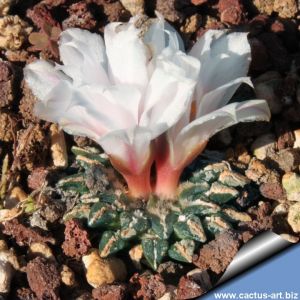
Very attractive, small geophytic cactus, forming a solitary rosette with dark green, verrucose tubercles.
-
23
-
24
NEW RELEASE! Beautiful Thai selection with prominent woolly spots creating a crisp white pattern on the ribs. Stock is very limited, and additional availability cannot be assured.
-
25
Coryphantha scolymoides has pale green stems, with tubercles ascending like tiles, spines numerous, radials ones flesh-coloured with a single central spine recurved, black, grey at the base. Flowers large, yellow with read throat.
-
26
Variegated plants have sectors, patches or stripes with two or more colours. Plants with variegated body are highly prized. Very variable.
-
27
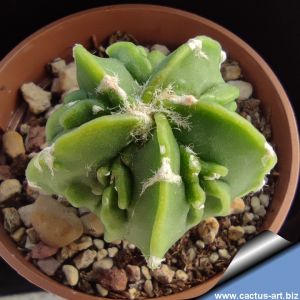
(Type B - HEKIRAN FUKURYU + RURI KABUTO) The Japanese term FUKURYU indicates the presence of small lateral rib-like protrusions, lacking areoles, that develop between two main ribs. Meanwhile, RURI refers to smooth-bodied individuals without dots.
-
28
This particular cultivar differs from the typical A. asterias due to the starry rather than rounded stem and the large felted areoles. The skin is dull green and smooth.
-
29
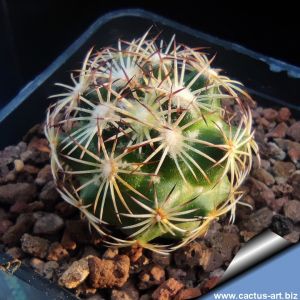
Round dark green body, whitish radial spines, darker hooked central spine, large yellow flower. In culture Coryphantha pallida is without problems and regularly shows its large pale yellow flowers.
-
30
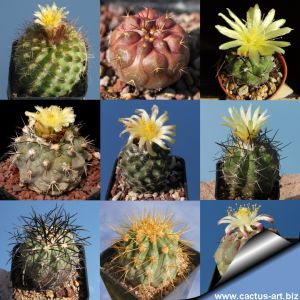
A diverse mix of Copiapoa species and seed-grown hybrids, including some seed collected from their natural habitat. Each plant is one-of-a-kind, displaying unique shapes, spination patterns, and flower colors.
-
31
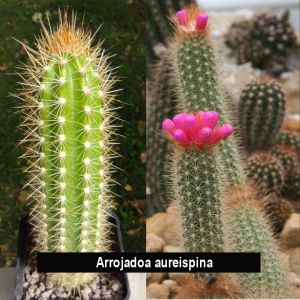
Arrojadoa aureispina is a clustered, cylinder-shaped cactus that produces apical clusters of pinkish purple flowers. The specific name “aureispina”, yellow spined, refers to characteristic golden-yellow spines of this plant.
-
32
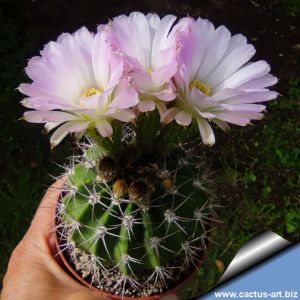
Elegant white flowers tinged with violet. Beautiful!
-
33
A small and highly attractive variety with disk-like bodies and flattened triangular tubercles barely rising above the soil. The main body is a large underground caudex. Flowers are white or very pale pink.
-
34
Plant with round, dark green stems, white-yellow radial spines, and a dark, arched central spine. Large, glossy yellow flowers.
-
35
Occasional few short spines per areole (extremely rare trait). At flowering size already!
-
36
-
37
Chamaelobivia cv. ESP 2009.40.2 hybrid (Chamaecereus Granat x Lobivia claeysiana)
-
38
-
39
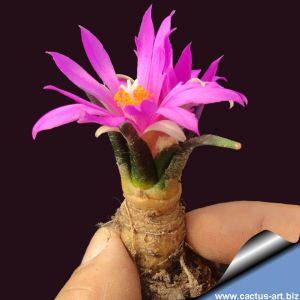
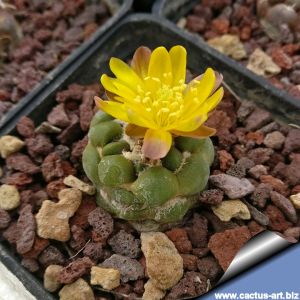
A tiny geophytic cactus with an olive-green spherical stem marked by smooth, rounded tubercles. Its sunken woolly areoles lack spines. A deep tuberous root anchors the plant. Bright yellow flowers, larger than the stem, emerge at the apex.
-
40
A star-shaped disk that lives half-buried! It forms flat, geometric rosettes no larger than a coin and hides a long, fleshy taproot underground. A gem for lovers of camouflaged, minimalist plants.
-
41
The Japanese HAKU-JO cultivar features fuzzy areoles along its ribs, forming a double felt line that makes it appear as though the areoles are linked together.
-
42
-
43
Rare variety that combines the irregular ribs of FUKURYU with the felt lines of HAKU-JO on the edge of the ribs. As the plants get older they become more and more beautiful.
-
44
(HEKIRAN FUKURYU Type B + RURI KABUTO)
Refined Japanese cultivar combining the intercostal protuberances of cv. Hekiran Fukuryu with the perfectly smooth, polished surface of cv. Ruri Kabuto. The name “Multicostatum” refers to the presence of six to seve
-
45
A rare Astrophytum cultivar combining a three-ribbed (tricostate) form with dense, irregular white flecking (ONZUKA pattern) . A special plant highly sought after by collectors for its clean, sculptural look. Each specimen has a unique pattern.
-
46
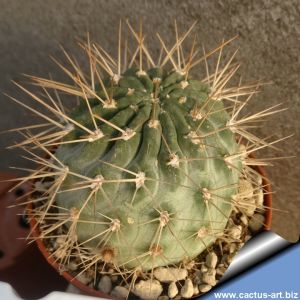
Massive tubercles bearing formidable fang-like spines - spreading unevenly, curved, and appressed (never upright). Noticeably lacks central spines. Produces showy yellow flowers.
-
47
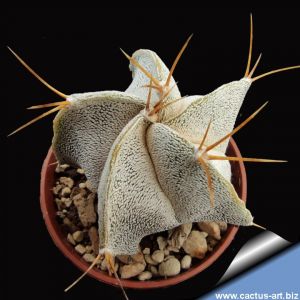
Plants obtained by controlled pollination of Astrophytum myriostigma x Astrophytum ornatum. Ribs are sharp usually 5 (like in A. myriostigma) spineless or with variable spines.
This hybrid are strong growing. The flower are also very beautiful.
-
48
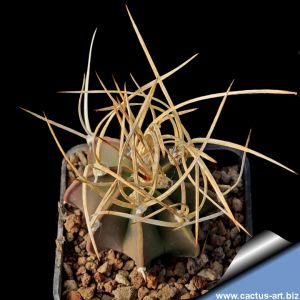
A magnificent variety with long, flat, and contorted spines, showcasing a unique color ranging from ivory-white to pale beige.