-
1
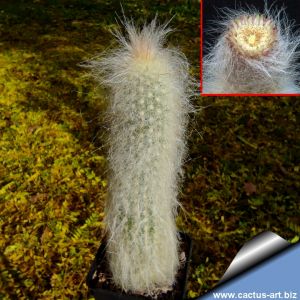
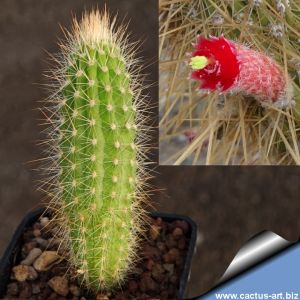
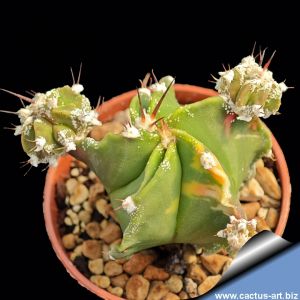
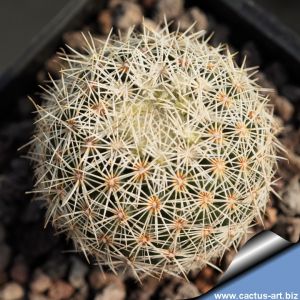
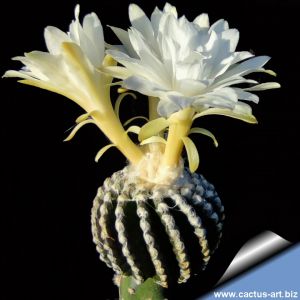
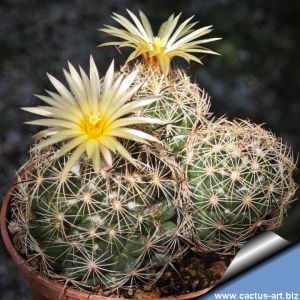
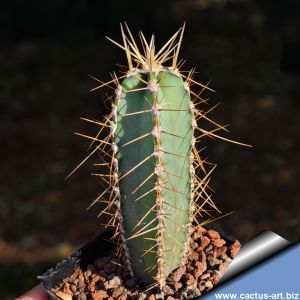
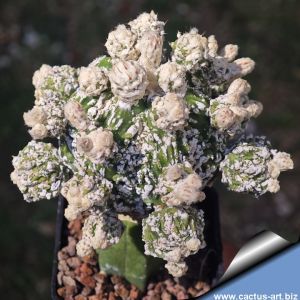
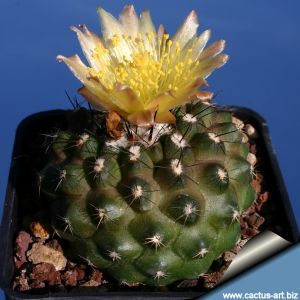
Seedlings 3-5cm (or more). Cremnocereus albipilosus is a new columnar cactus from dry forests of Bolivia. It differs from other cacti by its woolly many-ribbed stems and flowers pollinated by bats. Discovered in 2017. VERY RARE!!!
-
2
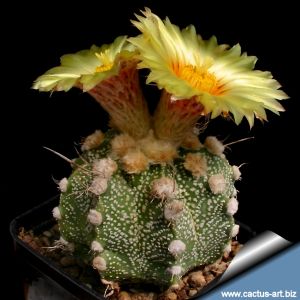
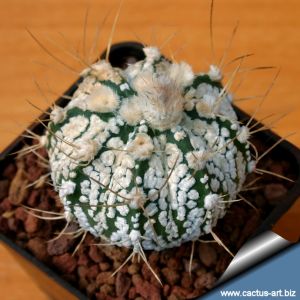
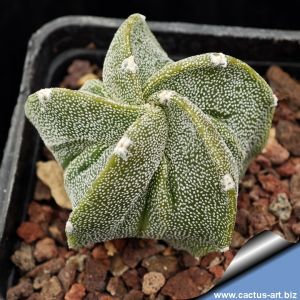
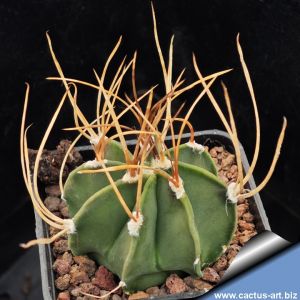
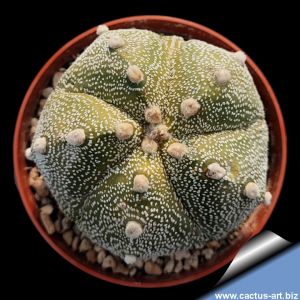
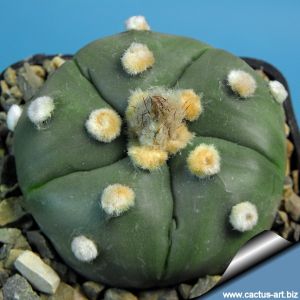
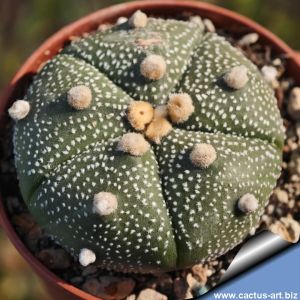
Plants obtained by controlled pollination of ♀Astrophytum asterias x ♂Astrophytum senilis aureum. Ribs sharp with very short spines and yellow woolly areoles. As the plant ages the areoles become more and more large, woolly and colourful.
-
3
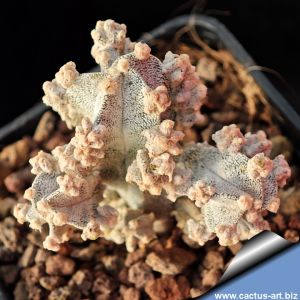
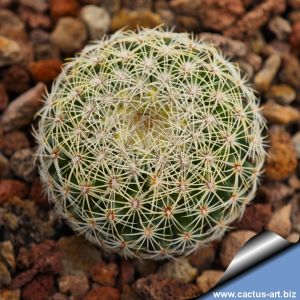
Rootted cuttings not grafted.
-
4
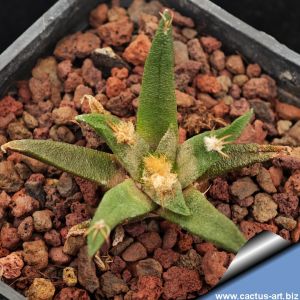
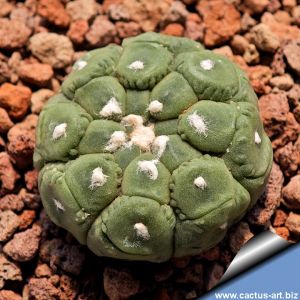
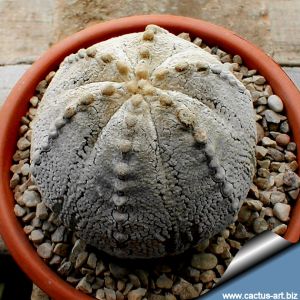
Variety with greener, elongated tubercles and a firm lizard-skin-like texture. Short yellow spines emerge from large woolly areoles. Green in shade, it turns purple in full sun.
-
5
-
6
-
7
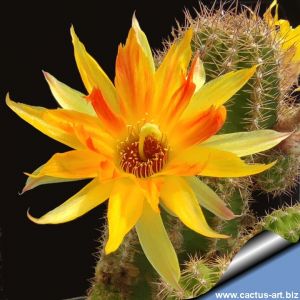
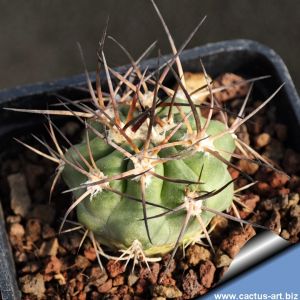
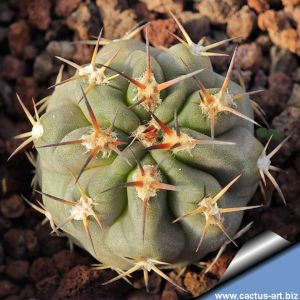
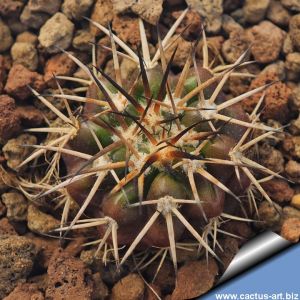
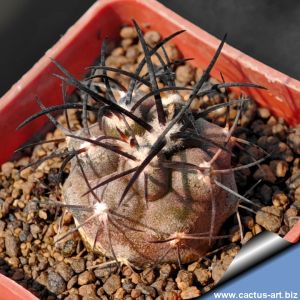
Superb plant with a greyish body and very strong, long spines in brown-red to black tones. Bears a bright yellow flower that contrasts vividly against the dark, spiny form.
-
8
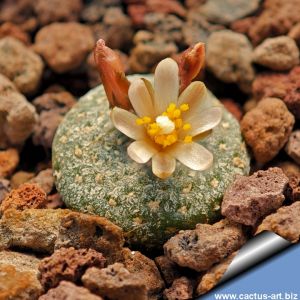
A rare, compact variety with a small body. Four-year-old seedlings,8-10 mm wide, extremely slow-growing. Limited availability.
-
9
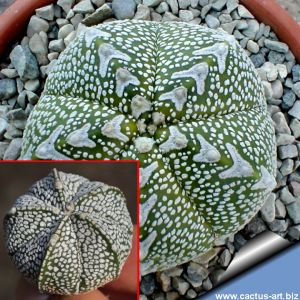
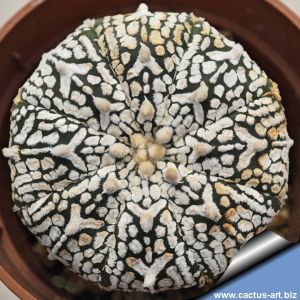
Hybrid A. capricorne x A. asterias 'Superkabuto'. This hybrid inherited large white spots from “Superkabuto”.The ribs are also noticeably raised, clearly indicating kinship with A. capricorne. The flower are also very beautiful.
-
10
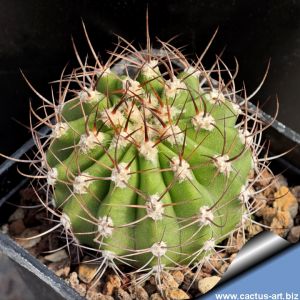
Small grey-green, glaucous body, new spines dark, later greyish, flower yellow.
-
11
-
12
-
13
These plants merge the vivid yellow, orange, or reddish variegation of “NISHIKI” against a deep green base with the “RURY KABUTO” (nudum) type, known for its absence of white dots. Every specimen is one-of-a-kind, displaying uniquely decorative designs.
-
14
The Japanese cultivar “Nishiki” stands out for its vibrant yellow, orange, or reddish variegation against a dark green background, creating unique, high-impact patterns. An iconic and essential plant for any collection.
-
15
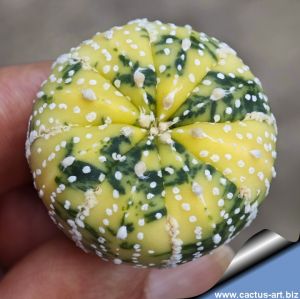
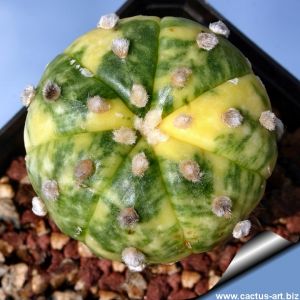
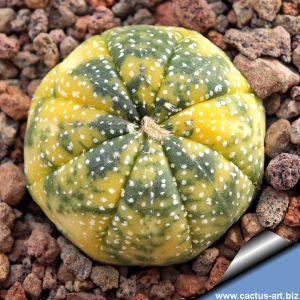
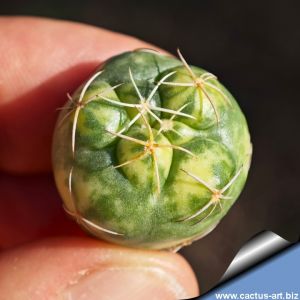
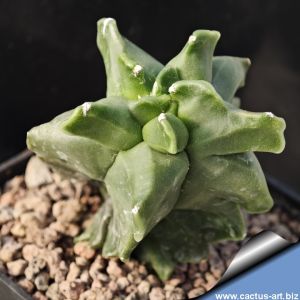
A gorgeous plant featuring a bicolored stem with yellow and green zones or stripes. Its vibrant contrast and irregular patterns make it truly eye-catching and unforgettable.
-
16
Selected form with very elongated tubercles. Graceful and distinctive. Grown from seed, quite variable. Japanese cultivar still quite rare in collection, seldom offered for sale.
-
17
Blossfeldias are the tiniest cacti, but truly captivating. Due to their miniature size and extremely slow growth, it is very rare to encounter specimens like these, raised from seed. The plants are ready to flower.
-
18
The variety pulvinicapitatus is a particular form of Discocactus placentiformis, distinguished by the shape of its body, which tends to be more flattened and develops a more pronounced and "cushion-like" cephalium.
-
19
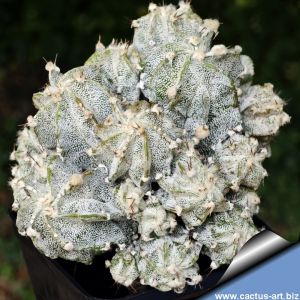
This plant is an example of a cross between two of the most popular Astrophytum cultivars (Astrophytum asterias "SUPERKABUTO" x Astrophytum myriostigma "ONZUKA"); the resulting interspecific F1 hybrid shows intermediate characteristics from both parents.
-
20
Olive green body, straight rather thin ribs, litght pinkish flowers - nice variety!
-
21
A remarkable hybrid of Astrophytum caput-medusae and A. myriostigma, featuring shorter and chunkier tubercles than A. caput-medusae. Exceptionally rare, with extremely limited availability. Grafted specimen.
-
22
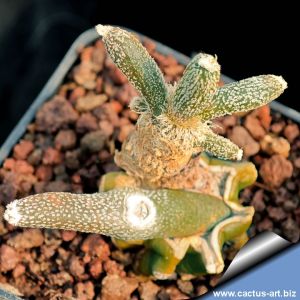
Thin, elongated tubercles, mottled with yellow and green, which take on a lovely pinkish-red hue in winter. Grafted plants, very beautiful.
-
23
Beautiful Japanese cultivar with characteristic cloud-like white patches on a smooth green body. The pattern creates a soft, artistic contrast.
-
24
A dream Myriostigma! The cottony dots are so densely packed they form a continuous, seamless covering. The effect is delicate, elegant, and hypnotic, with a smooth, velvety texture that draws the eye and holds attention.
-
25
Type A: This is the most common form with small, partially developed extra ribs. Typically, these small additional ribs do not reach the apex of the plant, lack areoles, and develop on the lateral side, situated between two adjacent true ribs.
-
26
Plant with sharp green/bluish ribs sometimes tinged with purple without white flakes. Spines golden yellow or amber, long and pointing in all directions, often so densely nest wrapped that the body is barely visible and looks like a bundle of dry grass.
-
27
A Bolivian columnar cactus with branched stems densely covered in thin, translucent white-yellow spines, creating a "glassy" look. Bears striking orange-red tubular flowers against its unique spination.
-
28
Striking plants featuring elongated areoles and spines aligned in a comb-like pattern.
-
29
A hybrid between A. myriostigma and A. asterias—two species that are generally non-interfertile and rarely produce viable seeds. Among the very few seeds available, only a handful develop into striking and exceptionally rare five-ribbed plants.
-
30
These prized Astrophytum hybrids combine A. asterias "SUPER KABUTO"'s large white spots with A. coahuilense's fluffy, wool-like flecking. Their five symmetrical ribs showcase nature's perfect balance of rarity and geometric beauty.
-
31
A slow-growing botanical treasure, cloaked in dense white-to-yellow radial spines. Central spines, brown in color, appear only several years after germination, culminating in a dramatic display. The vivid yellow flowering is truly spectacular.
-
32
Astrophytum hybrid OR-MY (A. ornatum × A. myriostigma), nude and variegated. Rare naturally branching specimens with smooth green skin and unique cream, yellow, or pink variegation. Highly collectible and sporadically available.
-
33
A.k.a cv. Goryo Kabuto (Five Ribs) + Ruri in Japan - Unusual form featuring just 5 smooth green ribs, contrasting with the species' standard 8-rib morphology. These rare 5-ribbed specimens are exceptionally uncommon and highly prized.
-
34
Special "Fly's wings" variety - Displays striking white V-patterns at every areole (like fly wings),
rarely seen in standard 'Super Kabuto'. The markings develop beautifully with age. Exceptionally attractive!
-
35
Juvenile plants wear a smooth "armor" of short, white flattened spines. At maturity, dark central spines erupt, creating a striking before/after effect. The years-long transformation rewards patient growers with a true botanical spectacle.
-
36
Obsidian-black disc body crowned by a cream cephalium. Tiny chocolate spines cling tightly downward like hummingbird talons. Each detail conspires in extraordinary harmony. On summer nights, transforms, erupting in sweetly-scented white blooms.
-
37
Globose with thin radial spines and partially recurved central spines, 2–3 cm long, dark reddish-brown. Flowers pale yellow with a characteristic silky sheen, fading toward the tips to a bright creamy hue, creating an elegant and distinctive appearance.
-
38
Columnar blue-green stem adorned with large, brilliant white areoles bearing long, straight spines that range in color from pale straw-yellow to ochre, brown, and even black.
-
39
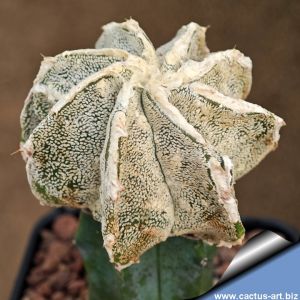
"SAZNAMI" is one of the finest Japanese clones. Its ribs bear many raised, wavy ridges, each crowned with an almost unbroken line of white felt. Proliferation of shoots along the ribs creates a lush, dramatic form, making it a standout specimen.
-
40
A small, low-growing cactus with thick, turnip-like roots. The stem is depressed and ranges from olive-green to tan. It produces abundant wool at the apex and, while sometimes solitary, usually forms clusters at the base.
-
41
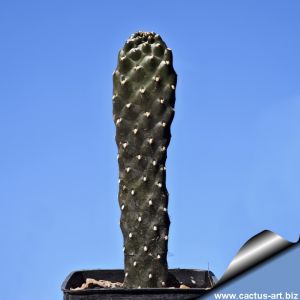
A relative of the prickly pear, this upright, geometric cactus has flat, dark green pads arranged in an orderly, almost two-dimensional form. It features inconspicuous spines and a sleek, sculptural appearance.
-
42
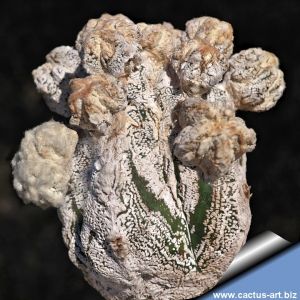
‘Snowy Peter’ is an Astrophytum hybrid derived from A. myriostigma and A. ornatum. Its defining feature is the symmetrical proliferation of lateral shoots from the areoles—a trait not found in either parent.
-
43
Derived from complex crosses involving A. myriostigma and various other forms, this cultivar features tightly packed woolly dots arranged in distinct vertical bands in a unique exceptional surface design.
-
44
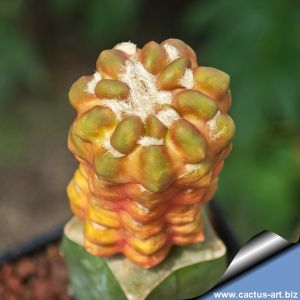
Una Cintia dai colori pastello! Tubercoli a forma di fagiolo color oliva chiaro che degrada dolcemente in toni pesca e ambrati verso la base. L’effetto cromatico risulta delicato e unico, con variegature stabili e non reversibili.
-
45
This is the mountain form of Copiapoa griseoviolacea, the most beautiful and characteristic variety. It has a brownish-violet globular body and abundant jet-black spines that are strong and elegantly curved. A rare and remarkable plant.
-
46
Exceptional variant of Astrophytum asterias, easily recognized by its five ribs rather than eight. A truly uncommon and sought-after form, offered in very limited availability.
-
47
A distinctive variety recognized by its areoles connected by a continuous white woolly line running along the ridge of the ribs.
Grafted specimens. Limited and sporadic availability.
-
48
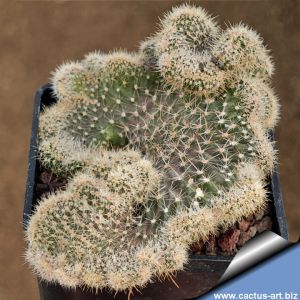
A true novelty: an extremely rare crested form of Austrocactus coxii, a small Patagonian cactus capable of enduring severe frosts. A unique blend of hardiness and collector’s appeal.
Plants grown from rooted cuttings—never grafted.